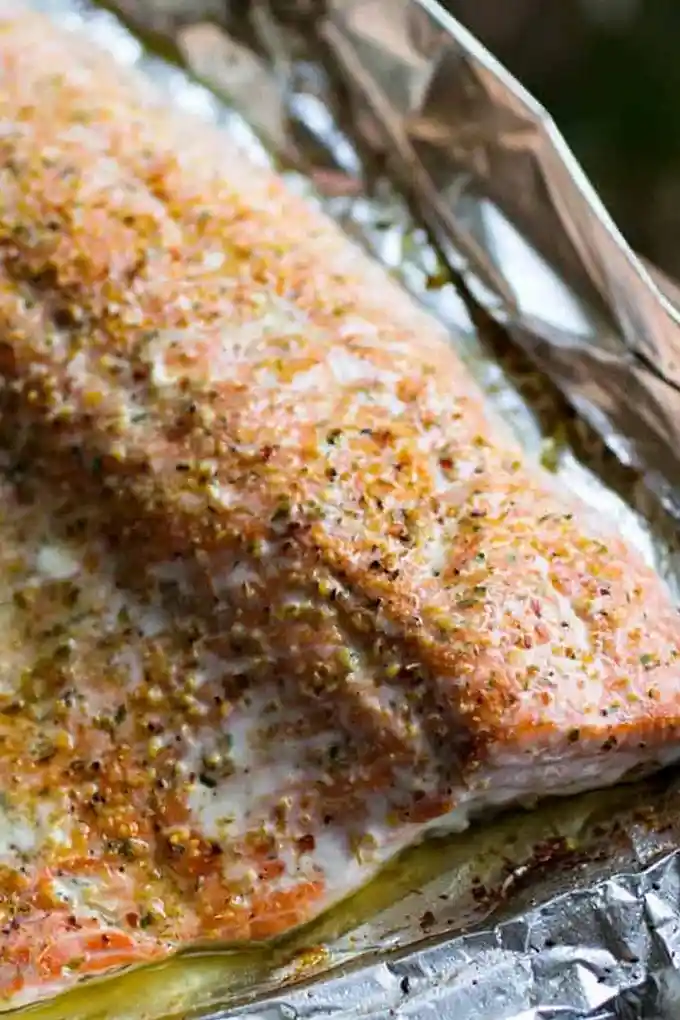
This efficient method for grilling salmon utilizes a pellet grill and a protective foil tray to ensure moist results. The combination of citrusy seasoning and melted butter creates a rich, savory glaze on the fish.
List of ingredients
- 1 large salmon fillet – use a fresh, high-quality cut for the best texture.
- 1/8 cup olive oil – helps the seasoning adhere and prevents sticking.
- 2 tablespoons lemon pepper seasoning – provides the primary flavor profile of citrus and spice.
- 1/4 cup butter, sliced into pats – melts over the fish to add richness and moisture.
step-by-step instructions
- Preheat Grill: Set your Traeger grill to 400°. Allow it to reach the full temperature before adding the food to ensure proper searing.
- Prepare Foil Tray: Create a sheet of non-stick foil and fold up the edges to form a tray with sides. Place the salmon fillet directly in the center of the foil.
- Season the Fish: Drizzle the olive oil over the entire surface of the fillet. Evenly sprinkle the lemon pepper seasoning over the top and place the butter pats across the fish.
- Grill the Salmon: Place the foil tray on the preheated grill grates and close the lid. Cook at 400° for approximately 15 minutes, or until the internal temperature reaches 145°F and the meat flakes easily.
- Serve: Carefully remove the tray from the grill. Serve the salmon immediately alongside your chosen side dishes.
Comprehensive Salmon Selection Guide
Choosing Wild Pacific Salmon
Wild-caught Pacific salmon, such as Coho or Sockeye, typically offers a firmer texture and a more intense flavor. Coho salmon, also known as Silver salmon, is an excellent choice for grilling due to its balanced fat content. These varieties often have a deeper red color compared to farmed options.
Understanding Atlantic Salmon Characteristics
Farmed Atlantic salmon generally has a higher fat content, which results in a milder flavor and a more buttery texture. This higher fat level makes the fish more forgiving during the grilling process as it is less likely to dry out. It is a great option for those who prefer a softer bite.
Inspecting Fish for Freshness
Fresh salmon should have a mild, clean scent and should not smell overly fishy. The flesh should be firm to the touch and spring back immediately when pressed. Look for a vibrant color without any dull spots or brownish discoloration around the edges.
Technical Grilling and Equipment Tips
Constructing the Non-Stick Foil Tray
Using non-stick foil prevents the delicate skin and flesh from tearing when you move the fish. Folding the sides up creates a small basin that captures the melting butter and oil, effectively poaching the fish in its own juices. If non-stick foil is unavailable, use regular foil and coat it generously with cooking spray.
Utilizing Pellet Grill Heat Distribution
Pellet grills provide a consistent convective heat that cooks the salmon evenly from all sides. The addition of wood pellets adds a subtle smoky dimension that complements the lemon pepper rub. Keep the lid closed as much as possible to maintain a steady 400°F environment.
Calibrating Internal Temperature
Using a digital meat thermometer is the only way to guarantee the salmon is cooked perfectly. Aim for an internal temperature of 145°F for food safety, though some prefer pulling it at 135-140°F for a medium finish. The fish is done when it flakes easily with a fork at the thickest part.
Flavor Enhancements and Substitutions
Creating a Custom Lemon Pepper Rub
If you do not have a pre-made blend, combine coarse black pepper, dried lemon peel, salt, and a pinch of garlic powder. Adjust the ratio of pepper to lemon depending on your heat preference. Toasting the pepper slightly in a pan before mixing can enhance the aroma.
Selecting High-Smoke Point Oils
Olive oil is great for flavor, but avocado oil is a superior choice for higher temperature grilling due to its higher smoke point. Grapeseed oil is another neutral alternative that will not alter the taste of the lemon pepper seasoning. Ensure the oil completely coats the fish to create a barrier against sticking.
Dairy-Free Butter Alternatives
To make this recipe dairy-free, replace the butter pats with a plant-based butter substitute or extra olive oil. Vegan butter sticks often provide the same richness and melting properties as dairy butter. You can also use a small amount of coconut oil for a subtle sweetness.
Strategic Serving Suggestions
Preparing Roasted Asparagus Pairings
Asparagus pairs naturally with the citrus notes of the lemon pepper salmon. Toss asparagus spears in olive oil and salt, then grill them alongside the fish for 5 to 7 minutes. The charred tips provide a bitter contrast to the rich butter on the salmon.
Cooking Basmati Rice for Salmon
Basmati rice offers a fragrant, fluffy base that absorbs the excess lemon butter sauce from the foil tray. Cook the rice with a pinch of salt and a teaspoon of butter for added flavor. For more zest, stir in freshly chopped parsley after the rice is cooked.
Balancing Flavors with Coleslaw
A crisp, acidic coleslaw helps cut through the richness of the fatty salmon and melted butter. Use a vinegar-based dressing rather than a heavy mayo-based one to keep the meal feeling light. Shredded red cabbage and carrots add color and crunch to the plate.
Storage and Preservation Methods
Air-Tight Refrigeration Steps
Store leftover salmon in an airtight glass container to prevent it from absorbing other fridge odors. Allow the fish to cool slightly before sealing the lid to avoid excess condensation. Properly stored salmon will remain fresh in the refrigerator for up to three days.
Gentle Reheating in the Oven
Avoid the microwave, as it can make salmon rubbery and dry. Instead, place the fillets in a baking dish with a splash of water or a small pat of butter. Heat in an oven at 275°F until just warmed through to preserve the moisture.
Freezing and Thawing Guidelines
If freezing cooked salmon, wrap each portion tightly in plastic wrap and then place it in a freezer-safe bag. To thaw, move the salmon to the refrigerator 24 hours before you plan to eat it. This slow thaw prevents the texture from becoming mushy.
Cooking Troubleshooting
Identifying Overcooked Salmon
Overcooked salmon appears pale pink and has a dry, chalky texture. You may also notice a white protein called albumin pushing out of the sides of the fillet. If this happens, serve the fish with an extra squeeze of fresh lemon juice or a dollop of tartar sauce to add moisture.
Managing Different Fillet Thicknesses
Thicker fillets require a longer cooking time than thin cuts to reach the target internal temperature. If your salmon is over two inches thick, increase the grill time by 3 to 5 minutes. Always check the center of the thickest part with a thermometer to avoid undercooking.
Reducing Foil Sticking
If the fish still sticks to the foil, ensure you are using enough oil before adding the seasonings. You can also try a non-stick grill mat placed on top of the foil for an extra layer of protection. Always let the fish rest for a minute before lifting it off the foil.
Frequently Asked Questions
Can I use a gas grill instead of a Traeger?
Yes, you can use a gas grill by utilizing the indirect heat method. Place the foil tray on the cool side of the grill and keep the lid closed to create an oven-like effect. Ensure your grill thermometer reads 400°F before adding the salmon.
How do I know when salmon is perfectly done?
The most reliable sign is when the flesh transitions from translucent to opaque. When you press the top of the fillet, the flakes should separate easily along the natural lines of the muscle. A digital thermometer reading 145°F is the gold standard.
Should I leave the skin on during grilling?
Leaving the skin on helps protect the flesh from direct heat and keeps the fish from falling apart. The skin also acts as a barrier that holds in the juices. Since you are using foil, the skin will not stick to the grill grates.
Can I use a different seasoning blend?
While lemon pepper is classic, you can use garlic-herb or paprika-based rubs. If you change the seasoning, keep the butter and oil as they provide the necessary moisture. Adjust the cook time if using a rub with high sugar content, as it may brown faster.
What if I don’t have a large fillet?
You can use individual salmon portions instead of one large fillet. Place them in the foil tray with space between each piece for better air circulation. The cooking time remains roughly the same, but check the smallest piece first.
Print
Lemon Pepper Traeger Grilled Salmon
- Total Time: 25 minutes
- Yield: 4 servings 1x
- Diet: General
Description
This simple salmon recipe is flavored with a delicious lemon pepper rub, cooks quickly, and is delicious!
Ingredients
- 1 large salmon fillet
- 1/8 cup olive oil
- 2 tablespoons lemon pepper seasoning
- 1/4 cup butter, sliced into pats
Instructions
- Step 1: Preheat your grill to 400°.
- Step 2: Make a non-stick foil sheet with some sides, and place salmon on top.
- Step 3: Drizzle salmon with oil, sprinkle with seasoning mix, and place pats of butter on top.
- Step 4: Place the foil tray onto the preheated grill, and close the lid. Grill at 400° for 15ish minutes, or until the internal temp is 145 and the fish is flaky.
- Step 5: Remove from grill and serve with your favorite sides!
Notes
Use non-stick foil or a grill mat to prevent sticking. For the best flavor, use wild-caught Pacific salmon, such as Coho.
- Prep Time: 10 minutes
- Cook Time: 15 minutes
- Category: Traeger Recipes
- Method: Grilling
- Cuisine: American
Nutrition
- Serving Size: 1 serving
- Calories: 284 kcal
- Sugar: 0 g
- Sodium: 127 mg
- Fat: 25 g
- Saturated Fat: 10 g
- Unsaturated Fat: 14 g
- Trans Fat: 0 g
- Carbohydrates: 2 g
- Fiber: 1 g
- Protein: 13 g
- Cholesterol: 66 mg