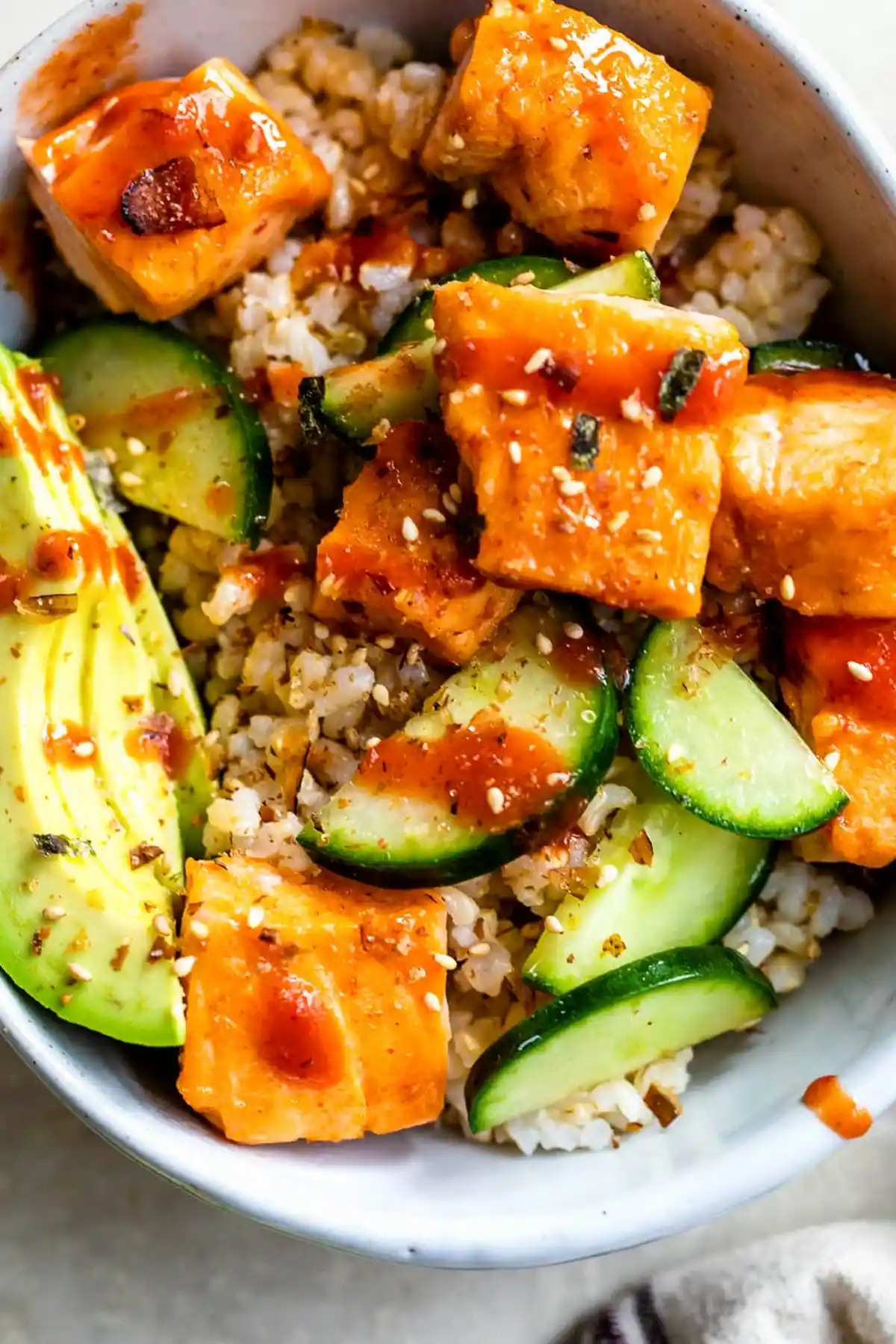
These vibrant, flavor-packed salmon bowls combine succulent bite-sized fish with a sweet and spicy honey-sriracha glaze. Designed for busy weeknights, this meal utilizes your broiler to achieve a perfect golden finish in just minutes. Each bowl is balanced with fresh, crunchy cucumber salad, creamy avocado, and wholesome brown rice for a complete, nutritious dinner.
List of ingredients
- 2 tablespoons honey
- 1 tablespoon sriracha (plus more for serving)
- 1 tablespoon soy sauce
- 2 teaspoons minced or grated fresh ginger
- 1 ½ pounds skinless salmon filets
- 3 Persian cucumbers (thinly sliced, or ⅓ English cucumber, cut into thin half-moons)
- 1 ½ teaspoons rice vinegar (plus more as needed)
- 1 teaspoon toasted sesame oil
- ½ teaspoon kosher salt
- 3 cups cooked short-grain brown rice
- 4 ounces avocado (from 1 small haas, thinly sliced)
- Furikake seasoning (or sesame seeds, for garnish)
step-by-step instructions
- Step: Preheat the broiler with a rack about 6 inches below it. Line a rimmed baking sheet with nonstick foil.
- Step: In a small bowl, combine the honey, sriracha, soy sauce, and ginger; stir with a fork until the honey dissolves.
- Step: Cut the salmon into 1-inch cubes and place them on the baking sheet, leaving a bit of space between each piece.
- Step: Brush the salmon with the glaze and cook under the broiler for 3 to 4 minutes, or until it’s easily flaked with a fork and golden on top.
- Step: Meanwhile, combine the sliced cucumber with the rice vinegar, sesame oil, and salt.
- Step: To serve, place 3/4 cup rice in each bowl. Divide and top with salmon, sliced avocado, cucumber, and a drizzle of sriracha, if desired, plus a sprinkle of furikake seasoning.
Refining Your Salmon Technique
Achieving Perfect Caramelization
To ensure your salmon develops that desired golden crust, avoid overcrowding the baking sheet. If the pieces are packed too tightly, they will steam rather than brown, which prevents the sugars in the honey from properly caramelizing under the broiler. Keep a consistent distance between cubes to allow the high heat to penetrate every side effectively.
Ensuring Even Cooking Through Uniform Sizing
When cutting your salmon, strive for uniformity in the one-inch cubes. If some pieces are significantly larger than others, the smaller pieces will become dry and tough before the thicker pieces are finished cooking. Taking an extra minute to measure your cuts ensures that every bite remains tender and juicy throughout the entire meal.
Understanding Ingredient Substitutions
Swapping Proteins for Variety
While salmon is the centerpiece of this dish, you can successfully swap it for firm white fish or even medium-sized shrimp. If you choose to use shrimp, reduce the broiling time by one to two minutes, as they cook much faster than salmon cubes. Chicken breast cut into small cubes also works, provided you ensure it is cooked through completely before serving.
Adapting for Dietary Needs
If you need to make this recipe strictly gluten-free, substitute the soy sauce with high-quality tamari or coconut aminos. These alternatives provide the same salty, savory profile without the wheat-based ingredients found in traditional soy sauce. For those seeking a lower sodium content, look for ‘less sodium’ versions of these pantry staples to control the salt intake of the overall dish.
Exploring Grain Alternatives
While short-grain brown rice provides a pleasant, chewy texture, you can experiment with other grains depending on what you have in your pantry. White sushi rice is a traditional option that offers a lighter mouthfeel, while quinoa provides a higher protein content and a slight nuttiness. If you are crunched for time, utilizing pre-cooked, frozen grain packets allows you to assemble the meal in under fifteen minutes.
Serving and Presentation Strategies
Enhancing Flavors with Acidity
The secret to these bowls is the contrast between the rich, sweet salmon and the acidic cucumber salad. If your palate prefers a sharper edge, add a tiny extra splash of rice vinegar to your cucumbers right before serving. This small adjustment can liven up the entire bowl, making the flavors pop against the mild base of the rice.
Customizing Your Toppings
While furikake provides a classic flavor profile, feel free to get creative with your toppings. Thinly sliced scallions add a mild onion flavor and a pop of green color, while toasted sesame seeds offer a simple crunch if you don’t have furikake on hand. Pickled ginger or a few thin strips of nori can also transform the dish into a more sushi-inspired experience.
Storage and Meal Preparation
Maintaining Freshness in Storage
Cooked salmon is best enjoyed fresh, but it can be stored in the refrigerator for up to three days. To keep the quality high, place the fish and rice in an airtight container separately from the cucumber salad. The cucumbers are best consumed within a day of preparation to avoid them becoming too soft from the salt and vinegar dressing.
Managing Cold Versus Warm Components
Many people find that the salmon bites are just as delicious cold as they are warm. If you are packing these bowls for a workplace lunch, you can store the salmon in the refrigerator overnight and eat it cold alongside the rice and cucumber. If you prefer to warm the fish, remove the cucumber and avocado before heating the rice and salmon, as these fresh items do not respond well to microwave reheating.
Frequently Asked Questions
Can I use frozen salmon for this recipe?
Yes, you can use frozen salmon, provided it is fully thawed before you begin the preparation. Pat the salmon dry with paper towels after thawing to ensure the glaze adheres properly to the surface of the fish; excess moisture on the fish will cause the sauce to slide off during the broiling process.
Is there a way to make the glaze less spicy?
The heat level in this recipe is largely determined by the amount of sriracha used in the glaze. If you prefer a milder version, start with half a tablespoon of sriracha and taste the sauce before applying it to the fish. You can always provide extra sriracha on the side for those who prefer more heat.
What is the best way to slice an avocado for these bowls?
For uniform, thin slices, cut the avocado in half vertically and remove the pit. Use a large metal spoon to scoop the flesh out in one piece, then place the rounded side down on a cutting board to slice it into consistent strips. Keeping the slices thin ensures they integrate well with the rice and salmon in every single bite.
Why does the recipe call for nonstick foil?
Honey-based glazes can be quite sticky once they caramelize under intense heat. Using nonstick foil on your baking sheet prevents the salmon from adhering to the surface, which allows you to move the bites easily and simplifies your kitchen cleanup. If you do not have nonstick foil, ensure you grease your standard foil with a light coating of neutral oil before arranging the salmon.
How do I tell if the salmon is fully cooked?
The best indicator of doneness is the physical texture of the fish. Use a fork to gently press on the thickest part of a salmon cube; if it flakes apart easily along its natural white lines, it is ready to be removed from the heat. Avoid overcooking, as the small size of the cubes makes them prone to drying out if left under the broiler for too long.
Print
Honey Sriracha Roasted Salmon Rice Bowls
- Total Time: PT30M
- Yield: 4 servings 1x
- Diet: Gluten-Free, Dairy-Free
Description
Honey and sriracha make a sweet and spicy glaze for bite-sized salmon pieces. Add rice and some veggies, and you have a complete meal in no time!
Ingredients
- 2 tablespoons honey
- 1 tablespoon sriracha (plus more for serving)
- 1 tablespoon soy sauce
- 2 teaspoons minced or grated fresh ginger
- 1 ½ pounds skinless salmon filets
- 3 Persian cucumbers (thinly sliced, or ⅓ English cucumber, cut into thin half-moons)
- 1 ½ teaspoons rice vinegar (plus more as needed)
- 1 teaspoon toasted sesame oil
- ½ teaspoon kosher salt
- 3 cups cooked short-grain brown rice
- 4 ounces avocado (from 1 small haas, thinly sliced)
- Furikake seasoning (or sesame seeds, for garnish)
Instructions
- Step: Preheat the broiler with a rack about 6 inches below it. Line a rimmed baking sheet with nonstick foil.
- Step: In a small bowl, combine the honey, sriracha, soy sauce, and ginger; stir with a fork until the honey dissolves.
- Step: Cut the salmon into 1-inch cubes and place them on the baking sheet, leaving a bit of space between each piece.
- Step: Brush the salmon with the glaze and cook under the broiler for 3 to 4 minutes, or until it’s easily flaked with a fork and golden on top.
- Step: Meanwhile, combine the sliced cucumber with the rice vinegar, sesame oil, and salt.
- Step: To serve, place 3/4 cup rice in each bowl. Divide and top with salmon, sliced avocado, cucumber, and a drizzle of sriracha, if desired, plus a sprinkle of furikake seasoning.
Notes
Cooked salmon will last in the refrigerator for about three days if refrigerated in an airtight container. If you prefer, store the rice and fish separately, warm the rice, and eat the salmon bites cold.
- Prep Time: PT20M
- Cook Time: PT10M
- Category: Dinner, Lunch
- Method: Broiling
- Cuisine: Asian
Nutrition
- Serving Size: 1 bowl
- Calories: 506 kcal
- Sugar: 10.5 g
- Sodium: 489 mg
- Fat: 17.5 g
- Saturated Fat: 2.5 g
- Unsaturated Fat: 15 g
- Trans Fat: 0 g
- Carbohydrates: 48 g
- Fiber: 5 g
- Protein: 38.5 g
- Cholesterol: 93.5 mg