This canned salmon salad is a nutrient-dense, high-protein meal that can be assembled in just a few minutes. It is a versatile dish that works perfectly as a sandwich filler, a wrap center, or a healthy snack paired with crisp crackers.
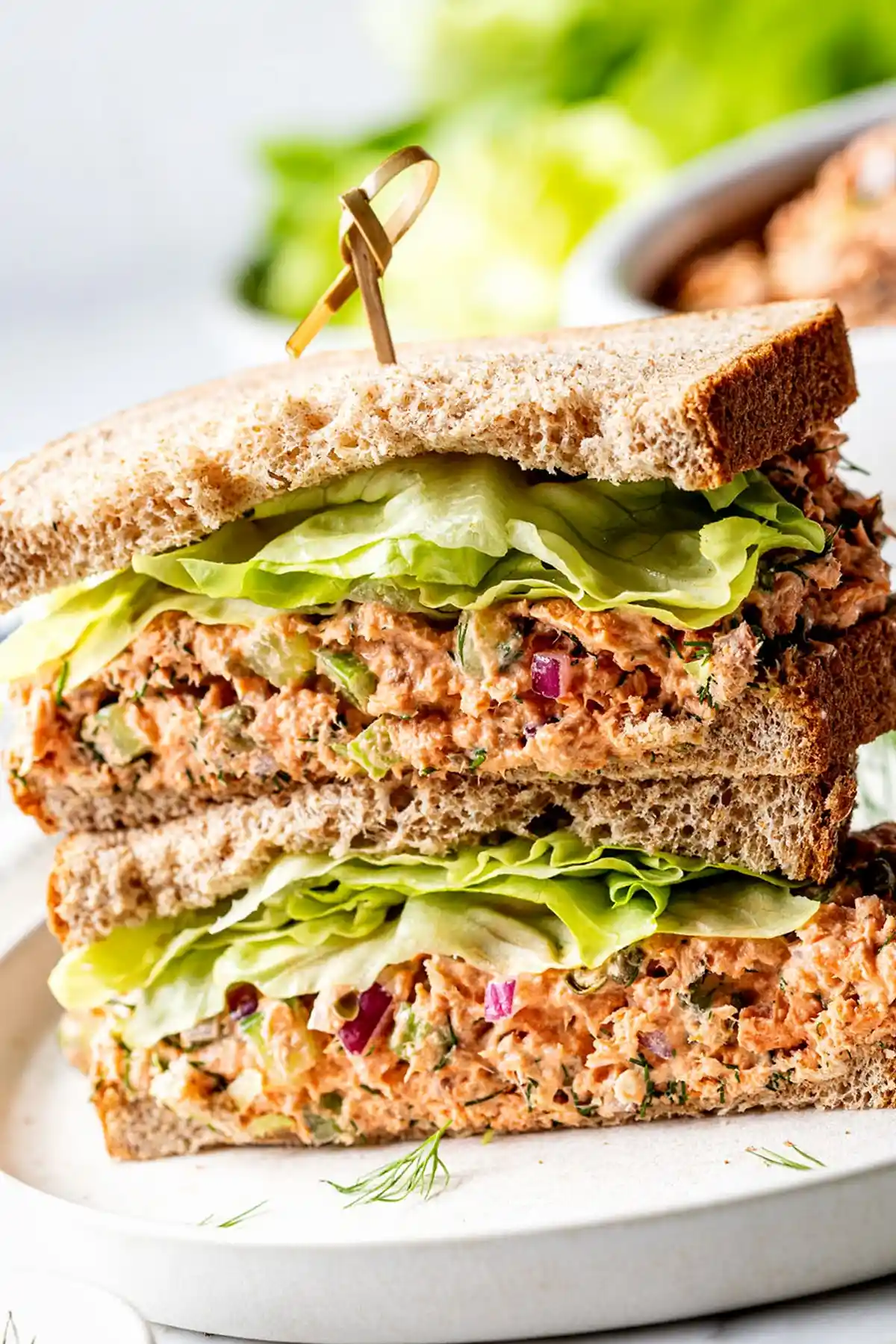
List of ingredients
- 2 6-ounce cans wild salmon – provides a lean, omega-3 rich protein base.
- 1 stalk celery, diced – adds a necessary fresh crunch and fiber.
- 3 tablespoons red onion, diced – provides a sharp, pungent contrast to the creamy dressing.
- 1 Persian cucumber, diced – contributes a cool, crisp texture without excess seeds.
- 2 tablespoons capers, chopped – adds a briny, salty pop of flavor.
- 2 tablespoons mayonnaise – ensures a rich and smooth consistency.
- 2 tablespoons plain Greek yogurt – increases protein content and lightens the texture.
- 1/4 cup fresh chopped herbs (such as dill) – brings a bright, aromatic finish.
- Salt and pepper to taste – used to balance and enhance all other flavors.
step-by-step instructions
- Drain: Pour out the excess liquid from the canned salmon to prevent the salad from becoming too watery.
- Combine: Place the drained salmon in a large mixing bowl and add the diced celery, red onion, cucumbers, chopped capers, fresh dill, mayonnaise, Greek yogurt, salt, and pepper.
- Mix: Use a spoon or fork to stir all components together until the dressing evenly coats the fish and vegetables.
Optimizing Your Salmon Selection
Use Wild-Caught Sockeye for Richer Flavor
Wild-caught sockeye salmon generally offers a deeper red color and a more robust taste than farm-raised varieties. It is typically leaner and contains a higher concentration of omega-3 fatty acids. This makes it an ideal choice for a salad where the fish needs to stand up against bold ingredients like capers and red onion.
Remove Salmon Bones for a Smoother Texture
Many canned salmon brands include soft, edible bones and skin. While these are nutrient-dense, some prefer a smoother consistency. Use a fork to gently flake the meat and pick out any larger bone fragments before adding the other ingredients to the bowl.
Choose Low-Sodium Cans to Control Salt
Canned fish can often be high in sodium used for preservation. To better control the salt levels of your final dish, select cans labeled as low-sodium or no-salt-added. This allows you to adjust the seasoning precisely with salt and pepper at the end.
Customizing the Creamy Base
Increase Greek Yogurt for Lower Calories
If you want to reduce the calorie count and increase the protein, you can replace the mayonnaise entirely with plain Greek yogurt. The result is a tangier, lighter salad that maintains a creamy mouthfeel. This is a great option for those following a strict fitness or weight-loss plan.
Use Full Mayonnaise for Traditional Creaminess
For a more classic, rich taste, you can omit the Greek yogurt and use only mayonnaise. This increases the fat content but provides a smoother, more traditional deli-style flavor profile. This version is often preferred when serving the salad on heartier breads like rye or sourdough.
Substitute Avocado for a Plant-Based Creamy Base
To avoid dairy and processed oils, replace both the mayo and yogurt with mashed ripe avocado. The healthy fats in the avocado provide a creamy texture that pairs exceptionally well with the briny capers. Be aware that avocado-based salads oxidize faster and should be eaten sooner.
Vegetable Variations for Texture
Dice Persian Cucumbers Small for Uniformity
Persian cucumbers are preferred over standard garden cucumbers because they have thinner skins and fewer seeds. Dice them into small, uniform cubes to ensure every bite contains a balanced mix of ingredients. This prevents the cucumber from overpowering the delicate flavor of the salmon.
Swap Red Onions for Green Onions to Reduce Sharpness
Red onions provide a strong bite that some find too intense. Substituting them with thinly sliced green onions or scallions offers a milder, sweeter onion flavor. This variation is particularly useful if you are packing the salad for a workplace lunch where strong smells might be an issue.
Incorporate Finely Chopped Bell Peppers for Color
Adding a tablespoon of finely diced red or orange bell pepper introduces a sweet note and vibrant color. The peppers provide an additional layer of crunch that complements the celery. This is a simple way to increase the vitamin C content of the meal.
Flavor Enhancements and Add-ins
Add Fresh Lemon Juice for Bright Acidity
A squeeze of fresh lemon juice helps cut through the richness of the mayonnaise and Greek yogurt. The acidity brightens the entire dish and prevents the salmon from tasting too heavy. Add one teaspoon of juice just before serving for the best effect.
Mix in Fresh Parsley for Earthy Notes
While dill is the classic pairing for salmon, adding a tablespoon of chopped flat-leaf parsley provides a fresh, earthy balance. The combination of dill and parsley creates a more complex herb profile. This is especially effective if you are using a more oily variety of canned salmon.
Use Dijon Mustard for a Tangy Kick
Adding a teaspoon of Dijon mustard to the dressing introduces a sophisticated, spicy undertone. Mustard acts as an emulsifier, helping the mayo and yogurt blend more seamlessly. It also enhances the saltiness of the capers for a more gourmet taste.
Serving Suggestions
Serve on Sourdough Bread for a Hearty Meal
Toasted sourdough provides a sturdy base and a slight tang that pairs well with the creamy salad. Lightly butter the toast before adding the salmon mixture to prevent the bread from getting soggy. This makes the recipe a filling lunch or a light dinner.
Use Romaine Lettuce Leaves for Low-Carb Wraps
For a keto-friendly or gluten-free option, scoop the salmon salad into chilled Romaine or butter lettuce leaves. The crispness of the lettuce replaces the need for bread while keeping the meal light. This is an excellent choice for warm weather lunches.
Top Cucumber Slices for a Light Appetizer
Thickly sliced English cucumbers can serve as edible crackers for the salmon salad. Place a dollop of the mixture on each slice and garnish with an extra sprig of dill. This presentation is ideal for parties or as a healthy appetizer.
Pair with Whole Grain Crackers for Snacking
Serving the salad alongside whole grain or seed crackers provides a satisfying crunch and extra fiber. This allows guests to control their portions and enjoy the salad as a dip. It is a convenient way to serve the dish during a casual gathering.
Storage and Freshness
Use Glass Containers for Better Freshness
Store the prepared salmon salad in a glass airtight container to keep it fresh. Glass does not absorb odors from the onion and fish, ensuring the flavor remains clean. It also keeps the salad colder than plastic containers when stored in the fridge.
Store for a Maximum of Four Days
While the flavors meld and improve after the first few hours, the salad should be consumed within three to four days. Beyond this point, the vegetables may lose their crunch and the dressing may separate. Always keep the container sealed to prevent the salmon from absorbing other fridge odors.
Avoid Reheating in the Microwave
Salmon salad is designed to be eaten cold or at room temperature. Heating the mixture in a microwave will cause the mayonnaise and yogurt to break down, resulting in an oily, unappealing texture. If the salad is too cold, let it sit on the counter for ten minutes before serving.
Meal Prep Strategy
Pre-Dice Vegetables for Faster Assembly
To save time during the week, dice the celery, onions, and cucumbers in advance. Store them in a separate container from the salmon and dressing. Mix the ingredients together only when you are ready to eat to ensure maximum crispness.
Store Dressing Separately for Long-Term Prep
If you are prepping for more than two days, mix the mayo, yogurt, and herbs in a small jar. Keep the fish and vegetables in another container. Combine them immediately before serving to prevent the vegetables from releasing water into the dressing.
Divide into Individual Portion Cups for Work
For easy grab-and-go lunches, divide the finished salad into small individual portion containers. This eliminates the need to scoop from a large bowl each morning. Ensure the lids are tight to prevent leakage during transport.
Troubleshooting Common Issues
Squeeze Out Excess Cucumber Water to Avoid Sogginess
Cucumbers can release a significant amount of water after being salted, which may make the salad runny. To prevent this, dice the cucumbers and let them sit in a colander for five minutes. Pat them dry with a paper towel before stirring them into the salmon.
Balance Over-Salted Salad with Extra Yogurt
If the capers or added salt make the salad too salty, do not add more salt. Instead, stir in an extra tablespoon of plain Greek yogurt. The creaminess and slight acidity of the yogurt neutralize the excess salt without altering the overall flavor profile.
Add More Herbs to Mask a Strong Fishy Taste
Some canned salmon can have a very strong scent and flavor. If the fish taste is too dominant, increase the amount of fresh dill or add a bit more lemon juice. These fresh, acidic elements balance the oiliness of the fish and lighten the overall taste.
Frequently Asked Questions
Can I use fresh salmon instead of canned?
Yes, you can use fresh salmon by poaching or grilling it first. Once cooked, let it cool completely before flaking it with a fork and mixing it with the other ingredients.
How do I remove the bones from canned salmon?
Use a fork to gently flake the salmon in a bowl. You can easily identify the small bones and skin fragments and lift them out before adding the vegetables and dressing.
What is the best substitute for capers?
Finely chopped dill pickles or cornichons are the best substitutes. They provide a similar briny and acidic pop that balances the creamy elements of the salad.
Is canned salmon healthy for daily consumption?
Canned salmon is a great source of omega-3s and protein. However, it is best to consume it in moderation, a few times a week, due to the potential for mercury in larger fish species.
How can I make this recipe vegan?
Replace the salmon with mashed chickpeas, use vegan mayonnaise, and swap the Greek yogurt for a cashew-based cream or vegan yogurt alternative.
Print
Easy Canned Salmon Salad with Greek Yogurt
- Total Time: 10 minutes
- Yield: 4 servings 1x
- Diet: Gluten free, Low carb, Keto
Description
This Canned Salmon Salad takes just minutes to make and is packed with fresh flavor and over 20 grams of protein per serving. Made with canned salmon, crisp celery and cucumber, capers, fresh dill, and a creamy mayo-and-Greek-yogurt dressing, it’s a light and healthy lunch that’s perfect for sandwiches, lettuce wraps, crackers, or easy meal prep.
Ingredients
- 2 6-ounce cans wild salmon
- 1 stalk celery, diced
- 3 tablespoons red onion, diced
- 1 Persian cucumber, diced
- 2 tablespoons capers, chopped
- 2 tablespoons mayonnaise
- 2 tablespoons plain Greek yogurt
- 1/4 cup fresh chopped herbs (dill)
- salt and pepper to taste
Instructions
- Step 1: Drain the liquid for the salmon cans.
- Step 2: In a large bowl, combine salmon, celery, red onion, cucumbers, capers, dill, mayo, Greek yogurt, salt and pepper.
- Step 3: Stir to combine and enjoy!
Notes
To make this recipe dairy-free, use all mayonnaise and skip the yogurt. To keep the salad lighter, skip the mayo and use all Greek yogurt. Salmon salad will last up to 3 days in the fridge when stored in an airtight container.
- Prep Time: 10 minutes
- Cook Time: 0 minutes
- Category: Lunch, Salad
- Method: Mixing
- Cuisine: American
Nutrition
- Serving Size: 1 serving
- Calories: 177 kcal
- Sugar: 1 g
- Sodium: 491 mg
- Fat: 10 g
- Saturated Fat: 2 g
- Unsaturated Fat: 8 g
- Trans Fat: 0 g
- Carbohydrates: 2 g
- Fiber: 1 g
- Protein: 21 g
- Cholesterol: 74 mg