This sheet pan meal combines tender salmon and roasted Brussels sprouts with a sweet honey garlic glaze. It is a fast, nutritious dinner that minimizes cleanup by using a single baking tray.
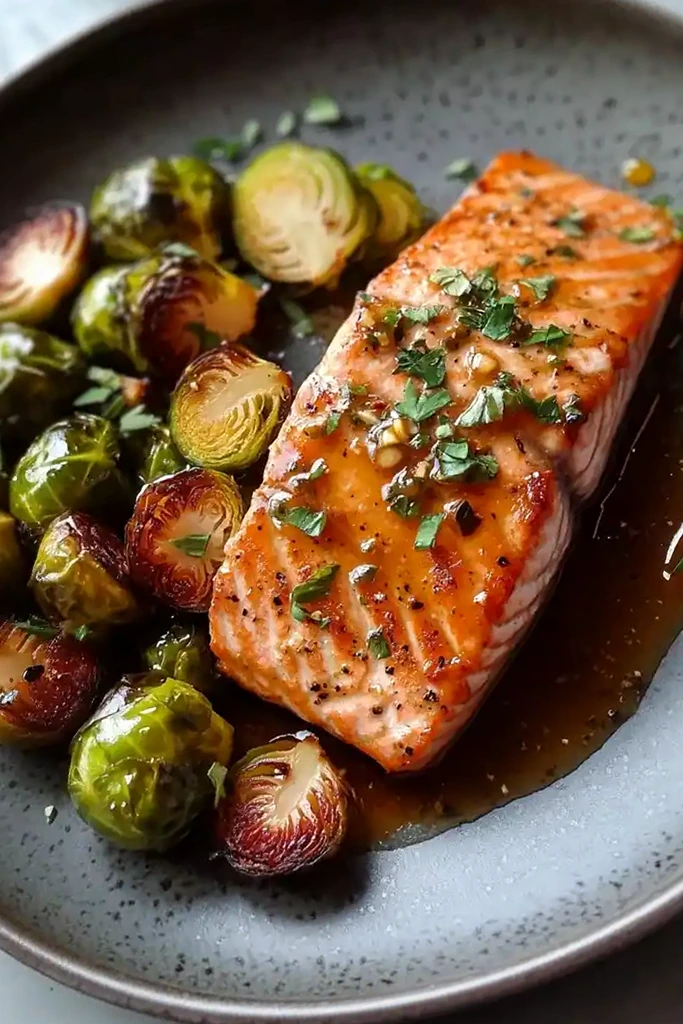
List of ingredients
- 4 salmon fillets (skin-on or skinless) – ensure they are similar in size for even cooking.
- 1 pound Brussels sprouts (trimmed and halved) – remove any damaged outer leaves.
- 2 tablespoons olive oil – used for roasting the vegetables.
- Salt and black pepper (to taste) – essential for enhancing the natural flavors.
- 3 tablespoons honey – provides the base sweetness for the glaze.
- 3 cloves garlic (minced) – adds a pungent, savory depth.
- 2 tablespoons soy sauce – contributes umami and saltiness.
- 1 tablespoon Dijon mustard – adds tang and helps emulsify the sauce.
- 1 tablespoon lemon juice – cuts through the richness of the salmon.
- ½ teaspoon red pepper flakes (optional) – adds a subtle hint of heat.
step-by-step instructions
- Prep the Ingredients: Preheat your oven to 400°F (200°C). Line a large baking sheet with parchment paper or aluminum foil to prevent sticking and simplify cleanup. Trim the stems of the Brussels sprouts and cut them in half lengthwise.
- Make the Honey Garlic Glaze: In a small mixing bowl, whisk together the honey, minced garlic, soy sauce, Dijon mustard, lemon juice, and red pepper flakes. Stir until the honey is fully integrated and the mixture is smooth. Set this aside for later use.
- Roast the Brussels Sprouts: Place the halved Brussels sprouts on the prepared baking sheet. Drizzle them with olive oil and season generously with salt and black pepper, tossing them to ensure an even coating. Spread the sprouts in a single layer and roast in the oven for 15 minutes.
- Add the Salmon and Glaze Everything: Remove the pan from the oven and shift the roasted sprouts to one side. Place the salmon fillets on the empty side of the tray. Brush each fillet generously with the honey garlic glaze and return the pan to the oven for 10-12 minutes, or until the salmon flakes easily with a fork.
- Broil for Extra Caramelization (Optional): Switch the oven setting to broil for 1-2 minutes to create crispy edges on the sprouts and a charred finish on the glaze. Drizzle any remaining glaze over the fish and vegetables before serving.
Pro Techniques for Salmon Preparation
Room Temperature Salmon for Even Cooking
Allow your salmon fillets to sit at room temperature for about 15 to 20 minutes before cooking. This prevents the outside from overcooking while the center remains cold. It ensures a more uniform texture throughout the fillet.
Patting Salmon Dry for Better Searing
Use a paper towel to remove excess moisture from the surface of the salmon. Dry fish creates a better surface for the glaze to adhere to and promotes better browning. This simple step prevents the fish from steaming in its own juices.
Avoiding Overcooking with a Meat Thermometer
Use an instant-read thermometer to check the internal temperature of the thickest part of the fillet. Salmon is perfectly cooked when it reaches 145°F (63°C), though some prefer it at 135°F for a more tender center. This removes the guesswork and prevents the fish from becoming dry.
Selecting the Right Cut of Salmon
Center-cut fillets provide a consistent thickness, which is ideal for sheet pan roasting. If using skin-on fillets, place them skin-side down to protect the flesh from direct heat. This helps keep the moisture locked inside the fish.
Vegetable Alternatives and Pairings
Substituting Broccoli for Brussels Sprouts
Broccoli florets work exceptionally well with the honey garlic glaze. Since broccoli cooks slightly faster than sprouts, add them to the pan about 5 minutes after the initial roasting time. Ensure the florets are small and uniform for a quick roast.
Adding Carrots for Extra Sweetness
Carrots add a vibrant color and a natural sweetness that complements the honey glaze. Slice them into thin coins or matchsticks so they cook at the same rate as the sprouts. Toss them in olive oil and salt along with the primary vegetables.
Using Asparagus for a Quicker Roast
Asparagus is a great alternative if you are short on time. Because asparagus cooks very quickly, add it to the pan at the same time as the salmon. This ensures the spears remain crisp-tender rather than becoming mushy.
Incorporating Cauliflower for Low-Carb Volume
Cauliflower florets provide a hearty texture and soak up the glaze beautifully. Like Brussels sprouts, they require a head start in the oven to get golden brown. Roast them for 15 minutes before adding the salmon to the tray.
Glaze Customization and Flavor Tweaks
Reducing the Sweetness of the Honey
If you prefer a more savory profile, reduce the honey to two tablespoons and increase the soy sauce. This shifts the balance away from sweetness toward a saltier, more umami-forward glaze. It is particularly effective when serving with salty side dishes.
Increasing Heat with Chili Flakes
For those who enjoy a spicy kick, increase the red pepper flakes to a full teaspoon. You can also add a teaspoon of Sriracha or minced fresh jalapeños to the glaze. This heat cuts through the richness of the salmon oils.
Adding Fresh Ginger for an Asian Twist
Grate a teaspoon of fresh ginger into the glaze mixture. Ginger adds a bright, zesty note that pairs perfectly with garlic and soy sauce. This creates a more complex flavor profile reminiscent of traditional stir-fry sauces.
Using Maple Syrup as a Honey Substitute
Maple syrup is a direct substitute for honey and offers a deeper, woodsy sweetness. Use the same measurement as the honey in the original recipe. It pairs exceptionally well with the earthy flavor of the Brussels sprouts.
Serving and Plating Suggestions
Fluffy Quinoa for Nutrient Density
Serving this meal over a bed of quinoa adds a complete protein source and a nutty flavor. The quinoa absorbs the excess honey garlic glaze from the pan. It turns a simple sheet pan meal into a more filling feast.
Cauliflower Rice for Low-Carb Dining
Sautéed cauliflower rice is an excellent choice for those following a keto or low-carb diet. It provides a light base that doesn’t overpower the taste of the glaze. Season it with a bit of lemon zest to mirror the flavors in the salmon.
Creamy Mashed Potatoes for Comfort
For a heartier meal, serve the salmon and sprouts alongside garlic mashed potatoes. The creaminess of the potatoes balances the acidity of the lemon and the sharpness of the Dijon mustard. This is ideal for a cozy family dinner.
Wild Rice for a Rustic Texture
Wild rice offers a chewy texture and earthy taste that complements roasted vegetables. Cook the rice in vegetable broth instead of water for added depth. Spoon the remaining pan glaze over both the rice and the salmon.
Storage and Preservation Methods
Refrigeration Best Practices
Store leftover salmon and Brussels sprouts in an airtight glass container. Ensure the food has cooled slightly before sealing to prevent excess condensation. These leftovers will remain fresh and safe to eat for up to three days.
Freezing Salmon Fillets Properly
If you have extra cooked salmon, wrap it tightly in foil and place it in a freezer-safe bag. It can be stored for up to two months without losing significant quality. Note that the texture may change slightly upon thawing.
Managing Glaze Separation
The honey garlic glaze may separate or thicken when refrigerated. To fix this, stir the sauce vigorously or add a teaspoon of warm water before reheating. This restores the smooth consistency and ensures it coats the food evenly.
Reheating for Optimal Quality
Oven Reheating for Texture
The best way to reheat this meal is in a 350°F oven for about 10 minutes. Place the food on a baking sheet and cover loosely with foil to prevent the salmon from drying out. This method maintains the crispness of the Brussels sprouts.
Microwave Reheating for Speed
If you are in a hurry, use the microwave in short 30-second bursts. Use a medium power setting to avoid overcooking the salmon, which can become rubbery. Cover the dish with a damp paper towel to retain moisture.
Air Fryer Reheating for Crispiness
An air fryer is ideal for restoring the crunch to the Brussels sprouts. Heat at 350°F for 3-5 minutes, adding the salmon only in the last two minutes. This provides a texture very close to the original fresh-cooked version.
Common Cooking Challenges and Fixes
Fixing Burnt Honey Glaze
If the glaze burns during the broiling process, gently scrape the charred bits off with a knife. You can mask any bitter taste by drizzling a small amount of fresh lemon juice over the fillets. Next time, reduce the broiling time or lower the temperature.
Preventing Mushy Brussels Sprouts
Mushiness usually occurs when the pan is overcrowded, causing the vegetables to steam instead of roast. Use a larger baking sheet or roast the sprouts in two batches. Ensure there is plenty of space between the sprouts for air circulation.
Correcting Overcooked Salmon
If the salmon becomes too dry, serve it with a side of melted butter or a dollop of Greek yogurt. The added fat helps compensate for the loss of moisture in the fish. In the future, check the internal temperature a few minutes earlier.
Addressing Uneven Browning
If some sprouts are brown and others are pale, toss them halfway through the roasting process. Ensure the oven rack is in the center position for the most consistent heat distribution. Rotate the pan 180 degrees halfway through cooking.
Frequently Asked Questions
Can I use frozen salmon?
Yes, but you must thaw it completely in the refrigerator before cooking. Pat the thawed fillets dry with a paper towel to remove excess water. Cooking frozen fillets directly can lead to uneven cooking and a watery glaze.
How do I know when salmon is done?
The salmon should be opaque and flake easily when pressed with a fork. The most accurate method is using a thermometer to reach an internal temperature of 145°F. Avoid overcooking to maintain the fillet’s tenderness.
Can I substitute the Brussels sprouts?
Absolutely, you can use broccoli, asparagus, or green beans. Adjust the roasting time based on the density of the vegetable. Thinner vegetables like asparagus should be added later in the cooking process.
Is it okay to use skinless salmon fillets?
Yes, skinless fillets work perfectly well in this recipe. However, be mindful that they may cook slightly faster than skin-on fillets. Monitor the cooking time closely to ensure they don’t overcook.
Can I make the glaze in advance?
Yes, you can prepare the glaze up to two days before cooking. Store it in a sealed jar in the refrigerator. Shake or whisk the glaze before using it to reintegrate the ingredients.
Print
Honey Garlic Salmon and Brussels Sprouts
- Total Time: 35 minutes
- Yield: 4 servings 1x
- Diet: General
Description
This honey garlic salmon and Brussels sprouts recipe proves that healthy eating can be both simple and delicious. With a sweet-savory glaze, crispy Brussels sprouts, and tender salmon, it’s a perfect one-pan meal for any night of the week.
Ingredients
- 4 salmon fillets (skin-on or skinless)
- 1 pound Brussels sprouts (trimmed and halved)
- 2 tablespoons olive oil
- Salt and black pepper (to taste)
- 3 tablespoons honey
- 3 cloves garlic (minced)
- 2 tablespoons soy sauce
- 1 tablespoon Dijon mustard
- 1 tablespoon lemon juice
- ½ teaspoon red pepper flakes (optional)
Instructions
- Step 1: Preheat the oven to 400°F (200°C). Line a baking sheet with parchment paper or aluminum foil for easy cleanup. Trim and halve the Brussels sprouts.
- Step 2: In a small bowl, whisk together honey, garlic, soy sauce, Dijon mustard, lemon juice, and red pepper flakes. Set aside for basting later.
- Step 3: Place the Brussels sprouts on the prepared baking sheet. Drizzle with olive oil, season with salt and black pepper, and toss to coat. Spread them out in an even layer and roast for 15 minutes.
- Step 4: Remove the sheet pan from the oven and push the Brussels sprouts to one side. Place the salmon fillets on the other side. Brush the salmon generously with the honey garlic glaze. Return to the oven and bake for another 10-12 minutes, or until the salmon is cooked through and flakes easily with a fork.
- Step 5: For crispy edges, switch the oven to broil and cook for an additional 1-2 minutes. Drizzle with any remaining glaze before serving.
Notes
Use fresh salmon for the best texture and flavor. Avoid overcrowding the pan to ensure even roasting. You can add other vegetables like carrots, green beans, or asparagus for variety.
- Prep Time: 10 minutes
- Cook Time: 25 minutes
- Category: Main Course
- Method: Roasting
- Cuisine: American
Nutrition
- Serving Size: 1 serving
- Calories: 450 kcal
- Sugar: 18 g
- Sodium: 720 mg
- Fat: 22 g
- Saturated Fat: 5 g
- Unsaturated Fat: 17 g
- Trans Fat: 0 g
- Carbohydrates: 28 g
- Fiber: 7 g
- Protein: 34 g
- Cholesterol: 85 mg