This recipe delivers a rich and savory meal using fresh tomatoes and heavy cream. It is designed for efficiency, taking only 30 minutes from preparation to serving.
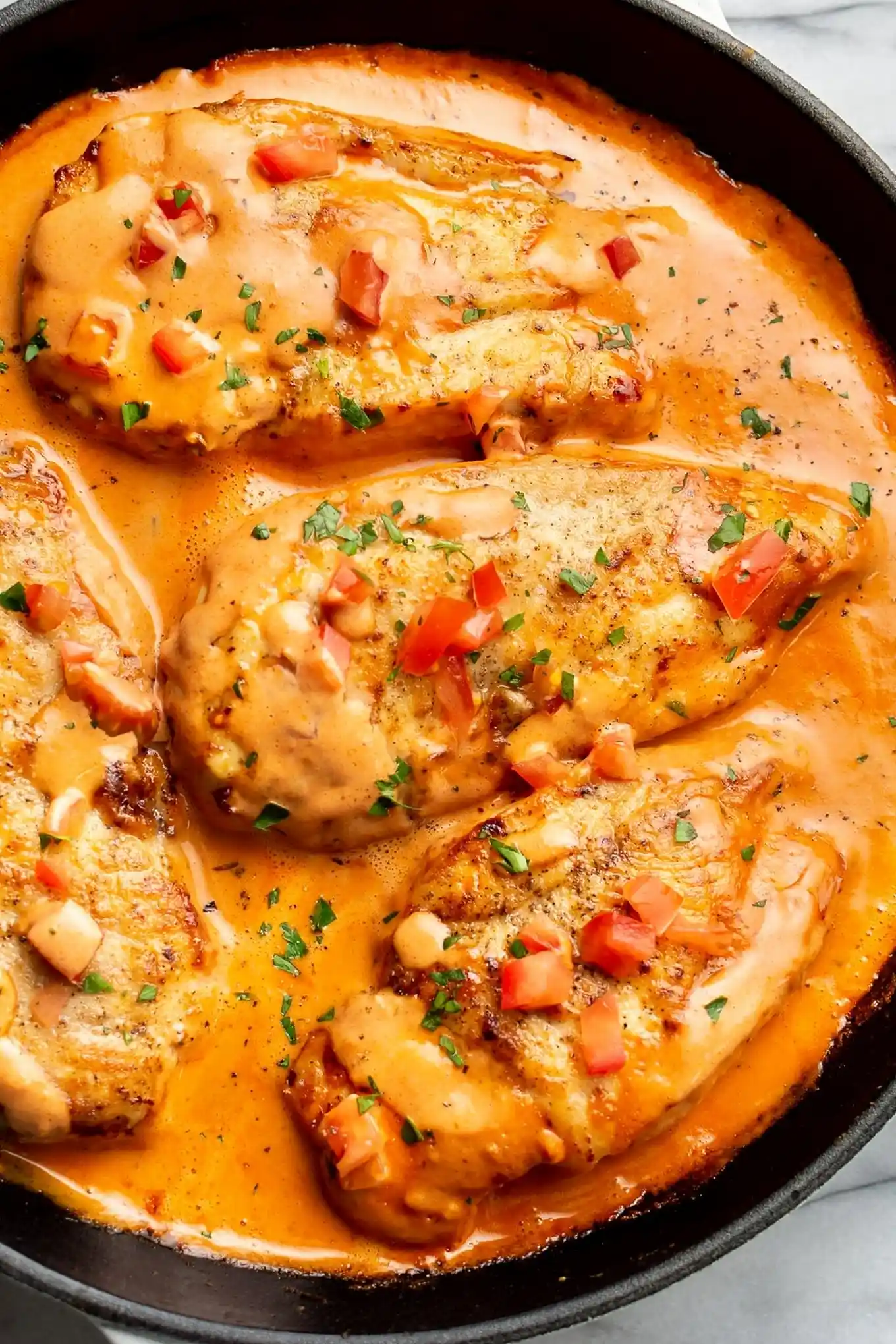
List of ingredients
- 2 chicken breasts – cut in half lengthwise to create 4 thinner cutlets.
- Salt & pepper – to taste for seasoning.
- 1/2 teaspoon garlic powder – for added depth of flavor.
- Flour – used for dredging the chicken.
- 1 tablespoon butter – for frying and flavor.
- 1 tablespoon olive oil – prevents butter from burning.
- 2 cloves garlic – minced finely.
- 3 tablespoons tomato paste – provides concentrated savory notes.
- 1 cup heavy/whipping cream – creates a luxurious, smooth texture.
- 1/4 teaspoon Italian seasoning – a blend of dried herbs.
- 1 medium tomato – chopped into small pieces.
step-by-step instructions
- Prepare the chicken: Cut the chicken breasts in half lengthwise to produce four thinner pieces. Season them with garlic powder, salt, and pepper, then coat each piece evenly in flour.
- Heat the pan: Add the butter and olive oil to a skillet over medium-high heat. Allow the pan to heat thoroughly for a few minutes before adding the meat.
- Sear the chicken: Cook the chicken for approximately 5-6 minutes per side. Ensure they are golden brown and have reached an internal temperature of 165F. Transfer the cooked chicken to a plate.
- Sauté aromatics: Reduce the skillet heat to medium. Add the minced garlic and tomato paste, cooking for 20-30 seconds until fragrant.
- Create the cream sauce: Whisk in the heavy cream and Italian seasoning. Stir continuously until the mixture is smooth and integrated.
- Add fresh tomatoes: Stir in the chopped tomato pieces. Allow the sauce to simmer and cook for another 3-5 minutes to soften the tomatoes.
- Combine and serve: Return the chicken to the skillet. Spoon the sauce over the chicken pieces, add extra salt and pepper if desired, and serve immediately.
Optimal Searing Techniques
Using a Meat Thermometer for Precision
An instant-read meat thermometer is the most reliable way to ensure chicken is safe to eat without overcooking. Probe the thickest part of the breast to ensure it has reached 165F. This prevents the meat from becoming dry or rubbery.
The Importance of Pan Temperature
Heating the butter and olive oil until they shimmer prevents the chicken from sticking. If the pan is too cold, the meat will steam rather than sear, resulting in a pale color. A hot pan creates the Maillard reaction for a deep golden crust.
Managing Pan Space to Avoid Steaming
Avoid overcrowding the skillet, as this drops the surface temperature and releases excess moisture. If the pan is too full, the chicken will boil in its own juices. Work in batches if necessary to maintain a high heat for searing.
The Purpose of Dredging in Flour
Coating the chicken in flour serves three technical purposes: it helps the meat brown more evenly, prevents sticking, and thickens the final sauce. The flour absorbs some of the pan juices, which adds body to the cream sauce.
Ingredient Variations and Substitutions
Incorporating Fresh Baby Spinach
Adding a handful of fresh baby spinach during the final minutes of sauce simmering adds nutritional value and color. Stir the leaves in just until they wilt. This provides a fresh contrast to the rich cream sauce.
Adding Fresh Basil for Aroma
Freshly chopped basil added at the very end of the cooking process enhances the tomato flavor. Avoid cooking the basil for too long, as high heat can destroy its delicate aromatic oils. Simply stir it in before serving.
Switching to Boneless Skinless Thighs
Chicken thighs offer a higher fat content and more flavor than breasts. If using thighs, increase the cooking time by a few minutes per side to ensure they are fully rendered and juicy. They are less likely to dry out during the simmering phase.
Omitting Flour for Low-Carb Needs
You can skip the flour dredging if you are following a low-carb or gluten-free diet. While the chicken will not brown as deeply, it will still cook through. Be aware that the sauce will be slightly thinner without the flour particles.
Recommended Side Pairings
Pairing with Garlic Butter Egg Noodles
Egg noodles provide a neutral base that complements the acidity of the tomato sauce. Toss the noodles in garlic butter and parsley before plating. This adds a rich, comforting element to the meal.
Serving with Creamy Mashed Potatoes
Mashed potatoes are excellent for soaking up the excess tomato cream sauce. Use a mix of butter and warm milk to keep the potatoes light and fluffy. This pairing turns the dish into a hearty comfort meal.
Adding Long-Grain White Rice
Steamed basmati or jasmine rice offers a clean flavor profile that lets the chicken shine. The grains absorb the sauce effectively, making every bite flavorful. For extra depth, cook the rice in vegetable broth instead of water.
Combining with Sautéed Asparagus
Sautéed asparagus adds a crisp texture and earthy flavor to the plate. Cook the spears in olive oil and lemon juice for a few minutes. The acidity of the lemon balances the richness of the heavy cream.
Guidelines for Storage and Freshness
Airtight Container Refrigeration
Store leftovers in a shallow, airtight container to maintain freshness. This dish will keep safely in the refrigerator for 3 to 4 days. Ensure the chicken is fully submerged in the sauce to prevent the meat from drying out.
Low-Heat Reheating Method
Reheat the chicken and sauce in a small saucepan over low heat rather than using a microwave. This prevents the cream from separating or breaking. If the sauce becomes too thick, stir in a splash of cream or water to restore the consistency.
Avoiding Freezing Cream-Based Sauces
Freezing is not recommended for this recipe because cream-based sauces often separate upon thawing. The texture can become grainy or clumpy, ruining the smoothness of the dish. It is best to cook only what you can consume within four days.
Troubleshooting and FAQ
Can I use milk instead of heavy cream?
Using milk or half-and-half is not recommended because the acidity from the tomatoes can cause lower-fat dairy to curdle. Heavy cream contains enough fat to stabilize the sauce against the acid. For a non-dairy alternative, use a full-fat coconut cream.
Is the flour coating necessary?
The flour is not strictly necessary for cooking the meat, but it is highly beneficial for the sauce’s texture. It creates a barrier that helps the chicken sear and adds a thickening agent to the sauce. Without it, the sauce will remain thinner.
Can I use canned diced tomatoes?
You can substitute the fresh tomato with canned diced tomatoes if fresh ones are unavailable. Drain the excess liquid from the can first to avoid thinning the sauce. The flavor will be slightly more acidic and less bright than fresh tomatoes.
How do I stop the sauce from separating?
Keep the heat at a medium or low setting when adding the cream. Boiling the sauce too vigorously can cause the fats to separate from the liquids. Constant whisking ensures a stable emulsion.
What if the sauce is too thick?
If the sauce reduces too much during the simmering phase, whisk in a tablespoon of water or additional cream. Do this slowly until you reach the desired consistency. Remember that the sauce will thicken further as it cools slightly.
Detailed Component Analysis
Understanding the Role of Tomato Paste
Tomato paste provides a concentrated base of umami and color that fresh tomatoes alone cannot achieve. Cooking the paste for 20-30 seconds caramelizes the natural sugars. This removes the raw metallic taste and deepens the overall flavor profile.
The Chemistry of Heavy Cream in Acidic Sauces
Heavy cream acts as a buffering agent that mellows the sharp acidity of the tomato paste and fresh tomatoes. The high fat content creates a silky mouthfeel and binds the ingredients together. It transforms a sharp tomato sauce into a rich, velvety glaze.
Selecting the Best Ripe Tomato
Choose a tomato that is firm but gives slightly under pressure and has a deep red color. Vine-ripened tomatoes offer the best balance of sweetness and acidity. Avoid mealy or overly soft tomatoes, as they will break down too much in the pan.
The Composition of Italian Seasoning
Italian seasoning typically contains a blend of oregano, basil, rosemary, and thyme. Using a pre-mixed blend ensures a consistent flavor profile in every batch. These dried herbs infuse the cream sauce with a classic Mediterranean aroma.
Pan Selection and Maintenance
Choosing the Right Stainless Steel Skillet
Stainless steel is ideal for this recipe because it allows for a high-heat sear and creates a fond. The fond is the brown bit of food stuck to the bottom of the pan. Deglazing this fond with the cream adds immense flavor to the sauce.
Using Non-Stick Pans for Easier Cleanup
Non-stick pans are a viable option if you struggle with sticking, though they may not brown the meat as effectively. Use a silicone spatula to avoid scratching the surface. Ensure the pan is rated for medium-high heat.
The Impact of Cast Iron Heat Retention
Cast iron skillets retain heat exceptionally well, which is great for achieving a thick crust on the chicken. However, they can hold too much heat, so be careful not to burn the garlic. Lower the heat significantly before adding the aromatics.
Flavor Balancing Tips
Adjusting Salt Levels for Paste Brands
Different brands of tomato paste have varying levels of sodium. Taste the sauce before adding final seasonings of salt and pepper. If the paste is very salty, you may only need a pinch of salt at the end.
Balancing Acidity with Extra Cream
If the sauce tastes too tart due to the tomatoes, stir in an extra tablespoon of heavy cream. The fats in the cream neutralize the perceived acidity on the palate. This results in a smoother, more balanced flavor.
Adding Heat with Red Pepper Flakes
For those who prefer a spicy kick, add a pinch of red pepper flakes when sautéing the garlic. The heat infuses into the oil and distributes evenly throughout the cream sauce. This provides a subtle warmth that complements the tomato.
Print
Creamy Tomato Chicken
- Total Time: 30 minutes
- Yield: 4 servings 1x
- Diet: General
Description
This creamy tomato chicken recipe has a bright sauce with fresh tomatoes. It’s ready in 30 minutes for a quick and flavorful meal!
Ingredients
- 2 chicken breasts (cut in half lengthwise)
- Salt & pepper to taste
- 1/2 teaspoon garlic powder
- Flour (for dredging)
- 1 tablespoon butter
- 1 tablespoon olive oil
- 2 cloves garlic (minced)
- 3 tablespoons tomato paste
- 1 cup heavy/whipping cream
- 1/4 teaspoon Italian seasoning
- 1 medium tomato (chopped)
Instructions
- Step: Cut the chicken breasts in half lengthwise (so you have 4 thinner pieces). Sprinkle them with the garlic powder and salt & pepper, and coat them in flour.
- Step: Add the butter and olive oil to a skillet over medium-high heat. Let the pan heat up for a few minutes.
- Step: Cook the chicken for about 5-6 minutes/side or until golden and cooked through (165F). Transfer the chicken to a plate.
- Step: Reduce the heat to medium. Add the garlic and tomato paste to the skillet and cook for about 20-30 seconds.
- Step: Whisk in the cream and Italian seasoning until smooth.
- Step: Stir in the chopped tomato. Let the sauce cook for another 3-5 minutes.
- Step: Add the chicken back to the skillet and spoon some sauce over top. Season with extra salt & pepper if needed, and serve immediately.
Notes
I don’t recommend substituting the cream with something that has a lower fat content as it’s likely to curdle due to the acid in the tomatoes. If needed, you may leave the fresh tomato out. This dish is delicious with a bit of fresh basil added in just prior to serving.
- Prep Time: 10 minutes
- Cook Time: 20 minutes
- Category: Main Course
- Method: Pan Frying
- Cuisine: American
Nutrition
- Serving Size: 1 serving
- Calories: 423 kcal
- Sugar: 2 g
- Sodium: 276 mg
- Fat: 31 g
- Saturated Fat: 17 g
- Unsaturated Fat: 13 g
- Trans Fat: 1 g
- Carbohydrates: 9 g
- Fiber: 1 g
- Protein: 27 g
- Cholesterol: 161 mg