This creamy chicken and noodles dish is a hearty meal featuring a rich homemade sauce and tender chicken. It is designed for a quick preparation time, making it a practical choice for weeknight dinners.
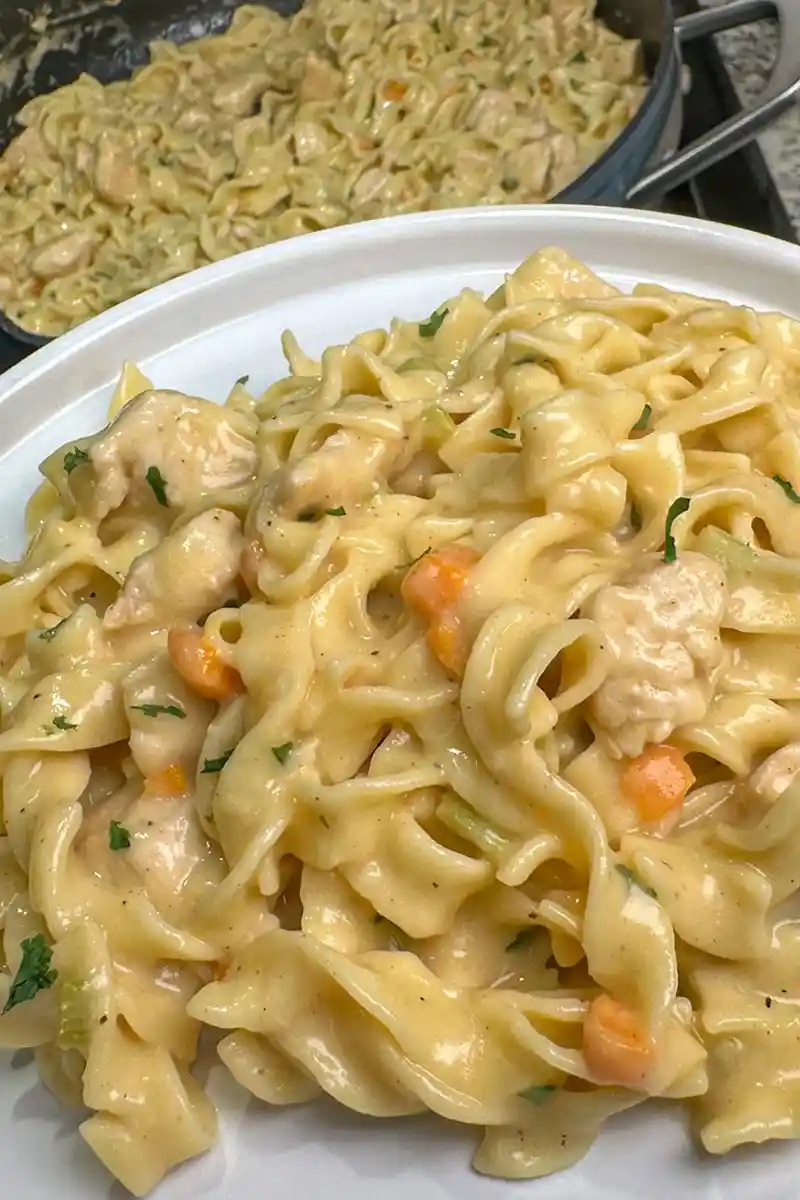
List of ingredients
- 2 Boneless Skinless Chicken Breasts (diced) – provide the main protein.
- 2 teaspoons Olive Oil – used for sautéing and preventing sticking.
- 1 cup Celery (finely diced) – adds aromatic flavor and texture.
- 1 cup Carrots (finely diced) – provides sweetness and color.
- 1/2 Yellow Onion (diced) – creates a savory base for the sauce.
- 1/3 cup All-Purpose Flour – used to thicken the sauce via a roux.
- 5 tablespoons Butter – combines with flour for a rich texture.
- 1 teaspoon Chicken Boullion Powder – enhances the savory depth of the broth.
- 1 teaspoon Onion Powder – adds concentrated onion flavor to the meat.
- 1 teaspoon Garlic Powder – provides a subtle garlic aroma.
- Salt and Black Pepper (to taste) – basic seasoning for balance.
- 1 teaspoon Seasoned Salt – adds complex seasoning to the chicken.
- 5 cups Egg Noodles – the primary starch that holds the sauce.
- 2 cups Chicken Broth – the liquid base for the cream sauce.
- 1/2 cup Heavy Whipping Cream – gives the final sauce its creamy consistency.
step-by-step instructions
- Cook the noodles: Prepare the egg noodles according to the package directions. Drain them and set aside.
- Sear the chicken: Heat 1 teaspoon of olive oil in a large skillet over medium-high heat. Add diced chicken and season with seasoned salt, onion powder, and garlic powder. Cook for 6-7 minutes until fully cooked, then remove from the pan and set aside.
- Sauté the aromatics: Lower the heat and add butter and 1 teaspoon of olive oil. Stir in diced onions, carrots, and celery. Sauté until the vegetables are soft and fragrant.
- Create the roux: Sprinkle all-purpose flour over the vegetables. Stir constantly for 2-3 minutes to cook out the raw flour taste.
- Build the sauce: Slowly whisk in the chicken broth. Bring to a simmer until thickened. Stir in chicken bouillon powder, salt, and black pepper. Turn off the heat and stir in the heavy whipping cream.
- Combine and serve: Return the cooked noodles and chicken to the skillet. Stir until well combined and heated through.
Advanced Cooking Techniques for Better Results
Deglaze the Pan for Maximum Flavor
After searing the chicken, small browned bits called fond remain on the bottom of the skillet. When you add the broth later, these bits dissolve and integrate into the sauce. To maximize this, ensure the pan is hot enough to brown the meat without burning it.
Manage the Roux Temperature
The roux is the combination of butter and flour that thickens the sauce. Cooking it for 2-3 minutes on low heat ensures the flour is cooked through, removing any raw grain taste. Avoid high heat during this stage to prevent the flour from browning too quickly or burning.
Emulsify the Heavy Cream
Always remove the skillet from the heat source before stirring in the heavy whipping cream. This prevents the dairy from breaking or curdling due to excessive heat. Stirring it in at the end preserves the smooth, velvety texture of the sauce.
Preventing Overcooked Noodles
Cook the egg noodles until they are just al dente, meaning they still have a slight bite. Since the noodles will be added back into a simmering sauce, they will continue to cook slightly. This prevents the pasta from becoming mushy in the final dish.
Ingredient Modifications and Substitutions
Using Rotisserie Chicken for Speed
If you are short on time, substitute the raw chicken breasts with pre-cooked rotisserie chicken. Shred the meat and add it to the skillet during the final step. This reduces the total cooking time by approximately 10 minutes.
Substituting Chicken Thighs for Breasts
Chicken thighs can be used instead of breasts for a richer flavor and more moisture. Thighs are less likely to dry out during the searing process. Ensure they are diced into uniform sizes to maintain consistent cooking times.
Alternative Pasta Options
While egg noodles are traditional, you can use rotini, bowties, or penne. These shapes are effective at capturing the cream sauce in their ridges. Adjust the boiling time based on the specific pasta type used.
Adding Extra Vegetables
To increase the nutritional value, stir in frozen peas, corn, or sliced mushrooms. Add these during the vegetable sauté phase or at the very end for a brighter color. Mushrooms add an earthy depth that complements the chicken broth.
Storage and Preservation Guidelines
Refrigeration and Shelf Life
Store leftover chicken and noodles in an airtight container in the refrigerator. The dish remains safe to eat for 3 to 4 days. Ensure the food is cooled to room temperature before sealing to prevent excessive moisture buildup.
Why Freezing is Not Recommended
Cream-based sauces and cooked noodles often separate or become grainy when frozen and thawed. The starch in the noodles can break down, leading to a mushy texture. For the best quality, it is better to refrigerate rather than freeze this meal.
Safe Cooling Procedures
Do not leave the cooked dish at room temperature for more than two hours. Transferring it to shallow containers helps the food cool more quickly and evenly. This reduces the risk of bacterial growth during the cooling process.
Reheating Instructions for Best Texture
Stovetop Reheating Method
Place the leftovers in a small pan over low to medium heat. Add a splash of chicken broth or whole milk to loosen the thickened sauce. Stir gently until the dish is heated through without scorching the bottom.
Microwave Reheating Tips
Heat the food in short 30-second intervals, stirring between each burst. Adding a teaspoon of water or milk helps the sauce re-emulsify. This prevents the chicken from becoming rubbery and the sauce from drying out.
Adjusting Sauce Consistency
Since the noodles absorb liquid as they sit, the sauce will be thicker upon reheating. Incorporating a small amount of liquid, such as broth, restores the original creamy consistency. Avoid adding too much liquid at once to prevent the sauce from becoming watery.
Troubleshooting Common Issues
Fixing Lumpy Sauce
If the flour does not incorporate smoothly, you may end up with lumps in the sauce. Use a whisk instead of a spoon to break up the clumps as you add the broth. If lumps persist, you can carefully strain the sauce or use an immersion blender.
Balancing Overly Salty Sauce
If the bouillon and seasoned salt make the dish too salty, add a small amount of unsalted chicken broth or extra heavy cream. This dilutes the salt concentration without altering the flavor profile. A small amount of lemon juice can also brighten the flavor and cut through the salt.
Handling Thin Sauce
If the sauce is too thin after simmering, allow it to cook for an additional 3-5 minutes on low heat. The reduction process evaporates excess water and concentrates the roux. Ensure you stir frequently to prevent the bottom from burning.
Frequently Asked Questions
What to serve with chicken and noodles?
This meal pairs well with light, acidic, or fresh sides to balance the richness of the cream. Consider serving a crisp green salad with a vinaigrette, steamed green beans, or roasted broccoli. For a sweet contrast, a fruit-based dessert like peach cobbler is a traditional choice.
Can I add vegetables to creamy chicken and noodles?
Yes, you can easily customize the vegetable mix. While carrots, celery, and onions provide the base, adding peas, corn, or mushrooms makes the dish heartier. Sauté these along with the mirepoix or stir them in at the end.
Can I use different noodles?
Any pasta will work in a pinch, but egg noodles are preferred for their texture and ability to hold heavy sauces. If using regular wheat pasta, be sure to cook it al dente. Wider noodles like pappardelle are also an excellent alternative.
Planning and Make-Ahead Tips
Prepping Vegetables in Advance
You can dice the carrots, celery, and onions several hours before cooking. Store them in a single container to create a ready-to-use mirepoix. This significantly reduces the active prep time on the day of the meal.
Searing Chicken Ahead of Time
Chicken can be diced and seared in the morning or the day before. Store the cooked chicken in the refrigerator and add it back to the skillet during the final combination step. This allows you to assemble the final dish in under 15 minutes.
Batch Cooking for Meal Prep
This recipe is suitable for batch cooking to provide lunches for the week. Divide the finished meal into individual portions immediately after cooking. Allow them to cool slightly before sealing to maintain the sauce’s integrity.
Print
Creamy Chicken and Noodles
- Total Time: 30 minutes
- Yield: 5 servings 1x
- Diet: General
Description
This creamy chicken and noodles recipe is pure comfort food! Tender chicken, egg noodles, and sautéed veggies come together in a rich, flavorful cream sauce.
Ingredients
- 2 Boneless Skinless Chicken Breasts (diced)
- 2 teaspoons Olive Oil
- 1 cup Celery (finely diced)
- 1 cup Carrots (finely diced)
- ½ Yellow Onion (diced)
- 1/3 cup All-Purpose Flour
- 5 tablespoons Butter
- 1 teaspoon Chicken Boullion Powder
- 1 teaspoon Onion Powder
- 1 teaspoon Garlic Powder
- Salt and Black Pepper (to taste)
- 1 teaspoon Seasoned Salt
- 5 cups Egg Noodles
- 2 cups Chicken Broth
- ½ cup Heavy Whipping Cream
Instructions
- Step: Cook the egg noodles according to the package instructions.
- Step: While the pasta is cooking, heat 1 teaspoon of olive oil in a large skillet over medium-high heat. Once the skillet is hot, add in the diced chicken and season with seasoned salt, onion powder, and garlic powder. Cook for 6-7 minutes, or until the chicken is fully cooked. Remove the chicken from the skillet and set aside.
- Step: Reduce the heat to low and add the butter and 1 teaspoon of olive oil to the skillet. Once the butter is melted, add in the onions, carrots, and celery. Sauté the vegetables over low heat until they are soft and fragrant.
- Step: Sprinkle the flour over the vegetables and stir well to combine. Cook the flour mixture (roux), stirring constantly, for 2-3 minutes.
- Step: Slowly pour in the chicken broth while whisking to combine. Bring the mixture to a simmer as it thickens. Season with chicken bouillon powder, salt, and black pepper. Once the sauce reaches your desired thickness, turn off the heat and stir in the heavy whipping cream until fully incorporated.
- Step: Add the drained egg noodles and cooked chicken back into the skillet. Stir everything together until well combined. Serve and enjoy!
Notes
This recipe works well with boneless, skinless chicken breasts, but rotisserie chicken or chicken thighs can be used if you prefer. Dice the carrots, celery, and onion small so they cook evenly and soften more quickly. Egg noodles are traditional, but any type of pasta you have on hand will work in a pinch. Don’t skip the chicken bouillon powder—it adds rich flavor and brings the sauce to life. If the sauce is to thick, add a splash of chicken broth to loosen it up.
- Prep Time: 10 minutes
- Cook Time: 20 minutes
- Category: Main Course
- Method: Stovetop
- Cuisine: American
Nutrition
- Serving Size: 1 serving
- Calories: 404 kcal
- Sugar: 10 g
- Sodium: 1023 mg
- Fat: 14 g
- Saturated Fat: 7 g
- Unsaturated Fat: 5 g
- Trans Fat: 0.1 g
- Carbohydrates: 52 g
- Fiber: 3 g
- Protein: 18 g
- Cholesterol: 90 mg