This recipe creates a crispy, golden-brown chicken breast smothered in a rich, creamy country gravy. It is a hearty meal that uses a double-dredging technique to ensure a thick, flavorful crust.
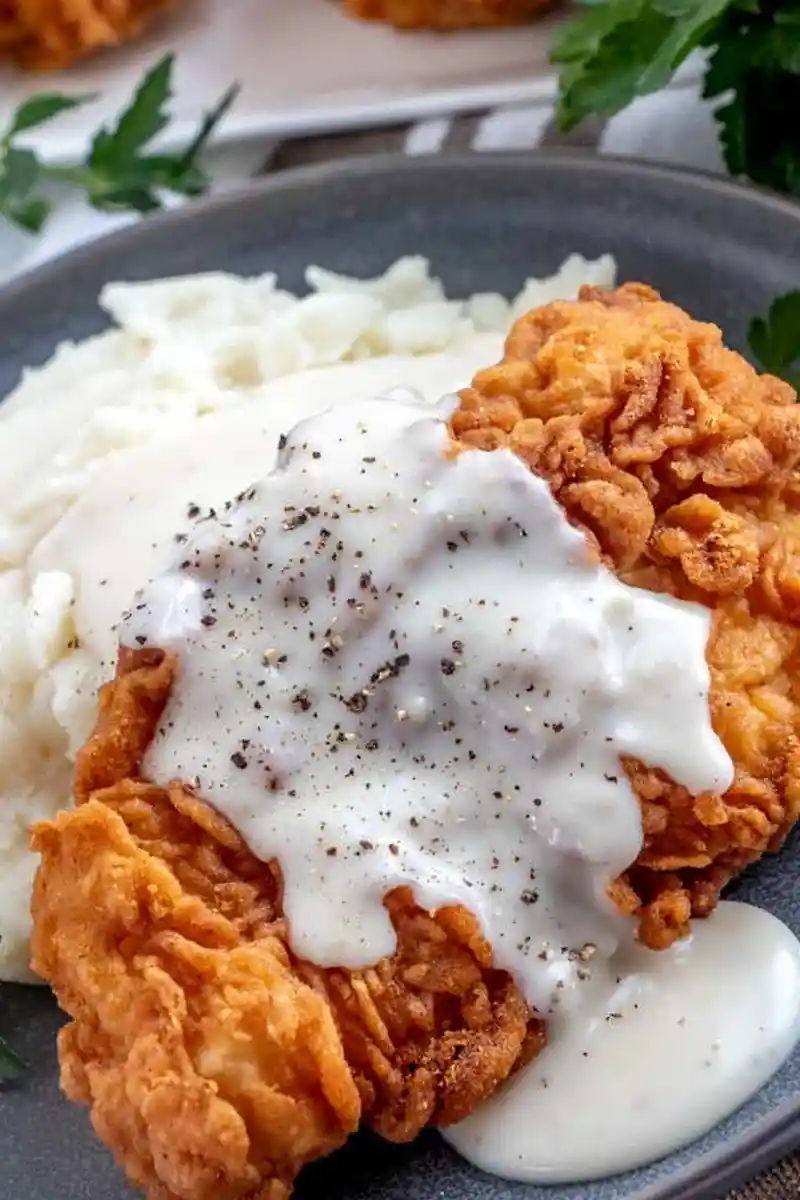
List of ingredients
- 6-8 thin sliced chicken breasts – ensures even and fast cooking.
- 2 cups flour – used for the breading and the gravy base.
- 2 tsp baking powder – adds lightness to the crust.
- 1 tsp baking soda – helps with browning and crispiness.
- 1 tsp salt – basic seasoning for the flour mix.
- 1 tsp pepper – adds a mild spicy kick.
- 1 tsp garlic powder – provides savory depth.
- 1 1/2 cup buttermilk – tenderizes the meat and helps flour stick.
- 1 egg – binds the coating to the chicken.
- 1 Tbs hot sauce – adds a subtle tang and heat.
- Oil for frying – use a high-smoke point oil like vegetable or canola.
- 1/4 cup reserved oil from frying – provides flavor for the gravy.
- 1/3 cup flour – used as a thickener for the sauce.
- 2 cup milk – the liquid base for the creamy gravy.
- Salt & pepper – used to season the gravy to taste.
step-by-step instructions
- Heat the Oil: Fill a deep fryer or large pan with a few inches of oil and heat it to 325 degrees Fahrenheit. Ensure the temperature is stable before adding the meat to prevent oil absorption.
- Prepare Flour Mixture: In a large bowl, whisk together the flour, baking powder, baking soda, salt, pepper, and garlic powder. Mix thoroughly to ensure seasonings are evenly distributed.
- Prepare Wet Wash: In a separate bowl, whisk together the buttermilk, egg, and hot sauce. Make sure the egg is fully integrated and not clumped.
- Coat the Chicken: Dredge each chicken breast in the flour mixture first, then dip into the buttermilk mixture, and return it to the flour. Press the flour firmly into the meat to create a thick, secure crust.
- Fry the Chicken: Carefully place the chicken in the hot oil and fry for 3-5 minutes per side. Remove when golden brown and drain on a paper towel-lined plate.
- Start the Gravy: Add 1/4 cup of the reserved frying oil to a large pan over medium-high heat. Stir in the 1/3 cup of flour and cook for about 1 minute until the flour is absorbed.
- Thicken the Sauce: Slowly pour in the milk while whisking constantly to remove lumps. Heat the mixture until it thickens, then stir in salt and pepper according to your taste.
- Final Assembly: Pour the hot gravy over individual portions of fried chicken immediately before serving.
Optimal Frying Techniques
Maintaining Constant Oil Temperature
Use a kitchen thermometer to keep the oil at 325 degrees Fahrenheit. If the oil is too hot, the breading will burn before the chicken is cooked. If it is too cool, the chicken will absorb excess oil and become greasy.
Avoiding Pan Overcrowding
Fry the chicken in small batches to avoid dropping the oil temperature. Adding too many pieces at once cools the oil rapidly, which prevents the crust from searing quickly. Leave enough space between pieces for them to float freely.
Choosing the Right Frying Oil
Select an oil with a high smoke point such as canola, peanut, or vegetable oil. These oils can handle the heat of deep frying without breaking down or producing off-flavors. Avoid using extra virgin olive oil as it burns at lower temperatures.
Customizing the Breading
Adding Extra Spice to the Crust
Incorporate paprika, cayenne pepper, or onion powder into the flour mixture for a bolder flavor profile. Adjust the amount of cayenne based on your heat preference. Always taste a small amount of the seasoned flour to balance the salt.
Using Gluten-Free Flour Substitutes
Replace the all-purpose flour with a 1:1 gluten-free flour blend that contains xanthan gum. This ensures the coating maintains its structure and adheres to the meat during frying. The cooking time and oil temperature remain the same.
Ensuring a Thick and Crunchy Crust
The double-dredge method is essential for a heavy coating. Pressing the flour firmly into the meat with your palms helps the breading lock in. Let the breaded chicken rest for a few minutes before frying to help the coating set.
Gravy Improvements
Adjusting Gravy Thickness
If the gravy is too thin, simmer it for a few more minutes to reduce the liquid. If it becomes too thick, whisk in a small amount of additional milk or chicken broth. Stir constantly to prevent the bottom from scorching.
Adding Herbal Notes to the Sauce
Stir in a pinch of dried thyme or chopped fresh parsley at the end of the cooking process. These herbs add a fresh contrast to the rich, creamy texture of the country gravy. Keep the herbs minimal to avoid overpowering the traditional flavor.
Preventing Lumps in the Sauce
Always add the milk slowly in a thin stream while whisking vigorously. If lumps form, you can use a handheld immersion blender or a whisk to smooth the sauce. Ensuring the roux (flour and oil) is well-cooked first also helps with smoothness.
Serving Suggestions
Classic Side Pairings
Serve this dish with creamy mashed potatoes to complement the gravy. Steamed green beans or corn on the cob provide a fresh balance to the fried elements. Cheddar biscuits are also a traditional accompaniment.
Adding Fresh Garnish
Top the finished plate with chopped scallions or a sprinkle of fresh parsley. This adds a pop of color and a mild onion flavor that cuts through the richness of the fried chicken. A wedge of lemon on the side can provide a bright acidity.
Balanced Vegetable Options
Pair the meal with a crisp garden salad featuring a vinaigrette dressing. The acidity of the vinegar helps cleanse the palate between bites of heavy gravy. Roasted carrots or steamed broccoli are also nutritious choices.
Storage and Reheating
Refrigeration Guidelines
Store leftover chicken and gravy in separate airtight containers in the refrigerator. The chicken will stay fresh for 3-4 days, while the gravy lasts about 3 days. Keep them separate to prevent the breading from becoming soggy.
Best Reheating Methods
Reheat the chicken in an oven or air fryer at 350 degrees Fahrenheit until warmed through. This restores the crispiness of the crust better than a microwave. Warm the gravy in a small saucepan over low heat, adding a splash of milk if it has thickened too much.
Freezing Leftovers
Flash-freeze the fried chicken on a baking sheet before transferring it to a freezer bag. This prevents the pieces from sticking together. The gravy can be frozen in a sealed container for up to two months, though it may require more whisking after thawing.
Common Troubleshooting
Handling Breaded Coating Slippage
If the breading falls off during frying, it is often because the chicken was too wet when dredged. Pat the chicken breasts dry with paper towels before the first flour coating. Ensure the buttermilk dip is not too thin.
Fixing Undercooked Centers
Thinly slicing the chicken is the best way to prevent raw centers. If the exterior is browning too quickly, lower the oil temperature slightly and increase the frying time. Use a meat thermometer to ensure an internal temperature of 165 degrees Fahrenheit.
Managing Oil Smoke Points
If the oil begins to smoke, it has exceeded its safe temperature. Remove the pan from the heat immediately and let it cool slightly before continuing. Never leave hot oil unattended to avoid fire hazards.
Frequently Asked Questions
Can I bake this instead of frying?
Baking is possible, but the texture will be different. Place the breaded chicken on a wire rack over a baking sheet and bake at 400 degrees Fahrenheit until cooked through, though it will not be as crispy as frying.
What is the best chicken cut for this?
Thin-sliced chicken breasts or pounded chicken breasts work best. They cook quickly and evenly, ensuring the crust doesn’t burn before the meat is done.
Can I use regular milk instead of buttermilk?
Yes, you can substitute regular milk. To mimic buttermilk, add one tablespoon of lemon juice or white vinegar to a cup of milk and let it sit for 5-10 minutes before using.
How do I keep the chicken crispy?
Avoid stacking the fried chicken on top of each other on the draining plate. Use a wire cooling rack instead of paper towels to allow air to circulate around the meat, preventing steam from softening the crust.
Print
Chicken Fried Chicken
- Total Time: 30 minutes
- Yield: 6 servings 1x
- Diet: General
Description
Easy and delicious this Chicken Fried Chicken is a quick and flavorful dinnertime recipe that brings the whole family to the table, with minimal ingredients it’s a simple and comforting meal.
Ingredients
- 6–8 thin sliced chicken breasts
- 2 cups flour
- 2 tsp baking powder
- 1 tsp baking soda
- 1 tsp salt
- 1 tsp pepper
- 1 tsp garlic powder
- 1 1/2 cup buttermilk
- 1 egg
- 1 Tbs hot sauce
- Oil for frying
- 1/4 cup reserved oil from frying
- 1/3 cup flour
- 2 cup milk
- Salt & pepper
Instructions
- Step: Heat oil in deep fryer or large pan on stove (a few inches deep) to 325.
- Step: In large bowl whisk together your flour, baking powder, baking soda, salt, pepper and garlic powder.
- Step: In another bowl whisk together buttermilk, egg and hot sauce.
- Step: Dredge your chicken in the flour mixture then dip into the egg mixture than back into the flour mixture making sure to press down flour to get stuck on the steak real good.
- Step: Place chicken in pan/deep fryer and fry on each side 3-5 minutes until golden brown, remove and drain on paper towel lined plate, repeat with all chicken.
- Step: To make your gravy, in large pan add 1/4″ of oil from cooking and heat on medium-high, stir in your flour until absorbed and cook for about 1 minute.
- Step: Slowly add in your milk whisking to blend and heat until thickened then stir in salt and pepper to desired taste.
- Step: Pour gravy over individual chicken before serving.
Notes
You can use a regular deep fryer to make this instead of in a skillet. If you don’t want to use frying oil to make gravy, substitute butter. We use the thin cut chicken you can buy at the store, but you can use a regular chicken breast and slice it in half.
- Prep Time: 10 minutes
- Cook Time: 20 minutes
- Category: Main Course
- Method: Frying
- Cuisine: American
Nutrition
- Serving Size: 1 serving
- Calories: 490 kcal
- Sugar: 7 g
- Sodium: 869 mg
- Fat: 18 g
- Saturated Fat: 4 g
- Unsaturated Fat: 14 g
- Trans Fat: 0 g
- Carbohydrates: 45 g
- Fiber: 1 g
- Protein: 35 g
- Cholesterol: 114 mg