This Chicken Francese features tender, pan-fried cutlets coated in a bright and buttery lemon sauce. It is a sophisticated yet simple meal that brings restaurant-quality flavor to your home kitchen.
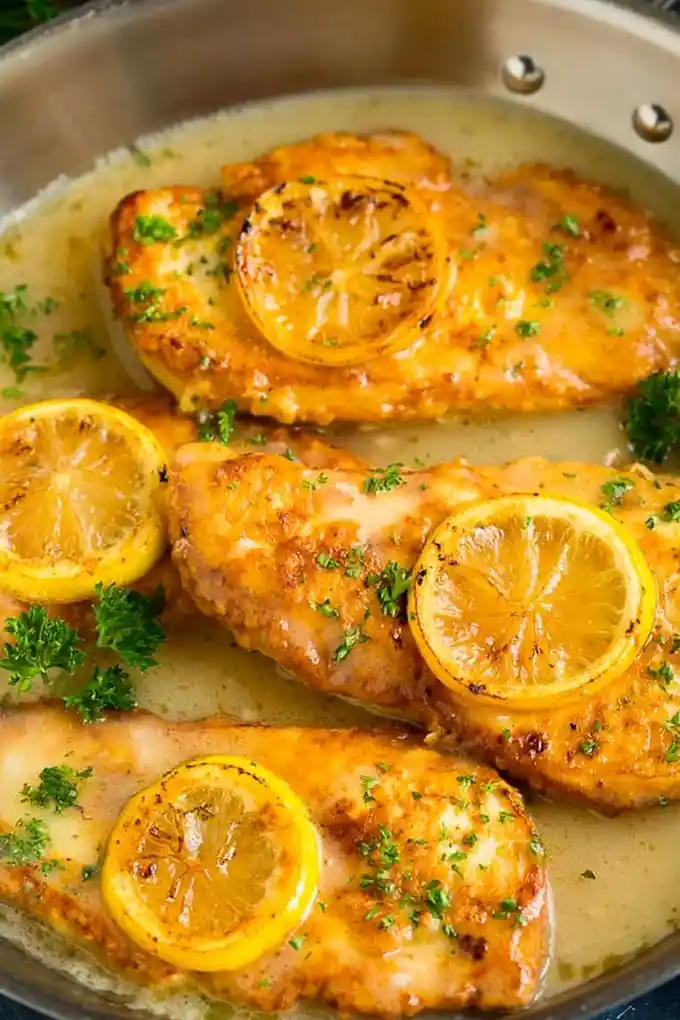
List of ingredients
- 4 boneless skinless chicken breasts (thin cut) – ensure they are of even thickness for uniform cooking.
- 1/3 cup all purpose flour – used for the initial dredging.
- 1 1/4 teaspoons salt – to season the flour and chicken.
- 1/2 teaspoon pepper – provides a base level of spice.
- 2 eggs – creates the binding batter.
- 2 tablespoons milk – thins the egg wash for better coverage.
- 1/4 cup olive oil – used for pan frying the chicken.
- 4 tablespoons butter (divided use) – used for browning lemons and thickening the sauce.
- 1 lemon (thinly sliced) – for flavor and garnish.
- 1 tablespoon all purpose flour – used to create the roux for the sauce.
- 1/2 cup chicken broth (as a substitute for white wine) – provides the savory liquid base.
- 3/4 cup chicken broth – adds volume and depth to the sauce.
- 1 tablespoon lemon juice – adds a fresh, acidic finish.
- salt and pepper to taste – for final seasoning adjustments.
- 2 tablespoons chopped parsley – used as a fresh garnish.
step-by-step instructions
- Prepare the chicken: Place each piece of chicken in between two pieces of plastic wrap. Pound with the flat end of a meat mallet to create thin cutlets.
- Set up dredging stations: Place the flour, salt, and pepper in a bowl and mix until combined. Place the eggs and milk in a small bowl and whisk until smooth.
- Coat the chicken: Heat the olive oil in a large pan over medium high heat. Dredge each chicken cutlet in the flour mixture, then dip it in the egg wash.
- Pan fry: Place the chicken breasts in a single layer in the pan. Cook for 4 minutes per side, or until golden brown and cooked through.
- Rest the meat: Remove the chicken from the pan and cover it to keep warm. Wipe out the pan with a paper towel to remove excess oil.
- Brown the lemons: Heat 1 tablespoon of butter in the pan over medium heat. Add the lemon slices and cook for 2-3 minutes or until they have browned. Remove the lemon slices from the pan.
- Make the roux: Add the remaining butter to the pan and cook until melted. Add 1 tablespoon of flour and cook for one minute, stirring constantly.
- Simmer the sauce: Pour in the 1/2 cup of chicken broth and simmer for 2 minutes. Add the 3/4 cup of chicken broth and simmer for an additional 4-5 minutes until the sauce has just thickened.
- Final touch: Stir in the lemon juice and season with salt and pepper to taste.
- Combine and serve: Return the chicken to the pan. Spoon the sauce over the chicken, then top with the cooked lemon slices and sprinkle with parsley.
Mastering Chicken Preparation
Using a Meat Mallet for Uniform Thickness
Pounding the chicken is the most important step for ensuring the meat cooks evenly. When the thickness is consistent, the edges won’t overcook before the center reaches the safe internal temperature. Use plastic wrap to prevent the meat from tearing or sticking to the mallet.
Slicing Thick Breasts into Cutlets
If you cannot find thin-cut breasts, slice a standard breast in half lengthwise. Place your hand flat on top of the breast and slice horizontally through the middle. This creates two thinner pieces that cook faster and absorb more flavor from the batter.
Working with Chicken Tenders
Chicken tenders are a great alternative for this recipe because they are naturally thin. They require less pounding than full breasts and cook slightly faster. Ensure they are similar in size so they all finish cooking at the same time in the pan.
Perfecting the Battering Process
Achieving a Light Flour Coating
When dredging the chicken, shake off any excess flour before dipping it into the egg. A layer that is too thick can lead to a gummy texture rather than a crisp crust. The goal is a thin, translucent layer of seasoned flour.
Ensuring a Smooth Egg Wash
Whisking the eggs and milk thoroughly prevents streaks of egg white in the batter. The addition of milk helps the egg wash adhere better to the flour-coated chicken. This creates a cohesive seal that keeps the chicken juicy during the frying process.
Avoiding Batter Clumps in the Pan
Dip the chicken into the egg wash quickly and place it immediately into the hot oil. If the batter sits too long on the meat, it may begin to slide off. Gently lay the cutlets into the pan to avoid splashing oil and uneven coating.
Advanced Pan-Searing Techniques
Controlling Oil Temperature
The oil should be shimmering but not smoking before you add the chicken. If the oil is too cold, the chicken will absorb the fat and become greasy. If it is too hot, the outside will burn before the interior is fully cooked.
Preventing Pan Overcrowding
Always cook the chicken in a single layer with space between each piece. Overcrowding the pan drops the oil temperature and causes the chicken to steam rather than sear. Work in batches if your skillet is not large enough.
Timing the Golden Brown Finish
Look for the edges of the chicken to turn a deep golden brown before flipping. Do not flip the meat too frequently, as this can break the crust. Four minutes per side is a general guide, but adjust based on the actual thickness of your cutlets.
Crafting the Lemon Butter Sauce
Browning Lemon Slices for Depth
Searing the lemon slices in butter caramelizes the natural sugars in the fruit. This removes some of the raw acidity and adds a rich, nutty flavor to the final dish. These slices serve as both a flavor component and a visual garnish.
Creating a Stable Roux
Cooking the flour in melted butter for one minute removes the raw flour taste. This roux acts as the thickening agent for the sauce, giving it a velvety consistency. Stir constantly to prevent the flour from browning too deeply or burning.
Balancing the Sauce Acidity
The addition of fresh lemon juice at the very end preserves the bright, citrusy notes. Adding it too early during the simmering process can cause some of the flavor to evaporate. Taste the sauce and add more juice or a pinch of salt to balance the richness of the butter.
Useful Ingredient Substitutions
Replacing the Wine Component
To keep the dish alcohol-free, use an extra half cup of chicken broth. For added complexity and acidity, you can mix the broth with a teaspoon of white grape juice or a splash of apple cider vinegar. This mimics the tartness of a dry white wine.
Gluten-Free Coating Options
Replace the all-purpose flour with a 1:1 gluten-free flour blend or almond flour. Almond flour provides a nuttier flavor and a naturally crispier texture. Ensure the gluten-free blend contains xanthan gum to help the batter stick to the meat.
Using Alternative Fats
If you prefer not to use olive oil, clarified butter or avocado oil are excellent high-smoke-point alternatives. Clarified butter adds a richer flavor to the sear without burning as quickly as regular butter. Avocado oil is a neutral option that allows the lemon flavor to shine.
Serving and Pairing Ideas
Ideal Vegetable Side Dishes
Sautéed spinach or roasted asparagus pair well with the acidity of the lemon sauce. Steamed broccoli or sautéed zucchini also provide a fresh contrast to the richness of the butter. Keep the vegetables lightly seasoned to avoid overpowering the chicken.
Starch Pairings for Sauce Absorption
Serve Chicken Francese over a bed of angel hair pasta or linguine to soak up the lemon butter sauce. Mashed potatoes or a wild rice pilaf are also excellent options for absorbing the extra gravy. A slice of toasted sourdough bread can be used to clean the plate.
Adding Fresh Garnishments
While parsley is the traditional choice, fresh basil or chives add a different aromatic dimension. A sprinkle of shaved Parmesan cheese over the top provides a salty contrast to the lemon. Freshly cracked black pepper added at the end enhances the visual appeal.
Storage and Reheating Advice
Refrigeration Guidelines
Store leftovers in an airtight container in the refrigerator for up to three days. Keep the chicken and the sauce in the same container so the meat stays moist. Ensure the dish is completely cooled before sealing the lid to prevent condensation.
Best Reheating Methods
Reheat the chicken and sauce in a skillet over low to medium heat. Add a tablespoon of water or broth to the pan to loosen the sauce as it warms. This method preserves the texture better than a microwave, which can make the coating rubbery.
Preventing Soggy Coating
To regain some crispness, you can briefly sear the chicken in a dry pan before adding the sauce back in. Avoid reheating the dish multiple times, as the emulsion in the sauce may break. Once the sauce separates, it is difficult to bring back to a smooth consistency.
Common Troubleshooting
Fixing a Sauce That Is Too Thin
If the sauce has not thickened enough, mix a teaspoon of cornstarch with a teaspoon of cold water to create a slurry. Stir the slurry into the simmering sauce and cook for another minute. This will quickly thicken the liquid without adding more flour.
Managing Burnt Flour in the Roux
If the flour turns dark brown or smells burnt, it is best to discard the roux and start the sauce over. Burnt flour imparts a bitter taste that cannot be masked by lemon or broth. Keep the heat at a steady medium to avoid this issue.
Correcting an Overly Sour Sauce
If the lemon flavor is too intense, stir in a small knob of unsalted butter or a splash of heavy cream. The fats help neutralize the acidity and mellow out the sharp citrus notes. Adjust slowly, tasting after each addition.
Frequently Asked Questions
What is the difference between Chicken Francese and Chicken Milanese?
Chicken Francese uses a batter of seasoned flour, egg, and milk, and is finished with a lemon-butter sauce. Chicken Milanese is typically coated in breadcrumbs, fried, and served plain or topped with a fresh salad.
Can I freeze Chicken Francese?
Freezing is not recommended because the flour-and-egg coating becomes soft and mushy upon thawing. For the best results, cook the dish fresh or store it in the refrigerator for a few days.
Can I use bottled lemon juice?
Freshly squeezed lemon juice is highly recommended for this recipe. Bottled juice often contains preservatives and has a flatter, more metallic taste that lacks the brightness of fresh fruit.
What is the best way to avoid splashing oil?
Carefully lower the chicken into the pan using tongs rather than dropping it from a height. Lay the meat away from you to ensure any pops of oil do not land on your skin.
Print
Chicken Francese
- Total Time: 40 minutes
- Yield: 4 servings 1x
- Diet: General
Description
This chicken francese recipe is battered chicken breasts that are pan fried to golden brown perfection, then topped with a savory lemon sauce.
Ingredients
- 4 boneless skinless chicken breasts (thin cut)
- 1/3 cup all purpose flour
- 1 1/4 teaspoons salt
- 1/2 teaspoon pepper
- 2 eggs
- 2 tablespoons milk
- 1/4 cup olive oil
- 4 tablespoons butter (divided use)
- 1 lemon (thinly sliced)
- 1 tablespoon all purpose flour
- 1/2 cup alcohol-free white wine alternative
- 3/4 cup chicken broth
- 1 tablespoon lemon juice
- salt and pepper to taste
- 2 tablespoons chopped parsley
Instructions
- Pound: Place each piece of chicken in between two pieces of plastic wrap. Pound with the flat end of a meat mallet to create thin cutlets.
- Mix: Place the flour, salt and pepper in a bowl. Mix until combined.
- Whisk: Place the eggs and milk in a small bowl and whisk until smooth.
- Dredge: Heat the olive oil in a large pan over medium high heat. Dredge each chicken cutlet in the flour mixture, then dip in the egg.
- Fry: Place the chicken breasts in a single layer in the pan. Cook for 4 minutes per side, or until golden brown and cooked through. Remove the chicken from the pan and cover to keep warm.
- Brown: Wipe out the pan with a paper towel. Heat 1 tablespoon of butter in the pan over medium heat. Add the lemon slices. Cook for 2-3 minutes or until lemon slices have browned. Remove the lemon slices from the pan.
- Roux: Add the rest of the butter to the pan, and cook until melted. Add the flour and cook for one minute, stirring constantly.
- Simmer: Pour in the alcohol-free white wine alternative and simmer for 2 minutes. Add the chicken broth and simmer for an additional 4-5 minutes or until sauce has just thickened.
- Season: Stir in the lemon juice and season with salt and pepper to taste.
- Finish: Return the chicken to the pan. Spoon the sauce over the chicken, then top with cooked lemon slices. Sprinkle with parsley, then serve immediately.
Notes
This dish works best with either chicken cutlets or thin sliced chicken breasts. Use freshly squeezed lemon juice for the best flavor.
- Prep Time: 20 minutes
- Cook Time: 20 minutes
- Category: Main Course
- Method: Pan frying
- Cuisine: Italian
Nutrition
- Serving Size: 1 serving
- Calories: 406 kcal
- Sugar: 2 g
- Sodium: 1210 mg
- Fat: 24 g
- Saturated Fat: 11 g
- Unsaturated Fat: 13 g
- Trans Fat: 0 g
- Carbohydrates: 14 g
- Fiber: 1 g
- Protein: 29 g
- Cholesterol: 185 mg