This rich and creamy pasta dish combines succulent rotisserie chicken with a savory garlic and parmesan sauce. It is a fast, flavor-packed meal that brings restaurant-quality taste to your kitchen in just 30 minutes.
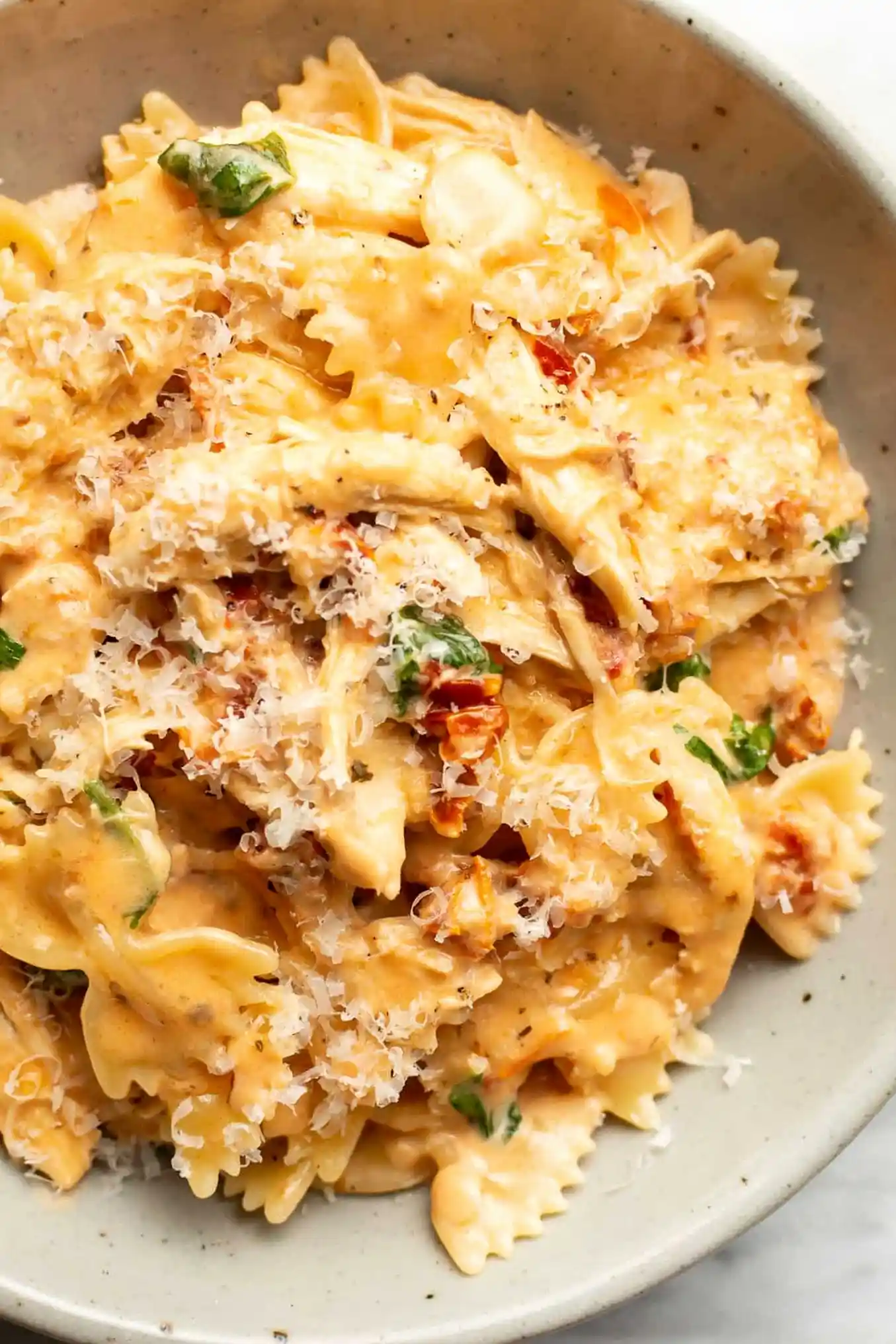
List of ingredients
- 8 ounces uncooked pasta – use a sturdy shape like rigatoni or farfalle to hold the sauce.
- 2 tablespoons butter – provides a rich, velvety base for the roux.
- 1/2 tablespoon flour – used to thicken the sauce for a creamy consistency.
- 3-4 cloves garlic, minced – adds deep aromatic and savory notes.
- 1 tablespoon tomato paste – concentrates the tomato flavor and adds color.
- 1/3 cup chicken broth – provides a savory liquid base for the sauce.
- 1 cup heavy/whipping cream – ensures a silky texture and prevents curdling.
- 1/3 cup sun-dried tomatoes – adds a concentrated tart and sweet flavor.
- 1/2 teaspoon dried oregano – contributes an earthy, herbal depth.
- 1/4 teaspoon crushed red pepper flakes – introduces a subtle warmth without excessive heat.
- 2 cups cooked/rotisserie chicken, shredded – a quick and convenient protein source.
- 1/3 cup freshly grated parmesan cheese – adds a salty, nutty finish to the cream.
- 1 small handful fresh basil, torn/chopped – provides a fresh, aromatic herbal finish.
- Salt and pepper to taste – essential for balancing all the savory elements.
step-by-step instructions
- Cook the Pasta: Boil a salted pot of water for the pasta and cook it al dente according to package directions. Be careful not to overcook the noodles as they will simmer briefly in the sauce later.
- Prepare the Roux: When the pasta is about 10 minutes away from being done, add the butter to a skillet over medium heat. Once it melts, sprinkle the flour in and cook for about a minute, stirring often to remove the raw flour taste.
- Build the Base: Add in the minced garlic, tomato paste, and chicken broth. Give it a good stir and let it bubble for about one minute to allow the tomato paste to caramelize slightly.
- Simmer the Sauce: Whisk in the heavy cream, then stir in the sun-dried tomatoes, oregano, red pepper flakes, and shredded chicken. Cook it for a few minutes over medium heat until the sauce has thickened to your liking.
- Finish the Sauce: Stir in the freshly grated parmesan and torn basil, then immediately take the skillet off the heat. Season the sauce generously with salt and pepper to bring out the richness of the cream and garlic.
- Combine and Serve: Prior to draining the pasta, reserve some of the hot pasta water. Add the drained pasta to the skillet and toss until every noodle is well coated. If the sauce is too thick, pour in a splash of the reserved pasta water to thin it out before serving immediately with extra parmesan.
Sauce Preparation Mastery
Creating a Stable Roux
The combination of butter and flour creates a roux, which is the foundation for the sauce’s thickness. Cooking the flour for a full minute ensures that you do not taste raw wheat in the final dish. This process emulsifies the fat and starch, creating a smooth base that prevents the cream from separating.
Optimizing Heavy Cream Selection
Using full-fat heavy cream is critical for the stability of this sauce. Lower-fat alternatives like half-and-half or milk have a higher water content and lack the fat needed to buffer the acidity of the tomato paste. High-fat cream ensures the sauce remains silky and does not break when heated.
Controlling Simmer Temperatures
Maintaining a medium heat is essential to prevent the cream from scorching or curdling. Avoid bringing the sauce to a rapid, rolling boil, as excessive heat can cause the dairy to separate. A gentle simmer allows the flavors to meld and the sauce to reduce slowly and evenly.
Emulsifying the Sauce Texture
The addition of reserved pasta water at the end is a professional technique to improve the sauce’s cling. The starch in the pasta water acts as a binder between the fat in the cream and the surface of the noodles. This ensures the sauce coats the pasta perfectly rather than pooling at the bottom of the plate.
Ingredient Variations and Substitutions
Using Different Protein Sources
While rotisserie chicken is a convenient choice, you can use pan-seared chicken breast or thighs for a different texture. For a seafood variation, replace the chicken with sautéed shrimp, adding them to the pan during the final few minutes of simmering. Tofu or chickpeas can be used as a plant-based protein alternative.
Incorporating Fresh Leafy Greens
Adding a handful of fresh baby spinach or chopped kale during the final stage of cooking adds nutritional value and color. Stir the greens in just before adding the parmesan cheese so they wilt slightly without overcooking. This provides a fresh, bitter contrast to the rich, creamy sauce.
Alternative Pasta Selection
While rigatoni and farfalle are excellent for capturing sauce, penne or fusilli are also great choices. If you prefer a gluten-free option, use a high-quality brown rice or chickpea pasta. Ensure you cook gluten-free pasta strictly according to the box to avoid a mushy texture.
Adjusting Spicy Flavor Profiles
The red pepper flakes provide a mild warmth, but you can adjust this based on your preference. For a spicier kick, increase the flakes to a half teaspoon or add a pinch of cayenne pepper. If you prefer a mild flavor, omit the flakes entirely and use a touch more black pepper.
Optimal Serving and Pairing Ideas
Pairing with Crisp Garden Salads
Because the pasta is very rich and creamy, it pairs best with a bright, acidic salad. A classic Caesar salad with a lemon-based dressing cuts through the heaviness of the parmesan and cream. Alternatively, a simple arugula salad with balsamic vinaigrette provides a peppery contrast.
Selecting the Best Bread Accompaniments
Garlic knots or toasted cheesy garlic bread are perfect for scooping up any remaining sauce on the plate. A crusty piece of sourdough or a warm baguette also works well to balance the textures. Toasting the bread with a bit of butter and parsley enhances the overall presentation.
Final Plating and Garnishing
To make the dish look professional, garnish with extra freshly grated parmesan and a few whole basil leaves. A sprinkle of fresh cracked black pepper on top adds a visual contrast and a final layer of flavor. Serve in shallow bowls to keep the pasta warm while eating.
Preservation and Reheating Techniques
Safe Refrigeration Practices
Store leftover pasta in an airtight container in the refrigerator for 3 to 4 days. To prevent the noodles from absorbing all the sauce, you can store the pasta and sauce separately if you have enough containers. Ensure the food is cooled slightly before sealing the lid to prevent excess condensation.
Restoring Sauce Consistency During Reheating
Cream-based sauces tend to thicken significantly when chilled. When reheating on the stove over low heat, add a tablespoon of milk or cream to restore the original silky consistency. Avoid using the microwave on high heat, as this can cause the sauce to separate or the chicken to become rubbery.
Managing Leftover Pasta Texture
If the pasta has become too soft after storage, reheat it gently and avoid over-stirring. Adding a tiny splash of water or broth during the reheating process helps loosen the noodles. Heating the dish slowly ensures the cheese melts back into the sauce without breaking the emulsion.
Common Kitchen Troubleshooting
Fixing a Sauce that is Too Thick
If the sauce becomes too dense while simmering, do not panic. Simply whisk in a small amount of chicken broth or the reserved pasta water one tablespoon at a time. Continue stirring over low heat until the sauce reaches your desired consistency.
Correcting Excess Saltiness
Since parmesan and rotisserie chicken are naturally salty, it is easy to over-season the dish. If the sauce tastes too salty, add a squeeze of fresh lemon juice or a teaspoon of heavy cream. The acidity of the lemon or the fat in the cream helps neutralize the saltiness.
Preventing Cream Separation
Separation usually happens due to excessive heat or adding low-fat dairy. If you see the sauce starting to break, lower the heat immediately and whisk vigorously. Adding a tiny bit of cold butter can also help re-emulsify the sauce and bring back the smooth texture.
Frequently Asked Questions
Can I use half-and-half instead of heavy cream?
It is not recommended to use half-and-half or milk because the acidity from the tomato paste can cause lower-fat dairy to curdle. Heavy cream contains enough fat to stay stable under heat and acidity, ensuring a smooth sauce.
Which pasta shape works best for this creamy sauce?
Shapes with ridges or holes, such as rigatoni, penne, or farfalle, are ideal because they trap the thick sauce inside and on the surface. Long noodles like spaghetti work, but they do not hold the chunks of chicken and sun-dried tomatoes as effectively.
How do I store this dish for the longest freshness?
Store the pasta in a glass airtight container in the coldest part of your refrigerator. For maximum freshness, undercook the pasta by one minute before mixing it with the sauce, as it will continue to soften during storage.
Can I use fresh tomatoes instead of sun-dried?
Fresh tomatoes have a much higher water content and will make the sauce too thin and watery. If you must use fresh tomatoes, dice them and sauté them separately until most of the liquid has evaporated before adding them to the cream sauce.
Print
Creamy Garlic and Sun-Dried Tomato Chicken Pasta
- Total Time: 30 minutes
- Yield: 4 servings 1x
- Diet: General
Description
Fall in love with this marry me chicken pasta recipe! It pairs the convenience of rotisserie chicken with an amazingly flavorful garlic tomato cream sauce, and it’s ready fast.
Ingredients
- 8 ounces uncooked pasta
- 2 tablespoons butter
- 1/2 tablespoon flour
- 3–4 cloves garlic (minced)
- 1 tablespoon tomato paste
- 1/3 cup chicken broth
- 1 cup heavy/whipping cream
- 1/3 cup sun-dried tomatoes
- 1/2 teaspoon dried oregano
- 1/4 teaspoon crushed red pepper flakes
- 2 cups cooked/rotisserie chicken (shredded)
- 1/3 cup freshly grated parmesan cheese
- 1 small handful fresh basil (torn/chopped)
- Salt & pepper (to taste)
Instructions
- Step: Boil a salted pot of water for the pasta and cook it al dente according to package directions.
- Step: When the pasta is about 10 minutes away from being done, add the butter to a skillet over medium heat. Once it melts, sprinkle the flour in and cook for about a minute, stirring often.
- Step: Add in the garlic, tomato paste, and chicken broth. Give it a good stir and let it bubble for about one minute.
- Step: Whisk in the cream, then stir in the sun-dried tomatoes, oregano, red pepper flakes, and chicken, and cook it for a few minutes until the sauce has thickened to your liking.
- Step: Stir in the parmesan and basil and take the skillet off the heat. Season generously with salt & pepper.
- Step: Prior to draining the pasta, reserve some of the hot pasta water. Add the drained pasta to the skillet and toss until coated. If needed, pour in a splash of the hot pasta water to the sauce to thin it out a bit. Serve immediately with more parmesan if desired.
Notes
I don’t recommend subbing the heavy cream for anything with a lower fat content (e.g. half-and-half or milk) because the tomato in the sauce is likely to curdle it, and you’ll have to add more flour to thicken the sauce.
- Prep Time: 10 minutes
- Cook Time: 20 minutes
- Category: Main Course
- Method: Stovetop
- Cuisine: American
Nutrition
- Serving Size: 1 serving
- Calories: 667 kcal
- Sugar: 7 g
- Sodium: 308 mg
- Fat: 35 g
- Saturated Fat: 20 g
- Unsaturated Fat: 12 g
- Trans Fat: 0.2 g
- Carbohydrates: 53 g
- Fiber: 3 g
- Protein: 31 g
- Cholesterol: 142 mg