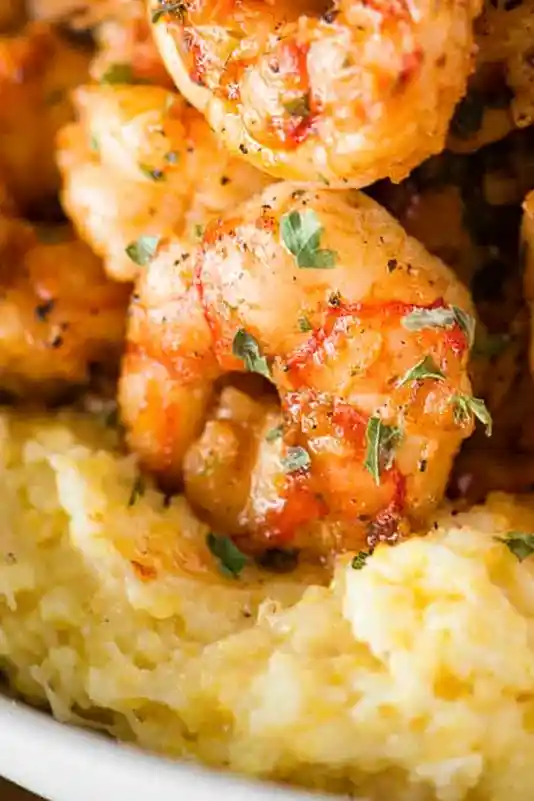
This cheesy shrimp and grits recipe provides a creamy, savory meal perfect for a comforting dinner. It combines tender shrimp in a zesty sauce with rich, cheddar-infused grits for a classic flavor profile.
List of ingredients
- 15 ounces seafood stock – provides a deep oceanic base for the grits.
- 1/2 cup white grape juice – used as a non-alcoholic substitute for white wine to add acidity.
- 1/2 cup water – balances the liquid ratio for the grits.
- 1/2 teaspoon Kosher salt – enhances the natural flavors of the grains.
- 1 cup grits – use a high-quality brand like Bob’s Red Mill for best texture.
- 3 tablespoons heavy cream – creates a luxurious, silky consistency.
- 3 tablespoons unsalted butter – adds richness and a smooth finish.
- 2 cups sharp cheddar cheese, shredded – provides a bold, tangy flavor.
- 2 tablespoons olive oil – used for searing the shrimp.
- 1 pound shrimp, shelled and deveined large raw shrimp – the main protein of the dish.
- 1/4 teaspoon black pepper – adds a subtle spicy heat.
- 3 garlic cloves, minced – should be approximately one heaping teaspoon.
- 1 tablespoon flat-leaf parsley, chopped – adds freshness and color.
- 1 teaspoon smoked paprika – gives the shrimp a woody, smoky depth.
- 1 teaspoon Worcestershire sauce – adds a complex, savory umami layer.
- 2 dashes hot sauce (such as Tabasco) – provides a tangy kick.
- 4 teaspoons lemon juice – usually equivalent to the juice of one whole lemon.
step-by-step instructions
- Heat liquid for grits: In a medium saucepan, bring the 15 ounces seafood stock, 1/2 cup white grape juice, 1/2 cup water, and 1/2 teaspoon Kosher salt to a boil.
- Cook grits: Whisk in the 1 cup grits and cook over moderately high heat. Continue to stir periodically until thickened and the grits are tender, which typically takes 5-10 minutes.
- Finish the grits: Add the 3 tablespoons heavy cream, 3 tablespoons unsalted butter, and 2 cups sharp cheddar cheese, then gently stir. Cover the pan and remove it from the heat to set aside.
- Sear the shrimp: Heat 2 tablespoons olive oil in a large skillet over medium-high heat. Coat the 1 pound of shrimp with 1/4 teaspoon black pepper and cook in the skillet until they start to turn golden brown, about 3 minutes.
- Create the sauce: Turn the shrimp and stir in the 3 minced garlic cloves, 1 tablespoon chopped parsley, 1 teaspoon smoked paprika, 1 teaspoon Worcestershire sauce, 2 dashes hot sauce, and 4 teaspoons lemon juice. Cook for an additional 2 minutes or until the shrimp are fully cooked.
- Serve: Spoon the warm cheesy grits into a bowl and top with the shrimp and a generous amount of the pan sauce. Serve hot.
Optimal Ingredient Selection
Choosing the Right Type of Grits
For this recipe, stone-ground grits offer the most traditional texture and a deeper corn flavor. If you are in a hurry, quick-cooking grits can work, but they may lack the heartiness of the traditional variety. Always check the package for specific liquid ratios if you switch brands.
Selecting the Best Shrimp
Use large, raw shrimp that have been peeled and deveined for the best eating experience. Fresh shrimp are preferred, but frozen shrimp work equally well if they are completely thawed and patted dry before cooking. Dry shrimp sear better in the pan, creating a more flavorful crust.
The Importance of Sharp Cheddar
Using a sharp cheddar cheese ensures that the cheese flavor is not lost in the creamy base of the grits. Mild cheddar may be too subtle, whereas extra-sharp cheddar provides a tangy contrast to the savory seafood stock. Shred your own cheese from a block to avoid anti-clumping agents that can prevent a smooth melt.
Using High-Quality Seafood Stock
The seafood stock acts as the primary flavor vehicle for the grits, moving them beyond simple porridge. If you cannot find a pre-made version, a fish-based broth or a light vegetable stock can be used. This liquid infuses the cornmeal with a briny depth that complements the shrimp topping.
Professional Cooking Techniques
Preventing Grits from Clumping
The key to smooth grits is consistent whisking during the initial stages of cooking. When you add the grits to the boiling liquid, whisk vigorously to ensure no dry pockets remain. Stirring periodically as they thicken prevents the bottom from scorching and ensures an even texture.
Avoiding Overcooked Shrimp
Shrimp cook very quickly and can become rubbery if left in the pan too long. Watch for the shrimp to curl into a ‘C’ shape, which indicates they are perfectly cooked. Avoid letting them curl tightly into an ‘O’ shape, as this is a sign of overcooking.
Creating a Balanced Pan Sauce
The sauce is created by combining the aromatic garlic and spices with the natural juices of the shrimp. Adding the lemon juice at the end preserves its brightness and cuts through the richness of the butter and cream. Ensure the garlic is stirred in well so it doesn’t burn before the other liquids are added.
Managing Pan Temperature
Use medium-high heat to ensure the olive oil is shimmering before adding the shrimp. This high temperature creates a golden-brown sear that locks in moisture and adds flavor. If the pan is too cold, the shrimp will steam in their own juices rather than brown.
Flavor Variations and Customizations
Adding Sautéed Bell Peppers
Dicing red and green bell peppers and sautéing them before adding the shrimp adds sweetness and vibrant color. Cook the peppers until tender-crisp, then remove them and set them aside. Stir them back into the shrimp sauce just before serving.
Incorporating Fresh Green Onions
Sliced green onions provide a sharp, fresh contrast to the heavy cheese and cream. You can stir the white parts into the shrimp sauce during the last minute of cooking. Use the green tops as a garnish on top of the finished bowl for visual appeal.
Adjusting the Spice Level
For those who prefer more heat, increase the amount of hot sauce or add a pinch of cayenne pepper to the shrimp seasoning. Conversely, if you prefer a milder dish, reduce the hot sauce to a single dash. Smoked paprika provides flavor without adding significant heat.
Adding Sautéed Mushrooms
Sliced cremini or button mushrooms add an earthy depth that pairs well with the savory seafood stock. Sauté the mushrooms in the olive oil before adding the shrimp to the pan. This adds a meatier texture to the final dish.
Serving Suggestions and Side Dishes
Pairing with Sautéed Spinach
Sautéed spinach with garlic and lemon provides a light, nutritious balance to the rich grits. The bitterness of the greens cuts through the creaminess of the cheddar cheese. Serve the spinach on the side or as a bed underneath the grits.
Adding Collard Greens
For a traditional Southern experience, serve this dish with slow-cooked collard greens. The salty, vinegary flavor of the greens complements the smokiness of the paprika in the shrimp. Ensure the greens are cooked until tender but not mushy.
Serving with a Fresh Garden Salad
A simple salad with a light vinaigrette can cleanse the palate between bites of rich grits. Use mixed greens, cucumbers, and cherry tomatoes with a lemon-olive oil dressing. This prevents the meal from feeling too heavy.
Plating for Visual Appeal
Spoon a generous portion of grits into a shallow bowl and create a small well in the center. Place the shrimp on top and drizzle the remaining pan sauce over the edges. Garnish with fresh parsley and a lemon wedge for a professional presentation.
Storage and Reheating Guide
Storing Leftover Grits
Place leftover grits in an airtight container and refrigerate them for up to three days. Grits tend to thicken significantly as they cool, becoming almost solid. Ensure the container is sealed tightly to prevent the grits from absorbing fridge odors.
Storing Leftover Shrimp
Store the cooked shrimp and sauce in a separate airtight container from the grits. Keeping them separate prevents the grits from absorbing all the sauce and becoming too soggy. Cooked shrimp should be consumed within two to three days for safety and quality.
Reheating Grits with Liquid
When reheating grits, add a splash of milk, cream, or seafood stock to restore the creamy consistency. Heat them gently on the stovetop over low heat or in the microwave in 30-second intervals. Stir frequently to ensure the cheese melts evenly without separating.
Gently Warming Shrimp
To avoid overcooking the shrimp during reheating, use a microwave on low power. Heat the shrimp and sauce in 1-minute increments until just warm. Alternatively, flash-heat them in a skillet over medium heat for one minute.
Make-Ahead Preparation Tips
Prepping the Shrimp Mixture
You can mince the garlic, chop the parsley, and measure out the paprika and Worcestershire sauce in advance. Store these prepped ingredients in small containers or a divided prep tray. This allows you to focus on the timing of the shrimp sear without distractions.
Preparing the Liquid Base
The seafood stock, grape juice, and water can be mixed together in a jar or bottle before you start cooking. This simplifies the process of bringing the liquid to a boil. Just ensure the mixture is stirred before pouring into the saucepan.
Organizing Your Mise en Place
Since both the grits and the shrimp cook quickly, having all ingredients ready is crucial. Set up your station with the shredded cheese, butter, and cream within reach of the stove. This prevents the grits from overcooking while you search for an ingredient.
Troubleshooting Common Issues
Fixing Grits that are Too Thick
If your grits become too thick or pasty, stir in a tablespoon of warm seafood stock or milk. Add the liquid gradually until the desired creamy consistency is reached. Do this while the grits are still over low heat for the best integration.
Correcting Overly Salty Sauce
If the pan sauce tastes too salty, add an extra teaspoon of lemon juice or a small knob of unsalted butter. The acidity of the lemon and the fat from the butter help neutralize the saltiness. Avoid adding water, as this will dilute the concentrated flavors.
Managing Sauce Separation
If the sauce appears to separate or look oily, stir in a teaspoon of heavy cream or whisk it vigorously over low heat. The cream acts as an emulsifier to bring the fats and liquids back together. Keep the heat low to prevent further separation.
Handling Lumpy Cheese
Lumps usually occur when pre-shredded cheese is used or when the heat is too high. If lumps form, remove the pan from the heat and stir rapidly. Adding a tiny bit of extra cream can also help the cheese melt more smoothly into the cornmeal.
Frequently Asked Questions
Can I use frozen shrimp?
Yes, frozen shrimp are a great option. Ensure they are completely thawed and patted dry with paper towels before adding them to the skillet to ensure a proper sear.
What is a good substitute for seafood stock?
If seafood stock is unavailable, you can use chicken broth or vegetable broth. While the flavor will be slightly different, the texture and general savoriness will remain intact.
Can I make this dish dairy-free?
You can replace the heavy cream with coconut cream and the butter with a plant-based alternative. Use a dairy-free cheddar substitute or omit the cheese and add nutritional yeast for a similar savory taste.
How do I stop grits from sticking to the pan?
Use a heavy-bottomed saucepan to distribute heat evenly and stir frequently with a whisk or silicone spatula. Using a non-stick pan can also help prevent the cornmeal from clinging to the sides.
Print
Creamy Cheddar Shrimp and Grits
- Total Time: 35 minutes
- Yield: 4 servings 1x
- Diet: General
Description
Cheesy Shrimp and Grits combines succulent tender shrimp cooked to perfection in a tangy spicy sauce over creamy cheesy polenta. YUM!
Ingredients
- 15 ounces seafood stock
- 1/2 cup water
- 1/2 cup water
- 1/2 teaspoon Kosher salt
- 1 cup grits
- 3 tablespoons heavy cream
- 3 tablespoons unsalted butter
- 2 cups sharp cheddar cheese (shredded)
- 2 tablespoons olive oil
- 1 pound shrimp (shelled and deveined large raw shrimp)
- 1/4 teaspoon black pepper
- 3 garlic cloves (minced)
- 1 tablespoon flat-leaf parsley (chopped)
- 1 teaspoon smoked paprika
- 1 teaspoon Worcestershire sauce
- 2 dashes hot sauce
- 4 teaspoons lemon juice
Instructions
- Heat liquid for grits: In a medium saucepan, bring the 15 ounces seafood stock, 1/2 cup water, 1/2 cup water, and 1/2 teaspoon Kosher salt to a boil.
- Cook grits: Whisk in the 1 cup grits and cook over moderately high heat. Continue to stir periodically until thickened and the grits are tender- about 5-10 minutes total. Add the 3 tablespoons heavy cream, 3 tablespoons unsalted butter, and 2 cups sharp cheddar cheese and gently stir. Cover and remove from heat. Set aside.
- Cook shrimp: To cook the 1 pound shrimp, heat 2 tablespoons olive oil in a large skillet over medium-high heat. Coat shrimp with 1/4 teaspoon black pepper and cook in skillet until they start to turn golden brown for approximately 3 minutes. Once turned, stir in remaining ingredients (3 garlic cloves, 1 tablespoon flat-leaf parsley, 1 teaspoon smoked paprika, 1 teaspoon Worcestershire sauce, 2 dashes hot sauce, 4 teaspoons lemon juice) to create a sauce and cook for an additional 2 minutes or until they are fully cooked.
- To serve: spoon the warm cheesy grits into a bowl and top with shrimp with a bit of sauce. Serve hot and enjoy!
Notes
Prep the ingredients: Since both shrimp and grits are quick to cook, be sure to prepare and measure all of the ingredients before cooking.
- Prep Time: 15 minutes
- Cook Time: 20 minutes
- Category: Main Course
- Method: Stovetop
- Cuisine: American
Nutrition
- Serving Size: 1 serving
- Calories: 711 kcal
- Sugar: 1 g
- Sodium: 1886 mg
- Fat: 41 g
- Saturated Fat: 21 g
- Unsaturated Fat: 20 g
- Trans Fat: 0 g
- Carbohydrates: 35 g
- Fiber: 3 g
- Protein: 43 g
- Cholesterol: 383 mg