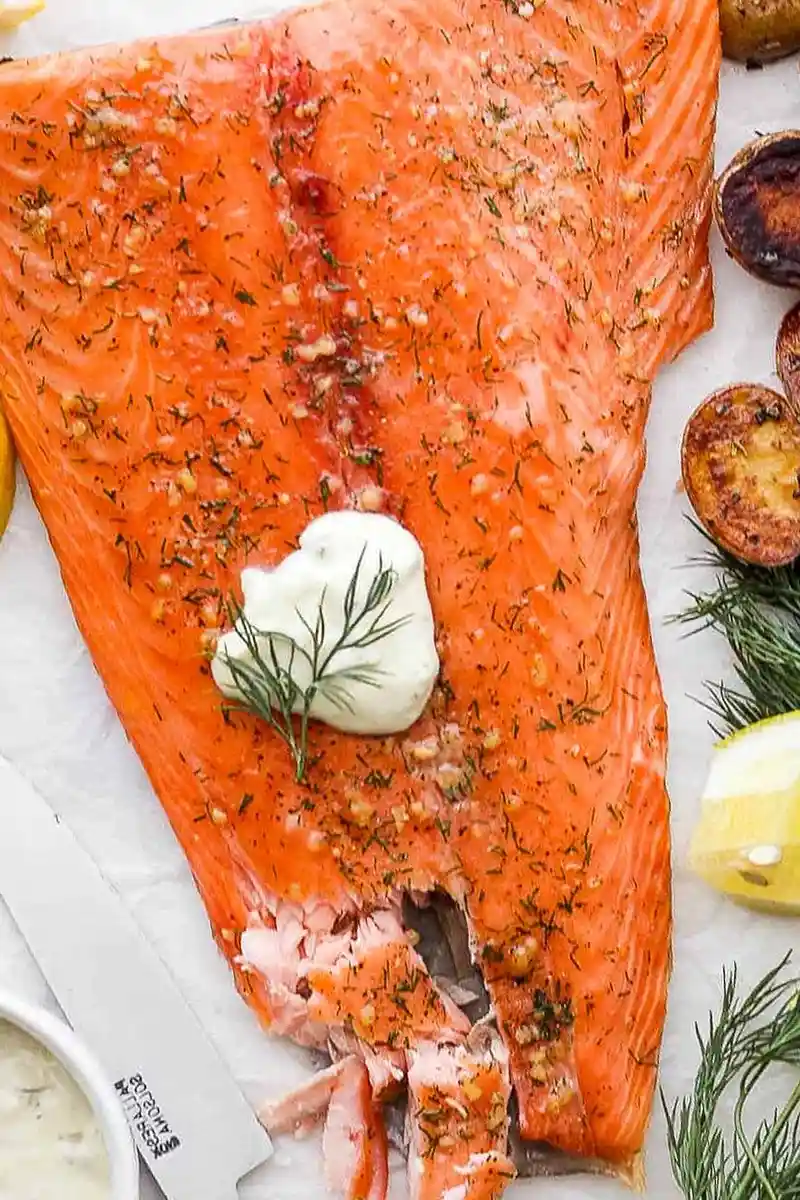
Learn how to prepare a high-quality hot smoked salmon using a simple dry brine technique. This process results in a flaky, smoky fillet perfect for meals or appetizers.
List of ingredients
- 1-2 tablespoons brown sugar – adds a subtle sweetness and helps form the pellicle.
- 1 1/2 teaspoons kosher salt – cures the fish and enhances the natural flavors.
- 1 teaspoon fresh dill, chopped – provides a classic herbal complement to the salmon.
- 1 teaspoon garlic, minced or grated – adds savory depth to the brine.
- 1/8 teaspoon ground black pepper – provides a mild spicy contrast.
- 1 1/2 pounds fresh salmon – use wild-caught Sockeye, King, or Atlantic salmon for best results.
step-by-step instructions
- Prep Brine: In a small bowl, combine 1-2 tablespoons brown sugar, 1 1/2 teaspoons kosher salt, 1 teaspoon fresh dill, 1 teaspoon garlic, and 1/8 teaspoon ground black pepper.
- Brine Salmon: Place 1 1/2 pounds fresh salmon on a wire rack on top of a baking sheet, skin side down. Rub the brine mixture over the top of the salmon, ensuring it is fully covered, but do not rub it on the skin. Place the salmon in the refrigerator, uncovered, for 1 hour.
- Smoke Salmon: Preheat your smoker to 225°F. Remove the salmon from the refrigerator and pat it dry with a paper towel without rinsing. Place the salmon skin side down on a piece of foil and transfer it to the smoker. Smoke for 40-60 minutes or until the internal temperature at the thickest part reaches 130-135°F.
- Serve: Serve the salmon immediately with smoked potatoes and smoked green beans for a dinner. Alternatively, use any remaining salmon to create a smoked salmon dip.
Optimal Wood Selection for Smoking
Apple Wood for Mild Sweetness
Apple wood provides a mild, fruity smoke flavor that does not overpower the delicate taste of the fish. It is an excellent choice for those who prefer a subtle smokiness. This wood pairs well with the brown sugar in the brine.
Alder Wood for Traditional Flavor
Alder is widely considered the gold standard for smoking salmon in the Pacific Northwest. It produces a light, sweet smoke that enhances the natural oils of the fish. This wood is ideal for achieving a classic smoked salmon profile.
Maple Wood for Richer Notes
Maple wood offers a slightly more intense sweetness than apple or alder. It creates a rich flavor profile that complements the fatty texture of King salmon. Use maple if you want a more pronounced smoke presence in the final dish.
Salmon Variety and Selection
Sockeye Salmon for Intense Color
Sockeye salmon is known for its deep red color and robust flavor. It is generally leaner than King salmon, meaning it can cook faster. Monitor the internal temperature closely to avoid overcooking this variety.
King Salmon for Buttery Texture
King salmon has the highest fat content of all salmon species, resulting in a rich, buttery mouthfeel. The higher oil content makes it more forgiving during the smoking process. It holds up well to longer smoke times at 225°F.
Atlantic Salmon for Consistent Results
Atlantic salmon is widely available and offers a consistent texture and flavor. It is a great versatile option for those new to smoking fish. Its moderate fat content ensures a juicy result when pulled at 130°F.
The Science of the Dry Brine
Creating the Pellicle
Leaving the salmon uncovered in the refrigerator for at least one hour allows a pellicle to form. The pellicle is a tacky, sticky layer of proteins and sugars on the surface of the fish. This layer is essential because it allows the smoke to adhere to the meat more effectively.
Osmosis and Moisture Control
The combination of salt and sugar draws moisture out of the salmon through osmosis. This concentrates the flavors and firms up the texture of the flesh. It also prevents the fish from releasing too much liquid during the smoking process.
Managing Sugar Ratios
The 3:1 ratio of brown sugar to salt balances the cure. The sugar prevents the salt from over-curing the fish, which would otherwise make it too salty. This balance ensures the fish remains tender and palatable.
Temperature Control and Precision
Maintaining 225 Degrees Fahrenheit
Keeping the smoker at a steady 225°F is critical for hot smoking. This temperature is high enough to cook the fish through but low enough to allow smoke penetration. Fluctuations in temperature can lead to uneven cooking or a dry texture.
Using a Digital Meat Thermometer
Relying on time alone is risky because salmon thickness varies. Use a digital probe thermometer inserted into the thickest part of the fillet. This is the only way to ensure the fish is cooked to the safe and desired internal temperature.
Understanding Carryover Cooking
Salmon continues to cook for several minutes after being removed from the heat. Pull the fish when the thermometer reads 130-135°F. The temperature will rise a few more degrees while resting, bringing it to a perfect medium-well finish.
Flavor Adjustments and Substitutions
Reducing Sugar for Savory Profiles
If you prefer a less sweet finish, you can reduce the brown sugar by half or omit it entirely. Note that removing the sugar may slightly affect the formation of the pellicle. You can compensate by increasing the refrigeration time to ensure the surface is tacky.
Swapping Fresh Dill for Other Herbs
Fresh dill is traditional, but parsley or chives can be used for a different flavor profile. Lemon thyme is another excellent alternative that adds a bright, citrusy note. Ensure the herbs are finely chopped to distribute evenly in the rub.
Incorporating Citrus Zest
Adding one teaspoon of lemon or orange zest to the dry brine adds a bright acidity. This cuts through the richness of the salmon fats and the heaviness of the smoke. Zest should be added to the rub just before applying it to the fish.
Serving and Pairing Recommendations
Main Course Pairings
Serve the hot smoked salmon as a center-piece with roasted vegetables. Smoked potatoes and green beans complement the smokiness of the fish. A side of wild rice or quinoa also works well to absorb the juices.
Appetizer and Dip Ideas
Flake the cooled smoked salmon into a mixture of cream cheese, lemon juice, and capers. This creates a rich dip that pairs perfectly with cucumber slices or toasted baguette rounds. It is an ideal way to use leftovers.
Breakfast Application
Place slices of smoked salmon on a toasted bagel with a thick layer of cream cheese. Add thin slices of red onion and capers for a classic Lox-style breakfast. It can also be added to a savory breakfast bowl with avocado and poached eggs.
Storage and Food Safety
Refrigeration Guidelines
Store leftover smoked salmon in an airtight container in the refrigerator. It will remain fresh and safe to eat for up to 3 days. Ensure the container is well-sealed to prevent the fish from absorbing other fridge odors.
Preventing Oxidation
To keep the salmon from drying out in the fridge, you can lightly brush the surface with olive oil before storing. This creates a barrier against air. Alternatively, wrap the fillet tightly in parchment paper before placing it in a container.
Reheating Techniques
Low-Temperature Oven Method
To reheat without overcooking, place the salmon in a 250°F oven for 10-15 minutes. This gentle heat warms the fats without toughening the proteins. Cover the fish with foil to retain moisture during the process.
Quick Microwave Reheating
If using a microwave, use a low power setting (50%) and heat in 30-second intervals. This prevents the fish from becoming rubbery. Let the salmon stand for one minute before serving to redistribute the heat.
Common Troubleshooting
Preventing Dry Salmon
Dryness is almost always the result of overcooking. Always use a thermometer and pull the fish at 130-135°F. If the fish is consistently dry, check for hot spots in your smoker and rotate the foil tray halfway through.
Handling Sticking Issues
Salmon skin can stick to smoker grates, which is why using a piece of foil is recommended. If you prefer not to use foil, lightly oil the grates before adding the fish. Always move the fish with a wide spatula to keep the fillet intact.
Managing Uneven Smoke Color
If the salmon is unevenly colored, it may be due to poor airflow in the smoker. Ensure the fish is not crowded and that there is space for smoke to circulate around the fillet. Rotating the fish can also help achieve a uniform gold color.
Frequently Asked Questions
Is smoked salmon cooked or raw?
Hot smoked salmon is fully cooked. The internal temperature reaches 130-140°F, which is high enough to cook the proteins and ensure the fish is safe for consumption.
What is the difference between hot and cold smoking?
Hot smoking occurs at temperatures around 225°F, resulting in a cooked, flaky texture and strong smoky flavor. Cold smoking happens at temperatures below 90°F, curing the fish without cooking it, which results in a silky, raw-like texture.
How is smoked salmon different than lox?
Lox is traditionally cured with a heavy salt brine and is not smoked. Smoked salmon may be cured first but is defined by the addition of smoke flavor. Lox has a fresher, saltier taste compared to the deep, woody flavor of smoked salmon.
Print
Professional Hot Smoked Salmon Guide
- Total Time: 130 minutes
- Yield: 6 servings 1x
- Diet: Dairy-Free, Gluten-Free
Description
Follow this easy, step-by-step process for making the best hot Smoked Salmon with pro tips, flavor insights, and serving ideas!
Ingredients
- 1–2 tablespoons brown sugar
- 1 1/2 teaspoons kosher salt
- 1 teaspoon fresh dill, chopped
- 1 teaspoon garlic, minced or grated
- ⅛ teaspoon ground black pepper
- 1 ½ pounds fresh salmon
Instructions
- Prep Brine: In a small bowl, combine 1-2 tablespoons brown sugar, 1 1/2 teaspoons kosher salt, 1 teaspoon fresh dill, 1 teaspoon garlic and ⅛ teaspoon ground black pepper.
- Brine Salmon: Place 1 ½ pounds fresh salmon on a wire rack on top of a baking sheet, skin side down. Rub brine mixture over the top of the salmon (no need to rub on the skin), ensuring it is fully covered. Place in the refrigerator, uncovered for 1 hour.
- Smoke Salmon: Preheat smoker to 225℉. Remove salmon from the refrigerator and pat dry with paper towel (no need to rinse off). Place salmon (skin side down) on top of a piece of foil and then transfer to the smoker. Let it smoke for 40-60 minutes or until the internal temperature at the thickest part of the salmon reaches 130-135℉.
- Serve: Serve salmon with some easy smoked potatoes and smoked green beans for a delicious dinner! Use leftovers to make the best smoked salmon dip!
Notes
Cook Time: we used a 1.5 pound salmon fillet that was approx. 1 inch at its thickest part. Cook time will vary depending upon the thickness of the salmon, hot spots on your smoker, humidity, wind, outdoor temp, etc. The best way to track is to keep an eye on that internal temp using a meat thermometer. Sugar: the brown sugar does leave a little sweetness, but not much. Feel free to reduce or omit the brown sugar, if you desire. Storage: store leftovers in an airtight container in the refrigerator for up to 3 days.
- Prep Time: 10 minutes
- Cook Time: 60 minutes
- Category: Salmon
- Method: Smoker
- Cuisine: American
Nutrition
- Serving Size: 1 serving
- Calories: 169 kcal
- Sugar: 2 g
- Sodium: 1213 mg
- Fat: 7 g
- Saturated Fat: 1 g
- Unsaturated Fat: 6 g
- Trans Fat: 0 g
- Carbohydrates: 2 g
- Fiber: 0.02 g
- Protein: 23 g
- Cholesterol: 62 mg