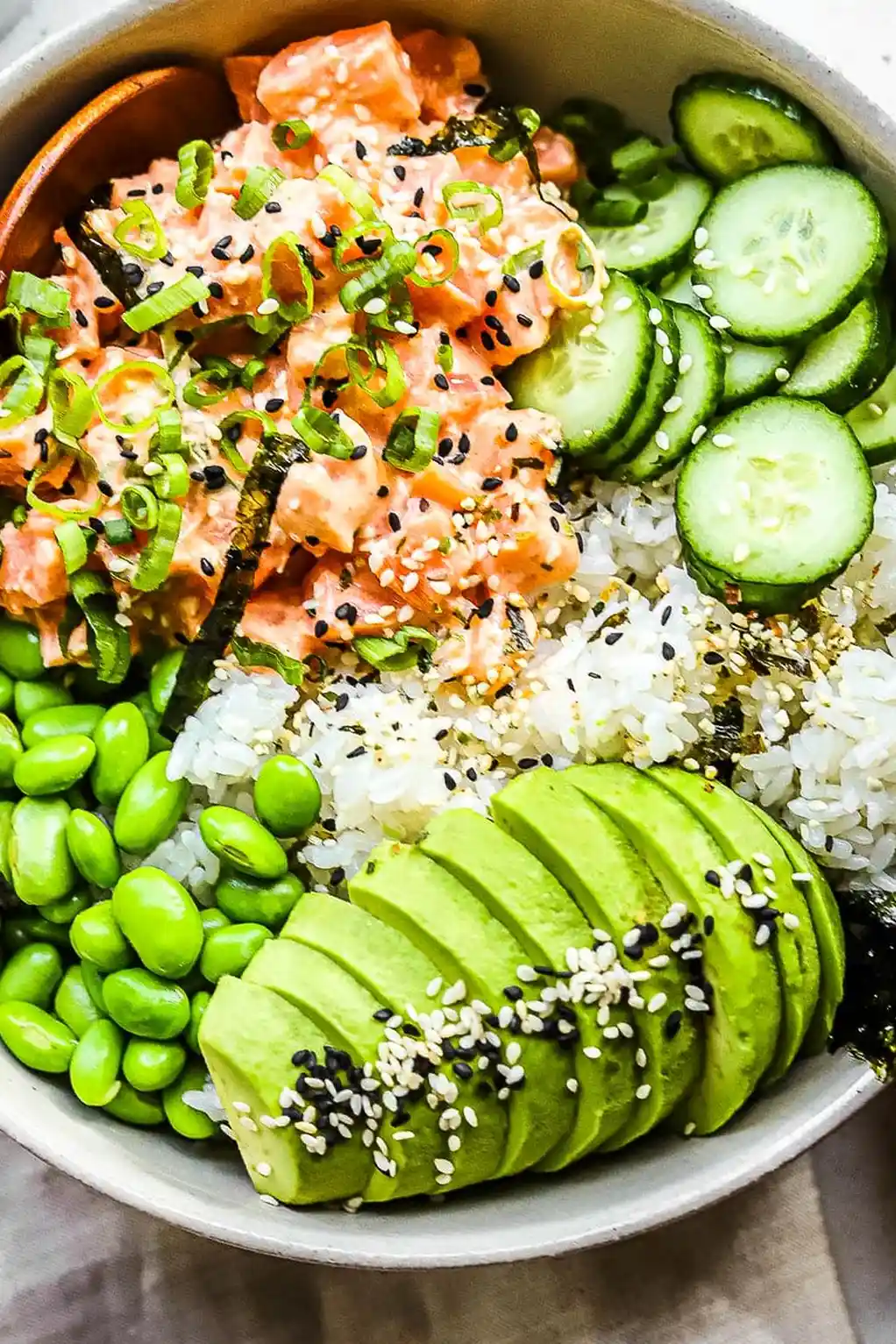
These spicy salmon sushi bowls offer the vibrant flavors of a classic sushi roll in a convenient, deconstructed format. It is a refreshing, no-cook meal perfect for warm weather or quick weeknight dinners.
List of ingredients
- 1 lb fresh sushi-grade salmon, diced small – ensure it is frozen-grade for safety.
- 3 tablespoons kewpie Japanese mayonnaise – provides a rich, creamy base.
- 1-2 tablespoons sriracha – adjust based on your heat preference.
- 2 teaspoons freshly grated ginger – adds a bright, zesty note.
- 1 teaspoon soy sauce – for a deep, salty umami flavor.
- 1 teaspoon sesame oil – adds a toasted, nutty aroma.
- 2 tablespoons thinly sliced green onion (tops only) – for fresh garnish and flavor.
- 1 1/2 cups sushi rice – short grain rice for the proper sticky texture.
- 1/4 cup rice wine vinegar – to season the rice.
- 2 teaspoons sugar – balances the acidity of the vinegar.
- 1 teaspoon kosher salt – enhances all the flavors.
- 1 cup steamed edamame – adds protein and a pop of green.
- 1 avocado sliced – provides a creamy contrast.
- 2 baby cucumbers, sliced – for a crisp, cool crunch.
- nori sheets – cut into strips or small squares.
step-by-step instructions
- Prepare the rice: Place the sushi rice in a mesh strainer and rinse it with cold water. Continue rinsing until the water runs completely clear to remove excess surface starch. Steam the rice according to the specific instructions provided by your rice cooker.
- Season the rice: While the rice is steaming, pour the rice wine vinegar into a small microwave-safe bowl and warm it slightly. Stir in the sugar and salt until both are fully dissolved into the liquid.
- Combine and cool: Once the steaming process is complete, gently fold the warmed vinegar mixture into the cooked rice using a rice paddle. Allow the rice to sit and cool down to room temperature before assembling.
- Mix the salmon: In a mixing bowl, whisk together the kewpie mayonnaise, sriracha, grated ginger, soy sauce, and sesame oil. Add the diced sushi-grade salmon and sliced green onions, tossing gently until every piece is evenly coated in the spicy sauce.
- Assemble the bowls: Divide the cooled sushi rice among four bowls. Top the rice with a generous portion of the spicy salmon mixture. Arrange the sliced avocado, cucumber, and steamed edamame on top, then garnish with nori strips and additional green onions.
Guidelines for Handling Raw Seafood
Select Certified Sushi-Grade Salmon
When purchasing salmon for raw consumption, always look for labels that specify it is sushi-grade. This usually means the fish has been frozen at extremely low temperatures for a specific duration to eliminate potential parasites. Always verify the source of your fish to ensure it meets these safety standards.
Maintain a Sterile Work Environment
Keeping your preparation area clean is essential when working with raw seafood. Thoroughly wash your hands, countertops, and all utensils before you begin. This practice prevents the spread of bacteria and ensures the meal remains safe for everyone to eat.
Choose the Right Cutting Board
Avoid using wooden cutting boards when prepping raw salmon because wood is porous and can trap bacteria and odors. Instead, use a high-density composite plastic or glass cutting board. These non-porous surfaces are easier to sanitize and do not absorb juices from the fish.
Keep the Fish Chilled Throughout
Temperature control is vital for seafood safety. Keep the salmon in the refrigerator until the moment you are ready to dice and mix it. If you are defrosting frozen salmon, do so slowly in the fridge rather than on the counter to maintain a safe internal temperature.
Pro Tips for Perfect Sushi Rice
The Importance of Rinsing
Rinsing sushi rice is not optional if you want the correct texture. The process removes excess starch that otherwise makes the rice gluey or clumpy. Rinse the grains in a mesh strainer under cold running water until the water is no longer milky.
Achieving the Right Seasoning Balance
The vinegar mixture should be folded in while the rice is still warm, as this allows the grains to absorb the flavor more effectively. Use a folding motion with a rice paddle rather than stirring, which prevents the grains from mashing. This preserves the individual integrity of each grain.
Cooling the Rice Properly
Never put piping hot rice directly into your bowls with raw salmon and avocado. The heat will slightly cook the fish and wilt the vegetables, ruining the fresh profile of the dish. Let the rice reach room temperature naturally or use a fan to speed up the cooling process.
Customizing Your Bowl Ingredients
Alternative Protein Options
If you prefer a different fish, sushi-grade tuna or scallops work wonderfully with the spicy mayo sauce. For a plant-based version, replace the salmon with firm tofu cubes that have been pressed and marinated in soy sauce and ginger. This keeps the essence of the bowl while changing the protein source.
Adding Different Vegetable Toppings
While cucumber and edamame are traditional, you can add shredded carrots for color and crunch. Radishes or pickled ginger can add a sharp, acidic contrast to the creamy mayo. Fresh mango cubes also provide a sweet tropical element that pairs well with spicy salmon.
Varying the Base Grain
For a different nutritional profile, you can use brown sushi rice or even quinoa. If you use quinoa, ensure it is cooked until fluffy and then seasoned with the same rice wine vinegar, sugar, and salt mixture. This maintains the sushi-style flavor profile while adding more fiber.
Substitution Guide for Common Ingredients
Replacing Kewpie Mayonnaise
If you cannot find Kewpie, you can use a high-quality regular mayonnaise. To mimic the flavor, add a tiny pinch of sugar and a drop of rice vinegar to the regular mayo. This helps replicate the slightly sweeter and more acidic taste of the Japanese version.
Sriracha Alternatives
If sriracha is too spicy or unavailable, gochujang (Korean chili paste) is a great alternative, though it is thicker and more fermented. You can also use a mild chili-garlic sauce or even a dash of cayenne pepper mixed with a bit of honey to get a similar heat level.
Substitutes for Rice Wine Vinegar
Apple cider vinegar is the closest common substitute for rice wine vinegar. It has a similar acidity, though it is slightly more fruity. If using apple cider vinegar, you may want to add an extra pinch of sugar to balance the tanginess.
Ways to Cook the Salmon
Pan-Searing the Salmon
For those who prefer cooked fish, cut the salmon into four small fillets. Sauté them in a skillet with a tablespoon of oil for 2-3 minutes per side until browned. This creates a savory crust that contrasts well with the fresh vegetables in the bowl.
Creating a Glazed Cooked Salmon
You can make a simple glaze by whisking together soy sauce, honey, grated ginger, and minced garlic. Add this sauce to the pan during the last two minutes of cooking the salmon, tossing the pieces until the sauce thickens and coats the fish in a sticky glaze.
Baking the Salmon
Baking is a great option for meal prep. Roast salmon fillets at 400 degrees Fahrenheit for about 10-12 minutes. Once cooked, flake the salmon into chunks and toss it with the spicy mayo mixture before adding it to your rice bowl.
Storage and Reheating Advice
Storing the Rice and Veggies
Cooked sushi rice can be kept in an airtight container in the refrigerator for 1 to 2 days. To revive the texture, reheat the rice in the microwave covered with a damp paper towel. This adds moisture back into the grains so they don’t become hard.
Managing Raw Salmon Leftovers
It is highly recommended to consume raw salmon immediately after preparation. However, if you have already mixed the salmon with the spicy mayo, it can be stored in an airtight container for up to 24 hours. Always smell the fish before consuming it to ensure freshness.
Keeping Toppings Separate
If you are preparing these bowls for later in the day, store the components separately. Keep the rice in one container, the spicy salmon in another, and the sliced vegetables in a third. This prevents the rice from absorbing the sauce and keeps the cucumbers and avocado crisp.
Serving Suggestions
Enhancing the Presentation
Use wide, shallow bowls to create a visually appealing layout. Place the rice as a base and arrange the salmon and vegetables in distinct sections on top rather than mixing them together. This allows the diner to see all the colorful ingredients clearly.
Adding Final Garnishes
Beyond the nori and green onions, a sprinkle of toasted sesame seeds adds a professional touch. A drizzle of extra sriracha or a squeeze of fresh lime juice just before serving can brighten the flavors and add a final layer of acidity.
Pairing with Side Dishes
Serve these bowls with a side of miso soup to provide a warm contrast to the cool sushi bowl. A side of steamed gyoza or a simple seaweed salad also complements the Japanese flavor profile of the meal.
Troubleshooting Common Issues
What to do if the rice is too sticky?
If the rice clumps together too much, it is likely because it wasn’t rinsed enough or too much vinegar was added. To fix this, gently fold in a small amount of extra steamed rice or use a damp rice paddle to separate the grains more carefully.
How to fix an overly spicy sauce?
If the sriracha makes the sauce too hot, stir in an extra tablespoon of Kewpie mayonnaise. The fat in the mayonnaise helps neutralize the capsaicin in the chili, mellowing out the heat without losing the flavor.
Dealing with Brown Avocado
To prevent the sliced avocado from oxidizing and turning brown, toss the slices in a small amount of lemon or lime juice. The citric acid slows down the browning process, keeping the avocado vibrant green for longer.
Frequently Asked Questions
Can I use regular white rice instead of sushi rice?
You can use regular short-grain white rice, but long-grain rice like Basmati or Jasmine will not have the necessary stickiness to hold the toppings. If you use regular white rice, ensure you still add the vinegar, sugar, and salt mixture to achieve the sushi flavor.
How do I cut nori sheets into strips?
Use a pair of clean kitchen shears or a sharp knife and a ruler. Cut the large sheets into thin strips about half an inch wide. You can also tear them by hand for a more rustic, organic look in the bowl.
What is the best way to slice a baby cucumber?
Baby cucumbers are best sliced into thin rounds or half-moons. Use a very sharp knife to ensure clean cuts, which prevents the cucumber from bruising and keeps the texture crisp.
Can I make these bowls ahead of time?
You can prep the rice, edamame, and sliced vegetables a day in advance. However, the salmon should be mixed and the bowls assembled shortly before eating to maintain the quality and safety of the raw fish.
Print
Spicy Salmon Sushi Bowls
- Total Time: 30 minutes
- Yield: 4 servings 1x
- Diet: General
Description
These spicy salmon sushi bowls are the perfect no-cook lunch or dinner recipe for summer! Fresh salmon is tossed in a spicy mayo sauce on top of seasoned sushi rice with cucumbers, edamame, avocado, and nori.
Ingredients
- 1 lb fresh sushi-grade salmon, diced small
- 3 tablespoons kewpie Japanese mayonnaise
- 1–2 tablespoons sriracha
- 2 teaspoons freshly grated ginger
- 1 teaspoon soy sauce
- 1 teaspoon sesame oil
- 2 tablespoons thinly sliced green onion
- 1 1/2 cups sushi rice
- 1/4 cup rice wine vinegar
- 2 teaspoons sugar
- 1 teaspoon kosher salt
- 1 cup steamed edamame
- 1 avocado, sliced
- 2 baby cucumbers, sliced
- nori sheets
Instructions
- Make the rice: Place the sushi rice in a mesh strainer and rinse with cold water until the water runs clear. Steam the rice according to your rice cooker’s instructions.
- Prepare the vinegar: Warm the vinegar in a small bowl in the microwave. Stir in the sugar and salt until dissolved.
- Season the rice: Once the rice is done steaming, fold the vinegar mixture into the rice with a rice paddle. Let the rice cool to room temperature.
- Prep the salmon: Whisk together the ingredients for the spicy mayo and toss the salmon and green onions in the mayo sauce.
- Assemble the bowls: Top the sushi rice with the spicy salmon and add the sliced avocado, cucumber, steamed edamame, and top with nori and green onions.
Notes
If you prefer cooked salmon: Cut the salmon into 4 small filets. Whisk together 4 tablespoons soy sauce, 1 tablespoon honey, 1 teaspoon ginger, and 2 minced garlic cloves. Sear in 1 tablespoon oil for 2-3 minutes per side, add sauce and simmer for 1-2 more minutes.
- Prep Time: 30 minutes
- Cook Time: 0 minutes
- Category: Main Course
- Method: No-cook
- Cuisine: Japanese
Nutrition
- Serving Size: 1 bowl
- Calories: 775 kcal
- Sugar: 8 g
- Sodium: 850 mg
- Fat: 29 g
- Saturated Fat: 6 g
- Unsaturated Fat: 23 g
- Trans Fat: 0 g
- Carbohydrates: 70 g
- Fiber: 7 g
- Protein: 21 g
- Cholesterol: 85 mg