This high-protein, low-carb salad combines succulent shrimp with a zesty Mediterranean-style dressing. It is a refreshing, dairy-free option that works perfectly for a light lunch or a dinner side dish.
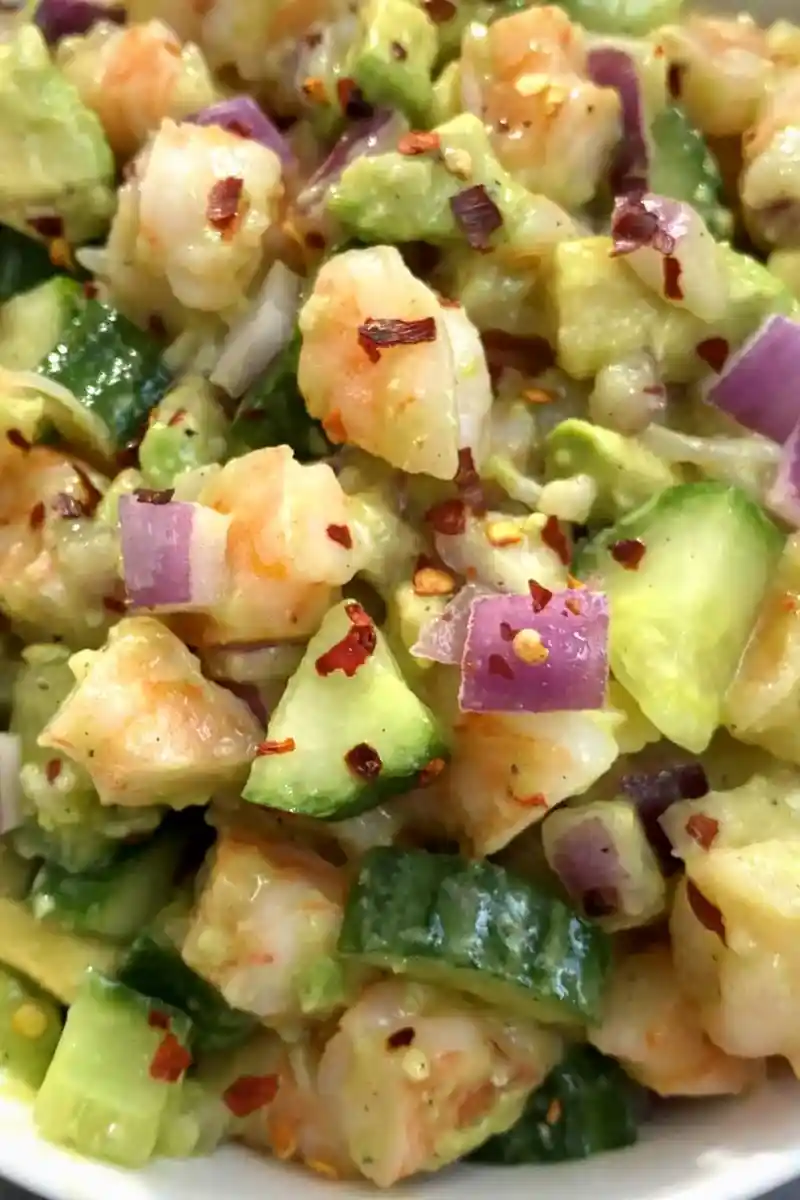
List of ingredients
- 1 pound medium-size shrimp (pre-cooked or raw, peeled, deveined, and tail-on) – serves as the primary protein.
- 5 tablespoons lemon juice – provides a bright, acidic flavor for the dressing.
- 2 tablespoons extra-virgin olive oil – adds a rich, smooth texture and healthy fats.
- 2 garlic cloves, minced – imparts a sharp, aromatic quality.
- 7 ounces English cucumber (roughly 2/3 of a cucumber), diced – adds a crisp, refreshing crunch.
- 2 ounces red onion (roughly 1/2 small red onion), diced – adds a bold, savory contrast.
- 1 avocado, diced – contributes a creamy texture and heart-healthy fats.
- 1/2 teaspoon salt – divided equally between the dressing and the final seasoning.
- Ground pepper – used to taste for a subtle warmth.
- 1/4 teaspoon red pepper flakes (optional) – adds a touch of spicy heat.
step-by-step instructions
- Prepare the shrimp: If using raw shrimp, boil them until they are fully cooked and pink. Chop both boiled and store-bought pre-cooked shrimp into 2 to 3 small, bite-size chunks.
- Create the dressing: In a small mixing bowl, whisk together the lemon juice, olive oil, minced garlic, 1/4 teaspoon of salt, and ground pepper until well combined.
- Chop and combine: Dice the English cucumber, avocado, and red onion. Place these vegetables into a large serving bowl along with the chopped shrimp.
- Finish and serve: Pour the dressing over the mixture and toss gently until all ingredients are coated. Season with the remaining 1/4 teaspoon of salt and pepper. Top with red pepper flakes if desired, and serve immediately or refrigerate until needed. Consume the salad on the same day it is prepared.
Shrimp Selection and Preparation
Choosing Between Raw and Pre-Cooked Shrimp
Using raw shrimp allows you to control the exact texture and salt content of the protein. Boiled shrimp often have a firmer bite compared to mass-produced pre-cooked options. If you choose pre-cooked shrimp, ensure they were prepared recently to avoid a mushy consistency.
Correct Boiling Technique for Raw Shrimp
To boil raw shrimp, bring a pot of salted water to a rolling boil. Add the shrimp and cook for approximately 2 to 3 minutes until they turn opaque and pink. Immediately plunge them into an ice bath to stop the cooking process and prevent overcooking.
Optimal Chopping Method
Cutting each medium shrimp into 2 or 3 pieces ensures an even distribution of protein in every bite. This prevents the shrimp from dominating the texture of the cucumber and avocado. Use a sharp chef’s knife to make clean cuts without crushing the delicate meat.
Vegetable Preparation and Selection
Selecting the Right English Cucumber
English cucumbers are preferred over garden cucumbers because they have thinner skins and fewer seeds. This reduces the amount of excess water released into the salad. Always dice them into uniform pieces to maintain a consistent crunch throughout the dish.
Taming the Red Onion Flavor
Red onions provide a necessary sharp contrast but can sometimes be overpowering. To mellow the flavor, soak the diced onions in cold water for ten minutes before adding them to the bowl. Drain and pat them dry to ensure the dressing adheres properly.
Identifying a Ripe Avocado
Choose an avocado that yields slightly to gentle pressure but is not soft or mushy. A firm-ripe avocado holds its shape better when diced, preventing the salad from becoming creamy or mashed. Avoid avocados with large brown spots inside the flesh.
Preventing Avocado Oxidation
Avocados brown quickly once exposed to air due to enzymatic browning. To minimize this, dice the avocado immediately before adding it to the salad. The lemon juice in the dressing also helps slow down this process by providing an acidic barrier.
Dressing Customization and Tips
The Role of Fresh Lemon Juice
Freshly squeezed lemon juice is superior to bottled versions for this recipe. The natural acidity breaks down the richness of the olive oil and avocado while enhancing the flavor of the shrimp. Avoid using concentrated lemon juice as it can taste overly metallic.
Selecting High-Quality Olive Oil
Extra-virgin olive oil provides a fruity, peppery undertone that complements the Mediterranean theme. Ensure the oil is stored in a dark bottle to prevent oxidation and rancidity. This oil acts as the carrier for the garlic and salt, distributing them evenly.
Managing Garlic Intensity
Two cloves of garlic provide a balanced aromatic base for one pound of shrimp. If you prefer a more pungent flavor, you can increase the amount to three cloves. For a milder taste, use a garlic press to ensure the garlic is completely integrated into the dressing.
Balancing Salt and Pepper
Dividing the salt between the dressing and the final toss ensures a layered seasoning profile. Salt in the dressing penetrates the vegetables, while the final dusting enhances the surface flavors. Use a coarse ground pepper for added texture and a sharper bite.
Serving and Presentation Ideas
Low-Carb Pita Options
This salad can be served inside low-carb pitas or almond flour wraps for a more substantial meal. The pita provides a handheld convenience while maintaining the ketogenic profile of the dish. Lightly toast the pitas before filling to add a contrasting warmth.
Adding Fresh Herb Garnishes
Fresh parsley or cilantro can be folded into the salad to add a burst of herbal freshness. Mint is another excellent addition that complements the cucumber and lemon juice. Chop the herbs finely so they distribute evenly without clumping.
Serving as a High-Protein Main Course
To turn this salad into a full dinner, increase the shrimp portion to 1.5 pounds. Serve it alongside a side of steamed asparagus or a simple leafy green salad. This ensures a high protein intake while keeping the net carbs very low.
Using as a Refreshing Side Dish
As a side dish, this salad pairs well with grilled fish or roasted chicken. The acidity of the lemon dressing cuts through the richness of grilled proteins. Serve it in small individual cups for a sophisticated appetizer presentation.
Storage and Freshness Guidelines
Short-Term Refrigeration
If not serving immediately, store the salad in an airtight glass container in the refrigerator. Keeping it chilled maintains the crispness of the cucumber and the firmness of the shrimp. Stir gently before serving to redistribute the dressing that may have settled.
Why Same-Day Consumption is Essential
The salt in the dressing draws water out of the cucumbers and onions over time through osmosis. This can lead to a watery pool at the bottom of the bowl and softened vegetables. Eating the salad within a few hours ensures the best texture and flavor.
Storing Ingredients Separately
For those who need to prepare in advance, store the chopped vegetables and shrimp in one container and the dressing in a separate jar. Combine them only moments before serving. Keep the diced avocado separate until the very last second to prevent browning.
Substitution Ideas
Replacing Shrimp with Other Seafood
If shrimp is unavailable, you can use scallops or firm white fish like cod or halibut. Ensure the alternative seafood is cooked and chilled before chopping. Calamari rings are also a great option for a similar Mediterranean vibe.
Alternative Citrus Options
Lime juice can be substituted for lemon juice to give the salad a slightly more tropical twist. While it changes the flavor profile away from traditional Mediterranean, it still provides the necessary acidity. Maintain the same 5-tablespoon ratio.
Cucumber Alternatives
If English cucumbers are not available, you can use Persian cucumbers or peeled garden cucumbers. If using garden cucumbers, remove the seeds with a spoon before dicing. This prevents the salad from becoming too watery.
Avocado Substitutes
For those who do not like avocado, diced hearts of palm provide a similar structural crunch. While you lose the creamy fat, the flavor remains neutral and fits the seafood theme. Alternatively, a few cubes of feta cheese can add creaminess.
Troubleshooting Common Issues
Dealing with Watery Salad
If your salad becomes too watery, it is likely due to the cucumber. To fix this, dice the cucumbers and let them sit in a colander with a pinch of salt for 15 minutes. Rinse them and pat dry before adding them to the shrimp.
Fixing an Overly Sour Dressing
If the lemon juice is too intense, add a small amount of additional olive oil to balance the acidity. A tiny pinch of stevia or a drop of liquid monk fruit can also neutralize the sharpness without adding sugar. Whisk thoroughly to emulsify the new oil.
Managing Soft Shrimp Textures
Soft shrimp usually result from overcooking or using old pre-cooked products. To avoid this, always use the ice bath method for boiled shrimp. If using store-bought, check the production date and feel for a firm, springy texture.
Frequently Asked Questions
Is this recipe suitable for a ketogenic diet?
Yes, this recipe is designed to be low-carb and high-protein. It utilizes healthy fats from olive oil and avocado while avoiding sugars and grains, making it ideal for keto.
Can I use pre-cooked shrimp from a bag?
Yes, you can use pre-cooked shrimp. However, ensure they are thawed completely and patted dry with paper towels so they do not dilute the dressing.
How long does the salad stay fresh in the fridge?
The salad is best consumed on the day it is made. While it can stay safe in the fridge for 24 hours, the texture of the vegetables and avocado degrades significantly after that.
Can I add cheese to this salad?
While the original recipe is dairy-free, adding crumbled feta or goat cheese can enhance the Mediterranean flavor. Ensure the cheese is a microbial-rennet variety to keep it clean.
Print
Mediterranean Keto Shrimp Salad
- Total Time: 25 minutes
- Yield: 4 servings 1x
- Diet: Keto, Low Carb, Dairy-Free
Description
This Mediterranean keto shrimp salad is similar to ceviche, except it uses cooked shrimp and a Mediterranean-style dressing. It’s keto-friendly and high in protein!
Ingredients
- 1 pound medium-size shrimp pre-cooked OR raw (peeled, deveined and tail-on)
- 5 tablespoons lemon juice
- 2 tablespoons extra-virgin olive oil
- 2 garlic cloves, minced
- 7 ounces English cucumber, diced
- 2 ounces red onion, diced
- 1 avocado, diced
- 1/2 teaspoon salt
- ground pepper as desired
- 1/4 teaspoon red pepper flakes (optional)
Instructions
- Prepare shrimp: If using raw shrimp, boil them first. Chop each shrimp into 2 to 3 small, bite-size chunks.
- Make dressing: In a small bowl, whisk together lemon juice, olive oil, minced garlic, 1/4 teaspoon salt and pepper to season.
- Chop and combine: Combine the diced cucumber, avocado, chopped shrimp and red onion in a large serving bowl.
- Finish and serve: Toss dressing with salad ingredients until combined. Season with 1/4 teaspoon salt and pepper as needed. Top with red pepper flakes as desired. Serve immediately or refrigerate until serving.
Notes
If purchasing pre-cooked shrimp, ensure it was prepared the same day for best firmness. Use a firm avocado and dice it immediately before adding to the salad. For the freshest taste, serve the salad on the day it is prepared.
- Prep Time: 20 minutes
- Cook Time: 5 minutes
- Category: Seafood Salad
- Method: Mixing
- Cuisine: Mediterranean
Nutrition
- Serving Size: 1 serving
- Calories: 255.7 kcal
- Sugar: 2 g
- Sodium: 276 mg
- Fat: 13 g
- Saturated Fat: 1.9 g
- Unsaturated Fat: 11.1 g
- Trans Fat: 0 g
- Carbohydrates: 7.8 g
- Fiber: 3.1 g
- Protein: 28.4 g
- Cholesterol: 214.3 mg