These ground beef enchiladas feature a rich homemade red sauce and melted Colby-jack cheese. The combination of seasoned beef and lightly fried corn tortillas creates a satisfying and hearty dinner.
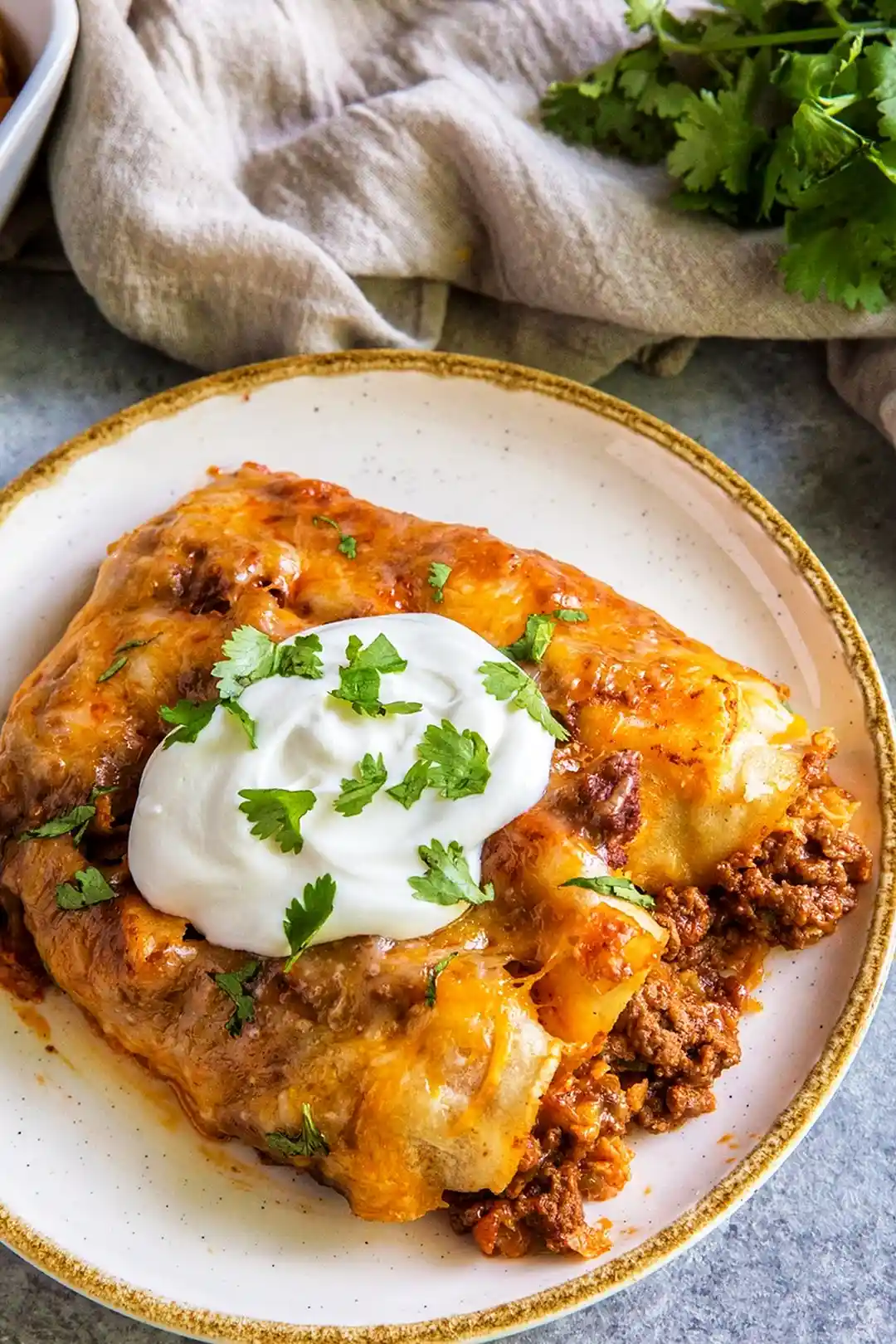
List of ingredients
- 1 tablespoon vegetable oil (plus additional for frying tortillas) – provides a high smoke point for sautéing.
- 1/2 cup onion (finely diced) – adds a sweet aromatic base.
- 1 jalapeno (minced and seeds removed) – adds mild heat and brightness.
- 4 cloves garlic (minced) – essential for savory depth.
- 1 pound 93/7 lean ground beef – keeps the filling hearty without excessive grease.
- 1 cup beef broth (low sodium) – provides a savory liquid base for the sauce.
- 2 8 oz cans tomato sauce (good quality) – creates a thick, smooth sauce texture.
- 2 tablespoons chili powder – the primary spice for authentic red sauce flavor.
- 1 teaspoon smoked paprika – adds a subtle woody, smoky note.
- 1 tablespoon sugar – balances the acidity of the tomato sauce.
- 1 teaspoon cumin – provides earthy, warm undertones.
- 1 teaspoon kosher salt – enhances all other flavors.
- 1/2 teaspoon freshly ground black pepper – adds a sharp, classic spice.
- 2 tablespoons cilantro (chopped) – adds a fresh, herbal finish.
- 12 corn tortillas – the traditional vessel for enchiladas.
- 16 oz Colby-jack cheese (shredded) – melts smoothly and adds a mild creaminess.
- sour cream (for serving) – provides a cool contrast to the spiced beef.
step-by-step instructions
- Sauté Aromatics: In a large skillet, sauté onions and jalapeño over medium low heat until onions start to soften and turn translucent, 2-3 minutes. Stir in garlic and cook 1 minute more.
- Brown the Beef: Increase heat and add ground beef to skillet and brown until cooked through.
- Simmer the Sauce: Add beef broth, tomato sauce, chili powder, sugar, cumin, salt and pepper to pan and stir to combine. Let simmer over low heat for 10 minutes or until sauce has reduced slightly.
- Prepare Tortillas: Meanwhile in a second smaller skillet, lightly fry corn tortillas in hot vegetable oil. Tortillas should still be pliable for rolling. Set tortillas aside with paper towels between each layer.
- Final Sauce Touch: Once sauce has reduced slightly, stir in 2 tablespoons of chopped fresh cilantro.
- Preheat and Prep: Preheat oven to 400 degrees and spray a 9×13 baking dish with non stick cooking spray.
- Begin Assembly: To assemble enchiladas, start by adding 1/2 cup of enchilada sauce mixture in bottom of baking pan.
- Fill and Roll: Use a slotted spoon to evenly divide meat mixture into each of the tortillas, then divide 8 oz of cheese between all 12 enchiladas, roll and place seam side down in baking dish.
- Top and Bake: Pour remaining enchilada sauce over rolled enchiladas and top with remaining cheese.
- Final Cooking: Cover dish with foil and bake at 400 degrees for 20-30 minutes, or until heated through and hot and bubbly.
- Garnish and Serve: Sprinkle with additional fresh cilantro and serve with sour cream.
Optimizing the Beef Filling
Selecting the Right Lean Ground Beef
Using 93/7 lean ground beef is highly recommended to prevent the filling from becoming too greasy. This allows you to sauté aromatics and brown the meat in the same pan without needing to drain the fat. If you use a higher fat percentage, be sure to brown the meat first and drain it before adding the vegetables.
Managing the Sauté Temperature
Keep the heat on medium-low when softening the onions and jalapeños to prevent burning. This slow process allows the sugars in the onion to release, creating a deeper flavor profile. Adding the garlic last ensures it doesn’t scorch, which would introduce a bitter taste to the beef.
Balancing Sauce Consistency
Simmering the meat and sauce together for 10 minutes is crucial for flavor concentration. This step reduces the excess water from the beef broth and tomato sauce, thickening the mixture. A thicker sauce prevents the enchiladas from becoming too watery during the baking process.
Enhancing Savory Notes
Using low-sodium beef broth allows you to control the salt levels more precisely with kosher salt. This ensures the sauce remains savory without becoming overly salty as it reduces. High-quality tomato sauce provides a consistent texture and a bright base for the spices.
Mastering Tortilla Preparation
The Purpose of Light Frying
Lightly frying the corn tortillas in vegetable oil creates a thin barrier that prevents them from absorbing too much liquid. Without this step, the tortillas often become mushy or soggy after baking. The oil seals the surface while keeping the tortilla flexible.
Maintaining Tortilla Pliability
The goal of frying is to soften the tortilla, not to make it crispy like a tostada. Remove the tortillas from the oil as soon as they are pliable enough to roll without cracking. Over-frying will make the tortillas brittle and difficult to assemble.
Using Paper Towels for Storage
Placing paper towels between the fried tortillas absorbs excess oil. This prevents the enchiladas from feeling greasy on the palate. It also keeps the tortillas from sticking together while you prepare the filling.
Choosing the Right Frying Oil
Vegetable oil is ideal because of its neutral flavor and high smoke point. Avocado oil or canola oil are also suitable alternatives that will not alter the taste of the corn. Avoid using butter for this step as it can burn at the temperatures needed to soften the tortillas.
Sauce Customization and Flavor
Using Smoked Paprika for Depth
Smoked paprika provides a subtle charcoal-like flavor that mimics traditional slow-cooked sauces. If you do not have smoked paprika, regular paprika can be used, though the flavor will be more mild. This spice is key to achieving a complex, rich red sauce.
Balancing Acidity with Sugar
The addition of one tablespoon of sugar helps neutralize the natural acidity found in canned tomato sauce. This creates a smoother, more balanced taste that complements the earthy cumin and chili powder. The sugar does not make the sauce sweet; it simply rounds out the sharpness.
Controlling Heat Levels
Removing the seeds and membranes from the jalapeño keeps the heat moderate and family-friendly. If you prefer a spicier dish, leave some of the seeds in or add a pinch of cayenne pepper. Adjusting the amount of chili powder can also shift the flavor from earthy to spicy.
Adding Fresh Herbal Notes
Adding fresh cilantro at the very end of the sauce-making process preserves its bright, citrusy flavor. Cooking cilantro for too long can cause it to lose its vibrancy and turn dull. For those who dislike cilantro, fresh parsley is an excellent substitute for a similar pop of color.
Assembly and Baking Techniques
Using a Slotted Spoon for Filling
A slotted spoon is the best tool for filling tortillas because it separates the meat from the excess liquid. This prevents the filling from dripping and ensures that a consistent amount of sauce remains in the pan for topping. It makes the assembly process much cleaner.
Even Cheese Distribution
Dividing the first 8 ounces of cheese equally among the 12 tortillas ensures every bite is cheesy. It is helpful to pre-portion the cheese into a bowl before you start rolling. This prevents you from running out of cheese for the final topping layer.
Proper Rolling and Placement
Always place the enchiladas seam-side down in the baking dish. This uses the weight of the tortilla to hold the roll together so it doesn’t unravel during baking. Packing them snugly together also helps them maintain their shape.
The Role of Aluminum Foil
Covering the dish with foil traps steam inside the pan, which keeps the tortillas moist and helps the cheese melt evenly. If you prefer a slightly crispier top, remove the foil for the last 5-10 minutes of baking. This allows the cheese to brown and bubble.
Serving and Presentation Ideas
Adding Creamy Toppings
Sour cream provides a cool, creamy contrast to the warm, spiced beef. You can dollop it on top of each enchilada or serve it in a bowl on the side. Greek yogurt is a high-protein alternative that offers a similar tang.
Incorporating Fresh Vegetables
Dicing fresh avocado or slicing it into wedges adds a rich, buttery texture to the plate. Finely diced raw white onions or radishes can provide a sharp crunch that cuts through the richness of the cheese. These toppings add visual appeal and nutritional balance.
Pairing with Mexican Rice
Serving these enchiladas alongside a fluffy Mexican red rice completes the meal. The rice absorbs any extra sauce from the baking dish, ensuring no flavor goes to waste. A side of corn salad (esquites) also pairs well with the beef.
Complementing with Refried Beans
Hearty refried beans provide a smooth, earthy side that complements the texture of the enchiladas. Topping the beans with a bit of extra Colby-jack cheese makes the side dish feel cohesive with the main course. This combination makes the meal more filling.
Storage and Make-Ahead Advice
Refrigerating Leftovers
Store leftover enchiladas in an airtight container in the refrigerator for up to three days. Ensure the dish is completely cooled before sealing the lid to prevent condensation. This keeps the tortillas from becoming overly soggy during storage.
Freezing for Future Meals
These enchiladas freeze exceptionally well if assembled but not baked. Once assembled, let them cool completely, cover tightly with plastic wrap and foil, and freeze for up to three months. This makes them a great option for meal prepping.
Proper Thawing Process
Thaw frozen enchiladas in the refrigerator overnight before baking. This ensures the center of the rolls reaches a safe temperature without overcooking the exterior. Avoid thawing them on the counter to maintain food safety standards.
Reheating for Best Texture
To maintain the best texture, reheat enchiladas in the oven at 350 degrees Fahrenheit until hot. While a microwave is faster, it can make the tortillas rubbery. Covering them with foil during reheating prevents the cheese from drying out.
Common Troubleshooting
Preventing Soggy Tortillas
If your tortillas are too soggy, ensure you are frying them long enough to create an oil barrier. Also, avoid over-filling the tortillas with too much liquid sauce. Using the slotted spoon for the meat filling is the most effective way to prevent this issue.
Fixing Dry Meat Filling
If the meat mixture seems too dry before rolling, add a tablespoon of beef broth or tomato sauce. This happens occasionally if the sauce is simmered for too long over high heat. The filling should be moist but not runny.
Dealing with Unmelted Cheese
If the cheese isn’t melting properly, check that your oven temperature is accurate. Using freshly shredded cheese instead of pre-shredded bags can also help, as pre-shredded cheese contains anti-clumping agents that slow melting. Ensure the foil is sealed tightly to trap heat.
Correcting Overly Acidic Sauce
If the sauce tastes too acidic, stir in a tiny pinch more of sugar or a small amount of unsalted butter. The fat in butter helps mellow out the sharpness of the tomato sauce. Taste the sauce before assembling the enchiladas to make these adjustments.
Frequently Asked Questions
Can I use flour tortillas instead of corn?
Yes, you can use flour tortillas, but the flavor and texture will be different. Flour tortillas are softer and more neutral, whereas corn provides a traditional earthy taste and holds up better to the sauce. If using flour, you can skip the frying step.
What is the best substitute for Colby-Jack?
Monterey Jack or a blend of Cheddar and Mozzarella are excellent substitutes. Monterey Jack is particularly good because it has a similar melting point and mild flavor to Colby-Jack. Avoid using hard cheeses like Parmesan, which do not melt smoothly.
How do I make this recipe spicier?
To increase the heat, leave the seeds in the jalapeno or add a teaspoon of crushed red pepper flakes to the sauce. You can also serve the final dish with sliced fresh serrano peppers on top. Increasing the amount of chili powder will add more depth but less sharp heat.
Can I use a different protein instead of beef?
This sauce works well with shredded chicken or ground turkey. If using chicken, simmer the shredded meat in the sauce for a few minutes before filling the tortillas. For turkey, follow the same browning process as the ground beef.
Do I have to fry the tortillas?
Frying is not mandatory, but it is highly recommended for texture. If you choose not to fry them, you can warm them in a damp paper towel in the microwave for 30 seconds to make them pliable. However, be aware that they will be softer after baking.
Print
Cheesy Ground Beef Enchiladas
- Total Time: 50 minutes
- Yield: 6 servings 1x
- Diet: General
Description
Seasoned ground beef, melty cheese and an easy homemade enchilada sauce.
Ingredients
- 1 tablespoon vegetable oil (plus additional for frying tortillas)
- 1/2 cup onion, finely diced
- 1 jalapeno, minced and seeds removed
- 4 cloves garlic, minced
- 1 pound 93/7 lean ground beef
- 1 cup beef broth (low sodium)
- 2 8 oz cans tomato sauce
- 2 tablespoons chili powder
- 1 teaspoon smoked paprika
- 1 tablespoon sugar
- 1 teaspoon cumin
- 1 teaspoon kosher salt
- 1/2 teaspoon freshly ground black pepper
- 2 tablespoons cilantro, chopped
- 12 corn tortillas
- 16 oz Colby-jack cheese (microbial-rennet), shredded
- sour cream (for serving)
Instructions
- Sauté: Sauté onions and jalapeño over medium low heat until onions start to soften and turn translucent, 2-3 minutes.
- Garlic: Stir in garlic and cook 1 minute more.
- Brown: Increase heat and add ground beef to skillet and brown until cooked through.
- Simmer: Add beef broth, tomato sauce, chili powder, sugar, cumin, salt and pepper to pan and stir to combine; let simmer over low heat for 10 minutes.
- Fry: Lightly fry corn tortillas in hot vegetable oil until pliable.
- Finish Sauce: Stir in 2 tablespoons of chopped fresh cilantro.
- Prepare Pan: Preheat oven to 400 degrees and spray a 9×13 baking dish with non stick cooking spray.
- Assemble: Add 1/2 cup of enchilada sauce mixture in bottom of baking pan, fill tortillas with meat and cheese, roll and place seam side down.
- Top: Pour remaining enchilada sauce over rolled enchiladas and top with remaining cheese.
- Bake: Cover dish with foil and bake at 400 degrees for 20-30 minutes until heated through and bubbly.
- Serve: Sprinkle with additional fresh cilantro and serve with sour cream.
Notes
Lightly frying the corn tortillas prevents them from getting soggy once you bake the enchiladas.
- Prep Time: 30 minutes
- Cook Time: 20 minutes
- Category: Dinner
- Method: Baking
- Cuisine: Mexican
Nutrition
- Serving Size: 2 enchiladas
- Calories: 565 kcal
- Sugar: 4 g
- Sodium: 1114 mg
- Fat: 32 g
- Saturated Fat: 19 g
- Unsaturated Fat: 13 g
- Trans Fat: 0 g
- Carbohydrates: 31 g
- Fiber: 5 g
- Protein: 38 g
- Cholesterol: 119 mg