This nutrient-dense vegan carrot potato soup delivers a rich, creamy texture without the need for dairy. It is a practical, one-pot meal that combines root vegetables for a comforting and healthy dinner.
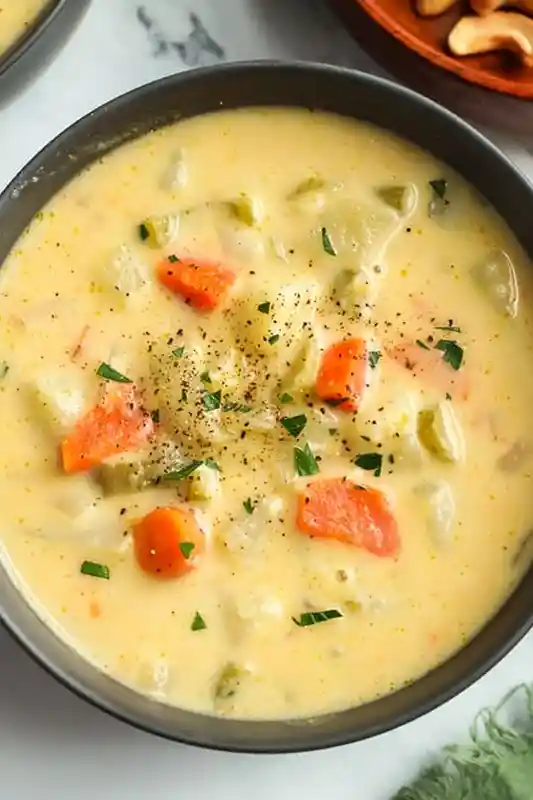
List of ingredients
- 2 tablespoons olive oil – used for sautéing the base vegetables.
- 1 medium yellow onion, diced – provides a foundational savory flavor.
- 3 large carrots, peeled and chopped – adds natural sweetness and color.
- 3 celery ribs, chopped – contributes an earthy, aromatic depth.
- 3 garlic cloves, minced – enhances the overall savory profile.
- 1/2 teaspoon dried thyme – adds a subtle herbal note.
- 2 medium russet potatoes (about 12oz), peeled and cut into 1/2 inch chunks – provides the primary starch for thickness.
- 4 cups vegetable broth – the liquid base for simmering.
- 1 bay leaf – infuses the soup with a mild floral aroma.
- 1/2 cup cashews, soaked for 4 hours – the base for the dairy-free cream.
- 1 teaspoon lemon juice – balances the richness with acidity.
- Salt and pepper – used for final seasoning to taste.
step-by-step instructions
- Sauté Aromatics: Heat olive oil in a large dutch oven or pot over medium heat. Add the diced onion, chopped carrots, and chopped celery, cooking for 6 minutes while stirring occasionally to prevent sticking.
- Add Seasonings: Stir in the minced garlic, dried thyme, and potato chunks. Continue to cook for 2 minutes to toast the garlic and coat the potatoes in oil.
- Simmer: Pour in the vegetable broth and add the bay leaf. Bring the mixture to a boil, then reduce heat to low. Simmer for 20 minutes or until all vegetables are tender. Remove and discard the bay leaf.
- Prepare Cashew Base: While the soup simmers, blend 1/2 cup of soaked cashews with 1/2 cup of water. Process until the mixture is completely smooth and creamy.
- Blend and Emulsify: Transfer one cup of the cooked soup into the blender with the cashew cream and lemon juice. Blend until the mixture is smooth and fully integrated.
- Final Combine: Stir the blended cashew mixture back into the main pot. Season with salt and pepper to taste before serving.
Comprehensive Ingredient Guide
Selecting the Right Potatoes
Russet potatoes are recommended for this recipe due to their high starch content. When cooked and blended, these starches break down to create a naturally thick and creamy consistency. Waxy potatoes, like red or fingerling, will not provide the same thickening effect.
Choosing the Best Carrots
Large, traditional carrots provide a balanced sweetness and a deep orange hue. If using baby carrots, ensure you use approximately one cup of chopped carrots to maintain the correct ratio of vegetables to liquid.
The Role of Celery in Flavor
Celery serves as a key component of the aromatic base, contributing a salty, savory undertone. While it can be omitted if unavailable, it adds significant nutritional value and depth to the broth.
Optimizing Vegetable Broth
Use a high-quality vegetable broth to ensure the soup has a robust flavor. A broth with a ‘not-chicken’ style profile often works best for those seeking a traditional savory soup taste without animal products.
Cashew Cream Preparation Techniques
Traditional Overnight Soaking
Soaking cashews in water for 4 to 5 hours or overnight softens the nut’s structure. This ensures that the resulting cream is perfectly smooth and free of any gritty texture, especially when using standard blenders.
The Quick-Soak Boiling Method
For faster preparation, place cashews in a heat-safe bowl and cover them with boiling water. Cover the bowl with a plate and let them sit for 15 minutes before draining and blending with fresh water.
Blending for Maximum Smoothness
Use a high-powered blender to process the cashews and water. If you notice any small chunks, continue blending on the highest setting for an additional 60 seconds to achieve a professional, creamy consistency.
Nut-Free Cream Alternatives
If cashews are not an option, full-fat coconut milk can be used as a replacement. While this will introduce a slight coconut flavor, it provides the same creamy mouthfeel and fat content required for the recipe.
Blending Hot Liquids Safely
Managing Steam Pressure
Never fill a blender to the top with boiling liquid, as the steam can build up pressure rapidly. Only transfer a small amount of soup, such as one cup, to the blender to minimize the risk of an overflow.
Proper Use of the Blender Vent
When blending hot soup, always remove the small center cap of the lid to allow steam to escape. This prevents the lid from blowing off due to the internal pressure created by the hot liquid.
The Kitchen Towel Method
Place a folded kitchen towel over the blender lid and hold it firmly in place while operating. This provides an extra layer of protection against potential splatters of hot liquid.
Avoiding Sealed Bullet Blenders
Do not use airtight, bullet-style blenders for hot liquids. Because these containers must be sealed completely to function, the steam cannot escape, which can lead to the container exploding.
Flavor Enhancements and Variations
Adjusting the Acidity
Lemon juice is used to brighten the flavors and cut through the richness of the cashew cream. If lemon juice is unavailable, a small splash of white wine vinegar provides a similar acidic balance.
Adding Heat and Spice
To add a spicy element, stir in a pinch of cayenne pepper or red pepper flakes during the sautéing phase. For a smokier profile, a teaspoon of smoked paprika can be added with the thyme.
Fresh Herb Substitutions
While dried thyme is the standard, fresh thyme leaves offer a more vibrant herbal flavor. Use three times the amount of fresh herbs compared to dried to maintain the same intensity.
Increasing the Creaminess
For an even richer soup, increase the amount of cashew cream by adding an extra 1/4 cup of soaked cashews. Alternatively, stir in a tablespoon of nutritional yeast for a savory, cheese-like depth.
Serving and Pairing Ideas
Recommended Bread Pairings
A crusty loaf of sourdough bread is the ideal accompaniment to this soup. The acidity of the sourdough complements the sweetness of the carrots and the creaminess of the potatoes.
Fresh Green Side Salads
Pair the soup with a simple green salad featuring a lemon-olive oil vinaigrette. The crisp texture and acidity of the salad provide a refreshing contrast to the dense, creamy soup.
Roasted Vegetable Accompaniments
Roasted cauliflower or Brussels sprouts make excellent side dishes. Their charred edges and earthy flavors complement the root vegetables found within the soup.
Garnish Options for Presentation
Garnish the soup with a drizzle of olive oil, a sprinkle of fresh parsley, or a few cracked black peppercorns. These additions add visual appeal and a fresh burst of flavor to each bowl.
Storage and Preservation
Refrigeration Guidelines
Store leftover soup in an airtight container in the refrigerator for up to 4 days. Ensure the soup has cooled completely before sealing the container to prevent condensation and spoilage.
Freezing for Long-Term Storage
This soup freezes well for up to 3 months. Use freezer-safe containers or bags, leaving a small amount of headspace at the top to allow for expansion as the liquid freezes.
Thawing Process
Thaw frozen soup in the refrigerator overnight for the safest results. Alternatively, place the frozen container in a bowl of cold water, changing the water every 30 minutes until thawed.
Maintaining Texture After Storage
Because of the potato starch, the soup will thicken significantly when chilled. Do not be alarmed by the gel-like consistency; it will return to a liquid state upon reheating.
Reheating Techniques
Stovetop Warming Method
Heat the soup in a pot over medium-low heat, stirring frequently. This method allows you to control the temperature and ensures the soup is heated evenly without burning the bottom.
Microwave Reheating Instructions
Place the soup in a microwave-safe bowl and heat in 1-minute intervals. Stir well between each interval to distribute the heat and prevent hot spots.
Thinning the Soup
If the soup is too thick after reheating, stir in small amounts of vegetable broth or water. Add liquid one tablespoon at a time until the desired consistency is achieved.
Preventing Overheating
Avoid bringing the soup to a rolling boil during the reheating process. Excessive heat can cause the cashew cream to separate or the potato starches to break down too much, altering the texture.
Troubleshooting Common Issues
Solving an Overly Thick Consistency
If the soup becomes too thick, it is likely due to the high starch content of the russet potatoes. Stir in additional vegetable broth or water until the soup reaches a pourable consistency.
Addressing a Thin or Watery Base
If the soup is too thin, simmer it for an additional 5 to 10 minutes without a lid to reduce the liquid. You can also blend an extra potato chunk into the cashew cream to increase the thickness.
Balancing Excessive Saltiness
If the soup is too salty, add a splash of water or a small amount of unsweetened plant-based cream. The additional volume and fat will help dilute the salt concentration.
Fixing a Dull Flavor Profile
If the soup tastes bland, increase the acidity by adding another teaspoon of lemon juice. A pinch more of salt or a dash of black pepper can also wake up the flavors of the root vegetables.
Frequently Asked Questions
Can I use sweet potatoes instead of russet potatoes?
Sweet potatoes are not recommended because they lack the specific starchy texture of russets. Using them will change the flavor profile to be much sweeter and will result in a thinner soup.
Can I use almonds or peanuts instead of cashews?
No, other nuts do not emulsify as well as cashews. Almonds and peanuts can leave a grainy texture and a strong flavor that clashes with the carrots and potatoes.
Is an immersion blender sufficient for this recipe?
An immersion blender can work for the soup, but a stand blender is required to get the cashews completely smooth. If you only have an immersion blender, soak the cashews for a longer period to ensure they are very soft.
Can I make this soup without any nuts?
Yes, you can substitute the cashew cream with full-fat coconut milk or simply omit the cream entirely. The soup will still be flavorful, though it will be less creamy.
Print
Creamy Vegan Carrot Potato Soup
- Total Time: 45 minutes
- Yield: 8 cups 1x
- Diet: Vegan
Description
This creamy vegan carrot potato soup is incredibly delicious and surprisingly simple to make. Enjoy this veggie packed soup for a healthy twist on a classic comfort food recipe.
Ingredients
- 2 tablespoons olive oil
- 1 medium yellow onion, diced
- 3 large carrots, peeled and chopped
- 3 celery ribs, chopped
- 3 garlic cloves, minced
- 1/2 teaspoon dried thyme
- 2 medium russet potatoes (about 12oz) peeled and cut into 1/2 chunks
- 4 cups vegetable broth
- 1 bay leaf
- 1/2 cup cashews, soaked for 4 hours
- 1 teaspoon lemon juice
- Salt and pepper
Instructions
- Step: In a large dutch oven or pot, add the olive oil, onion, carrots, and celery and cook over medium, heat for 6 minutes, stirring occasionally.
- Step: Add the garlic, thyme, and potatoes and continue to cook for 2 minutes.
- Step: Add the vegetable broth and bay leaf and bring to a boil.
- Step: Reduce the heat to low and simmer for 20 minutes or until the vegetables are tender. Remove the bay leaf.
- Step: While the soup is simmering, prepare the cashew cream.
- Step: Blend 1/2 cup of soaked cashews with 1/2 cup of water. Blend until completely smooth.
- Step: Once the vegetables in the soup have softened, add one cup of soup to the blender, add the lemon juice and continue to blend until smooth.
- Step: Stir the cashew and soup mixture back into the pot. Season with salt and pepper to taste.
Notes
To quick-soak the cashews, bring one cup of water to a boil, then add the cashews. Cover and let sit for 10 minutes. Drain the cashews, then add them to the blender with 1/2 cup of water. Blend until smooth.
- Prep Time: 15 minutes
- Cook Time: 30 minutes
- Category: Soup
- Method: Stovetop
- Cuisine: American
Nutrition
- Serving Size: 1 cup
- Calories: 210 kcal
- Sugar: 7 g
- Sodium: 540 mg
- Fat: 11 g
- Saturated Fat: 2 g
- Unsaturated Fat: 9 g
- Trans Fat: 0 g
- Carbohydrates: 24 g
- Fiber: 5 g
- Protein: 5 g
- Cholesterol: 0 mg