Experience a rich and velvety pasta dish inspired by the traditional flavors of the Amalfi Coast. This version enhances the classic Roman base with the addition of milk and shallots for a smoother, more refined texture.
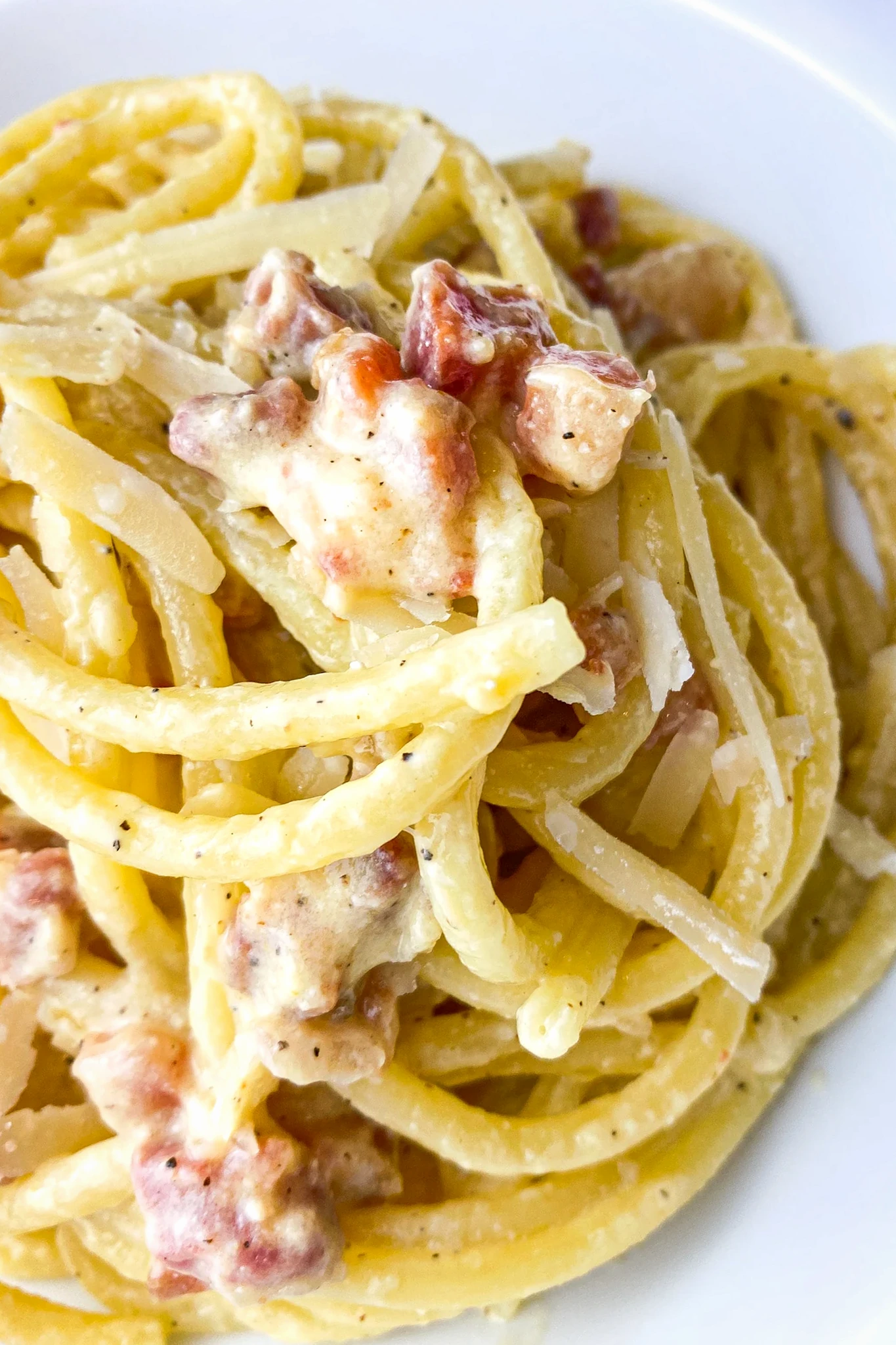
List of ingredients
- 1 pound good-quality spaghetti – provides the essential al dente structure.
- 8 ounces beef pancetta or cured beef – offers a salty, savory depth without using pork.
- 1 ½ cup Parmigiano Reggiano – finely grated to ensure a seamless melt into the sauce.
- ¾ cup whole milk – adds a layer of creamy richness to the emulsion.
- 2 shallots – finely chopped to provide a subtle, sweet aromatic base.
- 3 large eggs – acts as the primary thickening agent for the sauce.
- 1 tablespoon extra-virgin olive oil – used for sautéing the aromatics.
- ½ teaspoon black pepper – freshly cracked to add a warm, pungent kick.
step-by-step instructions
- Whisk the sauce base: In a medium mixing bowl, combine the whole milk, eggs, grated Parmigiano Reggiano, and black pepper. Whisk vigorously until the mixture is smooth and well combined, then set it aside.
- Boil the spaghetti: Bring a large pot of salted water to a boil. Cook the spaghetti until it is al dente, meaning it still has a slight bite, following the specific timing on the packaging.
- Brown the beef pancetta: While the pasta cooks, place the beef pancetta in a large pot over medium heat. Sauté for 5-8 minutes until the meat is just starting to get crispy, then carefully drain away the excess liquid fat.
- Sauté the aromatics: Add the chopped shallots to the pot with the beef pancetta. Add a dash of olive oil if the pan is too dry and sweat the shallots for about 2 minutes until translucent. Turn the heat to low to keep the mixture warm.
- Combine pasta and meat: Drain the spaghetti and immediately transfer the noodles into the pot containing the beef pancetta and shallots. Use tongs to toss the pasta thoroughly, ensuring every strand is coated in the savory oils.
- Emulsify the sauce: Turn the stove off completely to prevent the eggs from scrambling. Pour the egg and cheese mixture over the hot pasta, stirring constantly and quickly until the sauce thickens and becomes steaming hot.
- Final plating: Serve the pasta immediately. Garnish each plate with an additional sprinkle of grated Parmigiano Reggiano and a pinch of freshly cracked black pepper.
Professional Cooking Techniques
Use Room Temperature Eggs for Better Emulsion
Bringing your eggs to room temperature before whisking prevents the sauce from shocking when it hits the hot pasta. You can achieve this by placing cold eggs in a bowl of warm water for five minutes.
This temperature stability helps create a more cohesive emulsion between the fats and the liquids. It reduces the risk of the sauce separating or becoming grainy during the final mixing stage.
Grate Cheese Finely for Faster Melting
Using a microplane or the finest side of a box grater ensures that the Parmigiano Reggiano melts instantly into the sauce. Large shreds take longer to dissolve and can result in clumps of cheese.
Finely grated cheese distributes more evenly throughout the dish, contributing to that signature velvety texture. It allows the cheese to integrate with the milk and eggs more efficiently.
Manage Heat to Prevent Egg Curdling
The most critical step in carbonara is removing the pan from the heat source before adding the egg mixture. Residual heat from the pasta and the pot is sufficient to cook the eggs without scrambling them.
If the pan is too hot, the eggs will cook too quickly and turn into small pieces of scrambled egg. Stirring constantly while off the heat ensures the sauce stays silky and smooth.
Utilize Reserved Pasta Water for Consistency
Before draining your spaghetti, reserve about one cup of the starchy cooking water. This liquid gold can be used to thin out the sauce if it becomes too thick or sticky.
Adding a tablespoon of pasta water at a time helps emulsify the sauce further. The starch in the water binds the fat and liquid together for a professional gloss.
Ingredient Substitutions
Alternative Pasta Shapes for Different Textures
While spaghetti is the traditional choice, rigatoni or bucatini are excellent alternatives. Rigatoni, with its hollow center and ridges, captures more of the creamy sauce in every bite.
Fettuccine is another great option for those who prefer a wider noodle. The increased surface area allows the cheese and egg mixture to cling more effectively to the pasta.
Swapping Hard Cheeses for Different Profiles
If you do not have Parmigiano Reggiano, Pecorino Romano is a strong substitute. Note that Pecorino is typically saltier and has a sharper tang, so you may want to reduce added salt elsewhere.
A blend of both cheeses often provides a balanced flavor profile. Using a 50/50 mix offers both the nuttiness of Parmesan and the sharpness of Pecorino.
Dairy Alternatives for the Creamy Component
For those avoiding cow’s milk, a small amount of heavy cream can be used for a richer result. Alternatively, an unsweetened cashew milk can provide a similar creaminess for a dairy-free twist.
When using alternatives, ensure they are unsweetened and neutral in flavor. This preserves the savory integrity of the beef pancetta and eggs.
Onion Substitutes for the Aromatic Base
If shallots are unavailable, finely diced yellow onion or leeks can be used instead. Yellow onions provide a stronger punch, while leeks offer a milder, more buttery flavor.
Ensure the substitute is diced very finely so that it integrates well with the pasta. Sauté them slowly to avoid browning them too quickly, which can make them bitter.
Creative Flavor Variations
Incorporating Sautéed Mushrooms for Earthiness
Adding sliced cremini or shiitake mushrooms to the sauté process adds a deep, earthy dimension to the dish. Sauté them along with the beef pancetta until they are golden brown.
Mushrooms complement the saltiness of the cured beef and the richness of the cheese. This variation turns the dish into a heartier meal perfect for colder months.
Adding Fresh Garlic for a Pungent Aroma
For a bolder flavor, mince one clove of garlic and add it to the shallots during the last minute of sautéing. Garlic adds a sharp aromatic quality that cuts through the richness of the eggs.
Be careful not to burn the garlic, as it can become bitter. Adding it late in the process ensures it softens without darkening too much.
Enhancing with Fresh Green Herbs
Stirring in finely chopped fresh parsley or chives at the very end adds a pop of color and freshness. The herbal notes balance the heavy fats in the cheese and beef pancetta.
Parsley provides a clean, grassy taste, while chives offer a mild onion-like quality. These should be added after the heat is off to preserve their bright color.
Adding Lemon Zest for a Bright Finish
A small pinch of freshly grated lemon zest stirred into the final sauce can brighten the entire dish. The acidity of the lemon cuts through the creaminess, making the flavors more vibrant.
Avoid adding lemon juice, as the acid could potentially curdle the egg and milk mixture. Zest provides the aroma and brightness without affecting the sauce’s stability.
Serving and Pairing Ideas
Pairing with a Crisp Green Salad
Serve this carbonara alongside a simple arugula or mixed greens salad. A light dressing of lemon juice and olive oil provides a sharp contrast to the rich pasta.
The acidity and bitterness of the greens cleanse the palate between bites of the creamy sauce. This makes the overall dining experience feel lighter and more balanced.
Accompaniment of Roasted Vegetables
Roasted asparagus or broccolini makes an excellent side dish for this meal. The charred, slightly bitter flavor of the vegetables complements the savory beef pancetta.
Roasting the vegetables with a bit of garlic and olive oil mirrors the flavors in the pasta. This adds essential vitamins and a variety of textures to the plate.
Adding Garlic Toast for Extra Texture
Slices of toasted sourdough rubbed with a raw garlic clove provide a satisfying crunch. This is perfect for scooping up any remaining sauce left on the plate.
Ensure the toast is golden brown and crisp. The contrast between the crunchy bread and the silky pasta creates a more dynamic meal.
Non-Alcoholic Beverage Pairings
A chilled glass of sparkling water with a squeeze of fresh lime or lemon is an ideal pairing. The carbonation helps cut through the richness of the egg and cheese.
Alternatively, a cold iced tea with a hint of mint can provide a refreshing counterpoint to the saltiness of the dish. Keep the drinks crisp and acidic to balance the fats.
Storage and Reheating Guide
Storing Leftover Carbonara
Place any leftovers in an airtight container and refrigerate immediately. Carbonara is best consumed within two days, as the emulsion will naturally begin to break down over time.
Keep the container tightly sealed to prevent the pasta from drying out. Be aware that the sauce will thicken significantly once chilled.
The Proper Way to Reheat
Avoid the microwave, as it will overcook the eggs and turn the sauce into clumps. Instead, gently reheat the pasta in a skillet over low heat.
Add a splash of whole milk or reserved pasta water to the pan. This helps re-emulsify the sauce and restores the creamy consistency as it warms up.
Preventing Sauce Separation During Warming
Stir the pasta constantly while reheating on the stove. Use a low temperature to ensure the heat is distributed evenly and the eggs do not scramble a second time.
If the sauce looks oily, whisk in a small knob of butter or a teaspoon of milk. This encourages the fats and liquids to bind together again.
Freezing Considerations
It is not recommended to freeze pasta carbonara. The emulsion of eggs, milk, and cheese does not survive the freezing and thawing process, resulting in a grainy texture.
The pasta also tends to become mushy after being frozen and thawed. For the best quality, prepare only what you plan to eat within 48 hours.
Troubleshooting Common Issues
Fixing a Sauce That is Too Thick
If the sauce feels too heavy or sticky, stir in a tablespoon of warm pasta water. Continue adding small amounts until the sauce glides smoothly over the noodles.
The starch in the water acts as a stabilizer, thinning the sauce without sacrificing the creamy mouthfeel. Do this while the pasta is still hot for the best results.
Addressing a Bland Flavor Profile
If the dish lacks punch, increase the amount of freshly cracked black pepper. The heat from the pepper is essential for balancing the richness of the dairy.
You can also add a small pinch of extra grated cheese or a tiny amount of salt. Always taste the sauce before adding salt, as the beef pancetta and cheese are already salty.
Handling Overcooked Pasta
If your pasta is too soft, it will break apart when you toss it with the sauce. To avoid this, always pull the pasta out of the water one minute before the box instructions suggest.
The pasta will continue to cook slightly when added to the warm pan of beef pancetta. This ensures the final result remains perfectly al dente.
Preventing the ‘Scrambled Egg’ Effect
If you see small clumps of cooked egg, the pan was likely too hot when the mixture was added. Ensure the stove is completely off and the pan has rested for a few seconds.
Rapid stirring is the key to a smooth sauce. The movement prevents the eggs from sitting in one spot and overcooking, distributing the heat evenly across the dish.
Frequently Asked Questions
Can I use a different type of pasta?
Yes, while spaghetti is the classic choice, any long pasta like linguine or short shapes like rigatoni and penne work well. Just ensure the shape is substantial enough to hold the creamy sauce.
What if my sauce is too runny?
If the sauce is too thin, add a bit more finely grated Parmigiano Reggiano. The cheese acts as a thickener and will help the sauce cling better to the pasta strands.
How can I ensure the pasta is truly al dente?
Start tasting the pasta two minutes before the suggested cook time. It should be tender on the outside but have a firm, slightly resistant center when bitten.
Can this dish be made in advance?
Carbonara is best served immediately. Because the sauce is an emulsion of eggs and cheese, it loses its creamy texture and flavor profile if it sits for too long or is reheated multiple times.
Print
Amalfi Coast Style Creamy Pasta Carbonara
- Total Time: 30 minutes
- Yield: 4 servings 1x
- Diet: General
Description
A creamy and rich pasta carbonara inspired by the Amalfi Coast, featuring a unique blend of shallots and whole milk for extra depth and silkiness.
Ingredients
- 1 pound good-quality spaghetti
- 8 ounces beef pancetta
- 1 ½ cup microbial-rennet parmigiano reggiano
- ¾ cup whole milk
- 2 chopped shallots
- 3 large eggs
- 1 tablespoon extra-virgin olive oil
- ½ teaspoon black pepper
Instructions
- Whisk: Whisk together milk, egg, cheese, and black pepper in a bowl and set aside.
- Boil: Boil spaghetti until al dente according to the cooking instructions on the box.
- Sauté: Sauté beef pancetta in a dry pan until crispy, drain extra fat, add shallots (with olive oil if needed) and sweat for 2 minutes, then turn heat to low.
- Combine: Drain pasta and add to the pan; turn off the stove and stir in the egg mixture constantly until steaming hot.
- Serve: Serve immediately with additional grated cheese and black pepper.
Notes
To prevent the eggs from scrambling, ensure the pan is completely removed from direct heat before stirring in the egg and cheese mixture.
- Prep Time: 15 minutes
- Cook Time: 15 minutes
- Category: Main Course
- Method: Stovetop
- Cuisine: Italian
Nutrition
- Serving Size: 1 serving
- Calories: 845 kcal
- Sugar: 6 g
- Sodium: 827 mg
- Fat: 37 g
- Saturated Fat: 14 g
- Unsaturated Fat: 21 g
- Trans Fat: 0.1 g
- Carbohydrates: 90 g
- Fiber: 4 g
- Protein: 35 g
- Cholesterol: 140 mg