This refreshing shrimp ceviche combines tropical fruits and crisp vegetables in a bright lime marinade. It is a no-cook dish that works perfectly as a light appetizer or a healthy meal during warm weather.
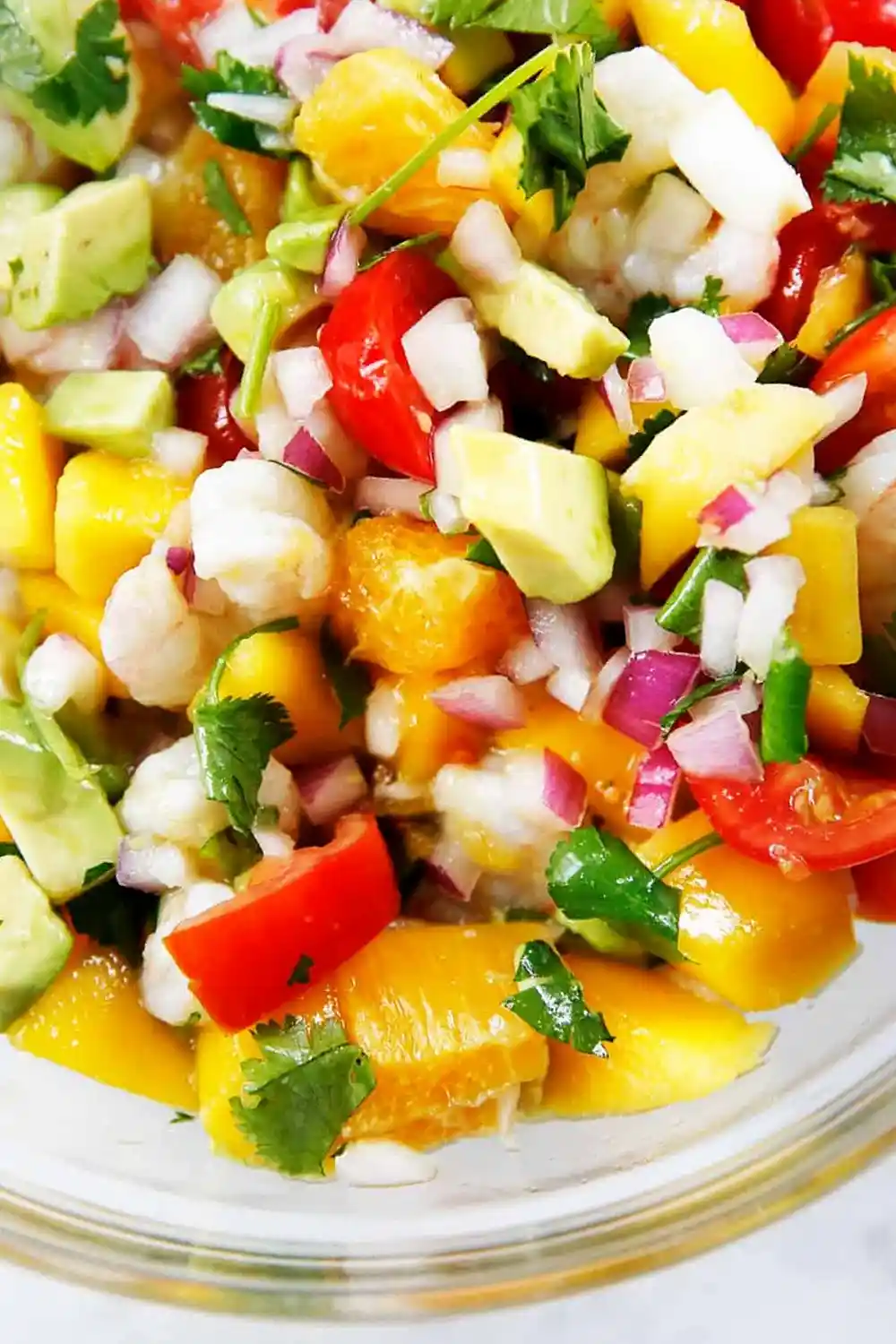
List of ingredients
- 1 cup grape tomatoes – chopped into small pieces.
- 1 mango – diced, approximately 1 1/2 cups.
- 1 navel orange – segmented and diced, approximately 1 cup.
- 1/2 red onion – finely diced for a sharp contrast.
- 1/8 cup chopped jalapeno – optional, for added heat.
- 1 pound wild-caught peeled and deveined shrimp – chopped into small, uniform bites.
- 1/2 teaspoon fine sea salt – to enhance the natural flavors.
- 1/4 cup lime juice – fresh squeezed to cure the shrimp.
- 1 avocado – diced and added at the end.
- 1/4 cup fresh cilantro – roughly chopped, optional for garnish.
step-by-step instructions
- Combine Base: In a large mixing bowl, combine the chopped grape tomatoes, diced mango, diced orange segments, finely diced red onion, and chopped jalapeno if you are using it.
- Add Protein: Stir in the chopped shrimp and season the mixture with the fine sea salt.
- Marinate: Pour the fresh lime juice over the ingredients and toss everything together to ensure the shrimp is fully coated.
- Chill and Cure: Cover the bowl and place it in the refrigerator for 20 minutes. The shrimp is ready when the flesh changes from transparent to an opaque white or pinkish color.
- Final Fold: Just before serving, gently fold in the diced avocado and chopped cilantro to maintain their texture and color.
Expert Ingredient Selection and Prep
Selecting High-Quality Wild-Caught Shrimp
Choose the freshest shrimp available from a trusted fishmonger to ensure safety and taste. Look for shrimp that have a mild, salty scent of the ocean and no ammonia-like smell. If using frozen shrimp, thaw them slowly in the refrigerator overnight rather than using warm water.
Precision Dicing for Uniform Texture
Aim for a consistent size across all fruits and vegetables, roughly the size of a small pea. This ensures that every spoonful contains a balanced mix of all ingredients. When chopping the shrimp, match this size to ensure the lime juice penetrates the protein evenly and cures it in the allotted time.
Segmenting Oranges Without Pith
To get clean orange segments, cut the peel and white pith away from the fruit entirely. Slice between the membranes to release the segments, then dice them into small cubes. Removing the white pith prevents a bitter taste from interfering with the sweetness of the mango.
Mincing Red Onion for Mildness
Dice the red onion as finely as possible to avoid overpowering the other delicate flavors. If you find raw red onion too pungent, you can soak the diced pieces in cold water for ten minutes and then drain them before adding to the bowl.
Alternative Shrimp Preparation Methods
Quick Sautéing for Heat-Preference
If you prefer not to use a citrus cure, you can sauté the shrimp in a pan over medium-high heat. Cook them for about two minutes per side until they turn opaque and pink. Let the shrimp cool completely before adding them to the fruit and vegetable mixture to avoid wilting the produce.
Parboiling and Ice Bath Technique
For a texture between raw and fully cooked, drop the shrimp into boiling water for two to three minutes. Immediately transfer them to a bowl of ice water to stop the cooking process and lock in the moisture. Drain and pat dry before chopping and mixing with the other ingredients.
Fruit and Vegetable Variations
Using Alternative Tropical Fruits
If mango is unavailable, diced papaya or fresh pineapple are excellent substitutes that provide similar sweetness and acidity. Pineapple adds a more tart profile, while papaya offers a softer texture. Adjust the amount of lime juice slightly if using a very sweet fruit like ripe papaya.
Swapping Citrus Bases
While lime juice is traditional, you can replace a portion of it with lemon juice for a different aromatic profile. A mix of both lime and lemon provides a complex acidity. Ensure you use fresh-squeezed juice, as bottled versions often contain preservatives that affect the curing process.
Alternative Onion and Pepper Choices
Replace red onion with green onions or shallots for a milder, sweeter onion flavor. For those who prefer less heat than jalapenos, use diced mild green chiles or omit the peppers entirely. You can also add finely diced cucumber for extra crunch and hydration.
Professional Serving and Pairing Ideas
Choosing the Right Dipping Chips
Corn tortilla chips provide a salty, classic crunch that complements the acidity of the ceviche. Plantain chips are a tropical alternative that adds a subtle sweetness and a denser crunch. Ensure the chips are sturdy enough to scoop the chunky mixture without breaking.
Serving on Tostadas
For a more substantial presentation, pile the shrimp ceviche onto crispy tostada shells. This transforms the dish from a dip into a light meal. Garnish the top with an extra slice of avocado or a dollop of Greek yogurt for added creaminess.
Main Course Pairing Suggestions
Serve this ceviche as a side dish to grilled proteins such as lemon-garlic chicken or salmon burgers. It also pairs well with fish tacos, where the ceviche can act as both a topping and a side salad. The acidity helps cut through the richness of grilled meats.
Storage and Safety Guidelines
Maximum Refrigeration Life
Ceviche is best consumed immediately, but leftovers can be stored in an airtight container in the refrigerator for one to two days. Be aware that the longer the shrimp sits in the lime juice, the firmer the texture will become. Over-marinating can lead to a rubbery consistency.
Preventing Avocado Oxidation
Always add the diced avocado immediately before serving to prevent it from turning brown. If you must prep it early, toss the avocado cubes in a small amount of extra lime juice. The citric acid acts as a barrier against oxygen, preserving the vibrant green color.
Proper Storage Container Selection
Use glass containers with airtight lids to store ceviche to prevent it from absorbing other fridge odors. Glass is also non-reactive, meaning it won’t interact with the high acidity of the lime juice. Avoid using metal bowls for long-term storage as the acid can leach metals into the food.
Safe Handling of Raw Seafood
Maintain a strict cold chain by keeping the shrimp refrigerated until the moment you begin preparation. Use separate cutting boards for the seafood and the produce to avoid cross-contamination. Ensure your workspace is sanitized and your hands are washed thoroughly before handling the raw shrimp.
Troubleshooting Common Issues
Managing Excess Liquid
If the ceviche becomes too watery, you can use a slotted spoon to transfer the mixture to a serving platter. Alternatively, you can strain some of the excess juice before adding the avocado. This prevents the avocado from sinking and keeps the flavors concentrated.
Balancing Overly Acidic Flavors
If the lime juice feels too overpowering, add a small amount of diced avocado or a pinch more salt. The fat in the avocado neutralizes the sharp acidity of the citrus. You can also add more mango or orange segments to increase the sweetness and balance the dish.
Correcting Rubbery Shrimp Texture
Rubbery shrimp usually result from over-marinating or over-cooking. To avoid this, strictly follow the 20-minute refrigeration window. If the shrimp has already become too firm, serve it with more creamy elements like avocado to soften the overall mouthfeel.
Frequently Asked Questions
Is ceviche technically raw?
Technically, no. The citric acid in the lime juice denatures the proteins in the shrimp, which changes the structure and appearance of the meat, effectively ‘cooking’ it without heat. However, it does not kill bacteria in the same way heat does, which is why freshness is critical.
How long should raw shrimp marinate in lime juice?
For this specific recipe with chopped shrimp, 20 minutes is typically sufficient. The shrimp should turn from translucent to an opaque white or pinkish color. If the shrimp pieces are larger, they may require an additional 10 to 15 minutes.
Can this dish be frozen for later?
No, ceviche should not be frozen. Freezing would destroy the texture of the fresh fruits and vegetables and would make the shrimp mushy upon thawing. It is best prepared fresh or stored in the refrigerator for a very short period.
Can I use pre-cooked shrimp?
Yes, you can use pre-cooked shrimp. In this case, omit the 20-minute curing time and simply toss the cooked shrimp with the ingredients and lime juice. Serve immediately or chill for a short time to let the flavors meld.
Print
Tropical Mango Shrimp Ceviche
- Total Time: 35 minutes
- Yield: 2–4 servings 1x
- Diet: Gluten-free, Paleo, Whole30
Description
This Tropical Mango Shrimp Ceviche is an easy, no-cook appetizer or light meal that’s always a hit. It’s packed full of fresh, vibrant fruits and veggies, juicy bites of shrimp, and a lime juice marinade.
Ingredients
- 1 cup grape tomatoes, chopped
- 1 mango, diced (about 1 1/2 cups)
- 1 navel orange, segmented and diced (about 1 cup)
- 1/2 red onion, finely diced
- 1/8 cup chopped jalapeno (optional)
- 1 pound wild-caught peeled and deveined shrimp, chopped
- 1/2 teaspoon fine sea salt
- 1/4 cup lime juice
- 1 avocado, diced
- 1/4 cup fresh cilantro, roughly chopped (optional)
Instructions
- Step 1: In a large bowl, mix together the tomatoes, mango, orange, red onion, and jalapeño (if using).
- Step 2: Stir in the shrimp and season with salt.
- Step 3: Add the lime juice and toss.
- Step 4: Cover and refrigerate for 20 minutes. When the shrimp is done “cooking” in the lime juice, it should have an opaque color (more white or pinkish, instead of transparent).
- Step 5: Just before serving, gently stir in the diced avocado and cilantro, if adding.
Notes
Use the freshest shrimp available. If you prefer not to use raw shrimp, you can sauté them for 10 minutes or parboil for 2-3 minutes, then transfer to an ice water bath to stop the cooking process.
- Prep Time: 15 minutes
- Cook Time: 0 minutes
- Category: Appetizer
- Method: Marinating
- Cuisine: Latin American
Nutrition
- Serving Size: 1 serving
- Calories: 376 kcal
- Sugar: 32 g
- Sodium: 424 mg
- Fat: 15 g
- Saturated Fat: 2 g
- Unsaturated Fat: 13 g
- Trans Fat: 0 g
- Carbohydrates: 57 g
- Fiber: 13.5 g
- Protein: 11.5 g
- Cholesterol: 43 mg