This fast, one-pan meal combines savory ground beef with crunchy cabbage for a nutritious dinner. It is an ideal choice for busy weeknights, coming together in under 30 minutes.
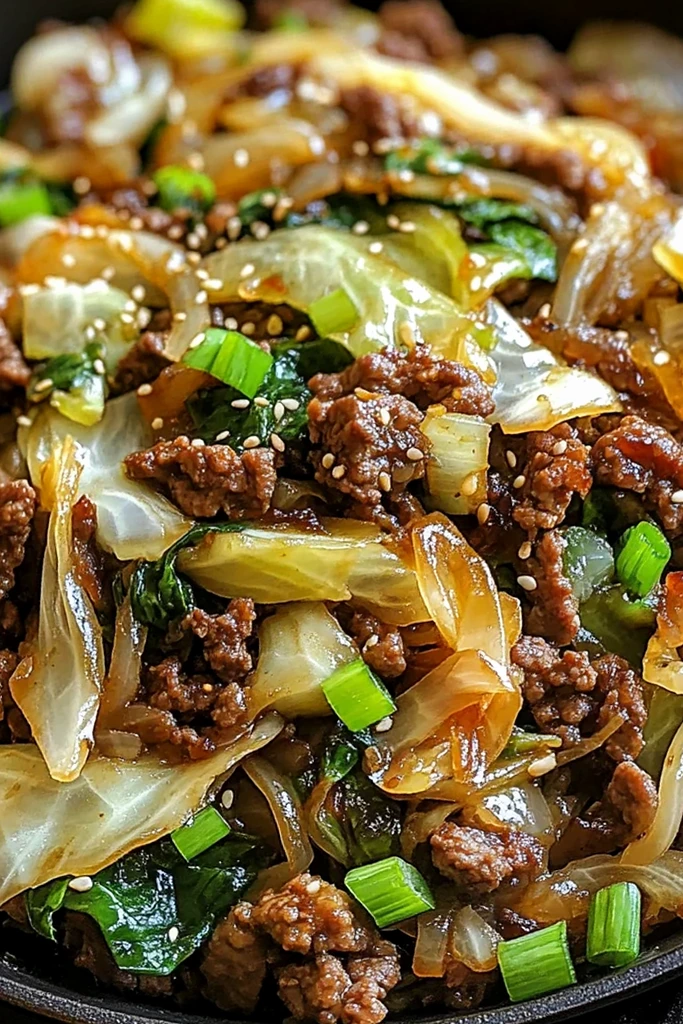
List of ingredients
- 1 lb ground beef – use lean beef to reduce excess grease.
- 4 cups green cabbage, thinly sliced – ensures quick and even cooking.
- 1 medium onion, sliced – adds a sweet, aromatic base.
- 2 cloves garlic, minced – provides a pungent, savory depth.
- 1 tbsp fresh ginger, grated – adds a zesty, warming flavor.
- 2 tbsp sesame oil – used for sautéing and a nutty aroma.
- 1/4 cup soy sauce – or tamari for a gluten-free version.
- 1 tbsp rice vinegar – adds a necessary acidic balance.
- 1 tbsp hoisin sauce – contributes a thick, sweet and salty element.
- 1 tsp sriracha – optional, add more if you prefer higher heat.
- Salt and black pepper – used to season to your taste.
- 2 green onions, chopped – for a fresh garnish.
- 1 tbsp toasted sesame seeds – adds a professional finish and crunch.
step-by-step instructions
- Heat the Oil: Place a large skillet over medium heat and add the sesame oil. Wait until the oil shimmers to ensure ingredients sear rather than stick.
- Sauté Aromatics: Add the sliced onion, minced garlic, and grated ginger to the pan. Cook for 2 to 3 minutes until the onions soften and the mixture becomes fragrant.
- Brown the Beef: Incorporate the ground beef into the skillet. Cook until completely browned, breaking the meat into small crumbles with a spoon; drain off any excess fat if necessary.
- Combine Cabbage and Sauce: Stir in the thinly sliced cabbage, soy sauce, rice vinegar, hoisin sauce, and optional sriracha. Toss the mixture thoroughly until the beef and cabbage are evenly coated.
- Simmer and Soften: Continue cooking for 5 to 7 minutes, stirring occasionally. The goal is for the cabbage to become tender while still retaining a slight crispness.
- Season and Garnish: Season the dish with salt and black pepper to taste. Remove from heat and top with chopped green onions and toasted sesame seeds before serving.
Expert Cooking Techniques
Optimize Your Beef Browning
To get the best flavor, let the beef sit undisturbed for a minute or two before breaking it up. This allows a brown crust to form, which adds deeper savory notes to the entire dish. Avoid overcrowding the pan if you are doubling the recipe to prevent the meat from steaming in its own juices.
Prepare Cabbage for Even Cooking
Slice the cabbage into thin, consistent strips, roughly 1/4 inch wide. Uniform pieces ensure that all the cabbage cooks at the same rate, preventing some pieces from becoming mushy while others remain raw. This creates a consistent texture in every bite.
Balance the Sauce Profile
Taste the skillet just before removing it from the heat to check the balance of salty, sweet, and sour. If it is too salty, add a small splash more rice vinegar. If it needs more depth, a tiny extra dab of hoisin sauce can provide the necessary sweetness.
Maintain High Heat for Cabbage
Keep the skillet at a steady medium-high heat when adding the cabbage. High heat helps the cabbage sear and caramelize slightly rather than boiling in the sauce. This preserves the bright color and the essential crunch of the vegetable.
Ingredient Substitutions and Swaps
Use Leaner Protein Options
You can replace ground beef with ground turkey or ground chicken for a lighter meal. Since these meats have less fat, you may need to add an extra tablespoon of sesame oil or olive oil to prevent sticking. Adjust the cooking time slightly as poultry may cook faster than beef.
Alternative Cabbage Varieties
Napa cabbage is a great substitute for green cabbage, though it has a higher water content and will wilt faster. If using Napa, reduce the final cooking time by 2 minutes to avoid overcooking. Red cabbage can also be used for a vibrant color, though the flavor is slightly more peppery.
Gluten-Free Soy Alternatives
To make this dish gluten-free, replace the soy sauce with tamari or coconut aminos. Tamari provides a very similar salt profile to soy sauce, while coconut aminos are slightly sweeter and lower in sodium. Always check the label on your hoisin sauce as some contain wheat flour.
Low-Sodium Adjustments
Use a low-sodium soy sauce or reduce the amount of soy sauce by half and increase the rice vinegar. Since hoisin sauce is also salty, reducing the soy sauce helps keep the overall sodium levels manageable without sacrificing the umami flavor.
Diverse Serving Suggestions
Pair with Aromatic Rice
Serve the skillet over steamed Jasmine rice for a classic presentation. The fragrant, fluffy grains absorb the savory sauce and provide a neutral base that balances the intensity of the ginger and garlic. Brown rice is also an excellent choice for added fiber and nuttiness.
Combine with Asian Noodles
Toss the beef and cabbage mixture with cooked udon, soba, or rice noodles. Stir-fry the noodles in the same pan for a minute to let them soak up the remaining sauce. This transforms the dish from a side-heavy meal into a hearty noodle stir-fry.
Create Fresh Lettuce Wraps
Scoop the mixture into large, crisp leaves of butter lettuce or iceberg lettuce. This provides a refreshing, cool contrast to the warm, savory beef. It is an excellent low-carb option that makes the meal feel like an appetizer or a light lunch.
Add a Rich Protein Topper
Place a fried egg with a runny yolk on top of each serving. The richness of the yolk creates a natural sauce that blends beautifully with the soy and sesame flavors. This addition increases the satiety of the meal and adds visual appeal.
Storage and Reheating Guide
Refrigerator Storage Tips
Store any leftovers in an airtight glass or plastic container. Keep the dish refrigerated and consume it within 3 to 4 days. Ensure the food is cooled slightly before sealing the container to prevent excess moisture from building up inside.
Freezing and Thawing Instructions
This dish can be frozen for up to two months in a freezer-safe bag or container. When ready to eat, thaw the mixture in the refrigerator overnight. Avoid thawing at room temperature to maintain food safety and quality.
Stovetop Reheating Method
For the best texture, reheat the leftovers in a skillet over medium heat. Add a teaspoon of water or sesame oil to loosen the sauce as it warms. Stir occasionally until the beef is heated through and the cabbage is warm.
Microwave Reheating Tips
Place the leftovers in a microwave-safe bowl and cover with a damp paper towel. Heat in 1-minute intervals, stirring in between, until hot. Be careful not to overcook, as the cabbage can quickly become soft in the microwave.
Troubleshooting Common Issues
Preventing Mushy Cabbage
If your cabbage is becoming too soft, you are likely cooking it for too long or using too low a heat. Add the cabbage during the last few minutes of cooking and keep the heat medium-high. Remove the pan from the stove the moment the cabbage is tender but still has a snap.
Managing Excess Grease
If the beef releases too much fat, do not simply stir it in, as this makes the sauce greasy. Use a spoon to remove the excess oil or carefully pat the surface of the meat with a paper towel before adding the vegetables and sauce.
Correcting Bland Flavors
If the dish tastes flat, it usually lacks acidity or salt. Stir in a small amount of extra rice vinegar or a pinch of salt to brighten the flavors. A squeeze of fresh lime juice at the end can also provide a fresh, acidic lift.
Avoiding Burnt Garlic
Garlic burns quickly and becomes bitter if the pan is too hot. Always add the garlic and ginger after the onions have had a chance to soften slightly. If the pan seems too hot, add a splash of water or oil to lower the temperature.
Frequently Asked Questions
Can I add other vegetables to the skillet?
Yes, you can add sliced carrots, bell peppers, snap peas, or broccoli. Add harder vegetables like carrots first, and softer vegetables like bell peppers along with the cabbage to ensure everything is cooked perfectly.
Is this recipe gluten-free?
The recipe can be made gluten-free by using tamari instead of soy sauce and ensuring your hoisin sauce is certified gluten-free. Always check the labels of processed condiments for hidden wheat ingredients.
How do I adjust the spice level?
The heat is controlled by the sriracha; omit it entirely for a mild flavor or increase it to 1 tablespoon for a medium kick. You can also add red pepper flakes or fresh sliced chilies during the sauté step for a more intense heat.
Can I use a different oil instead of sesame oil?
You can use a neutral oil like canola or vegetable oil for sautéing, but you will lose the characteristic nutty flavor. If you use a neutral oil, add a teaspoon of toasted sesame oil at the very end of cooking to regain that aroma.
Print
Savory Asian Beef and Cabbage Skillet
- Total Time: 25 minutes
- Yield: 4 servings 1x
- Diet: General
Description
Experience the vibrant flavors of Asian cuisine with this Asian-Inspired Beef & Cabbage Skillet. This quick and delicious dish comes together in just 25 minutes, making it an ideal choice for busy weeknights or casual gatherings.
Ingredients
- 1 lb ground beef
- 4 cups green cabbage, thinly sliced
- 1 medium onion, sliced
- 2 cloves garlic, minced
- 1 tbsp fresh ginger, grated
- 2 tbsp sesame oil
- ¼ cup soy sauce (or tamari)
- 1 tbsp rice vinegar
- 1 tbsp hoisin sauce
- 1 tsp sriracha (optional)
- Salt and black pepper, to taste
- 2 green onions, chopped
- 1 tbsp toasted sesame seeds
Instructions
- Heat Oil: Heat sesame oil in a large skillet over medium heat until shimmering.
- Sauté Aromatics: Sauté onion, garlic, and ginger for about 2–3 minutes until fragrant.
- Cook Beef: Add ground beef and cook until browned; drain excess fat if necessary.
- Add Cabbage & Sauces: Stir in cabbage along with soy sauce, rice vinegar, hoisin sauce, and optional sriracha.
- Cook Down: Cook for an additional 5–7 minutes until the cabbage is tender yet crisp.
- Season & Garnish: Season with salt and pepper to taste; garnish with chopped green onions and toasted sesame seeds before serving.
Notes
For a gluten-free option, substitute tamari for soy sauce. This dish pairs well with steamed jasmine rice, noodles, or lettuce wraps.
- Prep Time: 10 minutes
- Cook Time: 15 minutes
- Category: Dinner
- Method: Skillet
- Cuisine: Asian
Nutrition
- Serving Size: 1 cup (240g)
- Calories: 350 kcal
- Sugar: 4 g
- Sodium: 850 mg
- Fat: 24 g
- Saturated Fat: 9 g
- Unsaturated Fat: 13 g
- Trans Fat: 0 g
- Carbohydrates: 14 g
- Fiber: 3 g
- Protein: 25 g
- Cholesterol: 85 mg