This roasted salmon pesto pasta is a streamlined, one-bowl meal that balances rich proteins with vibrant herbs. It is an ideal choice for a healthy weeknight dinner that requires minimal active cooking time.
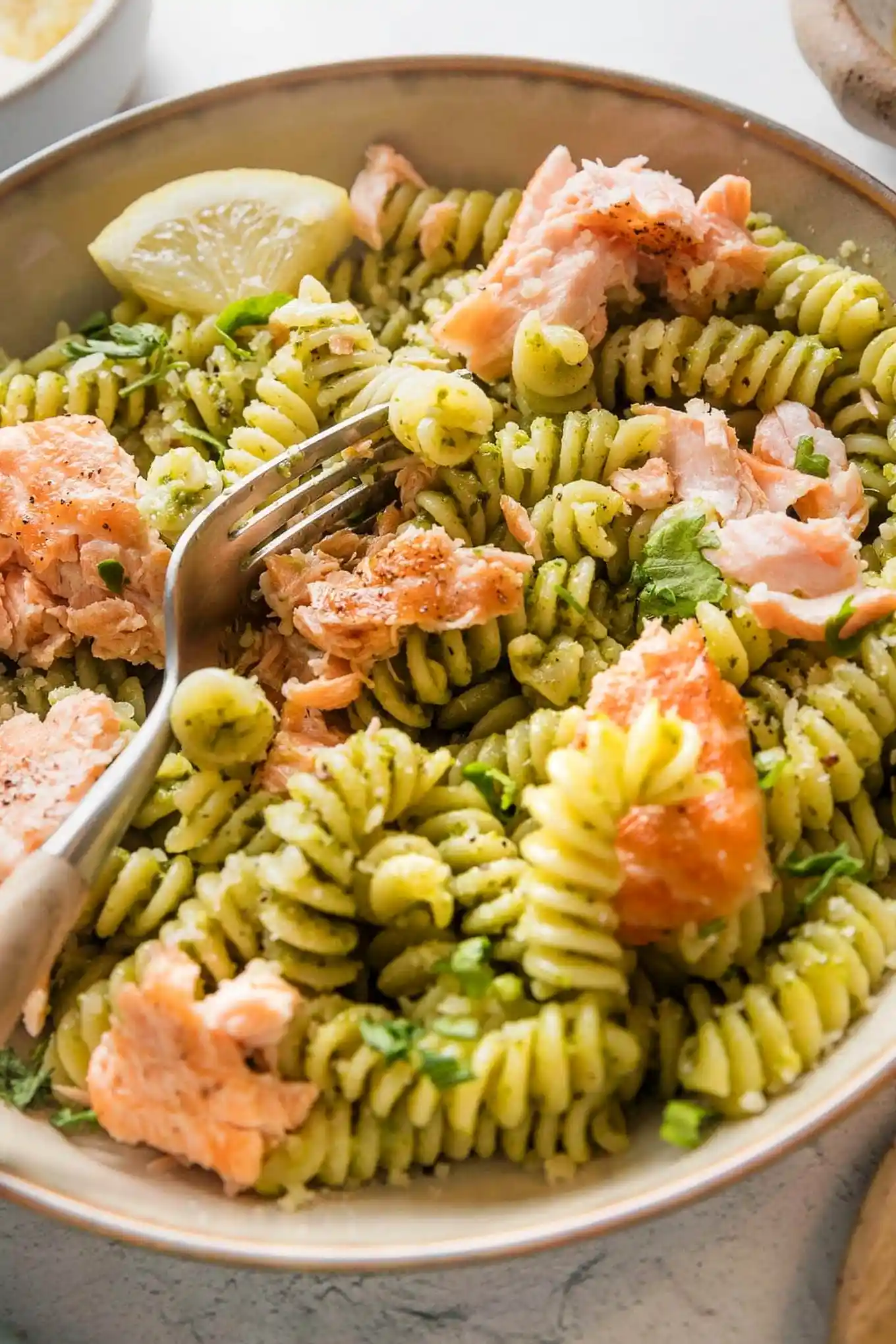
List of ingredients
- 2 large salmon filets – skin-on or off, based on preference.
- 1-2 teaspoons olive oil – used for brushing the fish.
- 1 teaspoon lemon juice – freshly squeezed from about half a lemon.
- Kosher salt and black pepper – for seasoning the salmon and pasta.
- 8 ounces dried pasta – ridged varieties like penne are recommended.
- 2/3 cup pesto – either homemade or high-quality jarred.
- 1/4 cup grated Parmesan cheese – preferably microbial-rennet for a clean finish.
step-by-step instructions
- Prepare the salmon: Line a rimmed baking sheet with parchment paper or aluminum foil and place salmon filets skin-side down. Brush the tops with olive oil and lemon juice, then season lightly with kosher salt and black pepper.
- Start the roasting process: Place the baking sheet in a cold oven. Close the door, turn the oven to 400 degrees F, and set a timer for 20 minutes.
- Check for doneness: After 20 minutes, ensure the salmon flakes easily with a fork or reaches an internal temperature of 145 degrees F. For a crispier top, broil on the top rack for 1-2 minutes while watching closely.
- Cook the pasta: Boil a large pot of well-salted water. Cook the pasta until al dente according to the package, reserving a small amount of pasta water before draining.
- Combine the sauce: Return the drained pasta to the pot and stir in the pesto, Parmesan, and a pinch of black pepper. Add the reserved pasta water a splash at a time if a looser sauce is desired.
- Final assembly: Break the cooked salmon into bite-sized pieces using a fork. Mix the salmon directly into the pasta or place the pieces on top of individual servings.
Selecting the Best Pasta
Penne Rigate for Sauce Grip
Penne rigate features ridges on the exterior that help the pesto cling to the pasta. This ensures that every bite is well-coated in the sauce rather than the pesto pooling at the bottom of the bowl.
Fusilli and Rotini for Maximum Pesto
Spiral-shaped pastas like fusilli or rotini create small pockets that trap the pesto and Parmesan. These shapes are excellent for incorporating small flakes of salmon and bits of cheese into every forkful.
Whole Wheat Pasta for Nutrition
Substituting dried white pasta with whole wheat versions increases the fiber and nutrient content of the meal. The nuttier flavor of whole wheat complements the earthy notes of the basil pesto.
Chickpea Pasta for Protein
For a higher protein and lower carb option, use pasta made from chickpeas or lentils. These alternatives provide a denser texture and additional plant-based protein to supplement the salmon.
Gluten-Free Pasta Options
Brown rice or corn-based gluten-free pastas work well in this recipe. To avoid mushiness, ensure you cook them strictly to al dente and rinse them briefly if they release too much surface starch.
Pesto Quality and Preparation
Using Fresh Basil Leaves
Homemade pesto using fresh basil provides a brighter, more aromatic flavor than jarred versions. Blanching the basil leaves briefly in boiling water and shocking them in ice water can preserve the green color.
Selecting High-Quality Store-Bought Pesto
When buying jarred pesto, look for options in the refrigerated deli section rather than the shelf-stable aisle. These typically contain fresher ingredients and have a more authentic taste and texture.
Adding Zucchini for Extra Nutrients
You can blend steamed zucchini or spinach into your pesto to increase the vegetable count. This creates a stealthy way to add nutrients without significantly altering the traditional pesto flavor profile.
Maintaining the Vibrant Green Color
Avoid boiling the pesto or exposing it to extreme heat for too long. Stir it into the pasta after it has cooled for a minute or two to prevent the basil from oxidizing and turning brown.
Adjusting Pesto Consistency
If the pesto is too thick, stir in a tablespoon of olive oil or lemon juice. Using the reserved starchy pasta water is the most effective way to emulsify the sauce and make it creamy.
Mastering the Salmon
Benefits of the Cold Oven Start
Starting the salmon in a cold oven allows the fish to heat up gradually. This method reduces the risk of the exterior overcooking before the center reaches the safe internal temperature.
Checking for the Correct Internal Temperature
Use an instant-read thermometer to ensure the thickest part of the filet hits 145 degrees F. Removing the fish at exactly this temperature prevents the salmon from becoming dry or chalky.
Achieving a Crispy Top with the Broiler
Switching to the broiler for the final two minutes creates a caramelized crust on the salmon. This adds a textural contrast to the tender pasta and creamy pesto sauce.
Handling Salmon Skin
Whether you use skin-on or skinless filets, the skin acts as a barrier that protects the meat from the hot pan. Simply flake the meat away from the skin before adding it to the pasta.
Slicing and Flaking Techniques
Use a fork to gently pull the salmon apart along its natural muscle lines. This creates irregular, bite-sized chunks that distribute more evenly throughout the pasta than uniform cubes.
Flavor and Seasoning Enhancements
Adding Minced Garlic for Depth
Stirring one or two cloves of finely minced garlic into the salmon seasoning adds a pungent depth. For a milder taste, use garlic powder or roast whole cloves alongside the fish.
Using Paprika for a Smoky Note
A dusting of smoked paprika on the salmon before roasting adds a subtle woody flavor. This complements the richness of the fish and provides a beautiful reddish-gold color to the crust.
Incorporating Red Pepper Flakes for Heat
Add a pinch of red pepper flakes to the pesto mixture if you prefer a spicy kick. The heat cuts through the richness of the Parmesan and olive oil, brightening the overall dish.
Using Fresh Lemon Zest
Adding freshly grated lemon zest to the final pasta mix enhances the citrus notes. Zest provides a concentrated aromatic punch that is more intense than lemon juice alone.
Adjusting Salt Levels in Pasta Water
Season the pasta water generously until it tastes like seawater. This is the only opportunity to season the interior of the pasta dough, which prevents the dish from tasting bland.
Vegetable Additions and Pairings
Adding Roasted Asparagus
Place trimmed asparagus spears on the same baking sheet as the salmon. They roast in the same amount of time and provide a crisp, earthy accompaniment to the pesto pasta.
Mixing in Sautéed Spinach
Sauté a few handfuls of fresh spinach in olive oil and stir them into the pasta at the very end. The residual heat will wilt the spinach while keeping its nutritional value intact.
Including Cherry Tomatoes
Halved cherry tomatoes can be tossed with the pasta for a burst of acidity and sweetness. You can either add them raw for freshness or roast them with the salmon for a jammy texture.
Pairing with a Fresh Arugula Salad
A simple side of arugula tossed in lemon juice and olive oil balances the richness of this meal. The peppery bite of the greens cleanses the palate between bites of creamy pasta.
Adding Frozen Peas for Color
Stir in a half-cup of frozen peas during the last minute of the pasta’s boiling time. This adds a pop of bright green and a subtle sweetness that pairs well with basil.
Storage and Food Safety
Refrigerator Storage Limits
Store leftover salmon pesto pasta in an airtight container for up to three to four days. Keep the container tightly sealed to prevent the salmon from absorbing other fridge odors.
Airtight Container Selection
Glass containers are ideal for this dish as they do not stain from the pesto oils. Ensure the lid is vacuum-sealed to maintain the moisture of the pasta during storage.
Microwave Reheating Tips
Heat the pasta in short 30-second bursts, stirring in between. This prevents the salmon from overcooking and ensures the pesto is warmed evenly throughout the dish.
Stovetop Reheating with Broth
For the best results, reheat the pasta in a skillet over medium heat. Add a splash of vegetable broth or water to loosen the sauce and restore the original creamy consistency.
Freezing Pesto Separately
Do not freeze the assembled pasta dish, as the texture of the salmon and pasta will degrade. Instead, freeze homemade pesto in ice cube trays to use for future meals.
Troubleshooting and FAQs
Why is my sauce too thick?
Pesto can thicken as it cools or if the pasta absorbs too much moisture. Stir in a tablespoon of reserved pasta water or a drizzle of olive oil to thin it back out.
How do I stop salmon from drying out?
Avoid overcooking the fish by using a thermometer and removing it at 145 degrees F. Let the salmon rest for a few minutes before flaking to keep the juices inside.
What can I use instead of Parmesan?
You can use Pecorino Romano for a saltier taste or a nutritional yeast-based substitute for a dairy-free option. Both provide the savory, umami quality needed for the sauce.
Can I use frozen salmon?
Yes, but ensure the salmon is completely thawed in the refrigerator overnight before roasting. Cooking frozen salmon directly can lead to uneven cooking and a watery texture.
How do I fix a bland pasta taste?
Add a squeeze of fresh lemon juice or an extra pinch of salt to the final dish. Acidity often unlocks the hidden flavors of the pesto and the fish.
Print
Roasted Salmon Pesto Pasta
- Total Time: 20 minutes
- Yield: 4 servings 1x
- Diet: General
Description
A quick, comforting, yet elegant one-bowl meal. Roast the salmon for a hands-off shortcut to light flavor and texture, and use either homemade or jarred pesto to keep things flexible.
Ingredients
- 2 large salmon filets
- 1–2 teaspoons olive oil
- 1 teaspoon lemon juice (from 1/2 lemon)
- kosher salt and black pepper
- 8 ounces dried pasta
- 2/3 cup pesto (jarred or homemade)
- 1/4 cup grated Parmesan cheese
Instructions
- Step 1: Line a rimmed baking sheet with parchment paper or aluminum foil, and place salmon filets on top, skin-side down, if they have skin. Brush the tops lightly with olive oil and lemon juice, then sprinkle lightly with kosher salt and black pepper.
- Step 2: Place the baking sheet in the cold oven. Close the door, then turn the oven on to 400 degrees F and set a timer for 20 minutes.
- Step 3: After 20 minutes, check the salmon. If it is done, it will flake easily when pressed with a fork, and have an internal temperature nearing 145 degrees F in the thickest part. Leave it for a few minutes if needed, but remove promptly when it hits 145 degrees. (For a slightly crispy top, move the baking sheet to the top rack and turn the oven to broil for the last 1-2 minutes of cooking time, but watch it closely.)
- Step 4: While the salmon cooks, bring a large pot of well-salted water to a boil. Cook pasta to al dente according to package directions. Reserve a bit of the pasta water in case you want it to loosen the sauce, then drain.
- Step 5: Return drained pasta to the pot and add pesto, Parmesan, and a pinch of black pepper. Stir well to combine. If you prefer a looser sauce, stir in reserved pasta water a splash at a time until it reaches your desired consistency. Taste and adjust seasoning as desired.
- Step 6: Using a fork, break up the cooked salmon into bite-sized pieces. Either mix into the pasta in the pot, or serve the pasta and top with salmon separately. Enjoy!
Notes
Pesto: Use classic basil pesto with lemon zest or zucchini basil pesto with spinach. For more flavor, add 1-2 cloves of minced garlic to the salmon seasoning or sprinkle paprika on top before roasting.
- Prep Time: 5 minutes
- Cook Time: 15 minutes
- Category: Dinner, Main, Pasta
- Method: Roasting
- Cuisine: American
Nutrition
- Serving Size: 1 serving
- Calories: 486 kcal
- Sugar: 3 g
- Sodium: 440 mg
- Fat: 20 g
- Saturated Fat: 4 g
- Unsaturated Fat: 16 g
- Trans Fat: 0 g
- Carbohydrates: 46 g
- Fiber: 2 g
- Protein: 28 g
- Cholesterol: 55 mg