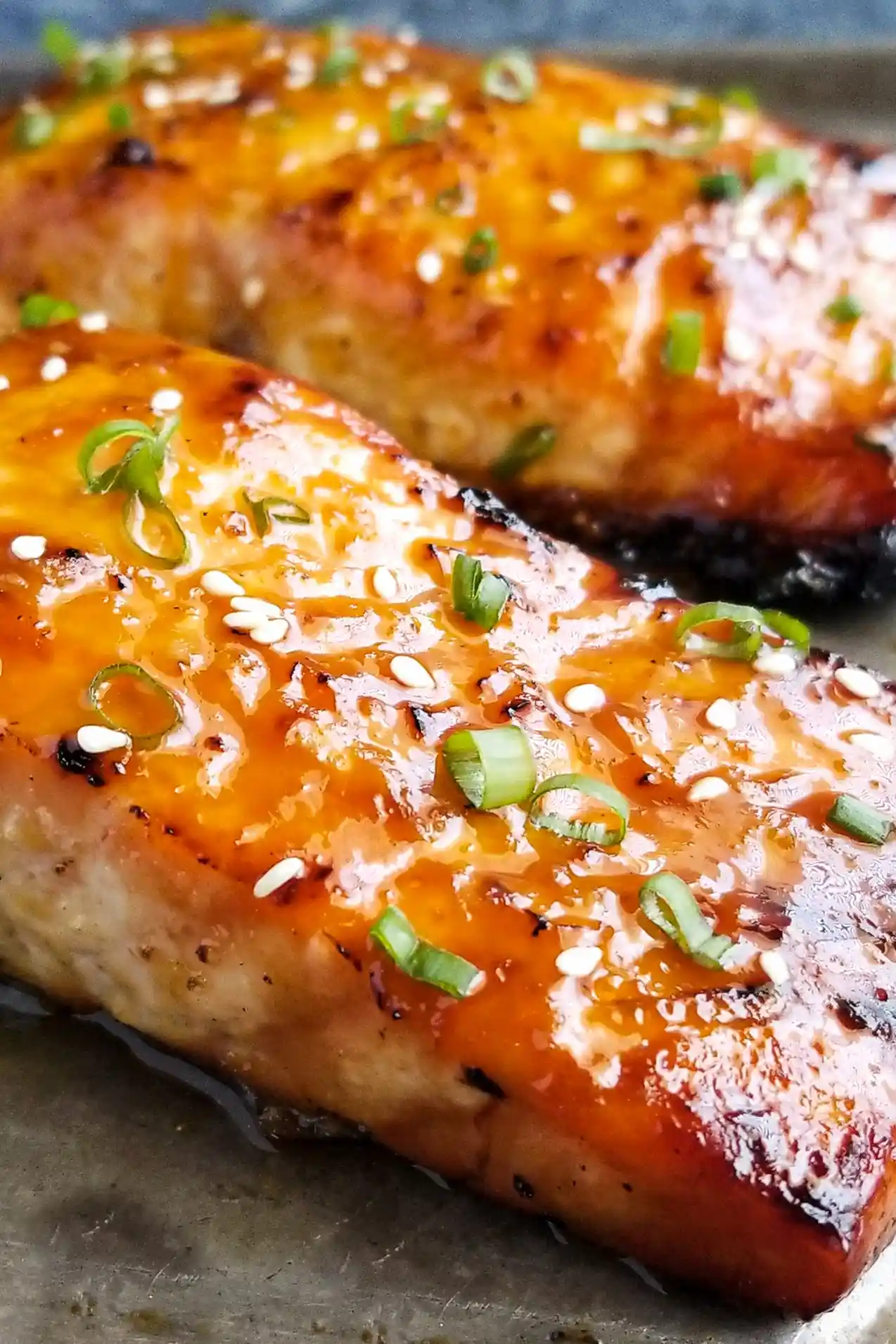
This oven-baked salmon features a balanced citrus glaze that combines sweet orange and savory soy notes. It is an efficient main course that requires minimal cleanup thanks to the foil-lined baking method.
List of ingredients
- 4 6 oz. Salmon Filets – center cut preferred for even cooking.
- 2 tsp Cornstarch – used to thicken the glaze.
- 4 tsp Water – to create the cornstarch slurry.
- 2/3 cup Orange Juice – fresh squeezed provides the best flavor.
- 1 tsp Orange Zest – adds concentrated citrus aroma.
- 1/3 cup Soy Sauce – low sodium is recommended.
- 1/4 cup Brown Sugar – light or dark brown both work well.
- 1 tsp Ginger (minced) – fresh ginger is preferred for a sharp taste.
- 2 cloves Garlic (minced) – fresh cloves provide the best pungency.
- 1/2 tsp Sesame Oil – adds a toasted nuttiness to the sauce.
- Sesame Seeds (optional) – for garnish and texture.
- Red Pepper Flakes (optional) – to add a hint of heat.
- Chopped Green Onions (optional) – for a fresh, savory finish.
step-by-step instructions
- Prepare the slurry: Mix the cornstarch and water in a small bowl until the powder is fully dissolved.
- Cook the glaze: Add the cornstarch mixture and all other sauce ingredients to a small saucepan. Bring the liquid to a low simmer and cook for 3-5 minutes until the sauce lightly thickens, then remove from heat and let it cool in a bowl.
- Prepare the oven: Preheat your oven to 400 degrees Fahrenheit.
- Arrange the fish: Line a baking sheet with a sheet of aluminum foil and apply a light coating of oil to the foil. Place the salmon filets on the sheet.
- First baste: Generously coat the salmon filets with the cooled sauce, making sure to reserve approximately half of the sauce for the final step.
- Bake: Place the baking sheet in the oven and bake for 14 minutes or until the fish is flakey.
- Final sear: Remove the salmon from the oven and apply the remaining sauce. Place the filets under the broiler for about one minute until the top is golden and lightly charred.
- Plate and serve: Serve the salmon over a bed of steamed rice and garnish with red pepper flakes, chopped green onions, and sesame seeds.
Professional Cooking Tips
Monitoring the Internal Temperature
To ensure the salmon is cooked perfectly, use an instant-read meat thermometer. The fish is ready when the internal temperature reaches 145 degrees Fahrenheit. If you do not have a thermometer, use a fork to gently press the thickest part of the filet; it should flake easily along the natural lines.
Selecting the Right Cut of Salmon
Choose center-cut filets for the most consistent cooking results. These portions have a uniform thickness, which prevents the thinner tail end from overcooking while the center remains raw. Ensure the flesh is bright and firm to the touch without any gaps or bruising.
Optimizing the Basting Technique
Use a silicone pastry brush to apply the glaze evenly across the top and sides of the fish. Applying the sauce in thin, consistent layers prevents the sugar from pooling and burning too quickly under the broiler. Reserving the second half of the sauce ensures a fresh, glossy coating for the final presentation.
Managing Oven Temperature Zones
Most ovens have slight temperature variations depending on the rack position. If you notice one side of the pan browning faster than the other, rotate the baking sheet 180 degrees halfway through the 14-minute baking period. This ensures all four filets receive equal heat distribution.
Ingredient Substitutions
Using Garlic Powder Instead of Fresh Garlic
If fresh garlic is unavailable, you can substitute it with garlic powder. Use 1 teaspoon of garlic powder to replace the two minced cloves. Mix the powder directly into the sauce ingredients before simmering to ensure it is well distributed.
Using Ground Ginger Instead of Fresh Ginger
Ground ginger is a viable alternative to fresh minced ginger. Replace the 1 teaspoon of minced ginger with 1/2 teaspoon of ground ginger. Ground ginger is more concentrated, so using a smaller quantity prevents the flavor from becoming overpowering.
Soy-Free Sauce Alternatives
For a soy-free version of this recipe, replace the soy sauce with coconut aminos. Coconut aminos provide a similar salty and slightly sweet profile while being naturally soy-free. Note that aminos are slightly thinner, so you may need to simmer the sauce for an additional minute to achieve the desired thickness.
Alternative Sweeteners for the Glaze
If you prefer not to use brown sugar, honey or maple syrup can be used as a substitute. Use 1/4 cup of your chosen liquid sweetener. Because these are liquids, the sauce may require a slightly longer simmering time or a tiny pinch more cornstarch to reach the same consistency as the brown sugar version.
Recommended Side Pairings
Steamed Rice Varieties
Steamed white jasmine or basmati rice provides a neutral base that absorbs the extra teriyaki glaze. For a heartier option, use brown rice or quinoa. Rinse the rice thoroughly under cold water before cooking to remove excess starch and ensure fluffy, separate grains.
Sautéed Garlic Zucchini
Zucchini pairs well with the sweetness of the orange glaze. Sauté sliced zucchini in olive oil with minced garlic, salt, and pepper over medium-high heat for 5-7 minutes. Finish with a squeeze of fresh lemon juice to cut through the richness of the salmon.
Honey-Roasted Carrots
Whole carrots roasted with honey, olive oil, and fresh dill provide a complementary sweetness. Toss the carrots in the mixture and roast at 400 degrees Fahrenheit for 20-25 minutes. The caramelization of the carrots mirrors the charred top of the salmon.
Lightly Grilled Asparagus
Asparagus offers a crisp texture that balances the soft flake of the fish. Grill the spears on a grill pan or oven-roast them alongside the salmon. Season simply with olive oil, salt, pepper, and a touch of lemon juice to keep the focus on the main dish.
Storage and Food Safety
Refrigeration Guidelines
Store any leftover salmon in a glass, airtight container in the refrigerator. The cooked fish will remain safe to eat for up to two days. Ensure the salmon is completely cooled before sealing the container to prevent excess moisture from building up inside.
Preventing Odor Transfer
Salmon has a distinct aroma that can transfer to other foods in the fridge. Use high-quality glass containers with locking lids rather than plastic wrap or loose lids. This maintains the quality of the fish and protects other refrigerated items from the scent of the glaze.
Freezing Cooked Salmon
It is generally not recommended to freeze cooked salmon, as the texture can become mushy upon thawing. However, if necessary, wrap the filets tightly in freezer-safe foil and place them in a vacuum-sealed bag. Thaw slowly in the refrigerator overnight before reheating.
Reheating Methods
Oven Reheating for Texture
To maintain the best texture, reheat the salmon in the oven at 275 degrees Fahrenheit. Place the fish on a baking sheet and cover it loosely with foil to prevent the surface from drying out. Heat for 10-15 minutes or until warmed through.
Microwave Reheating Tips
If using a microwave, heat the salmon on medium power in 30-second intervals. Overheating salmon in the microwave can make the proteins contract, resulting in a rubbery texture. Cover the dish with a damp paper towel to trap steam and keep the fish moist.
Restoring the Glaze
Reheated salmon often loses its glossy appearance as the sauce absorbs into the fish. To restore the look, brush a small amount of fresh orange teriyaki sauce over the filet before reheating. This adds a layer of moisture and refreshes the flavor profile.
Make-Ahead Strategies
Preparing the Sauce in Advance
The orange teriyaki glaze can be made up to one week before the salmon is cooked. Store the cooled sauce in a jar in the refrigerator. When you are ready to use it, shake the jar well to redistribute the cornstarch that may have settled at the bottom.
Marinating the Salmon
While this recipe uses a baste, you can marinate the salmon for 30 minutes to an hour before baking. Place the filets and a portion of the sauce in a zip-top bag and refrigerate. Do not marinate for more than 4 hours, as the acidity in the orange juice can begin to break down the fish proteins and change the texture.
Pre-Portioning the Fish
If you are preparing meals for the week, pre-cut the salmon into 6 oz filets and store them in individual portions. This allows you to cook only what you need each day, ensuring the fish is always fresh and not overcooked from repeated reheating.
Troubleshooting Common Issues
Preventing the Sauce from Burning
Because the glaze contains brown sugar, it can burn quickly under the broiler. Stay by the oven and watch the fish closely during the final minute of cooking. Remove the pan the moment the sauce begins to bubble and turn a deep golden brown.
Fixing a Thin Sauce
If the sauce does not thicken sufficiently during the simmering stage, create a small additional slurry. Mix 1/2 teaspoon of cornstarch with 1 teaspoon of water and stir it into the simmering sauce. Continue to cook for one more minute until the glaze coats the back of a spoon.
Avoiding the White Protein Leak
White beads of protein, called albumin, sometimes appear on the surface of salmon during cooking. This is a sign that the fish is being cooked too quickly or is slightly overdone. To minimize this, ensure your oven is fully preheated and do not exceed the 14-minute baking time.
Frequently Asked Questions
Can I use frozen salmon for this recipe?
Yes, you can use frozen salmon. Ensure the filets are completely thawed in the refrigerator overnight before cooking. Pat the fish dry with paper towels after thawing to remove excess water, which ensures the glaze adheres properly to the surface.
Is it possible to grill this instead of baking it?
Yes, this recipe can be adapted for the grill. Grill the salmon over medium-high heat for about 5-7 minutes per side. Baste the fish frequently during the last few minutes of grilling to build up the glaze layers without burning them.
What is the best way to zest an orange?
Use a fine microplane or a small grater to remove only the bright orange outer layer of the peel. Avoid grating into the white pith, as the pith is bitter and can negatively impact the flavor of the teriyaki sauce.
How do I know when the salmon is fully cooked?
The salmon is done when the flesh changes from translucent to an opaque pink color. When you press the top of the filet, the layers of the fish should separate easily. An internal temperature of 145 degrees Fahrenheit is the USDA recommended standard.
Print
Citrus-Glazed Oven-Baked Salmon
- Total Time: 50 minutes
- Yield: 4 servings 1x
- Diet: General
Description
Delicious easy baked salmon in a mouthwatering orange teriyaki glaze finished with fresh chopped green onion and sesame seeds.
Ingredients
- 4 6 oz. Salmon Filets
- 2 tsp Cornstarch
- 4 tsp Water
- 2/3 cup Orange Juice
- 1 tsp Orange Zest
- 1/3 cup Soy Sauce
- 1/4 cup Brown Sugar
- 1 tsp Ginger (minced)
- 2 cloves Garlic (minced)
- 1/2 tsp Sesame Oil
- Sesame Seeds (optional)
- Red Pepper Flakes (optional)
- Chopped Green Onions (optional)
Instructions
- Step: In a small bowl, mix cornstarch and water. Add all sauce ingredients to a small saucepan including cornstarch mixture. Bring sauce to a low simmer and cook for about 3-5 minutes. When sauce lightly thickens, remove from heat and transfer to a bowl to cool.
- Step: While your sauce is cooling, preheat oven to 400 degrees.
- Step: Line a baking sheet with a lightly oiled sheet of foil. Place salmon filets on the sheet and baste generously with sauce, reserving about half of the sauce for later use.
- Step: Place salmon in the oven and bake for 14 minutes. When salmon is nice and flakey, it’s ready.
- Step: Remove salmon from the oven and baste with sauce again. Place salmon under the broiler for about a minute or until you get a golden lightly charred top.
- Step: Serve salmon over a bed of steamed rice with a sprinkle of red pepper flakes, chopped green onion and sesame seeds.
Notes
Store leftover salmon in an airtight container in the fridge for up to 2 days. Substitute 1 teaspoon garlic powder for fresh garlic or ½ teaspoon ground ginger for fresh ginger if needed.
- Prep Time: 30 minutes
- Cook Time: 20 minutes
- Category: Main Course
- Method: Baking
- Cuisine: Asian
Nutrition
- Serving Size: 1 filet
- Calories: 450 kcal
- Sugar: 20 g
- Sodium: 1100 mg
- Fat: 18 g
- Saturated Fat: 4 g
- Unsaturated Fat: 14 g
- Trans Fat: 0 g
- Carbohydrates: 30 g
- Fiber: 1 g
- Protein: 35 g
- Cholesterol: 80 mg