This quick pan-seared chicken features a rich, citrus-infused cream sauce that comes together in under 30 minutes. It uses basic pantry staples to create a restaurant-quality meal that is both tangy and velvety.
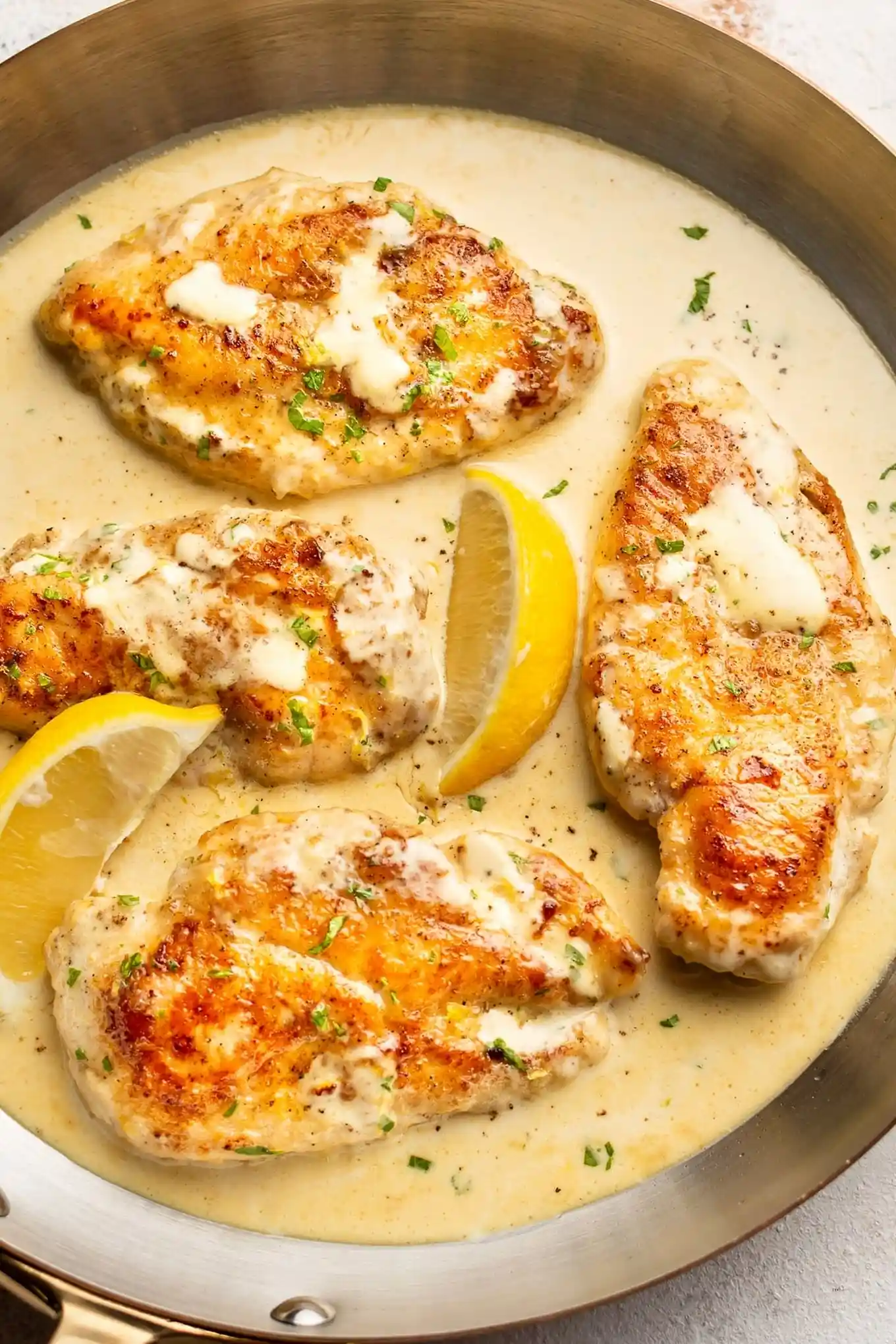
List of ingredients
- 2 large chicken breasts, cut in half lengthwise – ensures even cooking and tenderness.
- Salt & pepper – for essential basic seasoning.
- 1/4 teaspoon garlic powder – provides a subtle, savory depth to the meat.
- Flour – used for dredging to create a golden crust.
- 2 tablespoons butter – adds richness and aids in browning.
- 1 tablespoon olive oil – raises the smoke point to prevent butter from burning.
- 1/2 cup chicken broth – forms the savory base of the pan sauce.
- 2 tablespoons lemon juice – provides the necessary bright, acidic contrast.
- 1 cup heavy/whipping cream – creates a thick, luxurious sauce consistency.
- Fresh parsley, chopped (optional) – adds a pop of color and fresh flavor.
step-by-step instructions
- Prepare the chicken: Slice your chicken breasts in half lengthwise to make 4 thinner cutlets. Generously season them with salt and pepper on both sides, then sprinkle the garlic powder on both sides evenly before dredging them in flour.
- Sear the meat: In a large skillet over medium-high heat, melt the butter and olive oil together. Once the pan is hot, add the chicken and cook for 4-5 minutes per side until golden brown, then transfer the pieces to a plate.
- Deglaze the skillet: Add the chicken broth and lemon juice to the pan. Let the liquid cook for about a minute, making sure to scrape up all the browned bits from the bottom of the pan to incorporate the flavor.
- Simmer the sauce: Pour the heavy cream into the skillet and return the chicken to the pan. Let the sauce simmer for about 5 minutes, or until the cream thickens slightly and the chicken is cooked through completely.
- Final touch: Add more salt and pepper if needed to taste. Sprinkle with chopped fresh parsley if desired and serve immediately.
Mastering the Cooking Process
Achieving the Perfect Golden Crust
To get a professional sear, ensure your skillet is sufficiently hot before adding the chicken. The combination of butter and olive oil allows for a high-heat sear without the butter solids burning too quickly. Avoid overcrowding the pan, as this can lower the temperature and cause the chicken to steam rather than brown.
Deglazing for Maximum Depth
The brown bits stuck to the bottom of the pan after searing are known as fond. When you add the chicken broth and lemon juice, use a wooden spoon or whisk to scrape these bits into the liquid. This process releases concentrated savory flavors that form the heart of the creamy sauce.
Controlling the Sauce Consistency
The thickening of the sauce happens through a process of reduction during the simmering phase. Keep the heat at a gentle simmer rather than a rolling boil to prevent the cream from separating. If the sauce thickens too quickly, you can stir in a tablespoon of extra broth to reach your desired texture.
Optimizing Your Ingredients
Selecting the Right Chicken Cut
Using boneless, skinless chicken breasts is ideal for this recipe due to their lean nature. Slicing them lengthwise into cutlets is a critical step because it creates a uniform thickness. This ensures the meat cooks quickly and evenly, preventing the edges from drying out while the center remains raw.
The Role of Heavy Cream
Heavy cream is essential because its high fat content stabilizes the sauce when combined with acidic lemon juice. Lower-fat alternatives like milk or half-and-half lack the necessary stability and are more likely to curdle when heated with citrus. Always use cream with at least 36% fat for the most velvety result.
Using Fresh Lemon Juice
Freshly squeezed lemon juice provides a bright, clean acidity that bottled versions cannot replicate. Bottled juices often contain preservatives or a muted flavor profile that can make the sauce taste flat. For the best results, roll the lemon on the counter before squeezing to extract the maximum amount of juice.
The Benefit of Flour Dredging
Dredging the chicken in flour serves two purposes: it creates a protective barrier that helps the meat brown beautifully and it adds a small amount of starch to the pan. This starch naturally thickens the sauce as it simmers, resulting in a glossy coating that clings to the chicken.
Best Side Dish Combinations
Pairing with Garlic Mashed Potatoes
Creamy mashed potatoes are a classic accompaniment because they complement the richness of the sauce. The soft texture of the potatoes provides a great contrast to the seared chicken. Drizzle extra lemon cream sauce over the potatoes for added flavor.
Serving Over Steamed Jasmine Rice
White rice, such as Jasmine or Basmati, acts as a neutral base that absorbs the tangy sauce efficiently. This makes it an excellent option for those who prefer a lighter starch than potatoes. The fragrance of the rice pairs well with the citrus notes of the dish.
Adding Sautéed Asparagus
Asparagus provides a fresh, earthy balance to the richness of the heavy cream. Sauté the spears in a bit of butter and lemon zest to mirror the flavors of the chicken. This addition ensures the meal is nutritionally balanced with a green vegetable.
Complementing with Roasted Cauliflower
Roasted cauliflower florets add a nutty depth and a slight crunch to the plate. Tossing the cauliflower in olive oil and salt before roasting creates a savory element that cuts through the creaminess. This is a great low-carb alternative to traditional starches.
Using Steamed Broccolini
Broccolini offers a slightly bitter taste that cuts through the fat of the butter and cream. Steaming it quickly keeps the color vibrant and the texture crisp. It adds a sophisticated visual element and a healthy dose of vitamins to the meal.
Serving Over Fettuccine Pasta
For a heartier meal, slice the cooked chicken into strips and serve it over a bed of fettuccine or linguine. The wide noodles are perfect for catching the thick lemon sauce. Toss the pasta directly in the skillet with the sauce for a cohesive dish.
Preservation and Reheating Guide
Refrigerating Leftovers
Store any remaining chicken and sauce in an airtight container in the refrigerator. This dish will stay fresh and safe to eat for 3 to 4 days. Ensure the container is sealed tightly to prevent the sauce from absorbing other odors from the fridge.
The Best Way to Reheat
Avoid using the microwave, as it can overcook the chicken and cause the cream sauce to break. Instead, place the chicken and sauce in a small skillet over low heat. Add a splash of water or chicken broth to loosen the sauce as it warms through.
Why You Should Avoid Freezing
Freezing is not recommended for this recipe because of the dairy content in the heavy cream. When dairy-based sauces are frozen and thawed, the emulsion often breaks, resulting in a grainy or separated texture. For the best quality, consume the dish within a few days of cooking.
Common Cooking Solutions
Preventing the Sauce from Curdling
Curdling happens when the acid from the lemon juice causes the proteins in the cream to clump. To prevent this, ensure the cream is stirred in after the lemon juice has already simmered with the broth. Additionally, avoid bringing the sauce to a violent boil once the cream has been added.
Fixing a Sauce That Is Too Thin
If your sauce remains too watery after simmering, you can let it reduce for another few minutes over medium heat. Alternatively, you can whisk in a small slurry of cornstarch and water. Simmer for one minute after adding the slurry to achieve a thicker, glossy consistency.
Avoiding Dry Chicken
Overcooking chicken breasts is a common issue that leads to a rubbery texture. Use an instant-read meat thermometer to check the thickest part of the cutlet. Remove the chicken from the pan when it reaches 160-165F, as carry-over cooking will finish the process.
Eliminating Flour Clumps
To avoid clumps of flour in your sauce, ensure the chicken is shaken well after dredging to remove excess powder. If you see clumps forming in the sauce, a quick whisking motion will usually break them up. Sifting the flour before dredging can also help create a smoother coating.
Customizing the Flavor Profile
Adding Lemon Zest for Brightness
While lemon juice provides acidity, the zest provides the aromatic essence of the fruit. Use a microplane to grate the yellow outer skin of the lemon into the sauce at the very end. This adds a layer of citrus brightness that elevates the entire dish.
Incorporating Fresh Garlic Cloves
For a stronger garlic presence, substitute the garlic powder with fresh minced garlic. Add the fresh garlic to the skillet during the last minute of searing the chicken. This prevents the garlic from burning while infusing the oil with a pungent aroma.
Substituting Parsley with Other Herbs
Fresh parsley is traditional, but other herbs can change the character of the dish. Fresh thyme or rosemary adds a woodsy, earthy note that pairs well with the lemon. Basil is another great option for those who want a more Mediterranean-inspired flavor.
Adding Baby Spinach for Color
Stirring in a handful of fresh baby spinach during the final two minutes of simmering adds color and nutrition. The residual heat from the sauce will wilt the spinach perfectly without overcooking it. This turns the recipe into a more complete one-pan meal.
Frequently Asked Questions
Can I use milk instead of heavy cream?
Using milk or half-and-half is not recommended because they have lower fat content. This makes the sauce unstable and highly likely to curdle when it comes into contact with the lemon juice.
Do I have to flour the chicken?
While not strictly mandatory, flouring the chicken is highly recommended. It provides a golden crust and helps thicken the sauce, giving it a professional, velvety finish.
Can I use chicken thighs instead of breasts?
Yes, boneless skinless chicken thighs work well and are often more juicy. However, you should increase the searing time slightly as thighs generally take longer to cook through than thin cutlets.
How do I know when the chicken is done?
The most reliable method is using a meat thermometer to ensure the internal temperature has reached 165F. Visually, the meat should be opaque throughout with no pinkness in the center.
What is the best substitute for butter?
You can use ghee or a plant-based butter substitute if preferred. Ghee is particularly effective because it has a higher smoke point, which makes it excellent for searing the chicken.
Print
Easy Creamy Lemon Chicken
- Total Time: 25 minutes
- Yield: 4 servings 1x
- Diet: General
Description
This creamy lemon chicken recipe is fast, simple, and uses everyday pantry ingredients. You will love the tangy lemon sauce, and the chicken melts in your mouth!
Ingredients
- 2 large chicken breasts (cut in half lengthwise)
- Salt & pepper
- 1/4 teaspoon garlic powder
- Flour (for dredging)
- 2 tablespoons butter
- 1 tablespoon olive oil
- 1/2 cup chicken broth
- 2 tablespoons lemon juice
- 1 cup heavy/whipping cream
- Fresh parsley (chopped (optional))
Instructions
- Step 1: Slice your chicken breasts in half lengthwise to make 4 thinner cutlets. Generously season them with salt & pepper on both sides, and sprinkle the garlic powder on both sides evenly. Dredge them in flour.
- Step 2: In a large skillet over medium-high heat, melt the butter and olive oil. When the pan’s hot, add the chicken and cook it for 4-5 minutes per side, until golden. Take the chicken out of the pan and transfer to a plate.
- Step 3: Add the chicken broth and lemon juice to the pan, and let it cook for about a minute (make sure to scrape up the browned bits at the bottom of the pan).
- Step 4: Add the cream to the skillet, then add the chicken back in. Let the sauce simmer for 5 minutes or so, until the cream thickens up a bit and the chicken is cooked through completely.
- Step 5: Add more salt & pepper if needed and sprinkle parsley over top if using. Serve immediately.
Notes
I don’t recommend swapping the cream for half-and-half or milk because the lemon juice may cause the sauce to separate/curdle. Before serving, I sometimes will grate some lemon zest and stir it into the sauce, but this is totally optional.
- Prep Time: 10 minutes
- Cook Time: 15 minutes
- Category: Main Course
- Method: Pan-frying
- Cuisine: American
Nutrition
- Serving Size: 1 serving
- Calories: 426 kcal
- Sugar: 1 g
- Sodium: 311 mg
- Fat: 34 g
- Saturated Fat: 18 g
- Unsaturated Fat: 16 g
- Trans Fat: 0 g
- Carbohydrates: 4 g
- Fiber: 0 g
- Protein: 26 g
- Cholesterol: 169 mg