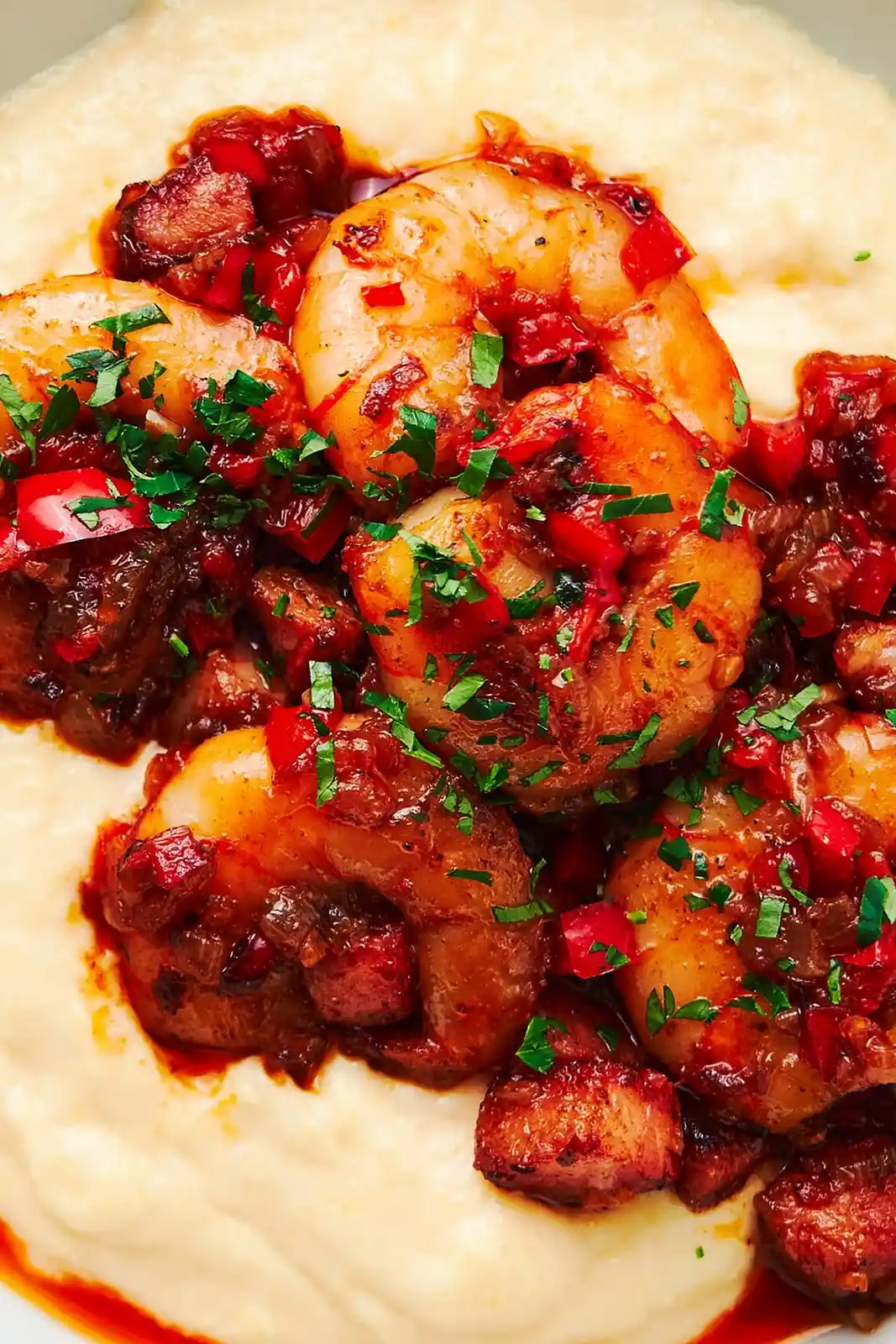
This savory dish pairs smoky, Cajun-style shrimp with rich, creamy cheddar cheese grits. It is an efficient way to prepare a high-protein, comforting meal with deep umami flavors.
List of ingredients
- 1 tablespoon olive oil – used for the shrimp marinade.
- 14 grams garlic (2 large cloves, finely minced) – provides a pungent aromatic base.
- 1 teaspoon smoked paprika – adds a deep, smoky flavor and red color.
- 1/4 teaspoon salt – enhances all other flavors.
- 1/4 teaspoon ground black pepper – adds a subtle spicy heat.
- 300 grams shrimp (peeled and deveined) – the primary protein source.
- 1 1/2 cups low sodium chicken stock – adds savory depth to the grits.
- 1 1/2 cup whole milk – creates a creamy, rich texture in the grits.
- 85 grams grits (~1/2 cup) – the base cornmeal porridge.
- 80 grams cheddar cheese (~1 cup grated) – provides sharpness and creaminess.
- 1 tablespoon cultured unsalted butter – adds a rich, buttery finish.
- 1 tablespoon olive oil – for sautéing the aromatics and shrimp.
- 90 grams smoked turkey breast (cut into 1/3-inch cubes) – provides a salty, smoky element.
- 90 grams onion (1/2 small onion, diced) – adds sweetness and depth.
- 65 grams red bell pepper (1/2 red bell pepper, diced) – adds color and a mild pepper flavor.
- 1/2 Lemon (to taste) – brightness to balance the rich fats.
- Flat-leaf parsley (for garnish) – adds a fresh, herbal note.
step-by-step instructions
- Prepare the marinade: Stir together the olive oil, garlic, smoked paprika, salt, and black pepper in a bowl. Add the shrimp and toss to coat evenly.
- Boil the liquid: Combine the chicken stock and milk in a pot and bring the mixture to a boil.
- Incorporate the grits: Add the grits and quickly stir them into the boiling liquid. Continue stirring for about a minute until the mixture starts to thicken slightly.
- Simmer the grits: Turn the heat to the lowest setting and cover the pot with a lid. Let it simmer for 10 minutes, stirring every 3 minutes to prevent the bottom from burning.
- Steam the grits: Remove the pan from the heat, give it one final stir, and cover with the lid. Let the grits steam without opening the lid while you prepare the shrimp.
- Brown the meat: Heat a frying pan over medium-high heat until hot. Add the olive oil and smoked turkey cubes, frying until they start to brown.
- Sauté aromatics: Add the diced onions and red bell peppers to the pan. Sauté until the onions are soft and translucent.
- Cook the shrimp: Add the shrimp and any remaining marinade to the pan. Spread the shrimp in a single layer to ensure even cooking.
- Flip the shrimp: When the shrimp are half cooked, toss or flip them to cook the other side.
- Finish the sauté: Continue frying until the shrimp are cooked through and the onions have started to brown.
- Add the cheese: Turn the heat back on under the grits pot. Add the grated cheddar cheese in three separate additions, stirring until fully incorporated after each addition.
- Finish the grits: Stir in the cultured unsalted butter until melted.
- Plate and serve: Spoon the grits into bowls and top with the shrimp and smoked turkey mixture. Garnish with chopped parsley and a squeeze of fresh lemon juice.
Techniques for Perfect Grits Texture
Using a Blend of Milk and Stock
Cooking grits in only water results in a thin and bland porridge. Using a 50:50 ratio of whole milk and chicken stock introduces both fats and amino acids. This combination creates a rich mouthfeel while providing a savory, umami-rich background that complements the shrimp.
Preventing Clumps During the Initial Boil
Cornmeal tends to clump when it first hits boiling liquid. Stirring rapidly during the first minute of cooking is essential to distribute the grains evenly. This prevents the formation of hard lumps and ensures a smooth, consistent texture throughout the dish.
The Importance of the Steaming Phase
Removing the pot from the heat and letting it steam allows the corn grains to finish hydrating without further reducing the liquid. This step ensures the grits are fully cooked through and tender. It also provides a convenient window of time to focus on the shrimp without the grits overcooking.
Integrating Cheese in Stages
Adding a large amount of cheese all at once can cause the fat to separate, leading to an oily texture. By stirring in the cheddar in three separate additions, the cheese emulsifies more effectively. This method results in a cohesive, creamy sauce integrated into the cornmeal.
Shrimp Sautéing Masterclass
Managing Pan Temperature
The frying pan must be hot before adding the oil and smoked turkey. High heat triggers the Maillard reaction, which browns the meat and creates complex flavor compounds. If the pan is too cool, the ingredients will steam rather than sear, losing the characteristic smoky char.
Controlling Shrimp Doneness
Shrimp cook very quickly and can become rubbery if overexposed to heat. The goal is to cook them until they form a ‘C’ shape; an ‘O’ shape usually indicates overcooking. Using a single layer in the pan ensures that every piece of shrimp is exposed to the heat evenly.
Layering the Aromatics
Adding the smoked turkey first allows its fats to render, providing a flavorful medium for the onions and peppers. Sautéing the vegetables after the meat ensures they soften and caramelize without burning before the shrimp are added. This sequence maximizes the flavor extraction from each ingredient.
Applying the Final Acid Balance
The addition of fresh lemon juice at the very end is a critical step. The citric acid cuts through the richness of the butter and cheddar cheese. This brightness elevates the overall flavor profile and prevents the dish from tasting too heavy or cloying.
Alternative Ingredient Options
Replacing Tasso Ham with Smoked Turkey
To avoid pork while maintaining the traditional smoky flavor, smoked turkey breast is an ideal substitute. It provides the same salty, cured profile and smoky aroma. Ensure the turkey is cut into small, uniform cubes to ensure they brown quickly in the pan.
Using Polenta Instead of Grits
If stone-ground grits are unavailable, polenta can be used as a substitute. Polenta is made from flint corn, whereas grits are usually made from dent corn. While polenta has a slightly firmer, grainier texture, it behaves similarly when cooked with milk and cheese.
Alternative Cheeses for Melting
While sharp cheddar is the classic choice, other melting cheeses like Gruyere, Fontina, or Swiss can be used. Gruyere adds a nuttier flavor, while Fontina provides an even creamier melt. Choose a cheese with a strong flavor profile to ensure it isn’t masked by the chicken stock.
Adjusting the Liquid for Different Milk Types
If using a plant-based milk, choose an unsweetened version such as almond or soy. Coconut milk is also a viable option, though it will introduce a subtle coconut flavor. You may need to slightly increase the amount of salt or stock to compensate for the lack of sodium in plant milks.
Serving and Pairing Suggestions
Adding a Poached Egg for Brunch
For a more substantial brunch meal, place a soft-poached egg on top of the grits. The runny yolk acts as an additional sauce, adding further richness to the cheddar grits. This combination is a classic Southern-style variation that increases the protein content of the meal.
Incorporating Hot Sauce for Heat
To add a spicy kick, finish the dish with a few dashes of a vinegar-based hot sauce. Tabasco or a similar Cajun-style hot sauce complements the smoked paprika and lemon. This adds a layer of acidity and heat that balances the creamy grits.
Pairing with Grilled Corn Salad
A side of chilled chili-lime grilled corn salad provides a refreshing contrast to the warm, rich shrimp and grits. The coolness of the salad and the tang of the lime cleanse the palate between bites. This makes the overall meal feel more balanced and less heavy.
Storage and Maintenance
Storing Shrimp and Grits Separately
If you plan to keep leftovers, store the shrimp mixture and the grits in separate airtight containers. This prevents the shrimp from overcooking during the reheating process and stops the grits from absorbing all the savory juices from the shrimp.
Reheating Grits to Restore Texture
Grits naturally thicken and become stiff as they cool. When reheating on a stovetop, add a small splash of milk or chicken stock. Stir gently over low heat to bring back the original creamy consistency without burning the bottom.
Warming Shrimp Gently
To reheat the shrimp and vegetable mixture, use a skillet over medium-low heat. Adding a teaspoon of water or butter helps steam the shrimp back to temperature without toughening the protein. Avoid the microwave for shrimp, as it often results in a rubbery texture.
Cooking Troubleshooting
Fixing Grainy Cheese Texture
If the cheese doesn’t melt smoothly, it may be because the grits were too cool or the cheese was too cold. To fix this, gently reheat the grits over low heat and whisk in a tablespoon of warm milk. This helps the cheese emulsify and smooths out the graininess.
Preventing the Grits from Burning
If you notice the grits sticking to the bottom of the pot, immediately add a tablespoon of liquid and scrape the bottom with a wooden spoon. Using a heavy-bottomed pot distributes heat more evenly, which significantly reduces the risk of scorching the milk solids.
Handling Overcooked Shrimp
If the shrimp have already become rubbery, do not continue cooking them. Remove them from the pan immediately and add them to the grits just before serving. Adding a squeeze of extra lemon can help mask the toughened texture of overcooked shrimp.
Common Questions
Can I use quick-cooking grits instead of stone-ground?
Yes, you can use quick grits, but the cooking time will be significantly shorter. Quick grits do not require the same simmering and steaming time as stone-ground grits. Follow the package instructions for liquid ratios, but maintain the milk and stock blend for flavor.
What is the best way to devein shrimp?
Use a small paring knife to make a shallow slit along the back of the shrimp. Gently press the meat away from the shell to remove the dark vein. For easier cleaning, you can use a toothpick to lift the vein out of the slit.
How do I make this dish spicier?
Increase the amount of smoked paprika or add a pinch of cayenne pepper to the marinade. You can also add diced jalapeños to the pan when sautéing the onions and bell peppers. Finally, topping the finished dish with sliced scallions and hot sauce adds immediate heat.
Can I use vegetable stock instead of chicken stock?
Yes, vegetable stock is a suitable replacement. Ensure you use a high-quality, low-sodium vegetable broth to maintain the savory depth. This change makes the base of the grits compatible with a wider range of dietary preferences without sacrificing taste.
Is it necessary to use cultured butter?
Cultured butter has a higher concentration of diacetyl, which provides a more intense buttery flavor. However, standard unsalted butter will work perfectly well. The primary goal is to add fat and richness to the final stage of the grits.
Print
Creamy Cheddar Shrimp and Grits
- Total Time: 25 minutes
- Yield: 2 servings 1x
- Diet: General
Description
Rich, creamy cheddar cheese grits and smoky Cajun-style shrimp, offering a flavorful twist on a classic comfort food.
Ingredients
- 1 tablespoon olive oil
- 14 grams garlic, finely minced
- 1 teaspoon smoked paprika
- 1/4 teaspoon salt
- 1/4 teaspoon ground black pepper
- 300 grams shrimp, peeled and deveined
- 1 1/2 cups low sodium chicken stock
- 1 1/2 cup whole milk
- 85 grams grits
- 80 grams microbial-rennet cheddar cheese, grated
- 1 tablespoon cultured unsalted butter
- 1 tablespoon olive oil
- 90 grams smoked turkey sausage, cut into 1/3-inch cubes
- 90 grams onion, diced
- 65 grams red bell pepper, diced
- 1/2 lemon, to taste
- Flat-leaf parsley, for garnish
Instructions
- Step: Make the marinade for the shrimp by stirring together the olive oil, garlic, smoked paprika, salt, and black pepper. Add the shrimp and toss to coat evenly.
- Step: To cook the grits, add the chicken stock and milk to a pot and bring the mixture to a boil.
- Step: Add the grits and quickly stir them into the milk and stock. Continue stirring the mixture until it starts to thicken slightly (about a minute).
- Step: Turn the heat down all the way and cover the pot with a lid. Let this simmer for 10 minutes, being sure to stir it every 3 minutes or so to keep it from burning.
- Step: When the 10 minutes are up, give it one last stir, cover it with the lid, and remove the pan from the heat. Let this steam without opening the lid while you prepare the shrimp.
- Step: For the shrimp, heat a frying pan over medium high heat until hot. Add the olive oil and smoked turkey sausage and fry it until it starts to brown.
- Step: Add the onions and bell peppers and sauté the mixture until the onions are soft and translucent.
- Step: Add the shrimp mixture, along with any remaining marinade, and spread the shrimp in a single layer in the pan.
- Step: When the shrimp is half cooked, toss the shrimp to flip them over, and then flip over any shrimp that got missed.
- Step: Let these fry until the shrimp is cooked through and the onions have started to brown.
- Step: To finish the grits, turn the heat back on, and then add the grated cheese in 3 additions, stirring until the cheese is fully incorporated after each addition.
- Step: When the cheese is incorporated, stir in the butter.
- Step: Serve the shrimp and grits in a bowl and garnished with chopped parsley or scallions and a squeeze of lemon.
Notes
Cooking the grits in a 50:50 blend of chicken stock and milk adds deep umami flavor. Ensure the cheese is added in increments to prevent the fat from separating.
- Prep Time: 5 minutes
- Cook Time: 20 minutes
- Category: Brunch
- Method: Stovetop
- Cuisine: American
Nutrition
- Serving Size: 1 serving
- Calories: 978 kcal
- Sugar: 17 g
- Sodium: 2631 mg
- Fat: 52 g
- Saturated Fat: 21 g
- Unsaturated Fat: 31 g
- Trans Fat: 0 g
- Carbohydrates: 61 g
- Fiber: 3 g
- Protein: 66 g
- Cholesterol: 487 mg