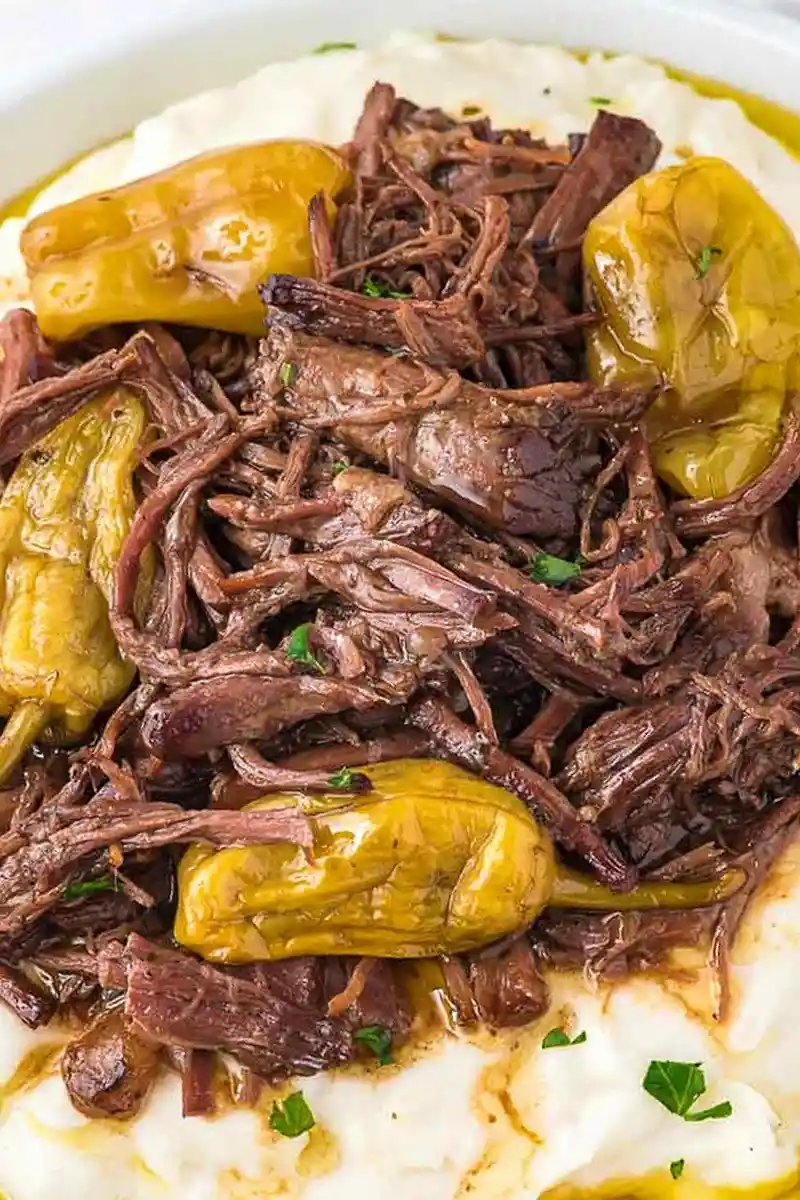
This slow cooker meal creates an incredibly tender beef roast with a savory and tangy flavor profile. It requires minimal preparation and cooks throughout the day for a hearty family dinner.
List of ingredients
- 2-4 pound chuck roast – choose a piece with good marbling for maximum tenderness.
- 1 packet ranch dressing mix – provides a seasoned, herby base.
- 1 packet au jus gravy mix – adds depth and creates a rich savory sauce.
- 8 pepperoncini peppers – adds a mild heat and signature tang.
- 1/4 cup pepperoncini juice (optional) – enhances the acidity of the gravy.
- 1/2 cup 1 stick butter – creates a rich, velvety texture in the sauce.
step-by-step instructions
- Prepare the meat: Place the chuck roast in the bottom of the crockpot.
- Season: Sprinkle the ranch dressing mix and the au jus gravy mix evenly over the top of the roast.
- Add aromatics: Pour the pepperoncini juice on top of the roast and place the whole peppers around the sides of the meat.
- Add fat: Place the full stick of butter directly on top of the roast.
- Slow cook: Cover and cook on the low setting for 8 hours.
- Serve: Once the meat is tender enough to shred, serve it over noodles, mashed potatoes, or rice.
Guidelines for Selecting the Best Beef
Prioritize Chuck Roast Cuts
The chuck roast comes from the shoulder area of the cow, which contains a high concentration of connective tissue and fat. This specific composition is essential for slow cooking because the collagen breaks down into gelatin over several hours. This process ensures the meat remains moist and becomes tender enough to pull apart with a fork.
Evaluate the Marbling
Look for meat with significant white flecks of intramuscular fat, known as marbling. This fat melts during the long cooking process and bastes the meat from the inside. Leaner cuts of beef may become dry or tough when subjected to an eight-hour cook time in a slow cooker.
Choose the Right Size for Your Pot
Ensure the roast fits comfortably in your crockpot without being pressed against the sides or lid. A 2-4 pound roast works best in a standard 6-quart or 8-quart slow cooker. Leaving some space around the meat allows the heat and steam to circulate more efficiently.
Understanding the Flavor Components
The Role of Seasoning Packets
The combination of ranch dressing mix and au jus gravy mix creates a concentrated blend of salt, garlic, onion, and herbs. These packets penetrate the meat as it cooks, seasoning it deeply throughout the roast. The au jus specifically helps thicken the natural beef juices into a savory gravy.
Adding Tang with Pepperoncinis
Pepperoncini peppers provide a vinegary brightness that cuts through the richness of the beef and butter. Using both the whole peppers and a small amount of the pickling juice increases the acidity. This acid helps further tenderize the muscle fibers of the beef.
The Importance of Butter
Adding a full stick of butter may seem excessive, but it is key to the texture of the final sauce. The butter emulsifies with the beef fat and the savory powders to create a thick, glossy gravy. This ensures the roast does not dry out and provides a rich mouthfeel.
Slow Cooking Technical Tips
Maintaining a Low Temperature
Cooking on the low setting is highly recommended for pot roast. High heat can cause the muscle fibers to contract quickly, which often results in tough, rubbery meat. A low, steady temperature over eight hours allows the connective tissues to dissolve slowly and completely.
Avoiding Added Water
Do not add water or beef broth to the crockpot for this specific recipe. The beef will release a significant amount of natural juice as it cooks, and the butter provides additional liquid. Adding extra water will dilute the concentrated flavors of the ranch and au jus mixes.
Checking for Tenderness
The meat is finished when it can be easily shredded with two forks. If the beef still feels resilient or tough, continue cooking on low for another hour. Every piece of meat is slightly different, so the exact timing can vary based on the roast’s thickness.
Protein Substitutions and Variations
Using Chicken Instead of Beef
You can use boneless chicken thighs or chicken breasts as an alternative protein. Chicken thighs are preferred as they handle long cook times better without drying out. Reduce the cooking time to 4-6 hours on low to avoid overcooking the poultry.
Incorporating Root Vegetables
To make this a one-pot meal, add cubed potatoes, carrots, and onions around the beef. Potatoes should be added at the beginning, while carrots can be added four hours into the process to prevent them from becoming too mushy. These vegetables soak up the savory gravy during the cooking process.
Adjusting the Heat Level
For a spicier roast, increase the number of pepperoncini peppers to 12 or 15. If you prefer a milder flavor, stick to 4 or 5 peppers and omit the extra pickling juice. You can also slice the peppers in half to release more of their heat into the sauce.
Serving Recommendations
Classic Potato Pairings
Creamy mashed potatoes are the traditional choice for this dish as they absorb the rich gravy perfectly. Alternatively, roasted red potatoes or boiled baby potatoes provide a nice texture contrast. Garlic-infused mashed potatoes add an extra layer of flavor that complements the ranch seasoning.
Grain and Noodle Bases
Wide egg noodles are an excellent base for shredded Mississippi pot roast. The noodles hold onto the sauce well and provide a comforting texture. For a gluten-free option, serve the beef over steamed white rice or quinoa to soak up the juices.
Complementary Vegetable Sides
Balance the richness of the roast with a fresh or steamed vegetable. Steamed green beans, roasted asparagus, or a crisp cucumber and tomato salad provide a necessary brightness. A side of sautéed spinach or kale also works well to add nutritional balance to the meal.
Storage and Preservation
Refrigeration Guidelines
Store leftover pot roast in an airtight container in the refrigerator for up to five days. Ensure the meat is stored within its own cooking juices to prevent it from drying out. Allow the roast to cool slightly before sealing the lid to avoid excessive condensation.
Freezing for Long Term Use
This roast freezes well for up to three months. Place the meat and a generous portion of the gravy in a freezer-safe bag or container. Squeeze out as much air as possible to prevent freezer burn and maintain the quality of the beef.
Effective Reheating Methods
Stovetop Reheating
For the best texture, reheat the beef in a skillet over medium heat. Add a small amount of the original gravy to the pan and cover with a lid. This allows the meat to steam and warm through without becoming tough.
Oven Warming
Place the roast and gravy in a baking dish and cover it tightly with aluminum foil. Heat in the oven at 325°F (163°C) for approximately 20 minutes. The foil traps the moisture, ensuring the beef remains juicy and tender.
Troubleshooting Common Issues
Fixing Tough or Rubbery Meat
If the meat is not shredding easily, it likely needs more time to cook. Return it to the slow cooker on the low setting for an additional hour. This usually happens if a leaner cut of meat was used or if the roast was exceptionally large.
Reducing Excess Grease
Because this recipe uses butter and a fatty cut of beef, the gravy may have a layer of oil on top. Use a spoon to skim the fat off the surface before serving. Alternatively, you can refrigerate the roast overnight and lift the solidified fat layer off the top the next morning.
Managing Overly Salty Results
Since the seasoning packets contain significant sodium, the dish can sometimes taste too salty. To balance this, stir in a tablespoon of apple cider vinegar or add a splash of water. Serving the roast over unseasoned rice or potatoes also helps neutralize the saltiness.
Frequently Asked Questions
What is the difference between Mississippi pot roast and regular pot roast?
The primary difference is the flavor profile created by ranch seasoning and pepperoncini peppers. Traditional pot roast usually relies on beef broth, carrots, and onions for a more neutral, savory taste, whereas this version is tangy and zesty.
Do I need to brown the meat first?
Browning the meat is not required for this recipe because the slow cooker develops flavor over several hours. However, if you prefer a deeper crust on the beef, you can sear the roast in a pan with oil before placing it in the crockpot.
Can I use a different cut of beef?
While chuck roast is ideal, you can use brisket or round roast. Be aware that brisket may take longer to tenderize, and round roast is much leaner, which increases the risk of the meat becoming dry if overcooked.
Print
Slow Cooker Mississippi Pot Roast
- Total Time: 8 hours 10 minutes
- Yield: 8 servings 1x
- Diet: General
Description
Are you ready for a pot roast that’s amazingly juicy, tender, and bursting with flavor? Say hello to this crockpot Mississippi pot roast! It’s an easy dinner that you will love making and eating.
Ingredients
- 2–4 pound chuck roast
- 1 packet ranch dressing mix
- 1 packet au jus gravy mix
- 8 pepperoncini peppers
- ¼ cup pepperoncini juice (optional)
- ½ cup 1 stick butter
Instructions
- Step: Place chuck roast in the bottom of the crockpot.
- Step: Sprinkle the ranch dressing mix and the au jus gravy mix on top of the roast.
- Step: Pour the pepperoncini juice on top of the roast and place the peppers around the roast.
- Step: Place the stick of butter on top.
- Step: Cook on low for 8 hours. Serve with noodles, mashed potatoes, or rice.
Notes
Slow cooking is best for making pot roast. Allow plenty of time for the roast to cook so that it comes out juicy, tender, and full of flavor. Don’t add water. The fat in the beef and the butter will create enough liquid to cook everything perfectly without diluting the flavor. Add some veggies like cubed potatoes, carrots, or onions around the beef in the crockpot. Store leftovers in an airtight container in the fridge for up to five days or in the freezer for up to three months. Reheat in a skillet over medium heat or in the oven at 325°F for about 20 minutes.
- Prep Time: 10 minutes
- Cook Time: 8 hours
- Category: Dinner
- Method: Slow Cooking
- Cuisine: American
Nutrition
- Serving Size: 1 serving
- Calories: 207 kcal
- Sugar: 0.2 g
- Sodium: 103 mg
- Fat: 13 g
- Saturated Fat: 6 g
- Unsaturated Fat: 8 g
- Trans Fat: 1 g
- Carbohydrates: 1 g
- Fiber: 0.3 g
- Protein: 22 g
- Cholesterol: 78 mg