This quick oven-baked salmon features a vibrant basil pesto base and a crunchy parmesan breadcrumb topping. It is an efficient high-protein dinner that requires minimal preparation and cleanup.
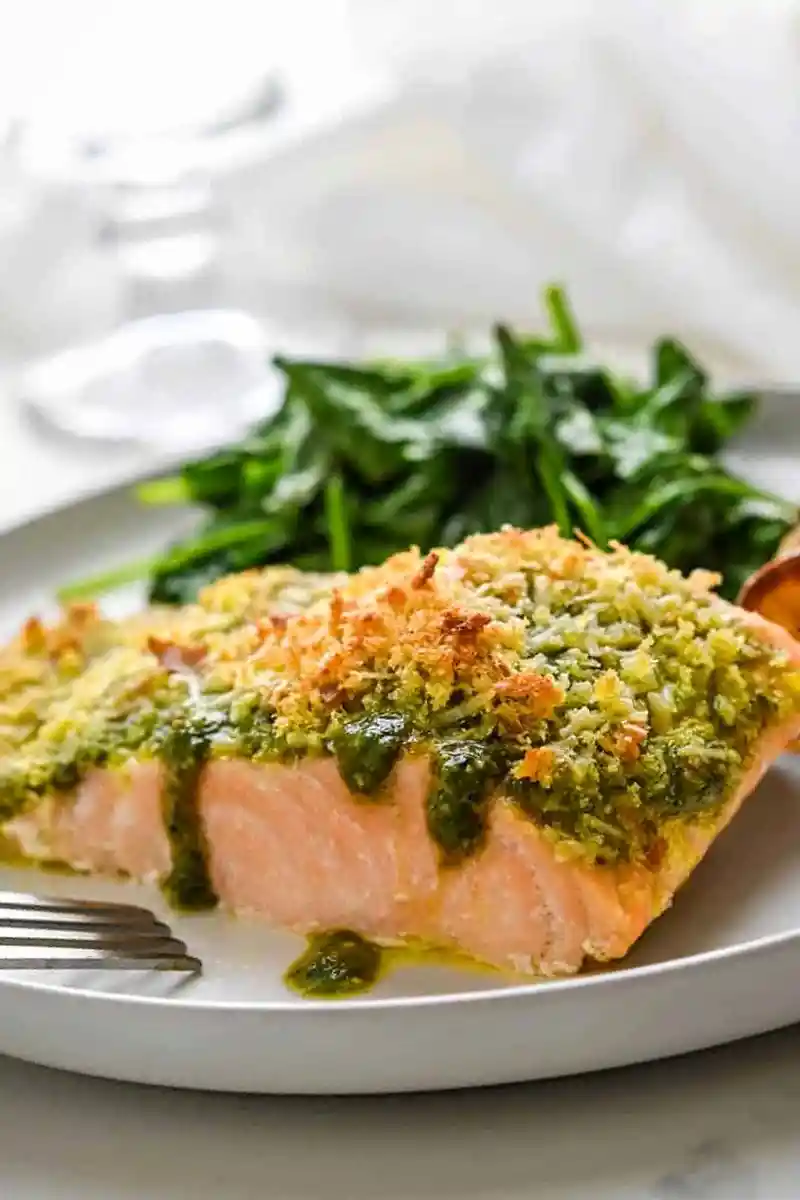
List of ingredients
- 24 ounces salmon fillets (four 6-ounce portions) – skin-on or skinless both work well.
- 6-7 tablespoons basil pesto – store-bought or homemade.
- 1/3 cup fresh breadcrumbs – for a light, airy crust.
- 1/3 cup freshly grated parmesan cheese – use a microplane for the best consistency.
step-by-step instructions
- Prepare the oven and pan: Preheat your oven to 400°F. Line a rimmed baking sheet with tin foil and lightly coat it with vegetable spray to prevent sticking.
- Arrange the fish: Place the salmon fillets on the prepared baking sheet, ensuring there is enough space between them so they do not touch.
- Apply the pesto: Spoon approximately 1½ tablespoons of basil pesto onto each fillet. Use the back of a spoon or a knife to spread the sauce evenly across the top of the fish.
- Prepare the crust: In a small mixing bowl, stir together the fresh breadcrumbs and the grated parmesan cheese until well combined.
- Add the topping: Generously sprinkle the parmesan breadcrumb mixture over the pesto-coated salmon, pressing lightly to adhere.
- Bake: Place the pan in the oven and cook for 12 minutes for a medium finish, or up to 15 minutes for the fish to be fully cooked through.
Professional Salmon Selection Guide
Choose Fattier Cuts for Better Moisture
Opt for King or Atlantic salmon if you prefer a richer, more buttery texture. These varieties have a higher fat content, which helps prevent the fish from drying out during the high-heat baking process.
Determine if Skin-on is Right for You
Keeping the skin on provides a natural barrier that protects the flesh from direct heat, often resulting in a moister fillet. If you prefer skinless, ensure you use a parchment or foil lining to avoid the fish sticking to the pan.
Handle Frozen Fillets Correctly
If using frozen salmon, thaw the fillets completely in the refrigerator overnight. Once thawed, pat them dry with paper towels to remove excess moisture, which ensures the pesto and crust adhere properly.
Identify Wild vs. Farmed Options
Wild-caught Sockeye or Coho salmon typically has a deeper red color and a more intense flavor. Farmed salmon is generally milder and more consistent in size, making it easier to time the cooking process across multiple fillets.
Pesto and Crust Customizations
Substitute Basil for Sun-Dried Tomato Pesto
For a tangier, more concentrated flavor, swap the traditional basil pesto for a sun-dried tomato version. This creates a savory, Mediterranean-style profile that pairs exceptionally well with the salty parmesan cheese.
Use Olive Tapenade for a Briny Twist
Replacing pesto with a black olive tapenade adds a salty, pungent depth to the dish. Since tapenade is saltier than pesto, reduce any additional salt seasoning on the fillets to maintain balance.
Create a Gluten-Free Topping
Replace standard breadcrumbs with certified gluten-free breadcrumbs or crushed cornflakes for a similar crunch. Rice Krispies or crushed potato chips also work as creative, gluten-free alternatives for the crust.
Introduce Heat with Red Pepper Flakes
Mix 1/4 teaspoon of crushed red pepper flakes into the breadcrumb and parmesan mixture. This adds a subtle spicy kick that cuts through the richness of the fatty salmon and the creamy cheese.
Swap Fresh Crumbs for Panko
Use Panko breadcrumbs instead of fresh ones if you want an ultra-crunchy, jagged texture. Panko crumbs are larger and airier, which allows them to brown more effectively under the oven’s heat.
Dairy-Free Crust Alternatives
Substitute the parmesan cheese with nutritional yeast or a vegan parmesan alternative for a dairy-free version. Ensure you use a vegan pesto that replaces parmesan with nuts or seeds.
Advanced Baking Techniques
Manage Carryover Cooking
Salmon continues to cook for a few minutes after being removed from the oven due to residual heat. To avoid overcooking, remove the fish when it is just slightly under your desired doneness, usually around the 12-minute mark.
Ensure Uniform Cooking Times
Slice a large piece of salmon into individual 6-ounce portions before adding the toppings. This ensures each piece cooks at the same rate and prevents thicker sections from remaining raw while thinner edges overcook.
Utilize a Microplane for Cheese
Grate the parmesan cheese using a microplane rather than a box grater. This creates a fine, fluffy powder that blends seamlessly with the breadcrumbs, resulting in a more even golden crust.
Optimize Pan Setup for Cleanup
Always use a rimmed baking sheet to catch any oil or pesto that may drip during the baking process. Combining foil with a light coating of vegetable spray makes the cleanup process nearly effortless.
Recommended Serving and Pairings
Pair with Roasted Root Vegetables
Toss carrots or parsnips in olive oil and roast them on a separate tray at the same temperature. The earthy sweetness of root vegetables complements the herbal notes of the basil pesto.
Serve Over Light Grains
Place the salmon fillets atop a bed of steamed couscous, orzo, or quinoa. These grains are excellent for absorbing the extra pesto juices that release from the fish during baking.
Complement with Fresh Green Salads
A simple arugula or spinach salad with a lemon vinaigrette provides a bright, acidic contrast. This acidity helps balance the richness of the parmesan crust and the oily nature of the salmon.
Include Sautéed Green Vegetables
Garlic green beans or steamed asparagus are classic pairings for pesto salmon. The snap of fresh greens adds a necessary textural contrast to the soft fish and crunchy topping.
Utilize Creamy Mash Alternatives
Serve the fish alongside roasted garlic mashed cauliflower or brown butter mashed potatoes. These options provide a comforting, creamy base that supports the bold flavors of the pesto.
Storage and Reheating Guidelines
Store in Airtight Containers
Place leftover salmon in a sealed airtight container and refrigerate immediately after cooling. The fish will remain safe to eat and maintain its quality for up to 3 days in the refrigerator.
Reheat in the Oven for Texture
To preserve the crunch of the parmesan crust, reheat leftovers in a 350°F oven for 8-10 minutes. Place the fillets uncovered on a foil-lined sheet to allow moisture to escape.
Avoid Microwave Reheating
Microwaving salmon often results in a rubbery texture and a soggy crust. If a microwave is the only option, heat in 30-second bursts to prevent the fish from overcooking.
Cooling Process Before Storage
Allow the salmon to cool to room temperature before sealing it in a container. This prevents steam from trapping inside the container, which would otherwise soften the crispy breadcrumb topping.
Troubleshooting Common Issues
Fixing a Bland Flavor Profile
If your pesto is mild, season the raw salmon fillets with a pinch of salt and black pepper before applying the sauce. This ensures the fish itself is seasoned, not just the crust.
Managing Excess Moisture
If the crust becomes soggy, it is likely due to excess moisture on the surface of the fish. Always pat the fillets completely dry with a paper towel before adding the pesto.
Adjusting for Fillet Thickness
Fillets thicker than one inch may require an additional 2-3 minutes of baking time. Conversely, very thin fillets should be checked at the 10-minute mark to prevent drying.
Preventing Pesto from Burning
If the pesto begins to darken too quickly, you can loosely tent the pan with foil. This protects the topping from the direct heat of the upper oven element while the center finishes cooking.
Frequently Asked Questions
How do I ensure the salmon stays moist?
The most effective way to keep salmon moist is to avoid overcooking. Use a meat thermometer to check for an internal temperature of 135-145°F, and remember that carryover cooking will raise the temperature slightly after removal.
Can I use different types of cheese for the crust?
While parmesan is traditional, Pecorino Romano offers a saltier punch, and Asiago provides a slightly nuttier flavor. Ensure the cheese is finely grated so it integrates well with the breadcrumbs.
How do I scale this recipe for a larger group?
This recipe scales linearly. For every additional 6-ounce fillet, add 1½ tablespoons of pesto and roughly 1½ tablespoons of the combined breadcrumb and parmesan mixture.
Is it better to use fresh or dried breadcrumbs?
Fresh breadcrumbs provide a lighter, more tender crust that mimics a professional restaurant finish. Dried breadcrumbs can be too dense and may not brown as evenly as fresh alternatives.
) Print
Baked Pesto Salmon with Parmesan Crust
- Total Time: 20 minutes
- Yield: 4 servings 1x
- Diet: General
Description
This easy Pesto Salmon recipe has a bright basil flavor with a crispy, golden crust. It’s a quick and easy dinner recipe ideal for weeknights and special enough for company.
Ingredients
- 24 ounces salmon fillets (four 6-ounce fillets)
- 6–7 tablespoons pesto
- ⅓ cup fresh breadcrumbs
- ⅓ cup freshly grated parmesan cheese
Instructions
- Step 1: Preheat the oven to 400°. Place a piece of tin foil on a rimmed baking sheet and spray with vegetable spray.
- Step 2: Lay the salmon fillets on the baking sheet so they don’t touch. Spoon 1½ tablespoons of basil pesto over each fillet and spread it with the back of a spoon or knife so it’s lightly coated.
- Step 3: Combine the breadcrumbs and parmesan cheese in a small bowl. Top the salmon fillets with the breadcrumb mixture.
- Step 4: Cook the salmon for 12 minutes for medium and up to 15 minutes to cook through.
Notes
Cooking time depends on fillet thickness. Due to carryover cooking, baking for 12-13 minutes often results in moister flesh.
- Prep Time: 5 minutes
- Cook Time: 15 minutes
- Category: Main Course
- Method: Baking
- Cuisine: American, Italian
Nutrition
- Serving Size: 1 fillet
- Calories: 399 kcal
- Sugar: 1.3 g
- Sodium: 497 mg
- Fat: 22 g
- Saturated Fat: 4.5 g
- Unsaturated Fat: 8.8 g
- Trans Fat: 0 g
- Carbohydrates: 9.3 g
- Fiber: 0.8 g
- Protein: 38.5 g
- Cholesterol: 103 mg