This quick meal features tender pan-fried chicken breasts smothered in a creamy, savory gravy. It uses simple pantry staples to create a comforting dinner in about 30 minutes.
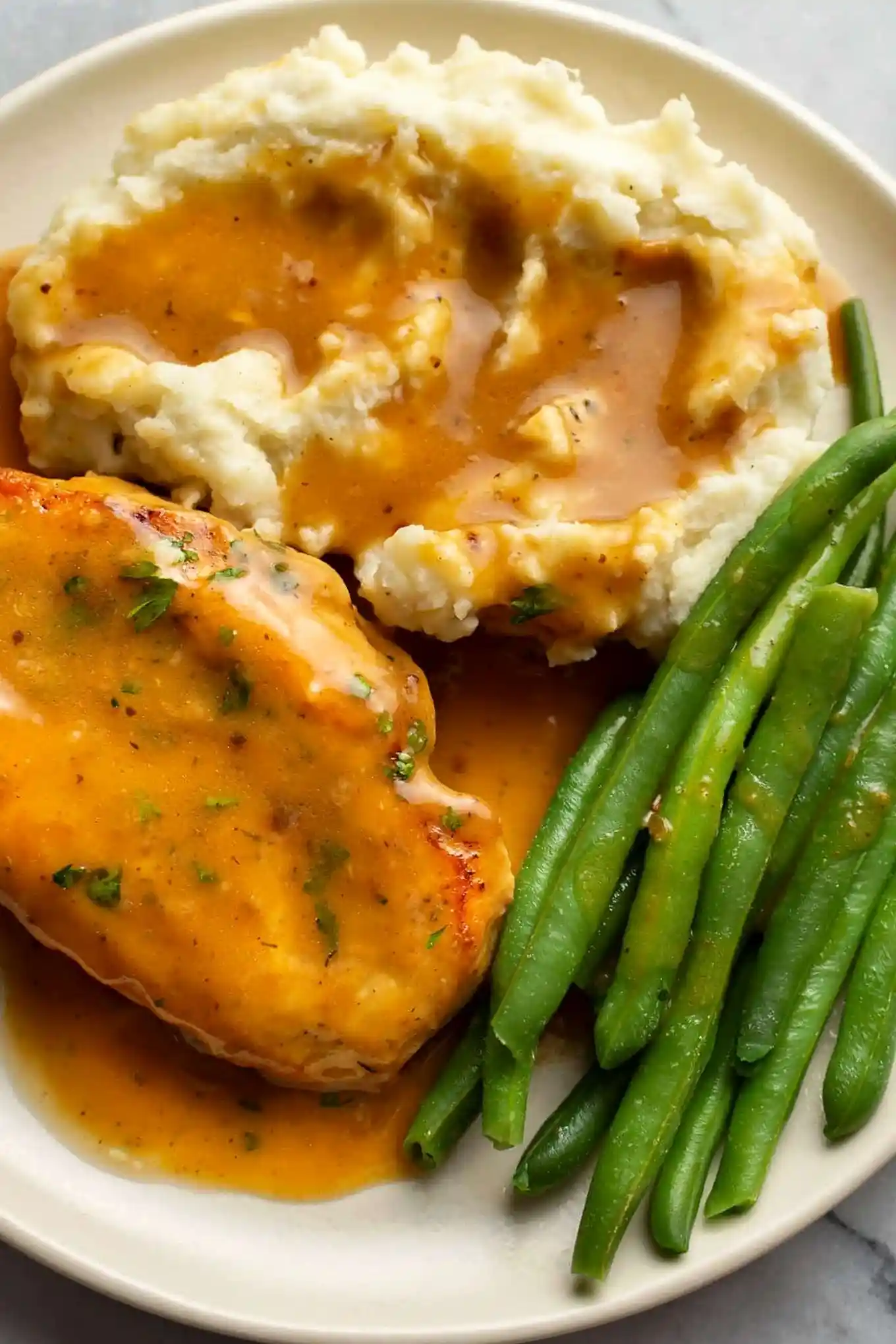
List of ingredients
- 2 large chicken breasts – sliced into thinner cutlets for faster cooking.
- Salt and pepper – used to taste for basic seasoning.
- 1/2 teaspoon garlic powder – adds a concentrated savory depth to the meat.
- 1 tablespoon olive oil – used for the initial searing process.
- 3 tablespoons butter (divided) – provides richness to the sear and the roux.
- 2 tablespoons flour – acts as the primary thickening agent for the gravy.
- 1 1/4 cups chicken broth – creates the liquid base for the sauce.
- 1/4 teaspoon Italian seasoning – a blend of herbs for aromatic flavor.
- 1/4 teaspoon onion powder – adds a subtle sweetness and depth.
- 1 tablespoon chopped fresh parsley (optional) – used as a fresh garnish.
step-by-step instructions
- Prepare the meat: Cut the chicken breasts in half lengthwise to create four thinner cutlets. Season each piece thoroughly with salt, pepper, and garlic powder.
- Sear the chicken: Add olive oil and 1 tablespoon of butter to a skillet over medium-high heat. Let the pan heat up for a few minutes before adding the meat.
- Brown the cutlets: Cook the chicken for approximately 4-5 minutes per side until golden brown. Transfer the cooked chicken to a plate and set aside.
- Create the roux: Reduce the heat to medium. Add the remaining butter to the skillet and stir in the flour once melted, cooking for about one minute.
- Build the sauce: Slowly whisk in the chicken broth, ensuring the flour is fully dissolved and no lumps remain.
- Season the gravy: Stir in the Italian seasoning and onion powder to infuse the sauce with herb flavors.
- Simmer and finish: Return the chicken and any accumulated juices from the plate to the skillet. Cook for another 4-5 minutes until the chicken reaches an internal temperature of 165F and the sauce thickens.
- Final touch: Adjust seasoning with salt and pepper if needed. Sprinkle with fresh parsley and serve immediately.
Advanced Cooking Techniques for Better Results
Searing for Maximum Flavor
Using a medium-high heat ensures a proper Maillard reaction, which creates the brown crust on the chicken. This crust provides a deep, savory flavor that transfers into the gravy. Avoid moving the chicken too often to allow the sear to develop fully.
Managing Pan Temperature
Controlling the heat is critical when transitioning from searing to making the roux. Reducing the heat to medium prevents the butter from burning and the flour from browning too quickly. This ensures a smooth, blonde roux that thickens the sauce without adding a burnt taste.
Ensuring Precise Doneness
Using an instant-read meat thermometer is the only way to guarantee the chicken is safe but not overcooked. Remove the chicken when it hits 165F in the thickest part of the meat. Overcooking leads to dry fibers, which can ruin the tender texture of the dish.
Deglazing the Skillet
The brown bits left in the pan after searing are called fond. When you whisk in the chicken broth, these bits dissolve and integrate into the sauce. This process, known as deglazing, is what gives the gravy its professional, complex flavor profile.
Emulsifying the Sauce
Whisking the broth slowly into the roux prevents the fat from separating. A steady stream of liquid combined with constant whisking creates a stable emulsion. This results in a velvety, glossy sauce that clings perfectly to the chicken.
Ingredient Substitutions and Customizations
Using Chicken Thighs
Boneless, skinless chicken thighs can be used as a substitute for breasts for a juicier result. Thighs have a higher fat content and require a slightly higher internal temperature of 175F to be tender. Adjust the simmering time at the end to account for this difference.
Gluten-Free Thickening Options
To make this recipe gluten-free, replace the all-purpose flour with a 1:1 gluten-free flour blend or cornstarch. If using cornstarch, mix it with a small amount of cold broth first to create a slurry. Stir the slurry into the simmering liquid at the end rather than making a roux.
Alternative Broth Choices
While chicken broth is standard, vegetable broth can be used for a slightly lighter flavor. Low-sodium broth is recommended so you can control the salt levels manually. For more depth, you can use a concentrated chicken stock.
Adjusting the Herb Profile
Italian seasoning is convenient, but you can customize the flavor with individual dried herbs. Sage, thyme, and rosemary are classic pairings for chicken and gravy. Use about 1/4 teaspoon of each for a more traditional pot-roast style flavor.
Substituting Butter
If you prefer to avoid butter, you can use a neutral oil or ghee. Ghee provides a similar flavor profile to butter but has a higher smoke point. Ensure the fat-to-flour ratio remains equal to maintain the thickening power of the roux.
Recommended Side Pairings
Creamy Mashed Potatoes
Mashed potatoes are the most classic accompaniment for this dish. The starch absorbs the rich gravy, creating a balanced bite. Try adding roasted garlic or a hint of cream to the potatoes for extra decadence.
Garlic Butter Noodles
Egg noodles or linguine tossed in garlic and butter provide a great base. The noodles act as a vehicle for the sauce, ensuring none of the gravy goes to waste. Freshly grated parmesan cheese can be sprinkled on top for added saltiness.
Steamed or Roasted Vegetables
To balance the richness of the gravy, serve with a fresh green vegetable. Steamed broccoli, sautéed green beans, or glazed carrots provide a necessary contrast in texture and flavor. The bitterness of charred Brussels sprouts also pairs well with the savory sauce.
Crusty Artisan Bread
A toasted baguette or a sourdough loaf is ideal for mopping up extra sauce. Brush the bread with olive oil and toast it in the oven until golden. This adds a crunchy element to an otherwise soft and tender meal.
Steamed White Rice
Basmati or jasmine rice serves as a neutral base that lets the gravy be the star of the show. Rice is particularly effective at soaking up the liquid. For more flavor, cook the rice in a small amount of chicken broth instead of water.
Storage and Freshness Guidelines
Refrigeration and Shelf Life
Store leftover chicken and gravy in an airtight container in the refrigerator. It will remain fresh and safe to eat for 3 to 4 days. Ensure the container is sealed tightly to prevent the chicken from absorbing other fridge odors.
Freezing for Long-Term Use
This dish freezes well for up to 3 months. Place the chicken and sauce in a freezer-safe bag, pressing out as much air as possible. To avoid freezer burn, wrap the bag in aluminum foil before placing it in the freezer.
Safe Thawing Process
Always thaw frozen leftovers in the refrigerator overnight. Avoid thawing at room temperature to prevent bacterial growth. Once thawed, the sauce may appear slightly separated, which is normal and will resolve upon reheating.
Best Reheating Methods
The best way to reheat this meal is in a saucepan over low heat. Add a tablespoon of water or chicken broth to loosen the sauce as it warms. This method prevents the chicken from overcooking while restoring the gravy to its original consistency.
Troubleshooting Common Issues
Fixing Lumpy Gravy
If lumps form in your sauce, it is usually due to adding the broth too quickly. You can fix this by whisking vigorously or passing the sauce through a fine-mesh strainer. Alternatively, a quick pulse with an immersion blender will smooth it out instantly.
Preventing Dry Chicken
Dry chicken occurs when the meat is cooked beyond 165F or seared for too long. Use thinner cutlets to ensure the center cooks quickly without the exterior drying out. Always let the meat rest for a few minutes after the final simmer.
Adjusting Overly Salty Sauce
If the gravy tastes too salty, you can balance it by adding a small amount of unsalted butter or a splash of heavy cream. A tiny pinch of sugar can also neutralize excess salt. If the sauce is too thick and salty, stir in a bit more unsalted broth.
Solving Sauce Thinness
If the sauce is too thin after simmering, increase the heat slightly to reduce the liquid. Alternatively, mix a teaspoon of cornstarch with cold water and stir it into the boiling sauce. Let it simmer for one more minute to activate the thickener.
Frequently Asked Questions
Can I use frozen chicken breasts?
Yes, but they must be completely thawed before cooking. Cooking frozen chicken leads to uneven searing and can result in a rubbery texture. Thaw them in the fridge for 24 hours for the best results.
Can I use skin-on chicken breasts?
You can, but the process changes slightly. You will need to sear the skin side first to render the fat and get the skin crispy. Note that the skin may soften once it is simmered in the gravy.
What if I don’t have a skillet?
A wide pot or a deep frying pan will work just as well. The most important factor is having enough surface area to sear the chicken without overcrowding. A cast-iron skillet is ideal for heat retention.
How do I make a larger batch?
Double the ingredients exactly, but use a larger pan to avoid overcrowding. You may need to sear the chicken in two batches to maintain the pan temperature. Increase the simmering time slightly to allow the larger volume of sauce to thicken.
How can I make the gravy creamier?
For a creamier consistency, stir in two tablespoons of heavy cream or a dollop of sour cream at the very end. Remove the pan from the heat before stirring in the dairy to prevent curdling. This adds a rich, velvety finish to the sauce.
Print
Savory Pan-Seared Chicken with Rich Gravy
- Total Time: 30 minutes
- Yield: 4 servings 1x
- Diet: General
Description
This chicken and gravy recipe has tender pan fried chicken breasts smothered in a rich gravy. It’s made with pantry ingredients and comes together fast!
Ingredients
- 2 large chicken breasts
- Salt & pepper to taste
- 1/2 teaspoon garlic powder
- 1 tablespoon olive oil
- 3 tablespoons butter, divided
- 2 tablespoons flour
- 1 1/4 cups chicken broth
- 1/4 teaspoon Italian seasoning
- 1/4 teaspoon onion powder
- 1 tablespoon chopped fresh parsley (optional)
Instructions
- Step 1: Cut the chicken in half lengthwise so you’ve got 4 thinner cutlets. Season each piece with salt & pepper and the garlic powder.
- Step 2: Add the olive oil and 1 tablespoon of the butter to a skillet over medium-high heat. Let the pan heat up for a few minutes.
- Step 3: Add the chicken to the pan and cook for about 4-5 minutes/side until golden. Transfer the chicken to a plate and set aside.
- Step 4: Reduce the heat to medium. Add the remaining butter to the skillet, and once it’s melted, stir in the flour and cook for about a minute.
- Step 5: Slowly whisk in the chicken broth until the flour has fully dissolved.
- Step 6: Stir in the Italian seasoning and onion powder.
- Step 7: Add the chicken back to the skillet (along with any juices from the plate), and cook for another 4-5 minutes or until it has finished cooking through (165F) and the sauce has thickened up a bit more.
- Step 8: Season with salt & pepper as needed. Sprinkle with fresh parsley if using, and serve immediately.
Notes
Use an instant read meat thermometer to ensure that chicken isn’t overcooked or undercooked. If you want a stronger herb flavor in the gravy, you can add more Italian seasoning or other dried herbs like sage, thyme, or rosemary.
- Prep Time: 10 minutes
- Cook Time: 20 minutes
- Category: Main Course
- Method: Pan frying
- Cuisine: American
Nutrition
- Serving Size: 1 serving
- Calories: 255 kcal
- Sugar: 1 g
- Sodium: 476 mg
- Fat: 15 g
- Saturated Fat: 7 g
- Unsaturated Fat: 8 g
- Trans Fat: 0 g
- Carbohydrates: 4 g
- Fiber: 1 g
- Protein: 25 g
- Cholesterol: 95 mg