This Chipotle Lime Shrimp Bowl is a high-protein, nutrient-dense meal that combines smoky heat with bright citrus notes. It is a fast-cooking dish that works perfectly for healthy weeknight dinners or structured meal prep.
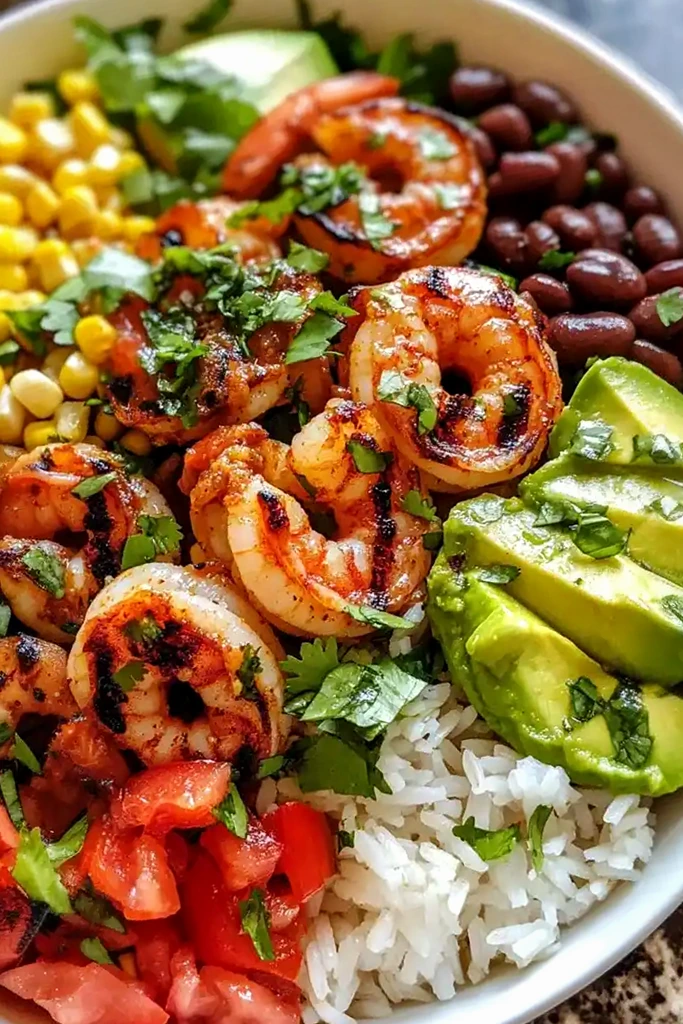
List of ingredients
- 1 lb large shrimp (peeled and deveined) – ensures quick and even cooking.
- 2 tbsp chipotle peppers in adobo sauce (minced) or 1 tsp chipotle powder – provides the smoky heat.
- 2 tbsp fresh lime juice (about 1 lime) – adds essential acidity to the marinade.
- 1 tsp lime zest – intensifies the citrus aroma.
- 1 tbsp olive oil or avocado oil – used for sautéing and marinating.
- 1 clove garlic (minced, optional) – adds a pungent aromatic depth.
- Salt and pepper to taste – basic seasoning for flavor balance.
- 2 cups cooked rice (white, brown, or cauliflower rice) – serves as the hearty base.
- 1 avocado (sliced) – provides healthy fats and creaminess.
- ½ cup black beans (drained and rinsed) – adds plant-based protein and fiber.
- ½ cup corn kernels (fresh, canned, or grilled) – introduces sweetness and texture.
- ½ cup fresh salsa – adds moisture and blended vegetable flavors.
- Fresh cilantro (for garnish) – adds a fresh, herbal finish.
- Additional lime wedges (for garnish) – allows for extra acidity upon serving.
step-by-step instructions
- Marinate the Shrimp: In a medium bowl, whisk together the lime juice, lime zest, minced chipotle peppers (or powder), minced garlic, salt, and pepper. Toss the shrimp in the mixture until fully coated and let them sit for 10 to 15 minutes to absorb the flavors.
- Cook the Shrimp: Heat olive oil in a large skillet over medium-high heat. Place the marinated shrimp in a single layer and cook for 2 to 3 minutes per side until pink and opaque. Remove from heat immediately to prevent the shrimp from becoming tough.
- Prepare the Base and Toppings: Cook your preferred rice according to the package instructions if not already prepared. Slice the avocado, rinse the black beans, and organize the corn and salsa for assembly.
- Assemble the Bowls: Divide the cooked rice evenly among four bowls. Top each bowl with a portion of cooked shrimp, avocado slices, black beans, corn, and salsa. Garnish with fresh cilantro and a side of lime wedges.
Choosing the Best Shrimp
Select Consistent Shrimp Sizes
Using shrimp of a uniform size, such as 21/25 count, ensures that every piece cooks at the same rate. This prevents smaller shrimp from overcooking while larger ones remain raw in the center. Consistent sizing is essential for a uniform sear across the batch.
Frozen vs Fresh Options
Flash-frozen shrimp are often just as high in quality as fresh shrimp and are easier to store. Ensure they are completely thawed in the refrigerator before marinating to allow the lime juice to penetrate the flesh. Pat them dry with a paper towel after thawing to improve the searing process.
Identifying Fresh Seafood
When buying fresh shrimp, look for translucent flesh and a mild, salty scent of the ocean. Avoid shrimp with a strong ammonia smell or those with black spots on the shells, which indicates age. Firm texture is a sign of freshness and will result in a better bite.
Optimizing the Searing Process
Use the Right Cookware
A cast-iron skillet or stainless steel pan is ideal for achieving a charred exterior on the shrimp. These materials distribute heat evenly and maintain high temperatures better than non-stick pans. This helps create the Maillard reaction, which enhances the smoky flavor of the chipotle.
Avoid Crowding the Pan
Cook the shrimp in a single layer with space between each piece to prevent steaming. If the pan is too full, the temperature drops, and the shrimp will release excess moisture instead of searing. Cook in batches if necessary to maintain high heat.
Recognize the Correct Doneness
Shrimp are cooked when they curl into a ‘C’ shape and become opaque. If they curl tightly into an ‘O’ shape, they are likely overcooked and will be rubbery. Remove them from the heat the moment they turn pink to maintain a tender texture.
Grain and Base Variations
White Rice for Neutrality
Basmati or Jasmine rice provides a light, fluffy texture that does not compete with the bold chipotle flavors. Rinse the rice thoroughly before cooking to remove excess starch and prevent clumping. This ensures a clean separation of grains in the bowl.
Brown Rice for Nutrition
Brown rice adds a nuttier flavor and significantly more fiber to the meal. Because it takes longer to cook, prepare it in advance or use a rice cooker on the brown rice setting. It provides a heartier chew that balances the softness of the avocado.
Quinoa as a Protein Alternative
Quinoa is an excellent gluten-free substitute that increases the overall protein content of the bowl. Rinse quinoa in a fine-mesh strainer to remove saponins, which can taste bitter. Simmer in water or vegetable broth for extra flavor depth.
Cauliflower Rice for Low-Carb Needs
For a ketogenic or low-carb option, use grated cauliflower. Sauté the cauliflower rice in a pan for 5 to 7 minutes to evaporate excess moisture. This prevents the bowl from becoming watery and maintains a better texture.
Ingredient Substitutions
Using Chipotle Powder
If canned chipotle peppers in adobo are unavailable, use 1 teaspoon of chipotle powder. While it lacks the tang of the adobo sauce, it provides the necessary smokiness. You may need to add a small amount of tomato paste to mimic the thickness of the adobo.
Plant-Based Protein Swaps
Firm tofu or tempeh can replace shrimp for a vegetarian version of this bowl. Press the tofu to remove excess water before tossing it in the chipotle lime marinade. Pan-sear the tofu until the edges are golden brown for a similar texture.
Substituting Avocado
If avocado is not in season, a dollop of plain Greek yogurt or a drizzle of cashew cream can provide the necessary creaminess. These options add a tangy contrast to the spicy chipotle. Ensure the substitute is chilled to contrast with the warm shrimp.
Alternative Citrus Options
Fresh lime is preferred, but bottled lime juice can be used in a pinch. If lime is unavailable, lemon juice provides a similar acidity, though the flavor profile will be slightly different. Avoid using white vinegar as it is too harsh for this specific flavor profile.
Flavor Enhancements and Variations
Adding Tropical Fruit
Diced mango or pineapple chunks complement the smoky heat of the chipotle. The sweetness of the fruit balances the acidity of the lime and the spice of the peppers. This creates a tropical flavor profile common in coastal Mexican cuisine.
Incorporating Fresh Peppers
Sautéed red or green bell peppers add a crunch and a mild sweetness to the base. For those who prefer more heat, thinly sliced fresh jalapeños can be added as a topping. Sautéing the peppers with the shrimp can integrate the flavors more deeply.
Creamy Texture Additions
A drizzle of chipotle mayo or a scoop of sour cream can mellow the spice of the dish. Whisk together mayonnaise, a bit of adobo sauce, and lime juice for a cohesive sauce. This adds a rich layer that ties the rice and shrimp together.
Increasing the Spice Level
To increase the heat, add a pinch of cayenne pepper or smoked paprika to the marinade. Using more of the adobo sauce from the chipotle can also intensify the flavor. Always taste the marinade before adding the shrimp to adjust the heat to your preference.
Serving and Pairing Ideas
Complementary Side Dishes
Mexican street corn (Elote) is a classic pairing that adds sweetness and creaminess to the meal. A side of seasoned black bean salad can also increase the nutritional value. These sides reinforce the Mexican-inspired theme of the bowl.
Adding Crunchy Elements
Serve the bowl with a side of corn tortilla chips for added texture. The chips can be used to scoop up the shrimp and avocado, making the meal more interactive. For a healthier crunch, use sliced radishes or toasted pepitas.
Serving as Lettuce Wraps
Instead of rice, spoon the shrimp and toppings into large butter lettuce or romaine leaves. This transforms the bowl into a light wrap, which is ideal for lunch or appetizers. It reduces the calorie count while maintaining all the flavor.
Meal Prep and Storage Guide
Preparing Shrimp in Advance
Shrimp can be marinated up to 24 hours in advance and stored in the refrigerator. However, do not marinate them for longer than 24 hours, as the citric acid in the lime juice will begin to ‘cook’ the shrimp (denature the proteins), making them mushy. Always cook them just before serving for the best texture.
Storing Component Parts
For meal prep, store the cooked rice, shrimp, and beans in one container and keep the fresh toppings separate. Store the sliced avocado in a separate airtight container with a squeeze of lime juice to prevent oxidation. This keeps the fresh elements from wilting or becoming soggy.
Refrigeration Timelines
The assembled bowls, minus the avocado, can be stored in the refrigerator for 3 to 4 days. Use airtight glass containers to maintain freshness and prevent the rice from drying out. Label the containers with the preparation date to ensure food safety.
Reheating Instructions
Microwave Reheating Method
Heat the rice and shrimp on a low-to-medium power setting in short 30-second intervals. This prevents the shrimp from overcooking and becoming rubbery. Add a teaspoon of water over the rice to help it steam and soften.
Stovetop Reheating Method
Place the shrimp and rice in a skillet over medium heat with a drizzle of oil. Stir-fry briefly until heated through, which preserves the seared texture of the shrimp. This is the best method for maintaining the original quality of the protein.
Oven Reheating Option
Place the components in an oven-safe dish and cover tightly with foil to trap moisture. Heat at 300°F (150°C) for about 10 to 15 minutes. This slower heating process is gentler on the shrimp than the microwave.
Troubleshooting Common Issues
Solving Rubbery Shrimp
If the shrimp become rubbery, it is almost always due to overcooking. Reduce the cooking time and ensure the pan is hot enough to sear quickly rather than simmer. Always remove the shrimp from the heat as soon as they turn opaque.
Balancing Excessive Heat
If the chipotle flavor is too intense, increase the amount of avocado or add a scoop of Greek yogurt. The fats in these ingredients neutralize the capsaicin in the peppers. A squeeze of extra lime juice can also help brighten the flavor and cut through the spice.
Correcting Bland Rice
If the base rice tastes bland, stir in a pinch of salt, lime zest, or a tablespoon of chopped cilantro after cooking. You can also cook the rice in vegetable broth instead of water for a deeper savory flavor. This ensures every component of the bowl is well-seasoned.
Frequently Asked Questions
Can I use frozen shrimp?
Yes, frozen shrimp are an excellent option. Ensure they are completely thawed and patted dry before marinating to ensure the flavors adhere and the shrimp sear properly.
Can I make this dish vegan?
Yes, replace the shrimp with extra-firm tofu, tempeh, or chickpeas. Use the same marinade, but ensure any additives are plant-based, and serve over quinoa or cauliflower rice.
How do I keep the avocado from browning?
Toss the sliced avocado in a small amount of lime juice immediately after cutting. Store it in an airtight container with a piece of plastic wrap pressed directly against the surface of the fruit.
Can I grill the shrimp instead of sautéing?
Yes, grilling is a great alternative. Thread the marinated shrimp onto skewers and grill over medium-high heat for 2 to 3 minutes per side until charred and cooked through.
Print
Zesty Chipotle Lime Shrimp Bowl
- Total Time: 30 minutes
- Yield: 4 servings 1x
- Diet: Gluten-free
Description
This Chipotle Lime Shrimp Bowl is a quick, healthy, and flavor-packed dish that’s perfect for any meal. Juicy, chipotle-lime-marinated shrimp are served on a bed of rice and topped with fresh avocado, black beans, corn, and salsa, creating a complete and balanced bowl.
Ingredients
- 1 lb large shrimp (peeled and deveined)
- 2 tbsp chipotle peppers in adobo sauce (minced) or 1 tsp chipotle powder
- 2 tbsp fresh lime juice
- 1 tsp lime zest
- 1 tbsp olive oil
- 1 clove garlic (minced)
- Salt and pepper to taste
- 2 cups cooked rice (white, brown, or cauliflower rice)
- 1 avocado (sliced)
- ½ cup black beans (drained and rinsed)
- ½ cup corn kernels
- ½ cup fresh salsa
- Fresh cilantro (for garnish)
- Additional lime wedges (for garnish)
Instructions
- Marinate the Shrimp: In a medium bowl, combine lime juice, lime zest, minced chipotle peppers (or chipotle powder), minced garlic, and a pinch of salt and pepper. Toss the shrimp in the marinade and let sit for 10 minutes.
- Cook the Shrimp: Heat olive oil in a large skillet over medium-high heat. Add the marinated shrimp in a single layer and cook for 2–3 minutes on each side, or until the shrimp is pink and opaque.
- Prepare the Base and Toppings: Prepare your base of choice (rice, quinoa, or cauliflower rice) according to package instructions. Slice the avocado and rinse black beans.
- Assemble the Chipotle Lime Shrimp Bowls: Divide the cooked rice among four bowls. Top each bowl with shrimp, avocado slices, black beans, corn, and salsa. Garnish with fresh cilantro and lime wedges.
Notes
For a low-carb option, use cauliflower rice or a bed of mixed greens. You can also swap shrimp for marinated tofu or tempeh for a vegetarian version.
- Prep Time: 10 minutes
- Cook Time: 10 minutes
- Category: Main Course
- Method: Sautéing
- Cuisine: Mexican
Nutrition
- Serving Size: 1 bowl
- Calories: 400 kcal
- Sugar: 6 g
- Sodium: 650 mg
- Fat: 15 g
- Saturated Fat: 3 g
- Unsaturated Fat: 12 g
- Trans Fat: 0 g
- Carbohydrates: 35 g
- Fiber: 8 g
- Protein: 25 g
- Cholesterol: 180 mg