This hearty vegetable beef soup is a filling meal that is easy to prepare using a slow cooker or stovetop. It combines tender beef and fresh vegetables in a rich tomato-based broth for a nutritious dinner. This recipe is ideal for meal prepping during colder months.
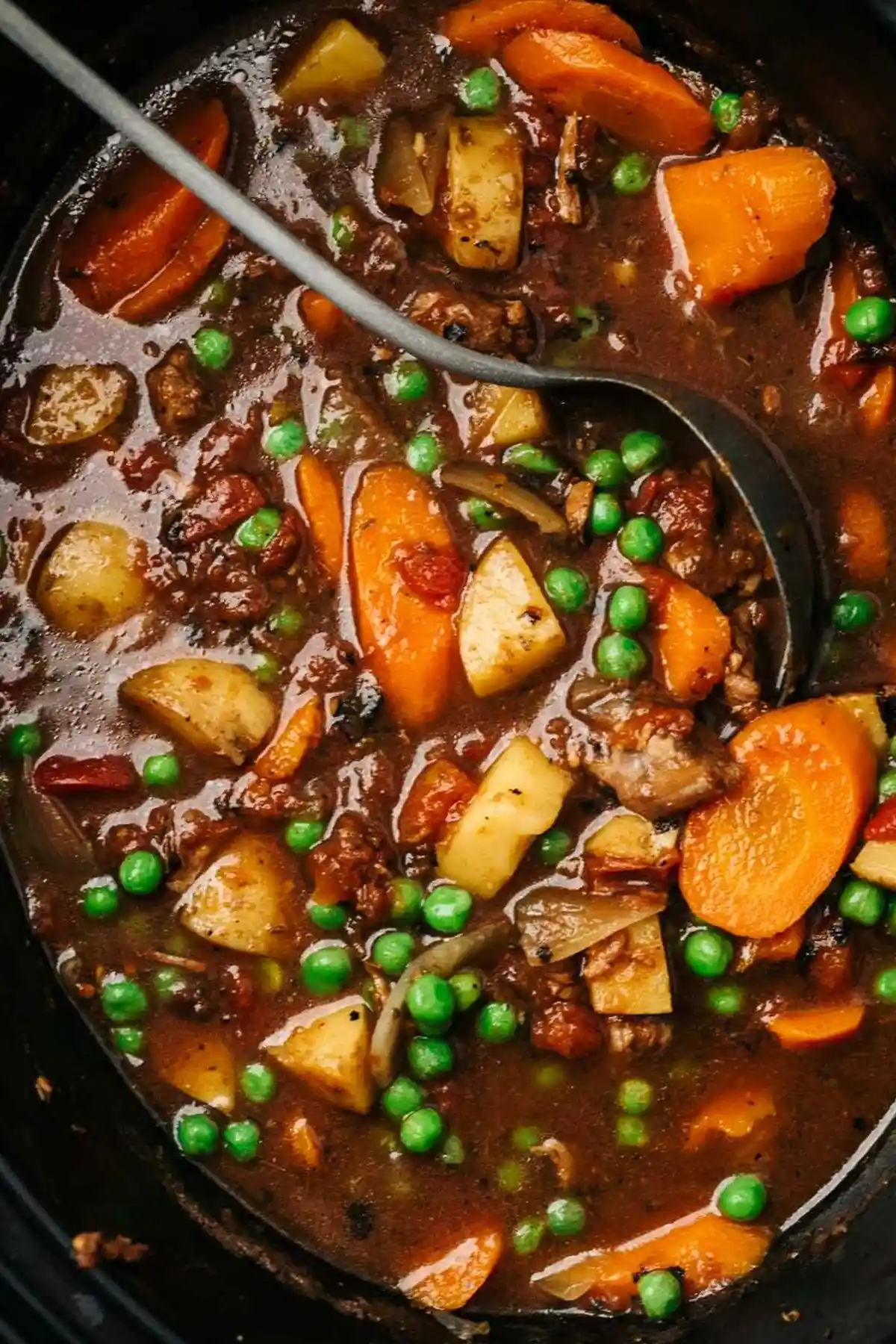
List of ingredients
- 1 pound boneless beef chuck roast – trimmed and cut into bite-size pieces for tenderness.
- 1 medium onion – chopped to provide a savory base.
- 3 medium carrots – cut into 1/2-inch thick slices.
- 2-3 cloves garlic – minced for aromatic flavor.
- 2 (14.5 ounce) cans diced tomatoes – do not drain the juices.
- 1 cup beef broth or water – for the soup base.
- 1/2 teaspoon salt – plus additional amounts to taste.
- black pepper – added to taste.
- 1/2 teaspoon dried thyme – adds an earthy herb note.
- 1 bay leaf – provides depth to the broth.
- 2 small potatoes – peeled and cut into 1/2-inch cubes.
- 1/2 cup frozen peas – added at the end to maintain color and texture.
- Fresh parsley sprigs – optional for garnish.
step-by-step instructions
- Brown the beef: Heat 1 tablespoon of olive oil in a large skillet over medium-high heat. Add the beef pieces and sprinkle with 1 teaspoon of salt and pepper. Brown the meat on all sides until a nice color develops, then transfer the pieces to the slow cooker.
- Combine ingredients: In a 3 1/2 to 6 quart slow cooker, add the browned beef, sliced carrots, cubed potatoes, chopped onion, and minced garlic. Sprinkle in the salt and dried thyme.
- Add liquids and aromatics: Add the bay leaf, the diced tomatoes with their juices, and the beef broth or water. Stir the mixture until all ingredients are well combined.
- Slow cook: Cover the slow cooker with a lid. Cook on the low-heat setting for 8 to 10 hours or on the high-heat setting for 4 to 5 hours.
- Final touch: Remove and discard the bay leaf. Stir in the frozen peas and garnish with fresh parsley if desired.
Selecting the Ideal Beef Cut
Why Beef Chuck Roast is Preferred
Beef chuck roast comes from the shoulder area and contains a significant amount of connective tissue and collagen. During the slow cooking process, these tissues break down into gelatin, which makes the meat tender and thickens the broth. This cut is generally more affordable than sirloin or rib roast while providing better flavor for stews.
Using Pre-Cut Beef Stew Meat
Pre-cut stew meat is a convenient time-saver available at most grocery stores. However, be aware that these packs often contain a variety of different cuts of meat. This can lead to some pieces cooking faster than others, resulting in inconsistent textures within the same pot.
Stovetop Cooking Method
Searing the Meat in a Pot
If you do not have a slow cooker, use a large Dutch oven or soup pot over medium-high heat. Heat 1 tablespoon of olive oil and brown the beef in batches to avoid crowding the pan. Remove the browned meat and set it aside on a plate to keep it warm.
Sautéing the Vegetable Base
In the same pot, add more oil if needed and sauté the chopped onion and carrots for 4 to 5 minutes. Once the vegetables have softened, add the minced garlic and cook for only 30 seconds to prevent the garlic from burning.
Simmering the Soup
Return the beef to the pot and stir in the tomatoes, beef broth, salt, pepper, thyme, and the bay leaf. Bring the liquid to a boil, then reduce the heat to a low simmer. Cover the pot and simmer for approximately 30 minutes or until the beef begins to tenderize.
Integrating Potatoes and Peas
Add the cubed potatoes to the simmering soup and cover for another 20 minutes until the potatoes are fork-tender. Finally, stir in the frozen peas and cook for 5 minutes before removing the bay leaf and serving.
Ways to Customize Your Soup
Replacing Chuck Roast with Ground Beef
You can use 1.5 pounds of ground beef as a faster alternative to roast. If using ground beef on the stovetop, you can skip the initial 30-minute simmer for the meat and proceed directly to adding the potatoes. This significantly reduces the overall cooking time.
Adding Additional Vegetable Varieties
To increase the nutrient density, add 1/2 to 1 cup of frozen corn or frozen green beans. These should be added at the same time as the peas to prevent them from becoming overcooked or mushy. You can also add celery or parsnips during the initial sauté phase.
Choosing Different Potato Types
While Russet potatoes are common, Yukon Gold potatoes offer a creamier texture that slightly thickens the broth. Red potatoes are a great choice if you prefer the vegetable chunks to hold their shape better during long cooking times.
Ideal Serving Pairings
Pairing with Crusty Breads
A warm loaf of crusty baguette or garlic bread is ideal for soaking up the tomato-beef broth. Breadsticks or soft dinner rolls also complement the richness of the soup and make the meal more filling.
Adding a Fresh Side Salad
Balance the hearty nature of the soup with a light side salad. A mixture of chopped romaine, sliced cucumbers, and cherry tomatoes with a vinaigrette dressing provides a crisp contrast to the cooked vegetables.
Storage and Preservation Guidelines
Refrigerator Storage
Allow the soup to cool completely before transferring it to an airtight container. When stored in the refrigerator, the soup will remain fresh for 4 to 5 days. The flavors often intensify after a day of sitting, making leftovers taste even better.
Freezing for Long Term
This soup freezes well for up to 3 months. Use freezer-safe containers or heavy-duty freezer bags, leaving a small amount of space at the top for the liquid to expand. Label the container with the date for easy tracking.
Best Reheating Methods
To reheat on the stovetop, place the soup in a pot over medium-low heat and stir occasionally. Add a splash of beef broth or water if the soup has thickened too much during storage. For smaller portions, a microwave is sufficient until the soup is steaming.
Common Questions and Troubleshooting
What is the difference between vegetable beef soup and vegetable beef stew?
The main difference is the amount of liquid and the consistency of the broth. Soup has a higher liquid-to-solid ratio, while stew is thickened and uses just enough liquid to submerge the ingredients during a long simmer.
How can I give my vegetable soup more flavor?
Searing the meat before adding it to the liquid is the most effective way to build depth. This process creates a brown crust on the beef, which releases savory compounds into the broth. Using low-sodium broth also allows you to control the salt levels more precisely.
Is vegetable beef soup healthy?
Yes, this version is balanced with lean protein from the beef and a wide variety of vitamins and minerals from the carrots, potatoes, and peas. It provides complex carbohydrates and protein, making it a complete meal in one bowl.
How long is homemade vegetable beef soup good for?
It stays fresh in the refrigerator for up to 5 days if kept in an airtight container. If you notice any change in smell or appearance, discard it immediately to ensure food safety.
Professional Kitchen Tips
Using Pre-Cut Vegetables
To save preparation time, purchase pre-cut carrots and onions from the produce department. These can be used directly from the package without thawing if you bought them frozen, which streamlines the process.
Managing Salt Levels
Always taste the soup before adding additional salt at the end. Since canned tomatoes and beef broth often contain sodium, you may find that the initial 1/2 teaspoon is sufficient for the entire pot.
Handling Frozen vs Fresh Peas
Frozen peas are preferred because they maintain a bright green color and a slight pop when added at the very end. Fresh peas can be used as well, but ensure they are shelled and added only during the last few minutes of cooking.
Print
Hearty Homemade Vegetable Beef Soup
- Total Time: 8 hours 5 minutes
- Yield: 4 servings 1x
- Diet: Dairy-Free
Description
Homemade Vegetable Beef Soup is made so easy either on the stovetop or in the slow cooker. It’s loaded with tender chunks of beef, hearty veggies and is simmered in a rich tomato broth.
Ingredients
- 1 pound boneless beef chuck roast (trimmed and cut into bite-size pieces)
- 1 medium onion (chopped)
- 3 medium carrots (cut into 1/2-inch thick slices)
- 2–3 cloves garlic (minced)
- 2 (14.5 ounce) cans diced tomatoes (not drained)
- 1 cup beef broth or water
- 1/2 teaspoon salt (plus more to taste)
- black pepper (to taste)
- 1/2 teaspoon dried thyme
- 1 bay leaf
- 2 small potatoes (peeled and cut into 1/2-inch cubes)
- 1/2 cup frozen peas
- Fresh parsley sprigs (optional for garnish)
Instructions
- Step: In a large skillet, heat 1 tablespoon olive oil over medium high, brown the beef with salt and pepper, and remove it to the slow cooker.
- Step: In a 3 1/2 to 6 quart slow cooker, combine beef chuck pieces, sliced carrots, cubed potatoes, chopped onion, and minced garlic.
- Step: Sprinkle with salt and thyme, then add the bay leaf, tomatoes with juices and water.
- Step: Cover and cook on low-heat setting for 8 to 10 hours or on high-heat setting for 4 to 5 hours.
- Step: Remove and discard bay leaf, then stir in peas and garnish with parsley.
Notes
Store in an airtight storage container in the refrigerator for up to 4 to 5 days. For freezing, use an airtight freezer-safe container for up to 3 months.
- Prep Time: 5 minutes
- Cook Time: 8 hours
- Category: Main
- Method: Slow Cooker
- Cuisine: American
Nutrition
- Serving Size: 1 serving
- Calories: 344 kcal
- Sugar: 9 g
- Sodium: 714 mg
- Fat: 14 g
- Saturated Fat: 6 g
- Unsaturated Fat: 8 g
- Trans Fat: 0 g
- Carbohydrates: 31 g
- Fiber: 7 g
- Protein: 28 g
- Cholesterol: 78 mg