This recipe provides a detailed method for creating a traditional Southern-style fried chicken breast smothered in a rich white gravy. It focuses on achieving a crisp crust and tender meat through specific pounding and dredging techniques.
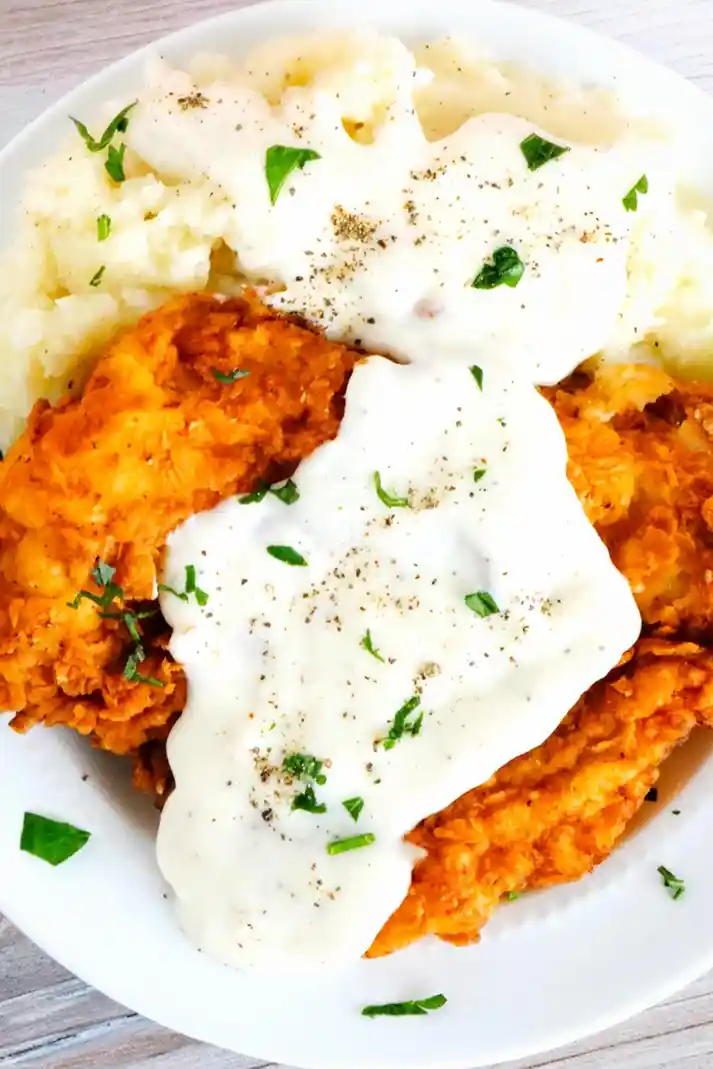
List of ingredients
- 4 boneless, skinless chicken breasts – pounded to 1/4 inch thickness.
- 1 tablespoon Kosher salt – used for seasoning the meat and flour.
- 1 1/2 teaspoon paprika – adds color and a mild earthy flavor.
- 1 teaspoon black pepper – provides a sharp, spicy bite.
- 1 teaspoon garlic powder – adds savory depth to the breading.
- 1/2 teaspoon onion powder – adds a subtle sweetness to the seasoning.
- 2 1/2 cups all-purpose flour, separated – used for dredging and thickening gravy.
- 2 large eggs, slightly beaten – binds the breading to the chicken.
- 3/4 cup milk – used in the egg wash for a richer crust.
- 2 dashes hot sauce – provides a hint of acidity and heat.
- 2 cups canola oil – preferred for its high smoke point and neutral taste.
- 3 tablespoons unsalted butter (or oil from the fried chicken) – base for the gravy.
- 3 tablespoons all-purpose flour – used to create the gravy roux.
- 2 cups warmed whole milk – ensures a smooth, creamy gravy consistency.
- 1 teaspoon Kosher salt – for seasoning the final gravy.
- 1/2 teaspoon black pepper – for seasoning the final gravy.
step-by-step instructions
- Pound Out the Chicken: Place each chicken breast one at a time in a gallon-sized ziptop bag and remove as much air as possible. Use the flat side of a mallet or a rolling pin to firmly pound the meat, starting from the thick end and moving toward the thin end, until it is about 1/4 inch thick.
- Season and Dredge the Chicken: Mix the salt, paprika, pepper, garlic powder, and onion powder in a small bowl. Set up three shallow dishes: one with 1 cup of plain flour, one with the beaten eggs, milk, and hot sauce, and one with 1 1/2 cups of flour mixed with half of the spice blend.
- Apply Coating: Sprinkle the remaining spice mixture evenly over both sides of the chicken breasts and rub it in. Dip each breast in the plain flour, shake off the excess, submerge it in the egg wash, and finally coat it thoroughly in the seasoned flour.
- Fry the Chicken: Heat canola oil in a large skillet over medium-high heat until it reaches 350-375°F. Fry the chicken breasts one at a time for 3-4 minutes on the first side, then flip and fry for another 2-3 minutes until golden and cooked to an internal temperature of 165°F.
- Make the Gravy: Melt butter in a small saucepan over medium heat and whisk in 3 tablespoons of flour. Allow the mixture to bubble for 1-2 minutes without browning.
- Finish the Gravy: Gradually add warmed milk one splash at a time, whisking constantly until smooth. Let the sauce bubble for 5-7 minutes until thickened, then remove from heat and season with salt and pepper.
Optimal Frying Techniques
Achieving Uniform Chicken Thickness
Pounding the chicken to a consistent 1/4 inch thickness ensures the meat cooks evenly. This prevents the thinner edges from drying out while the thicker center remains raw. Using a plastic bag protects the meat from tearing during the process.
The Role of the Triple-Dredge System
The plain flour first layer absorbs surface moisture, allowing the egg wash to adhere better. The egg wash then acts as a glue for the final seasoned flour coating. This multi-step process creates a thicker, crunchier crust that does not peel off during frying.
Maintaining Precise Oil Temperature
Keeping the oil between 350°F and 375°F is critical for a golden-brown finish. If the oil is too cold, the breading absorbs too much fat and becomes greasy. If the oil is too hot, the outside burns before the inside reaches a safe temperature.
Using a Cooling Rack for Drainage
Place fried chicken on a wire cooling rack instead of paper towels. This allows air to circulate around the entire piece of meat. This technique prevents the bottom side from steaming and becoming soggy.
Ingredient Substitutions and Alternatives
High Smoke Point Oil Options
While canola oil is recommended, peanut oil or vegetable oil are excellent alternatives. These oils can withstand high temperatures without smoking or breaking down. Avoid using extra virgin olive oil as its smoke point is too low for shallow frying.
Dairy-Free Milk Substitutes
For those avoiding dairy, unsweetened almond milk or soy milk can be used in both the egg wash and the gravy. These alternatives provide a similar liquid consistency. Be sure to use an unsweetened version to avoid adding unwanted sweetness to the dish.
Using Garlic Salt Instead of Garlic Powder
If you only have garlic salt, substitute it for the garlic powder in the seasoning mix. However, you must reduce the amount of Kosher salt added to the recipe to prevent the chicken from becoming overly salty. Taste the flour mix before dredging.
Utilizing Pan Drippings for Gravy
Instead of butter, you can use 3 tablespoons of the hot oil left in the pan after frying. This incorporates the savory bits of toasted flour and spices into the sauce. It provides a deeper, more integrated flavor profile to the country gravy.
Serving and Pairing Suggestions
Complementary Starchy Sides
Creamy mashed potatoes are the most traditional accompaniment for this dish. The starch absorbs the extra gravy and balances the saltiness of the fried crust. Red potatoes with skins left on provide a nice textural contrast.
Fresh Vegetable Pairings
Steamed collard greens or sautéed green beans add a necessary freshness to the plate. The slight bitterness of greens cuts through the richness of the fried meat and creamy sauce. Avoid overly creamy vegetable sides to keep the meal balanced.
Adding Traditional Southern Breads
Warm buttermilk biscuits or yeast rolls serve as a perfect tool for cleaning the remaining gravy from the plate. These breads should be served hot and buttered. They complement the savory profile of the chicken and white sauce.
Sweet and Savory Contrasts
Serving a side of honey-glazed carrots adds a touch of sweetness that contrasts well with the black pepper in the gravy. The brightness of the carrots lifts the heavier elements of the meal. This makes the overall dining experience more dynamic.
Storage and Reheating Guidelines
Refrigerating Fried Chicken
Store leftover chicken in an airtight container in the refrigerator for up to three to four days. To prevent the crust from softening, let the chicken cool completely before sealing the container. Keep the gravy in a separate sealed jar.
Preserving Gravy Quality
Store the country gravy in a glass jar with a tight lid. Because of the milk base, it can develop a skin on top during storage. Stir it vigorously after reheating to restore its smooth texture.
Restoring Crispiness with an Air Fryer
The best way to reheat this chicken is in an air fryer at 350°F for 3-5 minutes. This removes excess oil and recrisps the breading without drying out the meat. Avoid the microwave, as it makes the coating rubbery.
Oven Reheating Method
If an air fryer is unavailable, use an oven preheated to 325°F. Place the chicken on a wire rack over a baking sheet and heat for about 10 minutes. This method distributes heat evenly and maintains the texture of the crust.
Troubleshooting Common Issues
Fixing Breading That Separates
If the crust falls off during frying, it is often because the chicken was too damp before dredging. Pat the meat dry with paper towels before the first flour dip. Ensure the egg wash is well-beaten and not too thin.
Preventing Gravy Lumps
Lumps occur when cold milk is added to a hot roux too quickly. Always use warmed milk and whisk constantly during the addition process. If lumps form, you can pass the gravy through a fine-mesh strainer or use a blender.
Handling Oil That Overheats
If the oil begins to smoke, remove the pan from the heat immediately. Lower the temperature setting on your stove and allow the oil to cool for a few minutes before adding more chicken. Smoking oil can impart a bitter taste to the food.
Ensuring the Center is Fully Cooked
If the exterior is dark but the center is underdone, lower the heat and increase the cooking time. Use a meat thermometer to ensure the thickest part of the breast reaches 165°F. Letting the meat rest for five minutes also helps redistribute juices.
Make-Ahead Strategies
Preparing the Chicken in Advance
You can pound the chicken breasts and store them in sealed bags up to 24 hours before cooking. This saves significant time during the actual meal preparation. Keep them refrigerated at all times to maintain safety.
Mixing the Seasoning Blend
The spice mixture can be blended and stored in a small jar for weeks. This makes the recipe faster to execute for future meals. Simply measure out the required amount for the flour and the meat.
Pre-making the Gravy Base
The flour and butter roux can be prepared ahead of time and stored in the fridge. When ready to serve, simply reheat the roux and whisk in the warm milk. This reduces the active cooking time at the end of the recipe.
Oil Temperature Testing
The Flour Sprinkle Method
Sprinkle a pinch of flour into the oil to check the temperature. If it sizzles and bubbles immediately, the oil is ready. If it sinks without bubbling, the oil is too cold; if it browns instantly, it is too hot.
The Wooden Spoon Test
Dip the handle of a wooden spoon into the hot oil. If small bubbles form steadily around the wood, the oil is at the correct temperature. If the bubbles are violent or non-existent, adjust the heat accordingly.
Using Digital Thermometers
A digital probe or infrared thermometer is the most accurate way to ensure 350-375°F. This eliminates guesswork and prevents the oil from breaking down. Check the temperature frequently, especially after adding a new piece of chicken.
Customizing the Flavor Profile
Adding Heat to the Breading
Incorporate 1/2 teaspoon of cayenne pepper into the seasoned flour for a spicier kick. This adds a warm glow to the chicken without overpowering the other spices. Adjust the amount based on your heat tolerance.
Integrating Earthy Herbs
Add a pinch of dried thyme or sage to the flour mixture for a more herbal, aromatic crust. These herbs pair exceptionally well with the richness of the country gravy. Use dried herbs rather than fresh to avoid burning in the oil.
Using Smoked Paprika for Depth
Replace standard paprika with smoked paprika to add a subtle wood-fired flavor. This gives the chicken a deeper color and a complex, smoky undertone. It enhances the overall savory experience of the dish.
Frequently Asked Questions
Can I use bone-in chicken breasts?
Bone-in breasts take much longer to cook and are difficult to pound thin. It is recommended to use boneless breasts to ensure the meat is tender and the breading does not burn before the center is done.
How do I know if the oil is hot enough without a thermometer?
Use the flour sprinkle method by dropping a small amount of flour into the pan. If the flour bubbles and sizzles immediately, the oil is ready for the chicken. If it does nothing, wait longer.
Can this recipe be made in an oven?
While you can bake breaded chicken, it will not have the same crisp texture as pan-frying. To simulate the effect, use a wire rack and a high temperature, but the result will be more like a baked cutlet than chicken fried chicken.
What is the best way to pound chicken without tearing?
Always place the chicken in a heavy-duty Ziploc bag first. Start pounding from the thickest part of the breast and work your way toward the thinner end. Use a flat-faced mallet rather than a spiked one.
Print
Chicken Fried Chicken with Country Gravy
- Total Time: 45 minutes
- Yield: 4 servings 1x
- Diet: General
Description
Pounded out chicken breasts are dredged in a Southern seasoned flour mix and pan-fried to golden, extra crispy perfection! Top with a ladle-full of white country gravy and don’t forget the mashed potatoes on the side.
Ingredients
- 4 boneless, skinless chicken breasts
- 1 tablespoon Kosher salt
- 1 1/2 teaspoon paprika
- 1 teaspoon black pepper
- 1 teaspoon garlic powder
- 1/2 teaspoon onion powder
- 2 1/2 cups all-purpose flour, separated
- 2 large eggs, slightly beaten
- 3/4 cup milk
- 2 dashes hot sauce
- 2 cups canola oil
- 3 tablespoons unsalted butter
- 3 tablespoons all-purpose flour
- 2 cups warmed whole milk
- 1 teaspoon Kosher salt
- 1/2 teaspoon black pepper
Instructions
- Pound Out the Chicken: Place each breast one at a time in a gallon-sized ziptop bag, removing as much air as possible before sealing. Then, using either the flat side of a mallet or a rolling pin, begin firmly pounding on the large end of the breast, working your way to the other side until the entire breast is about a ¼ inch in thickness. Transfer the chicken to a work surface and set aside.
- Season and Dredge the Chicken: Combine salt, paprika, pepper, garlic powder, and onion powder in a small bowl. Set up three shallow dishes: 1 cup flour in the first, eggs, milk, and hot sauce in the second, and 1 ½ cup flour mixed with about ½ of the spice mixture in the third. Sprinkle the remaining spice mixture evenly over both sides of the chicken breasts and rub to adhere. Dip each breast in plain flour, then the egg wash, and lastly, coat it in the seasoned flour.
- Fry the Chicken: Add oil to a large skillet over medium-high heat. Once oil reaches 350-375°F, fry chicken breasts one at a time for 3-4 minutes on one side, then flip and fry for 2-3 minutes more until golden and cooked through.
- Make the Gravy: Melt butter in a small saucepan over medium heat. Add flour and whisk until combined, bubbling for 1-2 minutes. Add milk a generous splash at a time, whisking after each addition. Allow the sauce to bubble for 5-7 minutes until slightly thickened. Remove from heat and season with salt and pepper.
Notes
Place fried chicken on a rack rather than a paper towel to keep the underside from getting soggy. Use canola, vegetable, or peanut oil for a high smoke point.
- Prep Time: 25 minutes
- Cook Time: 20 minutes
- Category: Dinner
- Method: Pan-frying
- Cuisine: American
Nutrition
- Serving Size: 1 serving
- Calories: 856 kcal
- Sugar: 9 g
- Sodium: 2707 mg
- Fat: 50 g
- Saturated Fat: 13 g
- Unsaturated Fat: 37 g
- Trans Fat: 0 g
- Carbohydrates: 38 g
- Fiber: 2 g
- Protein: 60 g
- Cholesterol: 266 mg