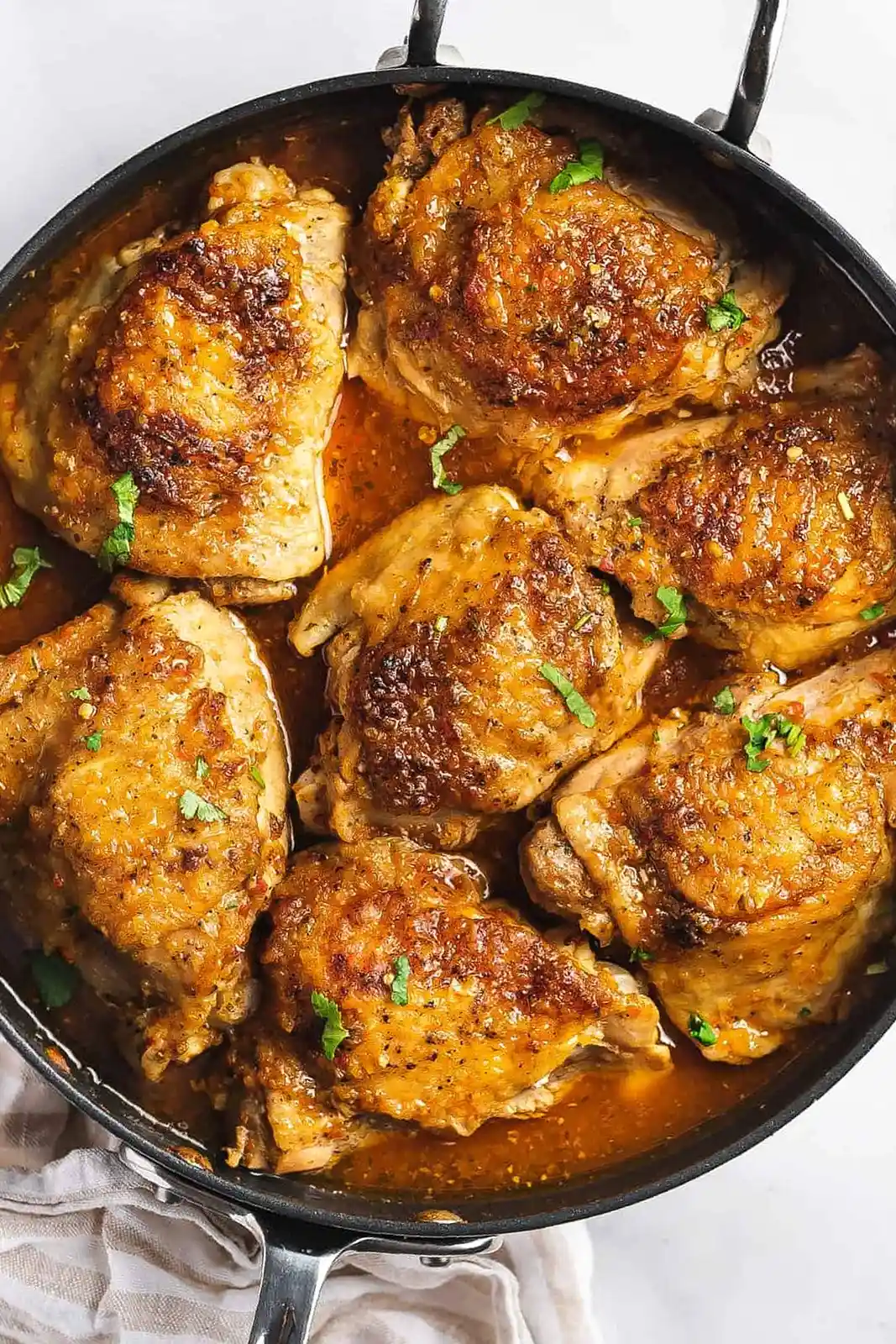
This savory dish utilizes a traditional Puerto Rican aromatic base to create a rich and flavorful sauce for tender chicken. It is a practical one-pan meal that combines stovetop searing with oven roasting for optimal texture.
List of ingredients
- 2 tablespoons extra-virgin olive oil – used for searing the chicken pieces.
- 6 to 8 bone-in, skin-on chicken pieces (thighs, legs, or both – 3 1/2 to 4 pounds total) – provides the best flavor and remains moist during baking.
- Coarse salt and ground pepper – for seasoning the meat.
- 1/2 cup sofrito – a blend of peppers, garlic, onion, and herbs.
- 1/2 cup tomato sauce – plain, unflavored canned tomato sauce.
- 1/2 cup low-sodium chicken broth – adds liquid and depth to the sauce.
- 1/3 cup low-sodium chicken broth – used as a substitute for white wine to maintain consistency.
step-by-step instructions
- Prep the oven: Preheat your oven to 400 degrees F.
- Sear the chicken: Heat olive oil in a large nonstick, oven-safe pan over medium-high heat. Season chicken pieces with salt and pepper, then place them skin side down in the pan. Cook for about 8 minutes until the skin is golden and crisp.
- Build the sauce: Flip the chicken pieces over. Add the sofrito, tomato sauce, and both portions of chicken broth to the pan, swirling the ingredients to combine them.
- Bake the chicken: Transfer the pan to the oven. Bake until the chicken is cooked through and reaches an internal temperature of 165 degrees F, which typically takes about 25 minutes.
- Rest and finish: Carefully remove the pan from the oven using oven mitts. Transfer the chicken to serving plates.
- Serve: Spoon off any excess fat from the pan. Pour the remaining sauce over the chicken and sprinkle with freshly chopped cilantro before serving.
Optimization Tips for Best Results
Using a Cast Iron Skillet for Superior Searing
While a nonstick pan works well, a cast iron skillet provides better heat retention. This helps the chicken skin achieve a deeper golden-brown crust more efficiently. Ensure the skillet is well-seasoned to prevent the skin from sticking during the first few minutes of cooking.
Patting Chicken Dry Before Seasoning
Always use paper towels to pat the chicken skin completely dry before adding salt and pepper. Excess moisture on the surface of the meat creates steam, which prevents the skin from crisping. Dry skin leads to a much better sear and a more professional finish.
Monitoring Temperature with a Meat Thermometer
Avoid relying solely on the timer to determine if the chicken is done. Use an instant-read meat thermometer to ensure the thickest part of the thigh or leg reaches 165 degrees F. This prevents the meat from being undercooked while avoiding the dryness caused by overcooking.
Selecting the Right Chicken Cuts
Bone-in, skin-on thighs are the ideal choice because they contain more fat and connective tissue. This makes them more forgiving during the roasting process and results in a richer sauce. If using a mix of legs and thighs, place the larger pieces in the center of the pan for even cooking.
Ingredient Substitutions and Swaps
Replacing Homemade Sofrito with Store-Bought
If you do not have time to make sofrito from scratch, store-bought versions are a convenient alternative. Check the label to ensure it contains the primary aromatics like garlic, onion, and peppers. If the store-bought version is very salty, reduce the amount of coarse salt used on the chicken.
Using Boneless Chicken Thighs
You can use boneless, skinless thighs if you prefer a faster cooking time. These will not require as long in the oven, so start checking the internal temperature after 15 to 20 minutes. Keep in mind that the sauce will be slightly less rich without the bone-in fat.
Alternative Liquid Bases for the Sauce
If you run out of chicken broth, vegetable broth is a suitable replacement. It provides a similar consistency and salt profile without altering the core flavor of the sofrito. Avoid using water, as it will dilute the intensity of the aromatic sauce.
Substituting Tomato Sauce with Tomato Puree
Tomato puree can be used instead of tomato sauce for a thicker, more concentrated base. If the sauce becomes too thick during the baking process, stir in an extra tablespoon of broth. Puree often has a slightly sweeter taste, which balances well with the garlic in the sofrito.
Flavor Variations to Try
Adding Heat with Red Pepper Flakes
For a spicier version of this dish, stir in a half-teaspoon of crushed red pepper flakes when adding the sauce ingredients. The heat infuses into the oil and the tomato base as the chicken bakes. Adjust the amount based on your preference for spice.
Incorporating Fresh Bell Peppers
You can add diced red or green bell peppers to the pan after flipping the chicken. Sauté them for 2 minutes before adding the liquid ingredients. This adds an extra layer of texture and reinforces the flavors found in the sofrito.
Adding Briny Elements Like Olives
Stirring in a handful of pimiento-stuffed green olives adds a salty, briny contrast to the rich sauce. Add them during the final 10 minutes of baking so they soften but retain their shape. This variation gives the dish a profile similar to traditional Spanish stews.
Balancing Flavors with Honey
A small teaspoon of honey or brown sugar can be stirred into the sauce to balance the acidity of the tomato. This is particularly helpful if your tomato sauce is very tart. The sweetness enhances the natural flavors of the aromatic peppers.
Best Side Dish Pairings
Classic Spanish Rice
Spanish rice is the traditional accompaniment for this meal. The seasoned rice absorbs the excess sofrito sauce from the plate, creating a cohesive flavor profile. Cook the rice with a pinch of turmeric or saffron for a vibrant yellow color.
Creamy Mashed Potatoes
Mashed potatoes provide a neutral, creamy base that complements the bold garlic and pepper notes. The thick sauce from the pan acts as a natural gravy for the potatoes. Use unsalted butter to keep the overall salt level of the meal in check.
Roasted Root Vegetables
Carrots, parsnips, and turnips roasted with olive oil and thyme offer a healthy contrast. Roast them on a separate tray at the same temperature as the chicken. The earthiness of the vegetables balances the acidity of the tomato sauce.
Cauliflower Rice for Low-Carb Dining
For a lower-carbohydrate option, serve the chicken over sautéed cauliflower rice. Sauté the cauliflower with a small amount of garlic and olive oil to mirror the sofrito flavors. This maintains the essence of the dish while reducing the calorie count.
Corn Tortillas for Tacos
You can shred the cooked chicken off the bone and serve it inside warm corn tortillas. Use the pan sauce as a topping and add fresh sliced avocado. This transforms the recipe into a creative family-style taco night.
Storage and Reheating Guide
Refrigeration Basics
Store any leftover chicken and sauce in an airtight glass or plastic container. Place it in the refrigerator immediately after it has cooled to room temperature. The dish will remain fresh and safe to eat for up to 4 days.
Freezing for Long-Term Storage
This recipe freezes well because of the sauce, which protects the meat from freezer burn. Use a freezer-safe container or a heavy-duty freezer bag, removing as much air as possible. The chicken can be stored in the freezer for up to 3 months.
Stovetop Reheating for Texture
To maintain the best texture, reheat the chicken in a deep skillet or Dutch oven over medium-low heat. Add a splash of chicken broth to loosen the sauce and prevent it from scorching. Cover the pan with a lid to steam the meat back to tenderness.
Microwave Reheating for Speed
If you are in a rush, the microwave is a viable option. Place the chicken and sauce in a microwave-safe dish and cover it with a damp paper towel. Heat in 1-minute intervals, stirring the sauce gently between bursts to ensure even warming.
Make-Ahead Strategy
Preparing Sofrito in Bulk
Since sofrito is used in many dishes, make a large batch and freeze it in ice cube trays. Once frozen, transfer the cubes to a bag. You can then drop a pre-measured cube directly into the pan, saving significant prep time on weeknights.
Marinating Chicken Overnight
For deeper flavor, rub the chicken with a small amount of sofrito and salt the night before. Store it in the refrigerator in a sealed container. This allows the aromatics to penetrate the meat more deeply before the searing process.
Pre-Searing the Chicken
You can sear the chicken pieces a day in advance and store them in the fridge. When you are ready to cook, start the process at the ‘Build the sauce’ step. This reduces the active cooking time on the day of serving.
Troubleshooting Common Issues
Dealing with a Thin Sauce
If the sauce is too watery after baking, remove the chicken from the pan and place it on a plate. Simmer the sauce over medium-high heat for 5 to 8 minutes to reduce the liquid. Once it reaches a syrupy consistency, pour it back over the meat.
Solving Lack of Skin Crispiness
If the skin is not crisp, it is likely due to the pan not being hot enough or the chicken being too damp. Ensure the oil is shimmering before adding the meat. Avoid overcrowding the pan, as this lowers the temperature and causes the chicken to steam.
Correcting Overly Salty Sauce
If the sauce tastes too salty, add a small amount of unsalted chicken broth or a splash of water. A squeeze of fresh lemon juice or a teaspoon of apple cider vinegar can also mask excess salt. This introduces acidity that balances the sodium levels.
Addressing Undercooked Meat
If the chicken has not reached 165 degrees F by the 25-minute mark, continue baking in 5-minute increments. Check the temperature again after each interval. Ensure the chicken is not overlapping too much in the pan to allow heat to circulate.
Frequently Asked Questions
Can I use chicken breasts instead of thighs?
You can use chicken breasts, but they are much leaner and more prone to drying out. If using breasts, reduce the oven baking time by about 5 to 10 minutes. Consider searing them for a shorter period to avoid overcooking the exterior.
What is the best way to store leftover sauce?
Store the sauce in a separate small container from the chicken. This prevents the chicken skin from becoming soggy while in the refrigerator. When reheating, warm the sauce first and then add the chicken back in.
Do I absolutely need a nonstick pan?
A nonstick pan is recommended for ease of cleaning, but not required. Stainless steel or cast iron pans work perfectly well as long as you use enough olive oil. Just be mindful of the heat to prevent the sofrito from burning during the transition to the oven.
How can I make this dish healthier?
To reduce the fat content, use skinless chicken thighs or breasts. You can also replace the olive oil with a light spray of avocado oil. Serve the dish with steamed vegetables or a fresh green salad to increase the nutrient density of the meal.
Print
Sofrito Chicken
- Total Time: 35 minutes
- Yield: 6 servings 1x
- Diet: Gluten-free
Description
Puerto Rican Sofrito is put to great use here in this Sofrito Chicken dish for an easy and crazy delicious weeknight dinner.
Ingredients
- 2 tablespoons extra-virgin olive oil
- 6 to 8 bone-in, skin-on chicken pieces (thighs, legs, or both – 3 1/2 to 4 pounds total)
- Coarse salt and ground pepper
- 1/2 cup sofrito
- 1/2 cup tomato sauce
- 1/2 cup low-sodium chicken broth
- 1/3 cup low-sodium chicken broth
Instructions
- Step: Preheat oven to 400 degrees F.
- Step: In a large nonstick, oven-safe pan, heat olive oil over medium-high; swirl to coat. Sprinkle some salt and pepper over the chicken pieces and place in the pan, skin side down. Cook until golden and crisp, 8 minutes.
- Step: Flip the chicken over, then add the sofrito, tomato sauce, chicken broth, and the additional chicken broth, swirling to combine.
- Step: Transfer pan to oven and bake until chicken is cooked through and an internal temperature of 165 degrees F is reached, about 25 minutes.
- Step: Remove pan from oven.
- Step: Transfer chicken to plates and serve.
- Step: Spoon off excess fat from pan; pour some sauce over chicken and sprinkle with a bit of freshly chopped cilantro.
Notes
The white wine has been replaced with low-sodium chicken broth. Serve with Spanish rice, mashed potatoes, or cauliflower rice.
- Prep Time: 10 minutes
- Cook Time: 25 minutes
- Category: Main Course
- Method: Baking
- Cuisine: Puerto Rican
Nutrition
- Serving Size: 1 serving
- Calories: 396 kcal
- Sugar: 2 g
- Sodium: 382 mg
- Fat: 30 g
- Saturated Fat: 7 g
- Unsaturated Fat: 20 g
- Trans Fat: 1 g
- Carbohydrates: 4 g
- Fiber: 1 g
- Protein: 25 g
- Cholesterol: 148 mg