Prepare a restaurant-quality meal in under 30 minutes with this creamy garlic butter salmon. This recipe delivers perfectly seared fillets coated in a rich, savory sauce that pairs well with various sides.
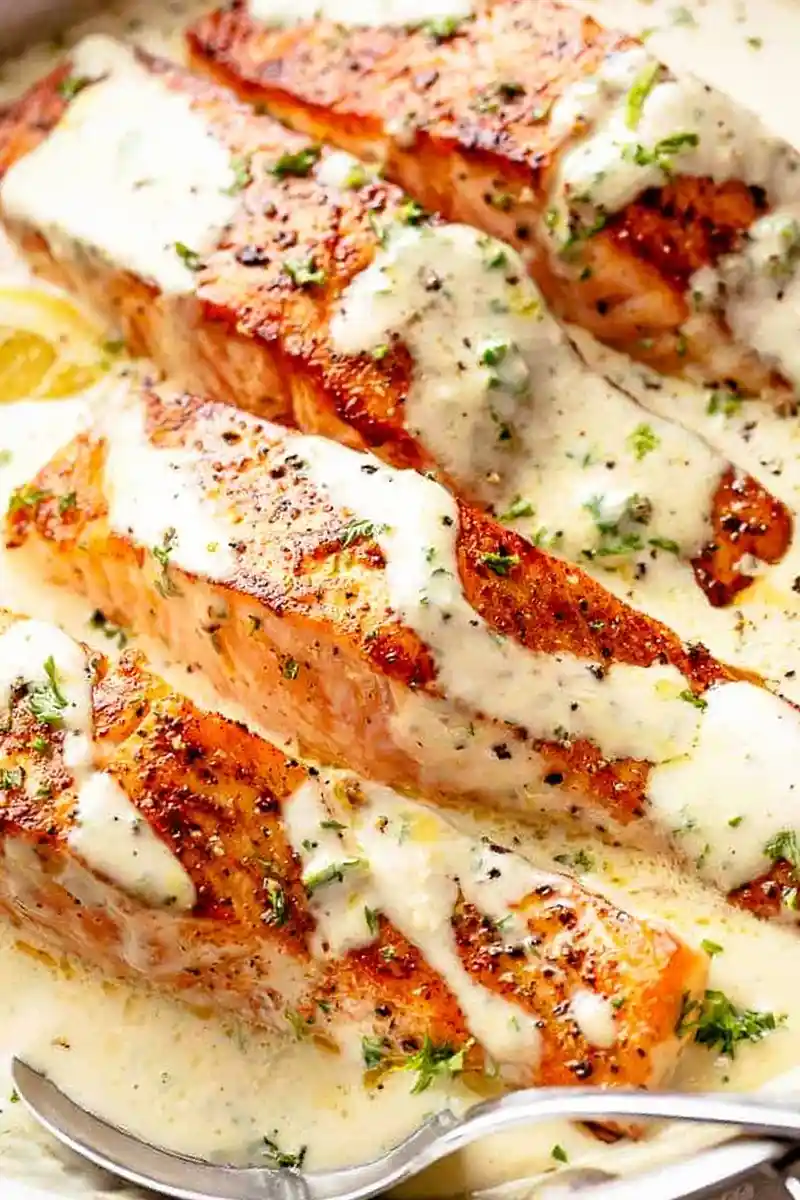
List of ingredients
- 1 tablespoon olive oil – used for high-heat searing.
- 21 ounces salmon fillets (skin on or off) – the main protein.
- 1/4 teaspoon salt – to taste.
- 1/4 teaspoon pepper – to taste.
- 1 teaspoon garlic powder – for an initial layer of flavor.
- 2 tablespoons unsalted butter – for sautéing and sauce richness.
- 6 cloves garlic (minced) – provides a pungent, aromatic base.
- 1/2 cup chicken broth – used to deglaze the pan and add depth.
- 1 1/2 cups reduced fat cream – creates the creamy texture.
- 1/2 cup parmesan cheese (fresh grated) – adds saltiness and thickens the sauce.
- 2 tablespoons fresh parsley (chopped) – for a fresh finish.
- 1 tablespoon lemon juice (from 1/2 lemon) – adds necessary acidity.
step-by-step instructions
- Sear the fish: Heat olive oil in a large skillet over medium-high heat. Season the salmon fillets on all sides with salt, pepper, and garlic powder. Place them in the hot pan, flesh-side down first, and sear for 5 minutes per side or until cooked to your preference. Remove the fillets from the pan and set them aside on a plate.
- Prepare the aromatics: Melt the unsalted butter in the same skillet over medium heat. Add the minced garlic and sauté for about 30 seconds until it becomes fragrant.
- Deglaze the pan: Pour in the chicken broth. Allow the liquid to simmer and reduce by half, using a spatula to scrape up any browned bits from the bottom of the skillet to incorporate those flavors.
- Simmer the cream: Lower the heat to medium-low. Pour in the reduced fat cream and bring the mixture to a gentle simmer, stirring occasionally. Season with salt and pepper according to your taste.
- Thicken with cheese: Stir in the fresh grated parmesan cheese. Let the sauce simmer for an additional minute or so until the cheese has completely melted and the sauce has thickened.
- Final assembly: Return the cooked salmon fillets to the skillet. Sprinkle with chopped fresh parsley and stir in the lemon juice. Taste the sauce one last time to adjust salt and pepper if needed.
- Serve: Plate the salmon and sauce over a bed of pasta, steamed rice, or cooked vegetables.
Expert Tips for Perfect Salmon
Pat the Fillets Dry
Use paper towels to remove all surface moisture from the salmon before seasoning. Excess water creates steam in the pan, which prevents the fish from developing a golden-brown crust. A dry surface ensures a successful sear and better flavor development.
Identify the Correct Flip Point
Watch the side of the salmon fillet as it cooks in the pan. When the color turns pale and the cooked portion reaches halfway up the side of the fillet, it is time to flip. This prevents overcooking and keeps the center juicy.
Manage Heat When Adding Garlic
Always lower the heat before adding the minced garlic to the butter. Garlic burns very quickly at high temperatures, which can introduce a bitter taste to the sauce. A gentle sauté ensures the garlic remains sweet and fragrant.
Simmer Instead of Boiling
Keep the cream sauce at a gentle simmer rather than a rolling boil. High heat can cause the cream to separate or curdle, especially if using reduced-fat options. A slow simmer maintains a glossy, smooth consistency.
Use the Right Skillet
A heavy-bottomed skillet, such as stainless steel or cast iron, is ideal for this recipe. These materials distribute heat evenly and hold it better than thin pans. This results in a more consistent sear across the entire surface of the fish.
Alternative Ingredient Options
Swap Dairy Cream for Coconut Cream
If you need a dairy-free alternative, full-fat coconut cream works well as a substitute. While it adds a slight coconut flavor, it maintains the rich texture required for the sauce. Pair it with a bit of extra lemon juice to balance the sweetness.
Substitute Parmesan with Pecorino Romano
Pecorino Romano can be used instead of Parmesan for a sharper, saltier flavor profile. Because Pecorino is more intense, you may want to slightly reduce the additional salt added to the sauce. Ensure the cheese is finely grated for smooth melting.
Replace Chicken Broth with Vegetable Broth
Vegetable broth is an excellent substitute if you prefer a different base for the deglazing process. It provides a similar depth of flavor without altering the core taste of the garlic and butter. Choose a low-sodium version to maintain control over the seasoning.
Use Different White Fish
While salmon is the star, this sauce works beautifully with other firm white fish like halibut or sea bass. Adjust the searing time based on the thickness of the fillet. These milder fish allow the garlic butter sauce to stand out more prominently.
Ways to Customize Your Salmon
Incorporate Briny Capers
Stir in a tablespoon of drained capers right before adding the salmon back to the pan. The salty, vinegary pop of capers cuts through the richness of the cream and butter. This adds a Mediterranean flair to the dish.
Add Heat with Red Pepper Flakes
For a subtle spicy kick, add a pinch of red pepper flakes when sautéing the garlic. This provides a gentle warmth that complements the richness of the parmesan. It is a great way to add complexity without overpowering the salmon.
Wilt in Fresh Baby Spinach
Add two handfuls of fresh baby spinach to the sauce just before returning the fish to the pan. Let the spinach wilt for about 60 seconds in the simmering cream. This adds color and a nutritional boost to the meal.
Enhance with Sun-Dried Tomatoes
Finely chopped sun-dried tomatoes can be stirred into the sauce for an umami-rich addition. The concentrated sweetness of the tomatoes pairs well with the acidity of the lemon. This creates a more robust and hearty sauce.
Fresh Dill Variation
Substitute the parsley with fresh dill for a more traditional seafood flavor profile. Dill has a citrusy, aromatic quality that pairs naturally with salmon. Add it at the very end to preserve its bright taste.
Serving Suggestions
Pairing with Grains
Serve the salmon over a bed of jasmine or basmati rice to soak up the extra sauce. Quinoa is another healthy alternative that provides a nutty flavor and added protein. For a heartier meal, consider wild rice or brown rice.
Serving Over Pasta
Linguine, fettuccine, or angel hair pasta are the best choices for this creamy dish. Toss the pasta directly in the sauce before plating to ensure every strand is coated. A sprinkle of extra parmesan on top enhances the presentation.
Choosing Steamed Vegetables
Steamed asparagus, broccoli, or sautéed zucchini provide a fresh contrast to the rich sauce. These vegetables offer a crunch and lightness that balances the meal. Squeeze a bit of extra lemon over the greens for added brightness.
Creating a Low-Carb Plate
For a low-carb or keto-friendly option, serve the salmon over cauliflower rice or sautéed kale. Zucchini noodles (zoodles) are also an excellent choice as they mimic pasta without the carbohydrates. These options keep the meal light while remaining filling.
Storage and Reheating Guidelines
Storing Leftovers in the Fridge
Place leftover salmon and sauce in an airtight container and refrigerate immediately. The dish will stay fresh for about 2 to 3 days. Keep the fish and sauce together so the salmon remains moist during storage.
Reheating in a Skillet
The best way to reheat this dish is in a skillet over low heat. Add a splash of water or a tablespoon of cream to loosen the sauce as it warms. This prevents the sauce from breaking or becoming too thick.
Avoiding Microwave Overcooking
If using a microwave, heat the salmon on medium power in short intervals. Overheating salmon in the microwave can make the fish rubbery and cause the cream sauce to separate. Stir the sauce gently between heating cycles.
Freezing Considerations
It is not recommended to freeze salmon cooked in a cream sauce. The cream and cheese can separate during the freezing and thawing process, resulting in a grainy texture. For the best quality, enjoy this meal fresh or from the refrigerator.
Make-Ahead Strategies
Prepping the Aromatics
Mince the garlic and chop the parsley several hours in advance. Store them in small containers in the refrigerator until you are ready to cook. This reduces the active prep time during the actual cooking process.
Portioning the Fillets
Cut your salmon fillets into equal sizes the day before and store them in the fridge. This ensures they cook evenly in the pan. Keep them covered to prevent the fish from drying out.
Troubleshooting Common Issues
Fixing a Broken Sauce
If the sauce separates or looks grainy, whisk in a tablespoon of cold cream or a teaspoon of water over low heat. This helps re-emulsify the fats and liquids. Stir vigorously until the texture becomes smooth again.
Preventing Salmon from Sticking
Ensure the oil is shimmering and hot before placing the fish in the pan. Do not attempt to flip the salmon too early; it will naturally release from the pan once a proper crust has formed. Using a non-stick or well-seasoned cast iron pan also helps.
Adjusting a Sauce That Is Too Thick
If the sauce thickens too much during the simmering process, stir in a small amount of chicken broth. Add the liquid one tablespoon at a time until you reach your desired consistency. This allows you to thin the sauce without losing flavor.
Frequently Asked Questions
How long should I cook salmon for?
Generally, 5 minutes per side over medium-high heat is sufficient for medium-doneness. However, the exact time depends on the thickness of the fillet. Use a meat thermometer to reach an internal temperature of 145 degrees Fahrenheit.
What is the best pan for searing salmon?
Stainless steel and cast iron are the top choices for achieving a professional sear. They provide the high, even heat necessary for a golden crust. Non-stick pans work but may not produce the same level of browning.
Can I use frozen salmon fillets?
Yes, but they must be completely thawed and patted very dry before cooking. Cooking frozen fillets directly in the pan will release too much moisture, preventing a sear and potentially curdling the sauce.
Is reduced-fat cream the best choice?
Reduced-fat cream provides a lighter feel, but heavy cream creates a richer, more stable sauce. If you use half-and-half, be extra careful not to let the sauce boil, as it is more prone to curdling.
Print
Pan-Seared Salmon in Creamy Garlic Butter Sauce
- Total Time: 20 minutes
- Yield: 4 servings 1x
- Diet: General
Description
Creamy Garlic Salmon is a deliciously easy salmon recipe! Coated in a rustic and buttery sauce and ready in less than 10 minutes, people will think there is a hidden chef in your kitchen!
Ingredients
- 1 tablespoon olive oil
- 21 ounces salmon fillets
- 1/4 teaspoon salt
- 1/4 teaspoon pepper
- 1 teaspoon garlic powder
- 2 tablespoons unsalted butter
- 6 cloves garlic, minced
- 1/2 cup chicken broth
- 1 1/2 cups reduced fat cream
- 1/2 cup parmesan cheese, fresh grated
- 2 tablespoons fresh parsley, chopped
- 1 tablespoon lemon juice
Instructions
- Step: Heat oil a large skillet over medium-high heat. Season salmon with salt, pepper and garlic powder all over. Sear in the hot pan, flesh-side down first, for 5 minutes on each side, or until cooked to your liking. Once cooked, remove from the pan and set aside.
- Step: Melt the butter in the same skillet. Sauté garlic until fragrant (about 30 seconds). Pour in the chicken broth; allow to reduce to half while scraping any bits off of the bottom of the pan.
- Step: Reduce heat to low-medium heat, add the cream and bring to a gentle simmer, while stirring occasionally. Season with salt and pepper to your taste.
- Step: Add the parmesan cheese and allow sauce to gently simmer for a further minute or so until the cheese melts and sauce thickens.
- Step: Add the salmon back into the pan, sprinkle with parsley and a squeeze of lemon juice. Taste test sauce and adjust salt and pepper, if needed.
- Step: Serve over pasta, rice or steamed veg.
Notes
Pat the salmon dry with paper towels before seasoning to ensure crisp edges. You can substitute reduced fat cream with half and half or evaporated milk.
- Prep Time: 10 minutes
- Cook Time: 10 minutes
- Category: Dinner
- Method: Pan Searing
- Cuisine: American
Nutrition
- Serving Size: 1 fillet
- Calories: 639 kcal
- Sugar: 1 g
- Sodium: 446 mg
- Fat: 50 g
- Saturated Fat: 25 g
- Unsaturated Fat: 21 g
- Trans Fat: 0.2 g
- Carbohydrates: 6 g
- Fiber: 0.3 g
- Protein: 37 g
- Cholesterol: 205 mg