This method produces a perfectly golden and crispy exterior while keeping the inside juicy. It uses a classic buttermilk marinade and a double-dredging process for maximum crunch.
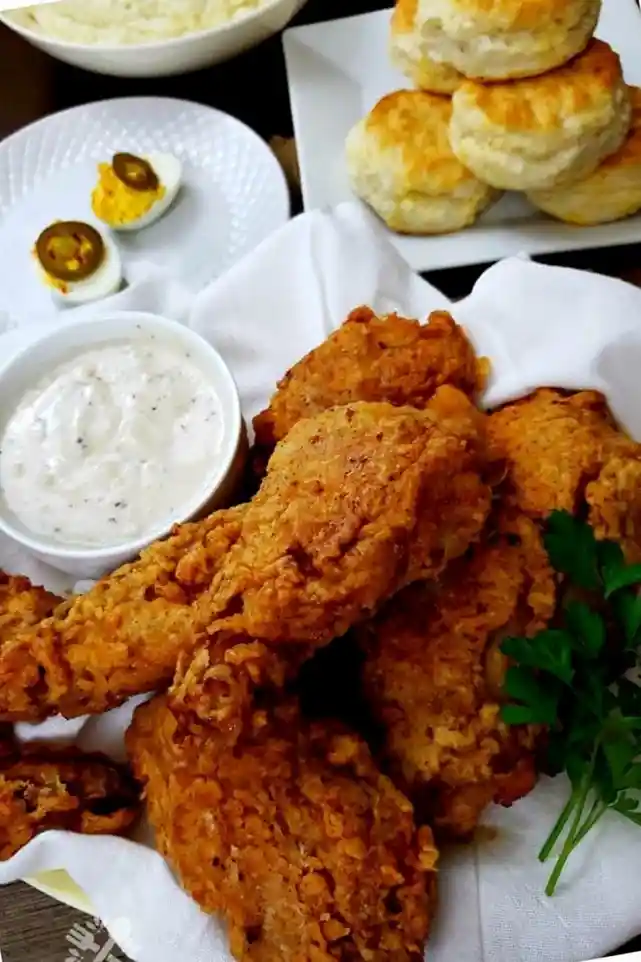
List of ingredients
- 2.5-3 lb Whole Chicken – cut into 8 pieces for even cooking.
- 2 c Buttermilk – used for the initial marinade.
- 2 tsp Hot Sauce – adds a subtle tang and heat to the meat.
- 2.5 c All Purpose Flour – the base for the crispy coating.
- 1.5 tsp Salt – enhances the overall flavor of the breading.
- 1 tsp Ground Black Pepper – provides a mild spicy warmth.
- 1/4 tsp Poultry Seasoning – adds traditional savory notes.
- 1/4 tsp Garlic Powder – provides a concentrated garlic flavor.
- 1/4 tsp Onion Powder – adds a sweet and savory depth.
- 1 tsp Paprika – gives the chicken a rich golden-red color.
- 1/2 tsp Creole Seasoning or Cayenne Pepper – controls the level of spice.
- 1 Egg – beaten to help the breading adhere to the chicken.
- 1 c Buttermilk – used in the wet dredge mixture.
- 2 c Peanut Oil or Vegetable Oil – used for pan frying.
step-by-step instructions
- Prepare the Marinade: Combine two cups of buttermilk and two teaspoons of hot sauce in a large mixing bowl. Add the chicken pieces, ensuring they are fully coated, then cover and refrigerate for at least 4 hours or overnight.
- Heat the Oil: Pour peanut oil into a cast iron skillet and heat over medium-low heat. Maintain a temperature between 325°F and 350°F for consistent frying.
- Mix the Dry Dredge: In a large bowl, combine the flour, salt, black pepper, poultry seasoning, garlic powder, onion powder, paprika, and Creole seasoning or cayenne pepper. Set this mixture aside.
- Prepare the Wet Dredge: Whisk together the beaten egg and one cup of buttermilk in a separate large bowl. Set this aside.
- Dry the Chicken: Remove the chicken pieces from the marinade and place them on a paper towel-lined sheet pan. Gently pat the chicken with paper towels to remove excess buttermilk.
- Dredge the Meat: Coat each piece of chicken in the dry flour mixture, then dip it into the wet egg mixture, and finally dredge it in the dry flour mixture again. Shake off any excess flour and place the pieces on a foil-lined sheet pan.
- Fry Dark Meat: Add the chicken legs, thighs, and wings to the hot oil in batches. Avoid overcrowding the skillet to prevent the oil temperature from dropping. Turn the pieces every 5 minutes, frying for 12-15 minutes until golden brown.
- Drain the Chicken: Transfer cooked pieces to a paper towel-lined sheet pan with a cooling rack on top to allow excess oil to drain away.
- Fry the Breasts: Cook the breast pieces last, turning as needed. Fry for approximately 15-18 minutes until they are crispy and golden brown on all sides.
- Cool and Serve: Move the breasts to the cooling rack. Allow all chicken pieces to cool for 10 minutes before serving to allow the juices to redistribute.
Optimizing Frying Oil Temperature
Utilizing a Kitchen Thermometer
Using an instant-read thermometer is the most reliable way to keep oil between 325°F and 350°F. If the oil is too cold, the breading will absorb excess fat and become greasy. If the oil is too hot, the crust will burn before the internal meat reaches a safe temperature.
Monitoring Heat Recovery
Adding cold chicken to hot oil causes the temperature to drop immediately. Cook in small batches to ensure the oil recovers its heat quickly. If the oil temperature dips too low, wait a few minutes between batches for it to return to the target range.
Choosing the Best Frying Oil
Peanut oil is highly recommended due to its high smoke point and neutral flavor. Vegetable oil is a suitable alternative that also handles high heat well. Avoid using butter or extra virgin olive oil as they burn at lower temperatures and can ruin the flavor.
Advanced Breading Techniques
The Science of Double Dredging
The dry-wet-dry sequence creates a thick, durable crust that protects the meat from drying out. The first flour layer absorbs surface moisture, the wet layer acts as a glue, and the final flour layer creates the crispy texture. This layering prevents the breading from peeling off during the frying process.
Removing Surface Moisture
Gently patting the marinated chicken with paper towels is a critical step. Excess buttermilk on the surface can cause the flour to clump or create steam pockets. Removing this moisture ensures a more uniform coating and reduces the amount of oil splashing in the pan.
Preventing Flour Clumps
Shake off excess flour vigorously before placing the chicken in the oil. Large clumps of dry flour can burn quickly and create bitter spots on the crust. A thin, even layer of flour provides the most consistent crunch and golden color.
Essential Equipment for Frying
Benefits of the Cast Iron Skillet
Cast iron is ideal for pan frying because it retains heat significantly better than stainless steel or aluminum. This stability helps maintain a consistent oil temperature throughout the cooking process. It also allows for a better sear on the skin of the chicken.
Using Cooling Racks for Drainage
Placing cooked chicken on a wire rack instead of directly on paper towels prevents the bottom from becoming soggy. A rack allows air to circulate around the entire piece of meat. This ensures that steam escapes and the crust remains crisp on all sides.
Precision Internal Temperature Checks
Always use a meat thermometer to check the thickest part of the chicken. The internal temperature must reach 165°F for safe consumption. This is especially important for breast meat, which can dry out if overcooked but remain dangerous if undercooked.
Customizing Flavor and Seasoning
Adjusting the Heat Level
For a milder flavor, use a small amount of paprika and omit the cayenne pepper. To increase the spice, increase the amount of Creole seasoning or add a pinch of crushed red pepper to the flour. The hot sauce in the marinade provides a baseline tang that balances the heat.
Enhancing Savory Notes
Adding a pinch of salt and pepper directly to the skin before the dredging process intensifies the flavor. You can also increase the garlic and onion powder for a more pungent, savory crust. Poultry seasoning provides the traditional herbal notes associated with Southern frying.
Substituting Breading Ingredients
If you prefer a crunchier texture, you can replace a small portion of the all-purpose flour with cornstarch. Cornstarch reduces the gluten development and creates a crispier, glass-like shell. Keep the ratio low to ensure the breading still adheres well to the meat.
Serving and Pairing Recommendations
Classic Vegetable Pairings
Pair fried chicken with vinegar-based coleslaw or sautéed collard greens to balance the richness. The acidity in these sides cuts through the fat of the fried coating. Fresh steamed broccoli or glazed carrots also provide a healthy contrast to the meal.
Complementary Grain Sides
Homemade cornbread is the traditional accompaniment for this dish. Mashed potatoes with gravy or a side of savory brown rice also work well. These starches absorb the flavors of the chicken and make the meal more filling.
Recommended Dipping Sauces
While the chicken is flavorful on its own, a side of honey mustard or a spicy ranch dip can add variety. A drizzle of maple syrup or honey is often used in Southern traditions for a sweet and salty combination. Fresh lemon wedges can also be served to brighten the flavor.
Storage and Reheating Guidelines
Proper Refrigeration Steps
Allow the chicken to cool completely to room temperature before storing it in an airtight container. This prevents condensation from forming inside the container, which would soften the crust. Refrigerate the chicken for up to three to four days.
Reheating in the Oven
To maintain crispiness, avoid using a microwave for reheating. Place the chicken on a wire rack over a baking sheet and heat in the oven at 350°F. Bake for 10-15 minutes or until the chicken is heated through and the skin sizzles.
Air Fryer Reheating Method
An air fryer is the most effective tool for restoring the original crunch. Heat the chicken at 375°F for about 3-5 minutes. This quickly evaporates surface moisture and crisps the oil in the breading without overcooking the meat.
Troubleshooting Common Frying Issues
Solving the Problem of Greasy Chicken
Greasiness usually occurs when the oil temperature is too low or the pan is overcrowded. Ensure the oil is at least 325°F before adding any pieces. If the chicken looks oily, increase the heat slightly for the next batch and use a cooling rack for drainage.
Fixing Raw Flour Spots
Raw flour pockets happen when the breading is too thick or the chicken is not fully submerged in the oil. Shake off all excess flour before frying. Ensure the pieces are laid flat in the skillet so the oil reaches all surfaces of the coating.
Preventing Burnt Breading
If the outside is dark brown but the inside is raw, your oil is too hot. Lower the heat to medium-low and consider adding a small amount of fresh oil to stabilize the temperature. Using a lid for a few minutes can help the interior cook without burning the exterior.
Frequently Asked Questions
Can I use milk instead of buttermilk?
You can use regular milk, but you should add a tablespoon of lemon juice or white vinegar per cup of milk and let it sit for 10 minutes. This creates an acidic environment similar to buttermilk, which helps tenderize the meat and aids the browning process.
Should I fry the chicken immediately after dredging?
It is better to let the dredged chicken rest on a pan for about 10-15 minutes before frying. This allows the flour to hydrate and bond with the wet mixture. This step helps the breading stay attached to the chicken rather than flaking off in the oil.
Why does my chicken skin peel off?
Skin peeling usually happens if the chicken was too wet when dredged or if it was moved too often in the pan. Ensure you pat the meat dry and let the breading set before frying. Avoid flipping the chicken too frequently; once every 5 minutes is sufficient.
What is the best way to cut a whole chicken?
Separate the legs and wings from the torso first, then split the legs into drumsticks and thighs. Cut the breast down the center to create two pieces. For the most consistent cooking, try to keep the pieces roughly the same size.
} Print
Crispy Southern Style Pan Fried Chicken
- Total Time: 50 minutes
- Yield: 8 pieces 1x
- Diet: General
Description
Tried and true recipe for classic Southern fried chicken that is pan fried crispy and golden brown.
Ingredients
- 2.5–3 lb whole chicken, cut into 8 pieces
- 2 cups buttermilk (for marinade)
- 2 tsp hot sauce
- 2.5 cups all purpose flour
- 1.5 tsp salt
- 1 tsp ground black pepper
- 1/4 tsp poultry seasoning
- 1/4 tsp garlic powder
- 1/4 tsp onion powder
- 1 tsp paprika
- 1/2 tsp Creole seasoning or cayenne pepper
- 1 egg, beaten
- 1 cup buttermilk (for wet dredge)
- 2 cups peanut oil or vegetable oil
Instructions
- Combine the Marinade: In a large mixing bowl, combine two cups of buttermilk with 2 teaspoons of hot sauce; add the chicken pieces and make sure they’re all coated well. Cover and refrigerate at least 4 hours to overnight.
- Heat Oil: Add peanut oil to a cast iron skillet and heat over medium low.
- Prepare Dry Dredge: Combine the flour and seasonings together in a large bowl.
- Prepare Wet Dredge: Whisk together the egg with a cup of buttermilk in a large bowl.
- Dry Chicken: Remove the chicken pieces from the marinade and place on a paper towel lined sheet pan, gently drying the chicken pieces slightly.
- Dredge Chicken: Dredge each chicken piece in the dry dredge mixture, then wet, then dry; shake off excess.
- Fry Dark Meat: Add chicken legs, thighs and wings to the hot oil in batches; turn every 5 minutes and fry until crispy and golden brown (12-15 minutes).
- Drain: Transfer the cooked chicken pieces to a paper towel lined sheet pan with a cooling rack to drain.
- Fry Breasts: Fry the remaining breast pieces, turning as needed (15-18 minutes) until crispy and golden brown.
- Serve: Transfer the breasts to the lined sheet pan and serve after chicken has cooled 10 minutes.
Notes
Save the neck and backbone for making stock. Use an instant read thermometer to ensure chicken reaches an internal temperature of at least 165°F. Cooking oil should be between 325-350°F. Allow chicken to cool slightly before serving. Season the skin with salt and pepper before dredging for added flavor.
- Prep Time: 20 minutes
- Cook Time: 30 minutes
- Category: Dinner
- Method: Pan Frying
- Cuisine: Southern United States
Nutrition
- Serving Size: 1 piece
- Calories: 320 kcal
- Sugar: 5 g
- Sodium: 311 mg
- Fat: 14 g
- Saturated Fat: 4 g
- Unsaturated Fat: 10 g
- Trans Fat: 0 g
- Carbohydrates: 35 g
- Fiber: 1 g
- Protein: 25 g
- Cholesterol: 96 mg