This simple chicken fried rice brings the flavor of your favorite takeout straight to your kitchen. It is a budget-friendly dinner option that prepares quickly and yields plenty of leftovers for the week.
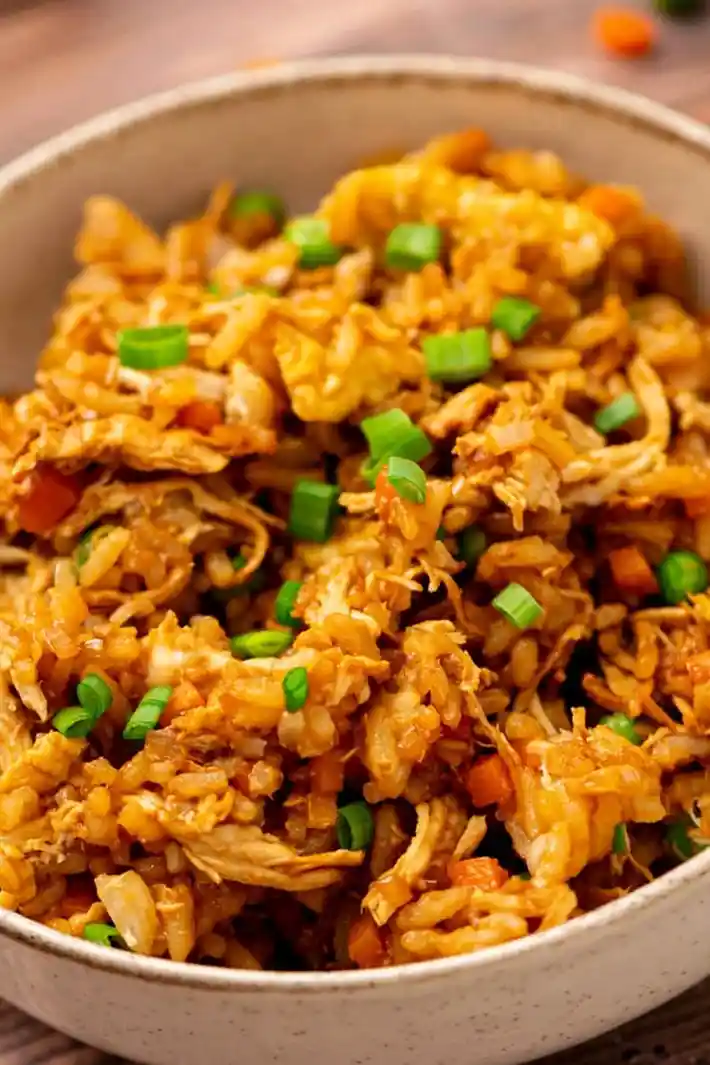
List of ingredients
- 1 lb chicken, cooked and shredded – ensures quick cooking and easy mixing.
- 3 cups cooked rice – chilled, day-old rice is highly recommended to prevent sticking.
- 2 tbsp sesame oil – provides the signature nutty aroma and authentic flavor.
- 1 onion, diced – adds a foundational savory sweetness.
- 1 cup frozen peas and carrots, thawed – a convenient way to add color and nutrients.
- 2 tbsp soy sauce (more if desired) – the primary seasoning for salt and umami.
- 2 eggs, lightly beaten – adds richness, protein, and a soft texture.
- 2 tbsp green onions, chopped (optional) – provides a fresh, sharp contrast to the fried rice.
step-by-step instructions
- Heat the Pan: Preheat a medium skillet or wok over medium heat.
- Sauté Aromatics: Add the sesame oil, diced onion, and thawed peas and carrots to the pan.
- Cook Vegetables: Stir-fry the mixture until the vegetables become tender.
- Prepare Egg Space: Slide the sautéed onion, carrots, and peas to one side of the skillet, creating an open space on the other side.
- Scramble Eggs: Pour the lightly beaten eggs into the open space and use a spatula to scramble them until they are fully set.
- Combine Base: Stir the cooked eggs back into the vegetable mixture until evenly distributed.
- Add Main Ingredients: Stir in the cooked rice and shredded chicken, mixing thoroughly with the egg and vegetable base.
- Season: Pour the soy sauce over the rice and stir continuously to ensure every grain is evenly coated.
- Final Touch: Fold in the chopped green onions if using, then serve immediately.
Optimal Rice Preparation
Use Day-Old Chilled Rice
Using rice that has been refrigerated overnight is the most critical step for achieving the correct texture. Freshly cooked rice contains too much surface moisture, which leads to clumping and a mushy, porridge-like consistency. Chilled rice grains are drier and separate easily in the pan, allowing them to fry and toast rather than steam.
Selecting the Best Rice Variety
Long-grain white rice, such as Jasmine or Basmati, is ideal because these varieties have less starch than short-grain rice. Jasmine rice offers a slightly floral aroma that complements the soy sauce, while Basmati provides a firmer grain. If using brown rice, allow for a slightly longer stir-fry time as the grains are denser and take more heat to toast.
Quick-Chilling Fresh Rice
If you do not have day-old rice, you can simulate the effect by spreading freshly cooked rice on a large baking sheet. Place the sheet in the freezer for 15 to 30 minutes to rapidly evaporate surface moisture. Ensure the rice is not frozen solid, but chilled and dry to the touch before adding it to the skillet.
Freezing Rice for Future Meals
To always have rice ready for frying, cook a large batch and portion it into freezer-safe bags. Spread the rice flat in the bag to avoid large clumps and freeze immediately. When you are ready to cook, thaw the rice in the refrigerator overnight, which perfectly mimics the texture of day-old rice.
Protein and Vegetable Customizations
Alternative Protein Options
While shredded chicken is the standard, you can easily substitute it with other proteins. Sautéed shrimp or diced lean beef work exceptionally well for a hearty meal. For a plant-based version, use extra-firm tofu that has been pressed and cubed, or simply omit the meat for a vegetable-only fried rice.
Adding Fresh Vegetables
Frozen peas and carrots are convenient, but fresh vegetables can add a brighter flavor. Diced red bell peppers, sliced zucchini, or snap peas are excellent additions. If using fresh vegetables, sauté them in the sesame oil before adding the eggs to ensure they are cooked through and tender.
Enhancing with Aromatics
For a deeper flavor profile, consider adding minced garlic or freshly grated ginger to the pan with the onions. These aromatics should be added just 30 seconds before the other vegetables to prevent them from burning. The combination of ginger and garlic adds a traditional pungent quality found in professional takeout.
Low-Carb Cauliflower Rice
To reduce the carbohydrate content, replace the cooked rice with cauliflower rice. Since cauliflower releases more water than grain rice, sauté it on high heat for several minutes to evaporate the liquid before adding the soy sauce. This ensures the dish remains fried and not steamed.
Flavor Enhancements and Sauce Variations
Adjusting the Soy Sauce Ratio
Depending on the brand of soy sauce, the saltiness can vary significantly. Start with the recommended two tablespoons and taste the rice before adding more. If the rice looks pale, a small additional amount of soy sauce will provide the classic golden-brown color along with added savoriness.
Introducing Spicy Elements
If you prefer a spicy kick, stir in a tablespoon of Sriracha or chili garlic sauce during the final mixing step. Alternatively, you can sprinkle red pepper flakes over the dish during the sautéing process. For a more nuanced heat, serve the finished rice with a side of chili oil for individual customization.
Using Lower Sodium Alternatives
For those watching their salt intake, use low-sodium soy sauce or coconut aminos. Coconut aminos provide a slightly sweeter taste and are naturally soy-free and gluten-free. If using these alternatives, you may need a pinch of salt to balance the sweetness and maintain the savory profile.
Garnishing for Visual Appeal
Beyond green onions, toasted sesame seeds add a professional look and a subtle crunch. A drizzle of extra toasted sesame oil just before serving can amplify the aroma. Fresh cilantro or thinly sliced red chilies also provide a vibrant color contrast and a fresh flavor burst.
Equipment and Heat Management
Using a Traditional Carbon Steel Wok
A wok is designed for high-heat cooking and efficient stirring. The sloped sides allow you to push ingredients to the edge while focusing heat in the center. This equipment is best for achieving ‘wok hei,’ the charred flavor that results from searing food at very high temperatures.
Non-Stick Skillet Advantages
A large non-stick skillet is an excellent alternative for home cooks who want easier cleanup. The non-stick surface prevents the eggs and rice from clinging to the pan, making the scrambling process smoother. However, avoid using metal utensils to prevent scratching the coating.
Blackstone Griddle for Large Batches
For feeding a crowd, a Blackstone or flat-top griddle provides the necessary surface area. Use the griddle’s zones to cook the eggs and vegetables separately before combining everything in the center. The wide area allows for more evaporation, which helps the rice stay separate and toasted.
Adapting for the Instant Pot
To make this in an Instant Pot, use the ‘Sauté’ function on the high setting. Follow the same sequence of cooking vegetables and eggs, then stirring in the rice and chicken. Because the pot is deeper, stir frequently to ensure the rice doesn’t stick to the bottom.
Storage, Freezing, and Reheating
Proper Refrigeration Techniques
Store leftover fried rice in an airtight container to prevent it from absorbing other odors in the fridge. It will remain fresh and safe to eat for up to three days. Ensure the rice is cooled slightly before sealing the lid to prevent excess condensation from making the rice soggy.
Long-Term Freezing Instructions
Fried rice freezes remarkably well for up to two months. Use freezer-safe bags and squeeze out as much air as possible to prevent freezer burn. Label the bags with the date to ensure you use the oldest batches first.
Optimal Stovetop Reheating
For the best texture, reheat the rice in a skillet over medium heat with a teaspoon of oil. Stir frequently until the rice is steaming and the edges are slightly crisp again. This method restores the ‘fried’ quality that is often lost during storage.
Microwave Reheating Tips
When using a microwave, place the rice in a bowl and add one tablespoon of water over the top. Cover the bowl with a damp paper towel or a lid to trap the steam. This prevents the rice from drying out and becoming hard or rubbery during the heating process.
Common Troubleshooting
Fixing Mushy Rice
If your rice turns out too soft, it is usually due to using fresh rice or over-stirring. To fix this, increase the heat and let the rice sit undisturbed in the pan for one to two minutes. This allows the excess moisture to evaporate and the bottom layer to crisp up.
Preventing Burnt Aromatics
Garlic and onions can burn quickly if the heat is too high or the oil is insufficient. Always ensure the oil is shimmering before adding the vegetables. If the pan seems too dry, add another teaspoon of oil immediately to distribute the heat evenly.
Balancing Overly Salty Rice
If you add too much soy sauce, you can balance the saltiness by adding a small pinch of sugar or a squeeze of fresh lime juice. The acidity of the lime or the sweetness of the sugar cuts through the sodium, bringing the flavors back into equilibrium.
Improving Egg Integration
If the eggs are too chunky or separate from the rice, ensure you are scrambling them quickly and combining them with the vegetables before adding the rice. The rice should be folded into the egg mixture, not the other way around, to ensure a cohesive texture.
Serving and Pairing Ideas
Complementary Appetizers
Pair your chicken fried rice with crispy baked egg rolls or steamed vegetable dumplings. These appetizers provide a contrasting texture and flavor that complements the savory rice. A side of sweet and sour sauce is perfect for dipping both the appetizers and the rice.
Main Course Pairings
For a full feast, serve the fried rice alongside orange chicken or a beef and broccoli stir-fry. The sweetness of the orange chicken balances the saltiness of the fried rice. Alternatively, a light steamed fish fillet provides a healthy and lean contrast to the fried nature of the rice.
Fresh Side Salads
A simple Asian-style slaw with shredded cabbage, carrots, and a rice vinegar dressing adds a refreshing element to the meal. The crispness and acidity of the salad cleanse the palate between bites of the rich, savory fried rice.
Frequently Asked Questions
How much dry rice equals the 3 cups cooked?
Approximately one and a half cups of dry long-grain white rice will yield three cups of cooked rice. Always measure your rice after it has fully cooked and cooled for the most accurate ratio.
Can I use brown rice in this recipe?
Yes, brown rice works well and adds more fiber and nutrients. Be aware that brown rice has a chewier texture and may require an extra minute or two of stir-frying to heat through completely.
How do I make the dish spicier?
You can add sriracha, chili flakes, or diced jalapeños. For the most integrated flavor, add the heat during the sautéing step; for a fresh hit, add the spice as a garnish at the end.
Can I use fresh vegetables instead of frozen?
Absolutely. Simply dice your preferred fresh vegetables and sauté them until tender before adding the eggs. Fresh vegetables often provide a better snap and more vibrant color than frozen options.
Is sesame oil mandatory for this recipe?
While not mandatory, sesame oil provides the essential nutty flavor characteristic of fried rice. If you don’t have it, you can use vegetable or canola oil, but consider adding a drop of sesame extract or toasted sesame seeds to compensate for the lost flavor.
Print
Quick and Easy Homemade Chicken Fried Rice
- Total Time: 20 minutes
- Yield: 8 servings 1x
- Diet: General
Description
Forget going out for Chinese food! You can make this at home dish and save on time, budget, and have plenty for leftovers!
Ingredients
- 1 lb chicken, cooked and shredded
- 3 cups cooked rice
- 2 tbsp sesame oil
- 1 onion, diced
- 1 cup frozen peas and carrots, thawed
- 2 tbsp soy sauce
- 2 eggs, lightly beaten
- 2 tbsp green onions, chopped (optional)
Instructions
- Preheat: Preheat a medium skillet or wok to medium heat.
- Sauté: Add the sesame oil, onion, and peas/carrots.
- Cook: Allow to cook until tender.
- Prepare Eggs: Slide the onion, carrots, and peas to one side of skillet and add in the lightly beaten eggs to the other side.
- Scramble: Using a spatula, scramble the eggs.
- Combine: Once eggs are fully cooked, combine with the onion/peas/carrots.
- Mix: Add the cooked rice and shredded chicken into the skillet and combine with the egg mixture.
- Season: Pour the soy sauce on top and stir to combine evenly.
- Finish: Add in the green onions, if using. Serve!
Notes
Cold leftover rice works best as it is drier and less likely to stick. You can use cauliflower rice for a low-carb option.
- Prep Time: 5 minutes
- Cook Time: 15 minutes
- Category: Main Course
- Method: Stovetop
- Cuisine: Chinese
Nutrition
- Serving Size: 1 serving
- Calories: 200 kcal
- Sugar: 1 g
- Sodium: 183 mg
- Fat: 9 g
- Saturated Fat: 2 g
- Unsaturated Fat: 7 g
- Trans Fat: 1 g
- Carbohydrates: 20 g
- Fiber: 1 g
- Protein: 9 g
- Cholesterol: 61 mg