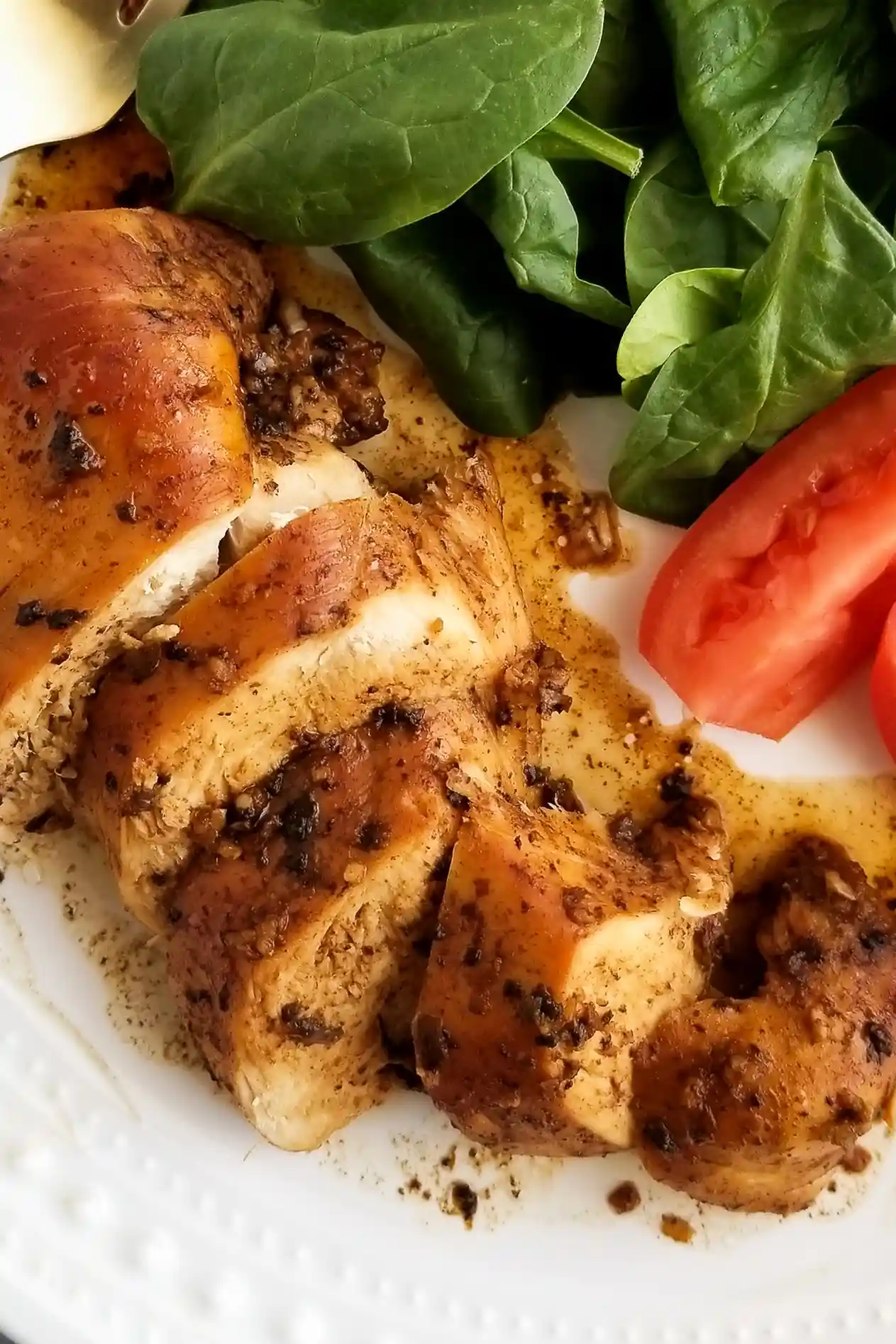
Prepare tender chicken breasts with a sweet and tangy balsamic glaze using your slow cooker. This method ensures the meat remains juicy while absorbing rich, savory flavors throughout the day.
List of ingredients
- 4 boneless, skinless chicken breasts – use large, uniform breasts for even cooking.
- 1/3 cup balsamic vinegar – select a high-quality aged vinegar for a deeper flavor profile.
- 2 tablespoons brown sugar – light or dark brown sugar both work to balance the acidity.
- 4 garlic cloves, minced – fresh garlic provides the most potent aroma and taste.
- 1/4 cup water – added to keep the chicken moist and prevent the sauce from thickening too early.
step-by-step instructions
- Prepare the glaze: In a small mixing bowl, whisk together the balsamic vinegar, brown sugar, minced garlic, and water until the sugar is completely dissolved.
- Layer the pot: Pour approximately one quarter of the balsamic sauce into the bottom of the slow cooker.
- Arrange the meat: Place the four chicken breasts into the pot and pour the remaining sauce evenly over the top of the chicken.
- Cook the chicken: Cover the slow cooker with the lid and set to low heat for 6 hours or high heat for 3 hours.
- Final touch: Spoon the accumulated balsamic juices from the crockpot over the chicken breasts when serving.
Optimizing Your Ingredients
Using Chicken Thighs for More Flavor
Boneless skinless chicken thighs can be used as a substitute for breasts in this recipe. Thighs contain more intramuscular fat, which makes the meat more resistant to drying out during long cooking cycles. If using thighs, ensure they are trimmed of excess fat to maintain the sauce consistency.
Selecting a Premium Balsamic Vinegar
The quality of the balsamic vinegar significantly impacts the final taste of the glaze. Look for a vinegar that is thick and slightly sweet, as these typically have a more concentrated flavor. Avoid very thin, watery vinegars that may make the sauce taste overly acidic.
Substituting Brown Sugar with Honey
If you prefer a different type of sweetness, honey or maple syrup can replace the brown sugar. Use a 1:1 ratio for honey, although it may result in a slightly thicker glaze. This substitution adds a floral note to the savory garlic and vinegar base.
Adjusting Garlic Levels for Pungency
Freshly minced garlic is recommended for the best flavor, but garlic powder can be used in a pinch. Use 2 teaspoons of garlic powder if fresh cloves are unavailable. For those who prefer a stronger garlic profile, increasing the count to six cloves is a practical adjustment.
Advanced Cooking Techniques
Monitoring Internal Temperature
To ensure the chicken is safe and juicy, use a digital meat thermometer. The internal temperature should reach 165 degrees Fahrenheit (74 degrees Celsius). Pulling the chicken out exactly at this point prevents the meat from becoming rubbery or dry.
Preventing Liquid Overflow
Avoid the temptation to add extra water or broth to the slow cooker. The chicken releases its own juices during the cooking process, and too much liquid will dilute the balsamic glaze. Stick to the measured 1/4 cup of water to maintain the intended sauce thickness.
Using a Slow Cooker Liner
Balsamic vinegar and brown sugar can create a sticky residue that is difficult to scrub. Using a heat-safe slow cooker liner allows for effortless cleanup after the meal. Simply lift the liner out and discard it once the chicken is served.
Reducing the Sauce After Cooking
If the sauce is too thin for your preference, you can reduce it on the stove. Pour the liquids into a small saucepan and simmer over medium heat for 5 to 10 minutes. Stir constantly to prevent the sugar from burning until the sauce reaches a syrupy consistency.
Best Side Dish Pairings
Serving with Garlic Mashed Potatoes
Creamy mashed potatoes are an ideal accompaniment because they soak up the excess balsamic glaze. Incorporate garlic or parmesan cheese into the potatoes to complement the savory notes of the chicken. This pairing provides a comforting, hearty meal balance.
Pairing with Roasted Root Vegetables
Roasted carrots or parsnips add a natural sweetness that aligns well with the balsamic reduction. Toss the vegetables in olive oil and salt before roasting at 400 degrees Fahrenheit until caramelized. The earthy tones of the roots contrast the acidity of the vinegar.
Serving over a Bed of Wild Rice
Wild rice or quinoa offers a nutty flavor and a firm texture that holds up well under the sauce. Cook the grains in a vegetable broth instead of water for added depth. This option increases the nutritional value and fiber content of the meal.
Adding a Side of Steamed Broccoli
Steamed broccoli or sautéed spinach provides a fresh, green element to the plate. The bitterness of the greens cuts through the sweetness of the brown sugar glaze. Lightly season the vegetables with lemon juice to brighten the overall flavor profile.
Storage and Preservation
Refrigeration Storage Tips
Allow the chicken and sauce to cool completely before transferring them to an airtight container. Store the leftovers in the refrigerator for up to 2 to 3 days. Keep the chicken submerged in the sauce to prevent the meat from drying out during storage.
Freezing Instructions
Cooked balsamic chicken can be frozen for up to three months. Place the chicken and a generous portion of sauce in a freezer-safe bag and squeeze out all excess air. Thaw the meat in the refrigerator overnight before reheating to maintain the best texture.
Reheating Without Drying Out the Meat
To reheat, place the chicken and sauce in a covered dish in the oven at 325 degrees Fahrenheit. Alternatively, use a microwave on medium power, adding a splash of water or extra sauce if needed. Avoid overheating, as this can make the chicken breasts tough.
Customizing the Flavor Profile
Adding Dried Oregano or Thyme
Adding a teaspoon of dried oregano or thyme to the initial sauce mix introduces an herbal dimension. These herbs pair naturally with balsamic vinegar and garlic. Whisk them into the sauce before pouring it over the chicken for an infused flavor.
Integrating Sliced Red Onions
Place thinly sliced red onions at the bottom of the slow cooker before adding the chicken. The onions will caramelize in the balsamic juices and brown sugar over several hours. This adds a sweet, savory vegetable component that can be served alongside the meat.
Incorporating a Hint of Dijon Mustard
Whisking in one tablespoon of Dijon mustard adds a subtle tang and helps emulsify the sauce. The mustard provides a sharp contrast to the sweetness of the brown sugar. This adjustment creates a more complex, restaurant-style glaze.
Equipment Recommendations
Choosing the Right Slow Cooker Size
A 4-to-6 quart slow cooker is ideal for this recipe to ensure there is enough room for the chicken to cook evenly. If the pot is too small, the chicken may overlap, leading to uneven cooking times. A larger pot allows the sauce to circulate better around the breasts.
Using Stainless Steel vs Ceramic Inserts
Ceramic inserts are traditional and hold heat consistently, which is perfect for slow-cooking meats. Stainless steel inserts may heat up faster, so you might need to check the meat temperature slightly earlier. Both materials are suitable as long as they are compatible with your appliance.
The Role of Meat Thermometers
An instant-read digital thermometer is the most reliable tool for this recipe. Because slow cookers vary in temperature, relying solely on a timer can lead to overcooked meat. Checking the thickest part of the breast ensures precision.
Whisking Tools for Smooth Sauces
Use a small balloon whisk to combine the balsamic vinegar and brown sugar. This ensures that no sugar clumps remain, which prevents the sauce from having a grainy texture. A whisk integrates the minced garlic more evenly than a spoon.
Common Troubleshooting Solutions
What to Do if the Sauce is Too Thin
If the sauce remains watery, it is likely due to the chicken releasing more moisture than expected. You can whisk in a small cornstarch slurry (1 teaspoon cornstarch mixed with 1 teaspoon water) during the last 30 minutes of cooking. This will thicken the glaze quickly while maintaining a glossy appearance.
How to Balance Excess Acidity
If the final dish tastes too tart, you can balance the acidity by adding a small amount of extra brown sugar or a pinch of baking soda. Stir in these additions carefully and taste as you go. A small amount of butter stirred in at the end can also mellow the sharpness.
Preventing Rubbery Chicken Texture
Rubbery chicken usually occurs when the meat is cooked for too long at a high temperature. To avoid this, stick to the low heat setting if you have the time. If using the high setting, begin checking the internal temperature 30 minutes before the suggested end time.
Frequently Asked Questions
Can I use frozen chicken breasts?
It is not recommended to put frozen chicken directly into a slow cooker due to food safety concerns. The meat may stay in the danger zone temperature for too long, allowing bacteria to grow. Always thaw chicken completely in the refrigerator before starting the recipe.
Is it necessary to sear the meat first?
Searing the chicken is not required for this recipe, but it is optional. Browning the meat in a skillet for 2-3 minutes per side adds a deeper color and an extra layer of flavor. If you choose to sear, reduce the slow cooker time by about 30 minutes.
Can this be made in an Instant Pot?
Yes, you can adapt this for a pressure cooker. Use the manual high-pressure setting for about 10 to 15 minutes depending on the thickness of the breasts. Allow for a natural pressure release for 10 minutes to keep the meat tender.
What is the best way to shred the chicken?
If you prefer shredded chicken for sandwiches or tacos, use two forks to pull the meat apart while it is still warm. Do this directly in the slow cooker so the shredded pieces can soak up the remaining balsamic juices. Stir the sauce back in thoroughly for maximum flavor.
Print
Slow Cooker Balsamic Chicken
- Total Time: 6 hours 10 minutes
- Yield: 4 servings 1x
- Diet: General
Description
Super tender and juicy boneless skinless chicken breasts cooked low and slow in a delicious balsamic sauce.
Ingredients
- 4 boneless, skinless chicken breasts
- 1/3 cup balsamic vinegar
- 2 tbsp brown sugar
- 4 minced garlic cloves
- 1/4 cup water
Instructions
- Step 1: In a small bowl, whisk together balsamic vinegar, brown sugar, minced garlic and water.
- Step 2: Pour about a quarter of the sauce to the bottom of the slow cooker. Add the chicken breasts and pour remaining balsamic sauce over the chicken.
- Step 3: Cover with lid and cook on low heat for 6 hours or on high heat for about 3 hours.
- Step 4: Spoon balsamic juices from the crockpot on top of your chicken when serving.
Notes
Store leftover chicken completely cooled in an airtight container in the fridge for up to 2-3 days.
- Prep Time: 10 minutes
- Cook Time: 6 hours
- Category: Main Course
- Method: Slow Cooking
- Cuisine: American
Nutrition
- Serving Size: 1 chicken breast
- Calories: 380 kcal
- Sugar: 12 g
- Sodium: 150 mg
- Fat: 7 g
- Saturated Fat: 2 g
- Unsaturated Fat: 5 g
- Trans Fat: 0 g
- Carbohydrates: 15 g
- Fiber: 1 g
- Protein: 45 g
- Cholesterol: 110 mg