Enjoy a fast and flavor-packed dinner with these one-pan shrimp fajitas. This recipe combines zesty lime and bold spices for a restaurant-quality meal in under 30 minutes.
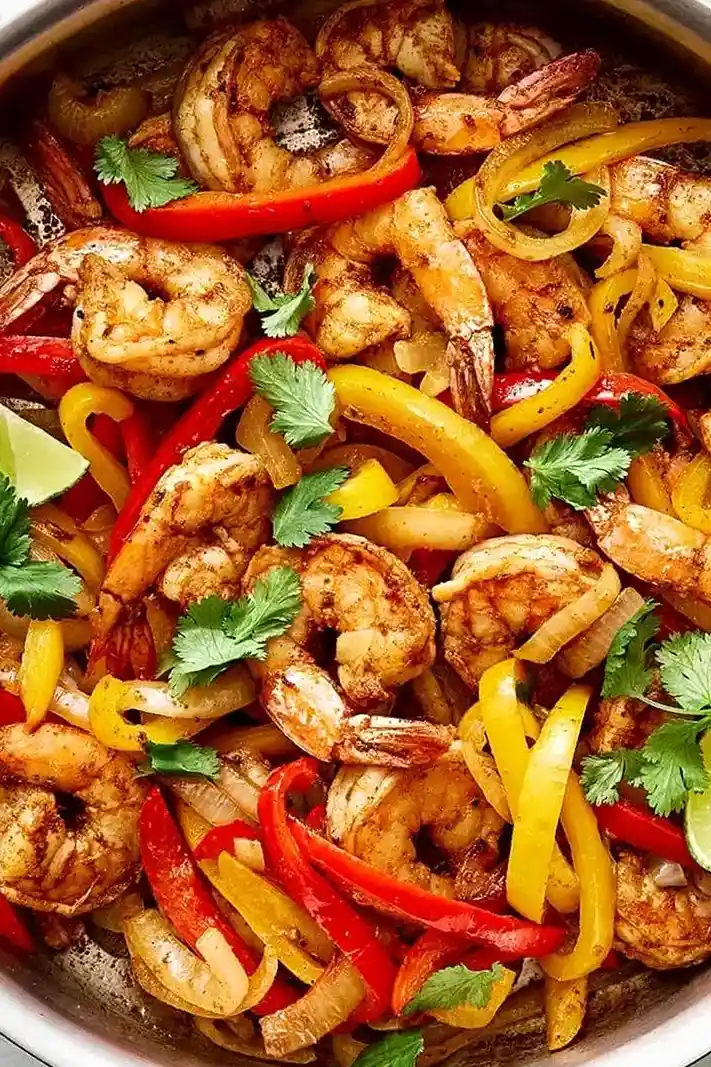
List of ingredients
- 1 ½ pounds jumbo shrimp (peeled and deveined) – pat dry to ensure a better sear.
- 1 yellow onion (thinly sliced) – provides a balanced, sweet base.
- 2 bell peppers (thinly sliced) – red and yellow offer the best color.
- ¼ cup extra virgin olive oil – divided for marinating and sautéing.
- 1 lime – used for juice in the marinade and for finishing.
- 8 tortillas – corn or flour, warmed before serving.
- ½ tablespoon chili powder – adds earthy heat.
- ½ tablespoon ground cumin – gives a characteristic smoky aroma.
- 1 teaspoon garlic powder – provides consistent flavor across all ingredients.
- ½ teaspoon paprika – adds color and a mild sweetness.
- ½ teaspoon dried oregano – adds a subtle herbal note.
- ½ teaspoon kosher salt – enhances the overall flavor profile.
- ¼ teaspoon ground black pepper – adds a light, sharp spice.
- Avocado or guacamole, sour cream, and salsa – essential for adding creaminess and acidity.
step-by-step instructions
- Mix the fajita seasoning: In a small bowl, stir together the chili powder, cumin, garlic powder, paprika, oregano, salt, and pepper until well combined.
- Season the shrimp: In a large bowl, add the shrimp, two tablespoons of olive oil, the juice from half a lime, and the prepared spice blend. Toss until the shrimp are well coated, then set them aside to marinate while you cook the vegetables.
- Sauté the onion and bell peppers: Heat the remaining two tablespoons of olive oil in a large skillet over medium heat. Add the sliced onion and bell peppers, sautéing for 4 to 5 minutes until softened and the onions begin to caramelize, then transfer them to a plate.
- Sauté the shrimp: In the same skillet, add the shrimp and cook for 2 to 3 minutes on each side. Ensure they turn pink and opaque before removing them from the heat.
- Combine and serve: Return the bell peppers and onions to the skillet with the shrimp. Toss everything together, squeeze fresh lime juice on top, and serve immediately with tortillas and your choice of toppings.
Optimizing Shrimp Texture
Thawing Frozen Shrimp Safely
If using frozen shrimp, thaw them overnight in the refrigerator. Alternatively, place them in a sealed bag and submerge them in cold water, changing the water every 30 minutes. Avoid thawing at room temperature to prevent bacterial growth.
Avoiding Protein Overcooking
Shrimp cook very quickly and can become rubbery if left on the heat too long. Watch for the color to change from translucent to pink and opaque. They should form a loose “C” shape rather than a tight “O” shape, which indicates overcooking.
Preparing Surface Moisture
Pat the shrimp dry with paper towels before adding them to the marinade. Excess water on the surface creates steam in the pan, which prevents the shrimp from searing. A dry surface ensures a better crust and deeper flavor.
Alternative Ingredient Choices
Switching Bell Pepper Varieties
Red, orange, and yellow bell peppers are naturally sweeter and provide a bright look. Green peppers have a more bitter, grassy flavor that adds a different dimension to the dish. Using a mix of three colors creates a visually appealing plate.
Choosing Different Onion Types
Yellow onions are the standard for caramelizing due to their balanced sugar content. White onions offer a sharper, cleaner taste, while red onions provide a mild sweetness and a pop of purple color. All three work well in this recipe.
Selecting Heart-Healthy Oils
Extra virgin olive oil is great for flavor and health. If you prefer a higher smoke point for a hotter sear, avocado oil or grapeseed oil are excellent substitutes. These oils allow you to increase the heat without the oil breaking down.
Serving and Plating Strategies
Building Fajita Bowls
For a lower-carb option, skip the tortillas and serve the shrimp and vegetables over a base of grains. Brown rice, quinoa, or cauliflower rice work perfectly. Top the bowl with extra avocado and a dollop of sour cream for balance.
Using Lettuce Wraps
Swap tortillas for large leaves of Romaine or butter lettuce for a crisp, fresh alternative. This method reduces the calorie count and provides a refreshing crunch. Ensure the leaves are washed and dried thoroughly before filling.
Perfecting Tortilla Warming
Warm your tortillas in a dry skillet for 30 seconds per side until they are pliable and slightly charred. You can also wrap a stack in foil and place them in a low oven. This prevents them from cracking when you fold them.
Complementary Side Dishes
Preparing Mexican Rice
A side of red Mexican rice adds heartiness to the meal. Sauté long-grain white rice in oil until golden, then simmer with tomato paste, vegetable broth, and a pinch of cumin. This provides a savory contrast to the zesty shrimp.
Adding Seasoned Black Beans
Simmer canned black beans with a splash of water, minced garlic, and a pinch of oregano. This adds plant-based protein and a creamy texture to the meal. Serve them on the side or inside the tortillas.
Making a Corn Salad
Create a refreshing corn salad by mixing charred corn kernels with diced red onion, cilantro, and lime juice. This side dish adds sweetness and a cooling element to the spicy fajita seasoning. It is a great way to incorporate more vegetables.
Storage and Preservation
Safe Refrigeration Limits
Store leftover shrimp fajitas in an airtight container in the refrigerator. They will remain fresh and safe to eat for 3 to 4 days. Keep the tortillas and toppings separate to maintain their individual textures.
Effective Reheating Methods
To avoid rubbery shrimp, reheat the mixture in a skillet over medium-low heat with a teaspoon of water or oil. Alternatively, microwave in short 30-second bursts. Gently stir between intervals to ensure even heating.
Freezing and Quality Loss
While you can freeze the cooked mixture, the texture of the shrimp may change and become softer. For the best experience, it is recommended to make this dish fresh. If freezing, use a vacuum-sealed bag to prevent freezer burn.
Solving Common Cooking Problems
Stopping Pan Steam
If the pan fills with liquid, you may have overcrowded the skillet or used shrimp that were too wet. To fix this, increase the heat slightly to evaporate the moisture. Cook in smaller batches if your pan is not large enough.
Controlling High Heat Searing
Ensure your pan is hot before adding the shrimp to get a proper sear. If the oil begins to smoke excessively, lower the heat immediately to prevent the spices from burning. Use a medium-high setting for a balance of speed and color.
Adjusting Salt Balance
If the final dish tastes too salty, add an extra squeeze of fresh lime juice. The acidity helps neutralize the saltiness and brightens the other flavors. You can also add more unsalted avocado to balance the taste.
Selecting the Best Pan
Cast Iron Skillet Benefits
Cast iron retains heat exceptionally well, making it ideal for getting a deep sear on the shrimp. It distributes heat evenly across the surface, preventing cold spots. Once seasoned, it provides a naturally non-stick surface.
Stainless Steel Performance
Stainless steel pans are excellent for creating a fond, which is the brown bits left over from sautéing. This fond adds incredible depth of flavor when the shrimp and vegetables are combined. These pans are durable and professional-grade.
Non-Stick Pan Utility
Non-stick pans are the easiest for cleanup and prevent the shrimp from sticking to the bottom. However, they cannot handle extremely high heat as well as cast iron. Use them on medium heat for a gentler cooking process.
Expanding the Flavor Profile
Increasing Spiciness
If you prefer a spicier kick, add a pinch of cayenne pepper or red chili flakes to the seasoning blend. You can also stir in minced jalapeños while sautéing the onions and peppers. Serve with a spicy habanero salsa for extra heat.
Incorporating Fresh Herbs
Stir in a handful of chopped fresh cilantro just before serving. The bright, citrusy notes of the herb complement the earthy cumin and chili powder. Fresh parsley is a good alternative if you do not like cilantro.
Enhancing Lime Zest
In addition to the lime juice, grate some fresh lime zest into the marinade. The zest contains aromatic oils that provide a more intense citrus fragrance. This adds a professional layer of flavor to the shrimp.
Efficiency and Meal Prep
Pre-Cutting Vegetables
Slice your onions and bell peppers a few hours in advance and store them in a container. This reduces the active prep time when you are ready to cook. Keep them chilled to maintain their crispness.
Timing the Marinade
Marinate the shrimp for no more than 15 to 30 minutes. Because shrimp are delicate, the acid in the lime juice can start to “cook” the protein if left too long. This can result in a mushy texture.
Batch Cooking Tips
If cooking for a large crowd, sauté the vegetables in batches to avoid overcrowding the pan. Keep the cooked vegetables warm in a low oven while you sear the shrimp. Combine everything at the very end for maximum freshness.
Frequently Asked Questions
Can I use small shrimp instead of jumbo?
Yes, you can use smaller shrimp, but you must reduce the cooking time. Smaller shrimp cook much faster than jumbo ones and can overcook in a matter of seconds. Check them frequently to ensure they stay tender.
How long should I marinate the shrimp?
The ideal marinating time is between 10 and 20 minutes. This is enough time for the spices to penetrate the surface without the lime juice breaking down the shrimp’s texture. Do not marinate them overnight.
Which tortillas are best for fajitas?
Flour tortillas are traditional for fajitas because they are soft and easy to fold. Corn tortillas offer a more authentic taste and are naturally gluten-free. Regardless of the type, warming them is key to preventing tears.
Can I make this recipe without a skillet?
You can use a grill pan for a charred effect or roast the vegetables and shrimp on a sheet pan in the oven. For oven-roasting, set the temperature to 400°F and cook for about 10-12 minutes. A skillet remains the fastest method.
Print
One-Pan Sautéed Shrimp Fajitas
- Total Time: 25 minutes
- Yield: 4 servings 1x
- Diet: General
Description
These shrimp fajitas are an easy dinner that’s sure to impress! Jumbo shrimp, bell peppers, and onions are tossed in homemade fajita seasoning and sautéed in one skillet.
Ingredients
- 1 ½ pounds jumbo shrimp, peeled and deveined
- 1 yellow onion, thinly sliced
- 2 bell peppers, thinly sliced
- ¼ cup extra virgin olive oil
- 1 lime
- 8 tortillas
- ½ tablespoon chili powder
- ½ tablespoon ground cumin
- 1 teaspoon garlic powder
- ½ teaspoon paprika
- ½ teaspoon dried oregano
- ½ teaspoon kosher salt
- ¼ teaspoon ground black pepper
- avocado or guacamole
- sour cream
- salsa
Instructions
- Make seasoning: In a small bowl, stir together the chili powder, cumin, garlic powder, paprika, oregano, salt, and pepper.
- Season shrimp: In a large bowl, add the shrimp, two tablespoons of olive oil, the juice from half a lime, and the fajita seasoning. Toss until well coated.
- Sauté vegetables: Heat the remaining two tablespoons of olive oil in a large skillet over medium heat. Add the onion and bell peppers, sauté for 4 to 5 minutes until softened, then transfer to a plate.
- Sauté shrimp: In the same skillet, add the shrimp and cook for 2 to 3 minutes on each side until pink and opaque.
- Combine and serve: Add the bell peppers and onions back to the skillet, toss, and squeeze more lime juice on top. Serve immediately with tortillas and toppings.
Notes
You can use either a cast iron pan or stainless steel pan. Avoid marinating the shrimp for too long as they can become mushy.
- Prep Time: 10 minutes
- Cook Time: 15 minutes
- Category: Main Course
- Method: Sautéing
- Cuisine: Mexican
Nutrition
- Serving Size: 2 fajitas
- Calories: 490 kcal
- Sugar: 7 g
- Sodium: 857 mg
- Fat: 18 g
- Saturated Fat: 3 g
- Unsaturated Fat: 13 g
- Trans Fat: 0 g
- Carbohydrates: 40 g
- Fiber: 4 g
- Protein: 41 g
- Cholesterol: 429 mg