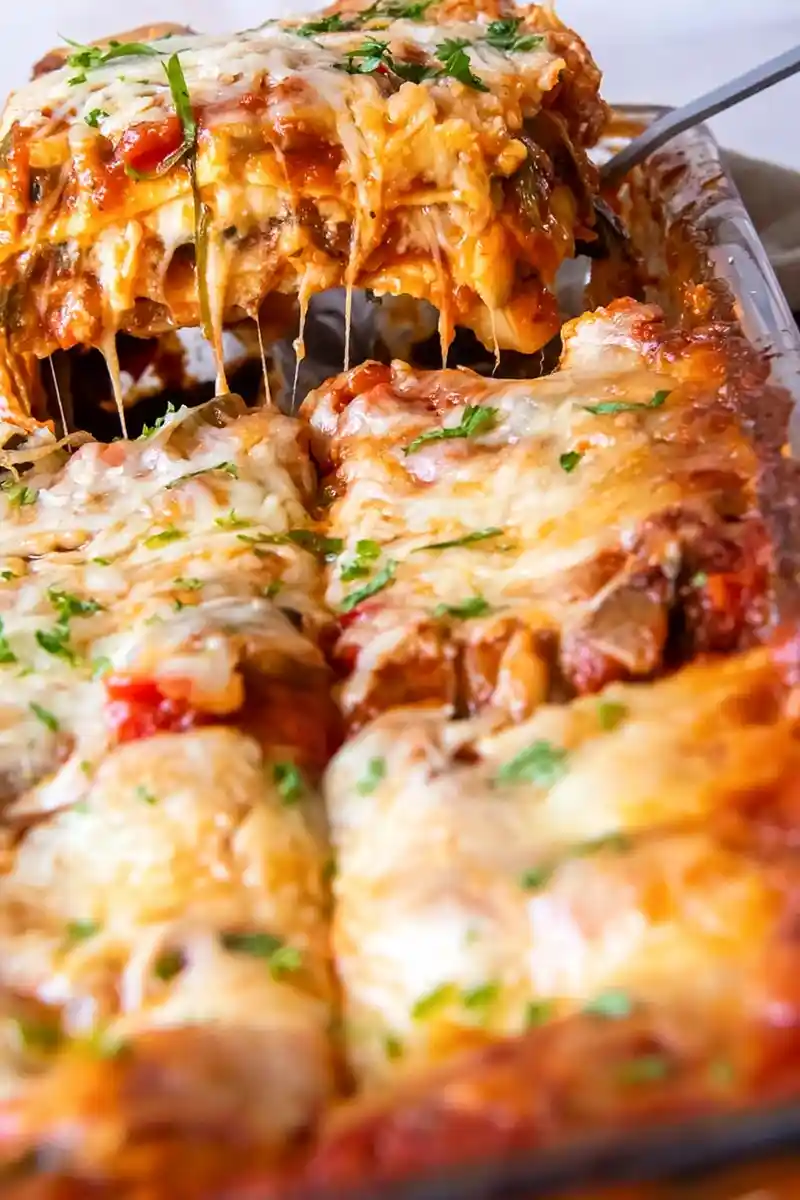
This hearty vegetable lasagna is a satisfying meatless main dish packed with nutrient-dense vegetables and creamy cheeses. It is an ideal choice for meal prep or hosting large gatherings thanks to its make-ahead versatility.
List of ingredients
- 2 tablespoons olive oil – used for sautéing vegetables
- 1 ½ cups chopped yellow onion – provides a sweet aromatic base
- 1 red bell pepper, chopped – adds color and sweetness
- 8 ounces cremini mushrooms, chopped – provides a hearty, meaty texture
- 2 medium zucchini, chopped into ½-inch pieces – adds freshness and bulk
- 4 cloves garlic, minced – for deep aromatic flavor
- 48 ounces marinara sauce – the primary flavor base for the layers
- 1 teaspoon dried Italian seasoning – blends classic herbs
- salt and pepper, to taste – essential for flavor balance
- 2 pinches crushed red pepper flakes, or to taste – adds a subtle heat
- ¼ cup chopped fresh parsley – adds a bright, herby finish
- 5 ounces baby spinach, coarsely chopped – wilts into the sauce for extra nutrients
- 1 egg – binds the ricotta cheese mixture
- 1 cup ricotta cheese (8 ounces) – creates creamy pockets throughout the dish
- 9 oven ready (no boil) lasagna noodles – absorbs excess moisture from the vegetables
- 16 ounces shredded mozzarella cheese, about 4 cups – for a gooey, melted top and interior
- ½ cup grated Parmesan cheese – adds a salty, sharp finish
- chopped fresh basil or parsley, optional – for final garnishing
step-by-step instructions
- Prep the Oven: Preheat your oven to 375°F to ensure it is ready for baking.
- Sauté Aromatics and Vegetables: Heat olive oil in a large skillet or Dutch oven over medium-high heat. Add the chopped onion, bell pepper, mushrooms, and zucchini, cooking for 7 to 8 minutes until softened, stirring occasionally. Add the minced garlic and cook for an additional 30 seconds.
- Simmer the Sauce: Stir in the marinara sauce, Italian seasoning, salt, pepper, red pepper flakes, and parsley. Bring the mixture to a simmer, then reduce heat to low and cook for 10 to 15 minutes, stirring occasionally. Stir in the chopped fresh spinach at the end until wilted.
- Prepare the Cheese Mixture: Lightly beat one egg in a medium bowl with a fork. Stir in the ricotta cheese until well combined and shred the mozzarella cheese if not already prepared.
- Create the First Layer: Spread about 1 cup of the vegetable sauce into the bottom of a 9×13-inch baking dish. Place 3 noodles evenly over the sauce, then spread one-third of the remaining sauce over the noodles. Add half of the ricotta and egg mixture in small spoonfuls, and sprinkle one-third of the mozzarella and one-third of the Parmesan on top.
- Create the Second Layer: Repeat the process by adding 3 more noodles, half of the remaining sauce, the rest of the ricotta mixture, half of the remaining mozzarella, and half of the remaining Parmesan.
- Final Top Layer: Place the final 3 noodles over the second layer. Spread the remaining sauce over the noodles and top with the rest of the mozzarella and Parmesan cheese.
- Cover and Bake: Cover the baking dish with a piece of aluminum foil that has been sprayed with cooking spray on the underside to prevent cheese from sticking. Place a rimmed baking sheet on the rack below the lasagna to catch any drips. Bake in the center of the oven for 35 minutes.
- Brown the Top: Remove the foil and bake for another 10 to 15 minutes until the sides are bubbling and the cheese is lightly browned.
- Rest and Serve: Let the lasagna rest for 15 minutes before slicing. This allows the structure to set so the pieces remain intact when served.
Vegetable Selection and Preparation
Using Cremini Mushrooms for Texture
Cremini mushrooms are ideal for vegetarian lasagna because they provide a dense, savory quality similar to meat. Chopping them into small, uniform pieces ensures they distribute evenly throughout the sauce. Sautéing them early allows their moisture to evaporate, intensifying their flavor.
Slicing Zucchini for Consistent Cooking
Cutting zucchini into half-inch pieces ensures that they cook at the same rate as the other vegetables. If the pieces are too large, they may remain crunchy; if too small, they may disintegrate into the sauce. Consistent sizing helps maintain the structural integrity of the layers.
Selecting the Best Marinara Sauce
A high-quality marinara sauce provides the foundational acidity and sweetness for the dish. Look for a sauce with a low sugar content and a rich tomato base to avoid an overly sweet lasagna. You can use a store-bought variety or a homemade version for more control over the seasoning.
Incorporating Fresh Baby Spinach
Adding baby spinach at the very end of the sauce-simmering process prevents the leaves from overcooking and becoming mushy. The heat of the sauce is sufficient to wilt the spinach quickly. This method preserves the bright green color and the nutritional value of the greens.
Cheese and Binding Tips
The Role of the Egg in Ricotta
Beating an egg into the ricotta cheese acts as a binding agent, preventing the cheese from running when the lasagna is sliced. It creates a firmer, more stable layer that holds its shape during the baking process. This simple addition transforms the ricotta into a cohesive filling.
Choosing High-Moisture Mozzarella
Low-moisture, shredded mozzarella is preferred for baking because it melts smoothly without releasing excessive water. This helps prevent the lasagna from becoming watery or soupy. Shredding the cheese yourself from a block often results in a better melt than pre-shredded options.
Using Freshly Grated Parmesan
Freshly grated Parmesan provides a sharper, saltier punch than the powdered versions found in cans. It adds a professional finish to the top crust and deepens the flavor of the internal layers. The fine grains melt into the sauce, adding a layer of complexity.
Ricotta Substitutions for Different Textures
If ricotta is unavailable, cottage cheese is a practical alternative. For a smoother texture, blend the cottage cheese in a food processor before mixing it with the egg. While it changes the mouthfeel slightly, the flavor remains compatible with the Italian seasonings.
Mastering the Assembly Process
Preventing Sticking with Greased Foil
Spraying the underside of the aluminum foil with non-stick cooking spray is essential. Without this step, the melted mozzarella often sticks to the foil, pulling the top layer off when you uncover the dish. This keeps the presentation clean and the cheese intact.
Proper Noodle Placement
When laying the oven-ready noodles, ensure they are placed in an even layer and slightly overlapping if necessary. Avoid bunching them up, as this can create dry spots where the sauce cannot penetrate. The noodles should be fully covered by sauce to ensure they hydrate properly during baking.
Distributing Cheese Evenly
Using small spoonfuls for the ricotta mixture prevents it from forming one large clump in the center. Spread the mozzarella and Parmesan in a consistent layer to ensure every bite has a balanced ratio of cheese to vegetable. Even distribution leads to a more professional slice.
Creating the Base Sauce Layer
Starting with a thin layer of sauce on the bottom of the baking dish is critical. This prevents the bottom layer of noodles from sticking to the pan and scorching. It also provides the necessary moisture for the first set of noodles to cook through.
Baking and Resting Guide
Using a Baking Sheet to Catch Drips
Placing a rimmed baking sheet on the oven rack below the lasagna is a practical safety measure. As the vegetables and cheese bubble, sauce can occasionally splatter or drip over the sides of the dish. This prevents burnt sauce from accumulating on the oven floor and creating smoke.
Determining When the Cheese is Golden
The final 10 to 15 minutes of uncovered baking are key for the visual appeal. Look for the edges of the lasagna to be bubbling vigorously and the cheese to have small brown spots. This caramelization adds a toasted flavor that complements the creamy interior.
Why the 15-Minute Rest Period is Essential
Allowing the lasagna to sit for 15 minutes allows the internal temperature to stabilize and the liquids to be reabsorbed. Slicing too early often results in the layers sliding apart or a pool of liquid at the bottom of the plate. Patience ensures clean, square slices.
Adjusting Oven Rack Position
Baking the lasagna in the center of the oven ensures that heat is distributed evenly from both the top and bottom. If the top browns too quickly, you can move the rack slightly lower. If the bottom isn’t setting, move it slightly higher for the final stage.
Make-Ahead and Storage Solutions
Refrigerating Assembled Lasagna
You can assemble the entire lasagna up to 24 hours before you plan to bake it. Keep it tightly covered with foil and stored in the refrigerator to maintain freshness. When baking from a cold state, increase the covered baking time by approximately 15 minutes.
Freezing Unbaked Lasagna
For long-term storage, wrap the unbaked lasagna tightly in plastic wrap and aluminum foil. It can be stored in the freezer for up to 3 months without losing quality. Thaw the dish completely in the refrigerator for 24 hours before following the standard baking instructions.
Freezing Sliced Leftovers
Baked lasagna freezes exceptionally well when cut into individual portions. Place slices in airtight containers or wrap them individually in freezer-safe wrap. This is a convenient way to prepare multiple meals for the week in one session.
Reheating Frozen Portions
To reheat, thaw the slice overnight in the fridge for the best results. Use a microwave for speed or a covered oven dish to maintain the texture. Heat until steaming hot throughout, ensuring the center is warmed before serving.
Serving and Side Dish Suggestions
Pairing with Crisp Green Salads
A fresh green salad with a vinaigrette dressing balances the richness of the cheese and pasta. The acidity of the dressing cuts through the creaminess of the ricotta and mozzarella. Use a mix of arugula and romaine for a peppery contrast.
Complementing with Garlic Bread
Warm, crusty garlic bread is a classic accompaniment that helps scoop up any remaining sauce. You can use a toasted baguette or homemade garlic knots. The buttery flavor of the bread pairs well with the savory marinara.
Adding Fresh Herb Garnishes
Sprinkling fresh basil or parsley over the top just before serving adds a pop of color and a fresh aroma. The heat from the lasagna releases the essential oils in the herbs. This simple step elevates the dish from home-style to restaurant-quality.
Serving Sizes for Large Groups
A 9×13-inch pan typically yields 12 generous servings. For a larger crowd, you can prepare multiple pans or supplement the meal with additional side dishes. Because it is hearty, it often serves as a complete meal on its own.
Troubleshooting Common Issues
Preventing a Soupy Texture
The most common issue with vegetable lasagna is excess water release from the zucchini and mushrooms. Using oven-ready (no boil) noodles is the best solution, as they absorb this extra liquid. Additionally, ensuring the vegetables are sautéed until softened prevents them from releasing water during the bake.
Fixing Dry Noodles
If the noodles seem dry or hard after baking, it usually means there wasn’t enough sauce or the foil wasn’t sealed tightly. Ensure each layer of noodles is completely covered by the marinara. If this happens, you can add a splash of water or sauce around the edges and bake for another 5 minutes covered.
Managing Vegetable Water Release
If you choose to substitute other vegetables like eggplant or yellow squash, salt them and let them sit for 15 minutes before sautéing. Pat them dry with a paper towel to remove surface moisture. This prevents the vegetables from turning the sauce into a soup.
Dealing with Burnt Cheese Tops
If the cheese browns too quickly before the center is hot, cover the pan back up with foil. This traps the heat and allows the interior to cook without further browning the top. Check the internal temperature with a knife or thermometer to ensure it is bubbling.
Frequently Asked Questions
Can I use traditional boil noodles?
It is not recommended for this specific recipe. Traditional noodles do not absorb the moisture from the vegetables as effectively as no-boil noodles, which often results in a soupy consistency.
How do I halve the recipe?
You can halve all the ingredients and bake the lasagna in a 9×9-inch baking dish. The baking time and temperature generally remain the same, though you should check for doneness slightly earlier.
Can I add more vegetables?
Yes, you can incorporate other vegetables like carrots or kale. However, ensure they are sautéed until soft before adding them to the sauce to prevent uneven cooking in the oven.
What is a good substitute for ricotta?
Cottage cheese is the best substitute for ricotta. For the best results, blend it until smooth so it mimics the creamy texture of ricotta before mixing it with the egg.
Print
Hearty Vegetable Lasagna with Ricotta and Spinach
- Total Time: 1 hour 50 minutes
- Yield: 12 servings 1x
- Diet: Vegetarian
Description
This Vegetable Lasagna has been named the BEST lasagna by so many readers who have tried it! It’s my go-to vegetarian main dish for entertaining and perfect for making ahead. Packed with vegetables, cheesy, baked until it’s hot, bubbly and golden on the edges – everyone will be asking for the recipe!
Ingredients
- 2 tablespoons olive oil
- 1 ½ cups chopped yellow onion
- 1 red bell pepper, chopped
- 8 ounces cremini mushrooms, chopped
- 2 medium zucchini, chopped into ½-inch pieces
- 4 cloves garlic, minced
- 48 ounces marinara sauce
- 1 teaspoon dried Italian seasoning
- salt and pepper, to taste
- 2 pinches crushed red pepper flakes, or to taste
- ¼ cup chopped fresh parsley
- 5 ounces baby spinach, coarsely chopped
- 1 egg
- 1 cup ricotta cheese (8 ounces)
- 9 oven ready (no boil) lasagna noodles
- 16 ounces shredded mozzarella cheese
- ½ cup grated Parmesan cheese
- chopped fresh basil or parsley, optional
Instructions
- Step: Preheat oven to 375° F.
- Step: Heat the olive oil in a large skillet or Dutch oven pot over medium-high heat. Add the onion, bell pepper, mushrooms and zucchini and cook until softened, 7 to 8 minutes, stirring occasionally. Add the minced garlic and cook, stirring, for 30 seconds.
- Step: Add the marinara sauce, Italian seasoning, salt, pepper, red pepper flakes and parsley to the skillet and stir. Bring to a simmer and then reduce the temperature to low. Cook at a low simmer for 10 to 15 minutes, stirring occasionally. Then stir in the chopped fresh spinach.
- Step: While the sauce simmers, crack the egg into a medium bowl and beat lightly with a fork. Add the ricotta cheese and stir to combine.
- Step: Put about 1 cup of the sauce into a 9×13-inch baking dish. Lay 3 noodles in an even layer over the sauce. Spread ⅓ of the remaining sauce over the noodles. Place small spoonfuls of the ricotta and egg mixture on top of the sauce, using ½ of the ricotta. Sprinkle ⅓ of the mozzarella and ⅓ of the Parmesan over the top.
- Step: Repeat the same layer one more time: 3 noodles, ½ of the remaining sauce, the rest of the ricotta, ½ of the remaining mozzarella and ½ of the remaining Parmesan. For the top layer of the lasagna, use the remaining 3 noodles, the rest of the sauce, and finally the rest of the mozzarella and Parmesan.
- Step: Cover the lasagna with a piece of foil that has been sprayed with cooking spray on the underside.
- Step: Bake the lasagna in the center of the oven, covered with foil, for 35 minutes. Uncover and continue baking for 10 to 15 minutes more, or until the lasagna is hot and bubbling on the sides and the cheese is lightly browned on top. Let the lasagna rest for 15 minutes before serving.
Notes
To Make Ahead: Assemble up to 24 hours before baking; cover and refrigerate. Add about 15 minutes to the covered baking time if baking from the refrigerator. To Freeze Unbaked: Wrap tightly and store for up to 3 months. Thaw in the refrigerator for 24 hours before baking, adding 15 minutes to the covered bake time. Leftovers: Store in an airtight container in the refrigerator for 3-4 days or freeze for up to 3 months.
- Prep Time: 45 minutes
- Cook Time: 50 minutes
- Category: Main Course
- Method: Baking
- Cuisine: Italian
Nutrition
- Serving Size: 1 serving
- Calories: 293 kcal
- Sugar: 7 g
- Sodium: 885 mg
- Fat: 16 g
- Saturated Fat: 8 g
- Unsaturated Fat: 6 g
- Trans Fat: 0 g
- Carbohydrates: 23 g
- Fiber: 4 g
- Protein: 17 g
- Cholesterol: 64 mg