This rich and savory Bolognese sauce is a slow-cooked masterpiece that brings deep, complex flavors to your dinner table. It is an ideal choice for family gatherings or meal prepping for the week ahead.
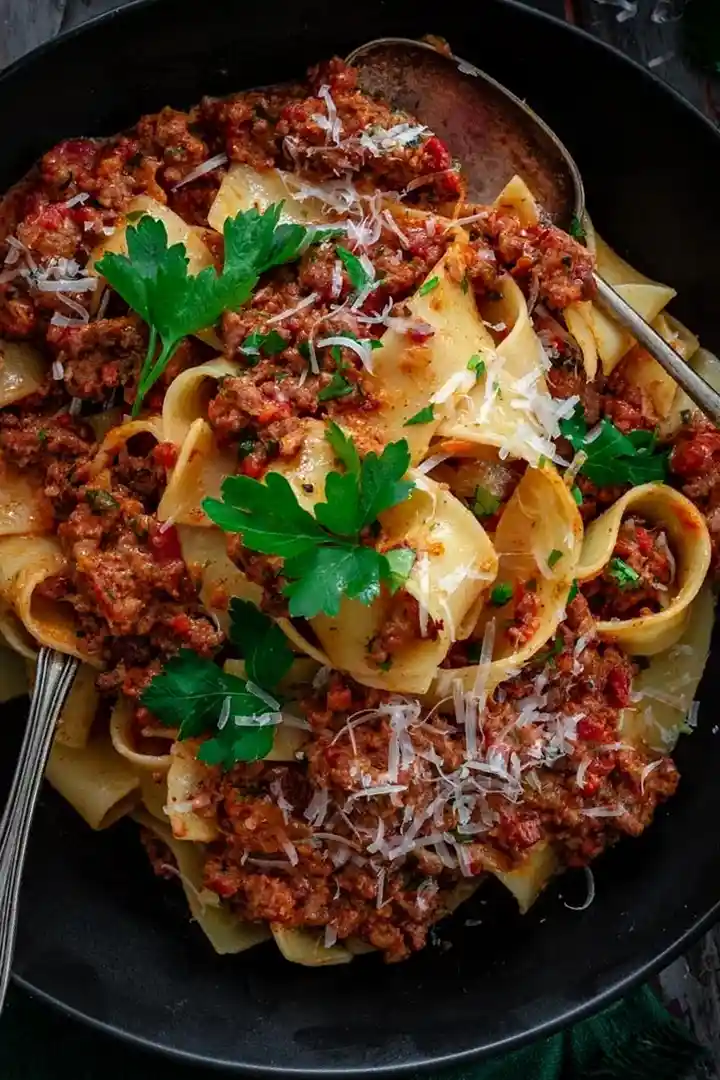
List of ingredients
- 1 tablespoon extra-virgin olive oil – used for sautéing vegetables.
- 2 tablespoons butter – adds richness to the soffritto.
- 1 large onion, finely chopped – provides a sweet base.
- 2 large carrots, finely chopped – adds natural sweetness and color.
- 2 celery stalks, finely chopped – contributes earthy notes.
- 3 cloves garlic, chopped – adds aromatic pungency.
- 4 ounces smoked beef, diced – a savory substitute for pancetta.
- 1 pound ground beef (20% fat) – provides essential flavor and texture.
- 1 pound ground turkey – a lean alternative to ground pork.
- Salt and freshly ground pepper, to taste – for seasoning throughout the process.
- 1 cup vegetable broth mixed with 1 tablespoon lemon juice – a non-alcoholic replacement for white wine.
- 1 (28 ounces) can peeled San Marzano tomatoes, hand crushed – the gold standard for Italian sauces.
- 1 cup whole milk – helps tenderize the meat and thicken the sauce.
- ½ teaspoon freshly grated nutmeg – adds a subtle, warm depth.
- 1 cup heavy cream, optional – for added indulgence and smoothness.
- 1 cup grated parmesan cheese (microbial-rennet) – adds salty, nutty flavor.
- ½ cup chopped parsley – for a fresh finish.
step-by-step instructions
- Sauté the Soffritto: Heat olive oil and butter in a large Dutch oven over medium-high heat until the butter is melted. Add the chopped onion, carrots, and celery, sautéing for 5 to 8 minutes until softened and lightly caramelized.
- Add Aromatics: Stir in the chopped garlic and cook for another 2 minutes until fragrant. Season the mixture with salt and pepper, then use a slotted spoon to remove the vegetables to a plate and set them aside.
- Brown the Savory Beef: If needed, add a bit more olive oil to the pot. Add the diced smoked beef and cook until golden brown, approximately 5 minutes. Remove the beef and reserve it on the plate with the vegetables.
- Sear the Ground Meats: Working in 2 to 3 batches to avoid overcrowding, add the ground beef and ground turkey. Season with salt and pepper and cook for 10 to 15 minutes, breaking up lumps with a wooden spoon. Avoid stirring too frequently to allow the meat to caramelize and create brown bits on the bottom of the pot.
- Deglaze the Pot: Return the reserved soffritto and smoked beef to the pot. Pour in the vegetable broth and lemon juice mixture, scraping the bottom of the pan to incorporate all the browned flavor bits. Cook for 2 to 3 minutes until the liquid has mostly evaporated.
- Simmer the Sauce: Stir in the hand-crushed San Marzano tomatoes, whole milk, nutmeg, and a pinch of salt and pepper. Bring the mixture to a boil, then immediately reduce the heat to a low simmer.
- Slow Cook: Cover the pot and cook for 3 to 4 hours, stirring occasionally, until the sauce is thick and the liquids have reduced. If the sauce is still too liquid, increase the heat slightly and boil while stirring frequently until the desired consistency is reached.
- Finish and Emulsify: Use a spoon to skim off and discard any fat that has floated to the top. Stir in the optional heavy cream, grated parmesan cheese, and chopped parsley. Stir vigorously to ensure the sauce is emulsified and smooth.
- Final Seasoning: Taste the sauce and adjust the salt and pepper as needed. Serve immediately by tossing with wide pasta such as tagliatelle or pappardelle.
Professional Cooking Tips for Texture and Flavor
Use a Heavy-Bottomed Dutch Oven
A cast-iron or heavy-bottomed Dutch oven is essential for this recipe because it distributes heat evenly. This prevents the meat from burning in one spot and allows for a consistent simmer over several hours. The heavy lid also helps maintain a steady internal temperature.
Brown Meat in Small Batches
Crowding the pan lowers the temperature of the meat, causing it to steam in its own juices rather than sear. By browning in batches, you ensure that the Maillard reaction occurs, creating the deep brown crust that is responsible for the sauce’s rich flavor.
Fine Vegetable Chopping
For a smooth consistency, chop the onion, carrots, and celery as finely as possible. Using a food processor is an efficient way to achieve a uniform dice that will almost melt into the sauce during the long simmering process.
Managing the Simmer Temperature
Keep the heat at the lowest setting that still produces occasional bubbles. If the sauce boils too vigorously, the meat can become tough and the milk may separate. A gentle simmer allows the collagen in the meat to break down into gelatin, resulting in a velvety texture.
Ingredient Substitutions and Dietary Adjustments
Beef-Based Alternatives for Pancetta
To avoid pork, use diced smoked beef or high-quality turkey bacon. These provide the necessary saltiness and smoky depth required to balance the sweetness of the carrots and onions in the soffritto.
Lean Meat Swaps for Ground Pork
Ground turkey or ground chicken are excellent substitutes for ground pork. To maintain the richness lost from the pork fat, you can add a small amount of extra olive oil or a teaspoon of tomato paste for added body.
Non-Alcoholic Deglazing Liquids
The acidity of white wine is traditionally used to cut through the richness of the meat. A combination of vegetable broth and a splash of lemon juice or white wine vinegar provides a similar acidic profile without the alcohol content.
Dairy-Free Creaminess Options
For a dairy-free version, replace the whole milk with unsweetened cashew milk and the heavy cream with full-fat coconut cream. Use a nutritional yeast-based parmesan alternative to maintain the salty, umami flavor profile.
Ideal Pasta Pairings for Heavy Ragù
Choosing Tagliatelle for Classic Texture
Tagliatelle is a traditional choice because its wide, flat shape provides a large surface area for the thick sauce to cling to. This ensures that every bite contains an equal balance of pasta and meat sauce.
Using Pappardelle for Hearty Meals
Pappardelle is even wider than tagliatelle and is particularly well-suited for chunky Bolognese. The broad ribbons are sturdy enough to support the weight of the slow-cooked beef and turkey without breaking.
Selecting Penne for Sauce Capture
If you prefer a short pasta, penne is a great option. The hollow center of the tube captures the sauce inside, making it an excellent choice for those who enjoy a more concentrated burst of flavor in every mouthful.
Integrating Sauce into Lasagna
Bolognese sauce is the primary filling for traditional Lasagna alla Bolognese. Layer the sauce with béchamel and pasta sheets for a structured dish that highlights the richness of the slow-cooked ragù.
Storage and Preservation Methods
Refrigeration Guidelines
Store leftover Bolognese sauce in an airtight glass container in the refrigerator for up to three days. Allow the sauce to cool completely before sealing the lid to prevent condensation, which can affect the texture.
Freezing for Long-Term Use
This sauce freezes exceptionally well for up to three months. For best results, omit the parmesan cheese and heavy cream before freezing; these ingredients are best added fresh during the reheating process.
Using Freezer Bags for Space Saving
Freeze the sauce in heavy-duty freezer bags, flattening them out before placing them in the freezer. This allows the sauce to freeze and thaw more quickly and saves significant space in your freezer.
Thawing Process
Thaw frozen sauce overnight in the refrigerator to ensure it warms evenly. If you are in a rush, you can reheat it directly in a saucepan over low heat, adding a splash of water to prevent sticking.
Reheating Instructions for Optimal Quality
The Saucepan Method
Reheating in a saucepan is superior to using a microwave because it allows you to control the temperature. Heat the sauce slowly over medium-low heat, stirring occasionally to prevent the bottom from scorching.
Incorporating Pasta Cooking Water
When reheating, add two to three tablespoons of starchy pasta cooking water to the sauce. This helps emulsify the fats and creates a glossy coating that allows the sauce to adhere better to the pasta.
Adding Fresh Finishes
After reheating the sauce, stir in a fresh pinch of parsley and a sprinkle of parmesan cheese. This restores the bright, fresh notes that can be muted during the cooling and freezing process.
Preventing Overheating
Avoid boiling the sauce rapidly during reheating, as this can cause the fats to separate. Keep the heat low and stir constantly until the sauce is warmed through.
Troubleshooting Common Sauce Issues
Fixing Excess Acidity
If the sauce tastes too acidic due to the tomatoes, stir in a small pinch of sugar or a teaspoon of butter. This neutralizes the sharp notes and rounds out the overall flavor profile.
Handling Fat Separation
It is common for fat to separate and float to the top of a slow-cooked sauce. Use a wide spoon to skim the oil off the surface and discard it before adding the final cream and cheese to ensure a smooth emulsion.
Adjusting a Sauce That is Too Thin
If the sauce remains too liquid after four hours, remove the lid and increase the heat to medium. Simmer without a cover for an additional 20 to 30 minutes, stirring frequently to encourage evaporation.
Correcting Over-Salted Sauce
If the sauce is too salty, you can add a peeled, halved potato to the pot and simmer for 15 minutes. The potato absorbs excess salt before you remove it prior to serving.
Frequently Asked Questions
Can I use a slow cooker for this recipe?
Yes, you can use a slow cooker. Sauté the vegetables and brown the meats in a skillet first, then transfer everything to the slow cooker and cook on low for 6 to 8 hours.
What is soffritto exactly?
Soffritto is a traditional Italian aromatic base consisting of finely diced onion, celery, and carrots sautéed in oil or butter. It provides the fundamental flavor foundation for most Italian ragùs.
Why is milk added to a meat sauce?
Milk is used to tenderize the meat fibers and mellow out the acidity of the tomatoes. It also contributes to the creamy, velvety consistency characteristic of a true Bolognese.
Can I make this sauce in one hour?
While you can cook it in one hour, it will not have the same depth of flavor or thickness. The long simmering time is necessary for the flavors to meld and the meat to become tender.
Which tomatoes are best for Bolognese?
San Marzano tomatoes are highly recommended because they are less acidic and have a sweeter, meatier texture than standard canned tomatoes.
} Print
Hearty Slow-Cooked Bolognese Sauce
- Total Time: 4 hours 30 minutes
- Yield: 8 servings 1x
- Diet: General
Description
A classic Bolognese Sauce should be in every home cook’s repertoire! My version is smooth, rich, hearty and slow cooked to perfection. The very essence of Italian comfort food!
Ingredients
- 1 tablespoon extra-virgin olive oil
- 2 tablespoons butter
- 1 large onion, finely chopped
- 2 large carrots, finely chopped
- 2 celery stalks, finely chopped
- 3 cloves garlic, chopped
- 4 ounces beef bacon, diced
- 2 pounds ground beef (20% fat)
- Salt and freshly ground pepper, to taste
- 1 cup vegetable broth
- 1 (28 ounces) can peeled San Marzano tomatoes, hand crushed
- 1 cup whole milk
- ½ teaspoon freshly grated nutmeg
- 1 cup heavy cream, optional
- 1 cup grated parmesan cheese (microbial-rennet)
- ½ cup chopped parsley
Instructions
- Step: Heat olive oil and butter in a large Dutch oven, over medium high heat, until the butter is melted. Add onion, carrots, and celery, and sauté until softened and beginning to caramelize, 5 to 8 minutes. Add garlic and sauté for another couple of minutes, until fragrant. Season with salt and pepper and, using a slotted spoon, remove the soffritto to a plate and reserve.
- Step: Add more olive oil, if needed, and add the beef bacon. Cook until golden brown, about 5 minutes. Remove beef bacon and reserve. Working in 2-3 batches so not to over crowd the pot, add ground beef. Season with salt and pepper and cook, breaking lumps with a wooden spoon but resisting the urge to stir too often, until browned, about 10 – 15 minutes.
- Step: Return the reserved soffritto and beef bacon to the pot. Add the vegetable broth and deglaze the pan, scraping all the browned bits stuck to the bottom. Cook until the broth is mostly evaporated, about 2 to 3 minutes. Stir in the crushed tomatoes, milk, nutmeg and a pinch of salt and pepper. Bring to a boil and then lower the heat to a simmer.
- Step: Cover and cook, stirring occasionally, for 3 to 4 hours or until the liquids have reduced and the sauce is thick. If, by then, the sauce is still too liquid-y, you can turn the heat up and boil – stirring frequently – until it reduces. Some of the fat will separate and float to the top, making it easier to skim it off with a spoon. Discard.
- Step: Stir in heavy cream, parmesan cheese and parsley. Stir vigorously to emulsify. Taste for seasoning and adjust salt and pepper, if necessary.
- Step: Serve, tossed with a wide pasta, like tagliatelle or pappardelle.
Notes
Warning: Even though we are not stirring the pot at all times, you should never leave it unattended. The addition of heavy cream is optional; it acts as an emulsifier to make the sauce extra creamy and indulgent.
- Prep Time: 30 minutes
- Cook Time: 4 hours
- Category: Main Course
- Method: Slow Cooking
- Cuisine: Italian
Nutrition
- Serving Size: 1 serving
- Calories: 588 kcal
- Sugar: 4 g
- Sodium: 401 mg
- Fat: 47 g
- Saturated Fat: 21 g
- Unsaturated Fat: 22 g
- Trans Fat: 1 g
- Carbohydrates: 8 g
- Fiber: 1 g
- Protein: 28 g
- Cholesterol: 146 mg