This light and savory broth is a staple of Hibachi-style dining, serving as a restorative appetizer. It is a low-calorie option that uses a blend of meat broths and aromatics to create a clean yet deep flavor profile.
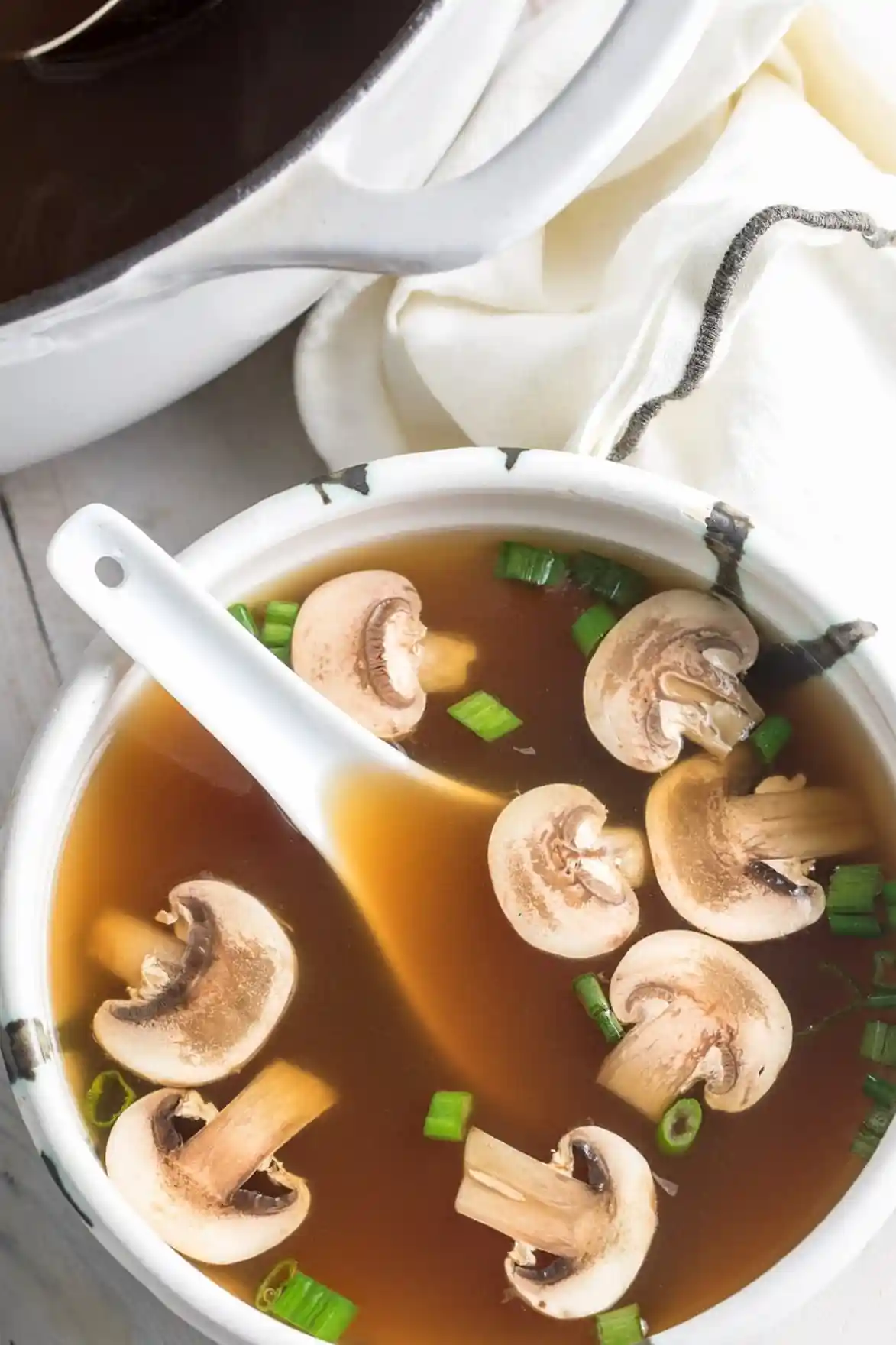
List of ingredients
- 2 teaspoons sesame oil (or peanut oil) – used for sautéing the aromatics.
- 8 cups chicken broth – provides a light and savory base.
- 4 cups beef broth – adds depth, richness, and a darker color.
- 4 cups water – balances the intensity and compensates for evaporation.
- 1 large sweet onion, peeled and cut into wedges – adds a mild, natural sweetness.
- 6 cloves garlic, peeled and smashed – provides essential aromatic depth.
- 2 large carrots, cut into chunks – adds sweetness and enhances the broth.
- 2 inch piece fresh ginger, sliced – adds a pungent, warming flavor.
- 4 whole scallions, chopped – used as a fresh, crisp garnish.
- 10 button mushrooms, sliced thin – used as a fresh, earthy garnish.
- salt – added to taste for final seasoning.
step-by-step instructions
- Sear the aromatics: Place a large 8-quart stock pot over medium-high heat and add the oil. Sauté the onion, garlic, carrots, and ginger until they are caramelized on all sides, being careful not to burn the garlic.
- Simmer the liquids: Pour in the chicken broth, beef broth, and water, then bring the mixture to a boil. Reduce the heat to a low boil and let the soup simmer for at least one hour to extract maximum flavor.
- Strain the broth: Use a skimmer or slotted spoon to remove the cooked vegetables from the pot. Taste the liquid and add salt as needed to reach your preferred seasoning level.
- Garnish and serve: Ladle the hot broth into bowls. Top each serving with a sprinkle of chopped scallions and thinly sliced mushrooms.
Optimizing Broth Selection and Ratios
Using Low Sodium Broths for Flavor Control
Choosing low-sodium versions of chicken and beef broth allows you to control the salt levels precisely. Since the broth simmers and reduces, the salt concentration increases, so starting with low-sodium options prevents the final soup from becoming too salty.
The Logic of Combining Meat Broths
Using both chicken and beef broths creates a more complex flavor than using a single type. The chicken broth keeps the soup light and clear, while the beef broth provides a robust, meaty undertone characteristic of Hibachi restaurants.
Managing Evaporation with Added Water
Adding four cups of water prevents the broth from reducing too quickly during the hour-long simmer. This ensures you have a sufficient yield of ten cups and prevents the flavors from becoming overly concentrated or salty.
Mastering the Searing Process
Preventing Garlic from Burning
Garlic burns much faster than onions and carrots, which can create a bitter taste in the broth. Add the garlic to the pot carefully and monitor the heat, ensuring it only browns slightly before the liquid is added.
Achieving Proper Onion Caramelization
Searing the sweet onion wedges until they are golden brown develops the Maillard reaction, which adds a layer of sweetness and depth. This step is crucial for achieving a rich flavor in a soup that is otherwise very lean.
The Importance of Searing Ginger and Carrots
Quickly searing the ginger slices and carrot chunks releases their natural oils and sugars. This process integrates the flavors more effectively into the liquid than if the vegetables were simply boiled.
Refining the Simmering Technique
Identifying a True Low Boil
A low boil, or simmer, is characterized by small, occasional bubbles breaking the surface rather than a rolling boil. Maintaining this temperature prevents the broth from becoming cloudy and ensures a clear appearance.
The Impact of Simmering Duration
Simmering for at least one hour allows the aromatics to fully infuse the liquids. If you have more time, a longer simmer can further deepen the flavor, though one hour is the minimum for a robust taste.
Skimming Impurities for Maximum Clarity
Using a skimmer to remove foam or floating particles during the simmering process helps maintain a transparent broth. This technique ensures the final product looks professional and clean.
Ingredient Substitutions and Alternatives
Replacing Sesame Oil with Peanut Oil
If you prefer a more neutral taste, peanut oil is an excellent substitute for sesame oil. While sesame oil adds a subtle nuttiness, peanut oil has a high smoke point that is ideal for searing vegetables.
Using All-Chicken Broth for a Lighter Profile
For a clearer and lighter-tasting soup, replace the beef broth with additional chicken broth. This version will have a pale gold color and a milder flavor, making it an even lighter appetizer.
Vegetarian Alternatives Using Mushroom Broth
To make this recipe vegetarian, substitute the chicken and beef broths with a high-quality mushroom or vegetable broth. This maintains the earthy depth of the soup while removing all animal products.
Substituting Fresh Ginger with Ground Ginger
If fresh ginger root is unavailable, you can use ground ginger powder. Use approximately 1/4 teaspoon of powder for every inch of fresh ginger, adding it during the simmering stage rather than the searing stage.
Professional Garnishing Tips
Slicing Button Mushrooms for Uniformity
Use a very sharp knife to slice the button mushrooms as thinly as possible. Thin slices allow the mushrooms to soften slightly from the heat of the broth without losing their structural integrity.
Chopping Scallions for Visual Appeal
Cut the scallions on a slight diagonal (bias cut) to create elegant, oval shapes. This technique increases the surface area and improves the presentation of the garnish on top of the broth.
Adding Garnishes at the Moment of Service
Always add the raw mushrooms and scallions immediately before serving. This preserves the bright green color of the onions and the crisp texture of the mushrooms.
Storage and Preservation Methods
Proper Cooling Before Refrigeration
Allow the strained broth to cool to room temperature before transferring it to a container. Putting boiling liquid directly into the refrigerator can raise the internal temperature of the fridge and risk spoilage.
Air-Tight Container Selection
Store the broth in glass or BPA-free plastic airtight containers to prevent it from absorbing odors from other foods. Ensure the lid is sealed tightly to keep the liquid fresh for up to five days.
Long-Term Freezing in Freezer Bags
For longer storage, pour the cooled broth into heavy-duty freezer bags, squeezing out as much air as possible. Lay the bags flat to save space and freeze for up to three months.
Reheating and Serving Advice
Stovetop Reheating for Even Heat
Reheating the soup in a small sauce pot over medium-low heat is the best method. This allows you to monitor the temperature and add a splash of water if the broth has thickened during storage.
Microwave Reheating Precautions
When using a microwave, heat the broth in short intervals and stir between each session. This prevents hot spots and reduces the risk of the liquid boiling over the sides of the bowl.
Refreshing the Soup Before Serving
If you are reheating stored soup, do not include the garnishes in the storage container. Always add fresh scallions and mushrooms to the reheated broth just before it reaches the table.
Common Troubleshooting Solutions
Correcting an Overly Salty Broth
If the broth tastes too salty after simmering, dilute it by adding small amounts of water or unsalted chicken broth. Stir well and taste again until the salt level is balanced.
Dealing with Cloudy Broth
Cloudiness is often caused by boiling the soup too vigorously. If this happens, you can strain the broth through a fine-mesh sieve lined with cheesecloth to remove fine particles.
Fixing a Lack of Depth in Flavor
If the broth feels thin or lacks depth, stir in a small amount of soy sauce. The fermented notes of the soy sauce enhance the savory quality of the beef and chicken broths.
Frequently Asked Questions
What is the difference between Japanese clear soup and miso soup?
Japanese clear soup relies on simmered broths and vegetables for flavor and remains transparent. Miso soup includes miso paste, which creates a cloudy appearance and a distinct salty, fermented taste.
Is clear soup good for you?
Yes, this soup is generally healthy as it is low in fat, carbohydrates, and calories. It provides hydration and utilizes aromatic vegetables known for their health-promoting properties.
How should I store leftover clear soup?
Store leftovers in an airtight container in the refrigerator for up to five days. It can also be frozen in zip-top bags for several months.
Can I use different types of mushrooms?
Yes, while button mushrooms are traditional, shiitake or enoki mushrooms also work well. Shiitake adds a stronger earthy flavor, while enoki provides a delicate, thread-like texture.
Does the soup taste better the next day?
Yes, making the soup a day in advance allows the flavors of the aromatics to fully meld with the broths. Many find the taste is richer and more cohesive after resting in the refrigerator.
Print
Japanese Clear Soup
- Total Time: 70 minutes
- Yield: 10 cups 1x
- Diet: Dairy-Free
Description
This classic Hibachi restaurant favorite is a light and healthy soup to soothe the soul.
Ingredients
- 2 teaspoons sesame oil
- 8 cups chicken broth
- 4 cups beef broth
- 4 cups water
- 1 large sweet onion, peeled and cut into wedges
- 6 cloves garlic, peeled and smashed
- 2 large carrots, cut into chunks
- 2 inch piece fresh ginger, sliced
- 4 whole scallions, chopped
- 10 button mushrooms, sliced thin
- salt to taste
Instructions
- Step 1: Place a large 8-quart stock pot over medium-high heat. Add the oil and place the onion, garlic, carrots, and ginger in the pot. Sear the veggies on all sides to caramelize, making sure not to burn the garlic.
- Step 2: Pour in the chicken broth, beef broth, and water. Bring to a boil. Lower the heat to a low boil and simmer for at least one hour.
- Step 3: Use a skimmer to remove the vegetables from the broth. Taste, then salt as needed.
- Step 4: To serve: ladle hot broth into bowls and sprinkle chopped scallion and sliced mushrooms over the top.
Notes
In restaurants, this soup is made several days in advance to allow the flavors to deepen. It tastes better on the second day. You can also add soy sauce to taste to deepen the flavor.
- Prep Time: 5 minutes
- Cook Time: 65 minutes
- Category: Soup
- Method: Simmering
- Cuisine: Japanese
Nutrition
- Serving Size: 1 cup
- Calories: 46 kcal
- Sugar: 2 g
- Sodium: 466 mg
- Fat: 1 g
- Saturated Fat: 0 g
- Unsaturated Fat: 1 g
- Trans Fat: 0 g
- Carbohydrates: 5 g
- Fiber: 0 g
- Protein: 3 g
- Cholesterol: 0 mg