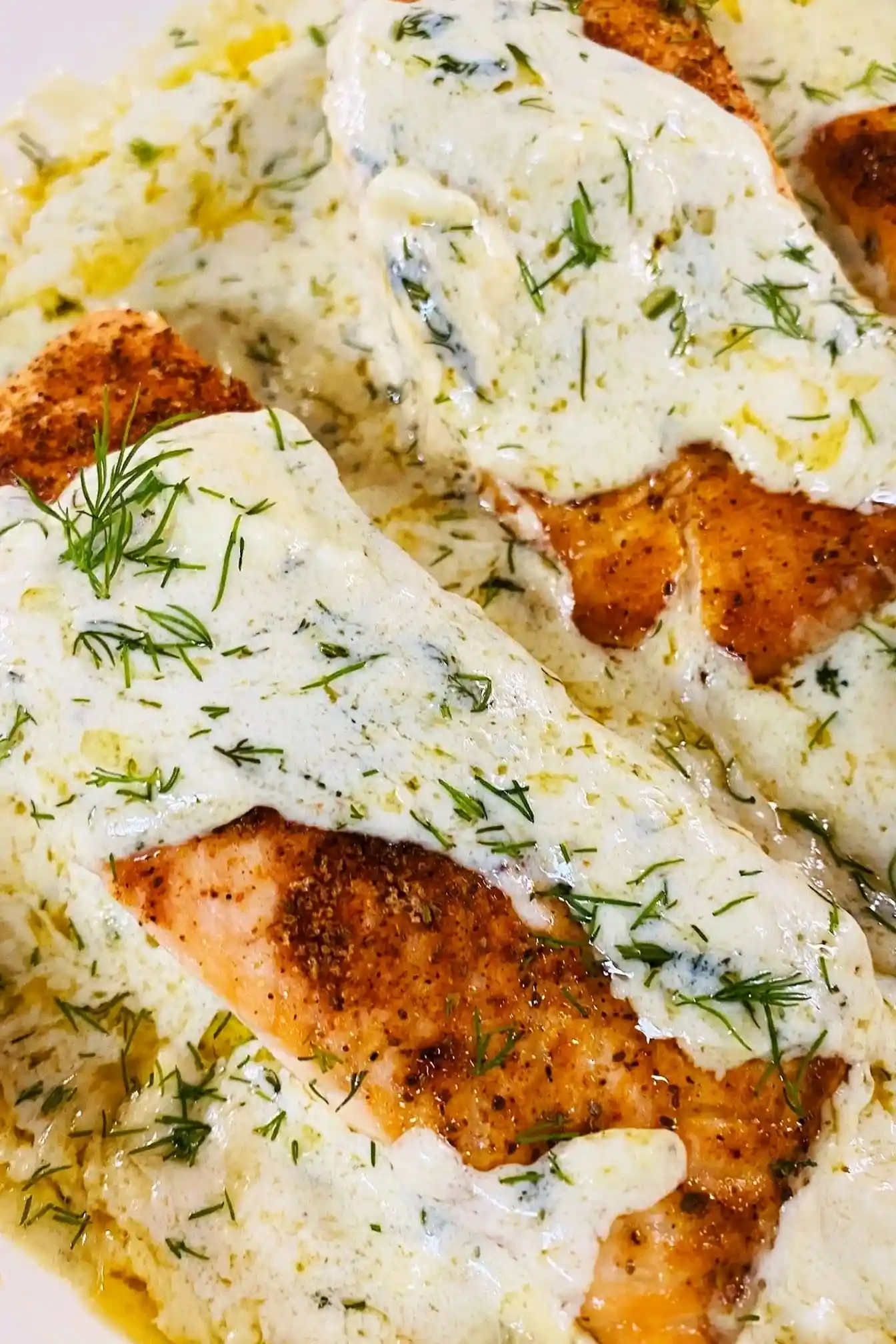
This dish combines tender, seasoned salmon fillets with a rich, salty feta and dill cream sauce. It is a versatile meal that can be prepared quickly using either an oven or an air fryer.
List of ingredients
- 4 salmon fillets (3 to 4 ounces each) – skin-on or skinless based on preference.
- 1 tablespoon lemon juice – provides essential acidity to balance the cream.
- Old Bay seasoning – used for both the fillets and the sauce for a consistent flavor profile.
- 2 tablespoons butter – adds richness and helps the sauce emulsion.
- 1 1/4 cups heavy cream – the base for the decadent cream sauce.
- 1 tablespoon Dijon mustard – adds a sharp, tangy depth to the cream.
- 4 oz crumbled feta cheese – provides a salty, tangy punch.
- 3 tablespoons chopped fresh dill – adds a bright, herbaceous finish.
step-by-step instructions
- Season the fish: Drizzle the salmon fillets with lemon juice and sprinkle generously with Old Bay seasoning.
- Cook the salmon: Place the fillets in an air fryer at 400 degrees for 8 to 10 minutes, or arrange them on a baking sheet and bake in the oven at 400 degrees for 8 to 10 minutes.
- Start the sauce: Place a skillet over high heat and add the butter, heavy cream, Dijon mustard, and a pinch of Old Bay seasoning.
- Simmer the base: Once the mixture begins bubbling, reduce the heat to medium-low and let it simmer for approximately three minutes, stirring occasionally.
- Incorporate cheese and herbs: Stir in the crumbled feta cheese and the majority of the fresh dill, reserving a small amount for the final garnish.
- Thicken and serve: Continue cooking for 2 to 3 more minutes, stirring occasionally, until the sauce reaches your desired thickness. Pour the sauce over the cooked salmon and garnish with the remaining fresh dill.
Expert Tips for Perfect Salmon
Use a Digital Meat Thermometer
To ensure the salmon is cooked perfectly without becoming dry, use an instant-read thermometer. Aim for an internal temperature of 135 to 145 degrees Fahrenheit. Removing the fish slightly early allows carryover cooking to finish the process while keeping the center moist.
Pat the Fillets Dry Before Seasoning
Use a paper towel to remove excess moisture from the surface of the salmon before applying lemon juice and seasonings. This helps the Old Bay seasoning adhere better and allows the fish to sear or roast more effectively. Dry surfaces prevent the salmon from steaming, which can result in a mushy texture.
Avoid Overcrowding the Pan or Basket
When using the oven or air fryer, ensure there is enough space between each fillet for air to circulate. Overcrowding can drop the temperature of the cooking environment and lead to uneven cooking. If you have a small air fryer, cook the fillets in batches to maintain a consistent 400-degree heat.
Customizing the Feta Dill Sauce
Swap Feta for Goat Cheese
For a creamier, less salty profile, replace the crumbled feta with equal parts soft goat cheese. Goat cheese melts more smoothly into the heavy cream, creating a more homogenous sauce. You may need to add an extra pinch of salt to compensate for the lack of saltiness found in feta.
Integrate Fresh Garlic
To add a more pungent, aromatic quality to the sauce, sauté one clove of minced garlic in the butter before adding the heavy cream. Ensure the garlic is fragrant but not browned to avoid a bitter taste. This addition complements the dill and mustard perfectly.
Use Greek Yogurt for a Lighter Texture
If you prefer a less decadent sauce, replace half of the heavy cream with plain Greek yogurt. Stir the yogurt in at the very end over low heat to prevent it from curdling. This maintains the tanginess of the sauce while reducing the overall fat content.
Recommended Side Dish Pairings
Lemon Butter Asparagus
Steamed or roasted asparagus provides a crisp, green contrast to the richness of the cream sauce. Toss the spears in melted butter and a squeeze of lemon juice to mirror the flavors of the salmon. Roast them at the same temperature as the salmon for a coordinated cooking time.
Fluffy Quinoa or Wild Rice
A bed of quinoa or wild rice is ideal for soaking up the excess feta dill sauce. These grains offer a nutty flavor and a hearty texture that balances the softness of the fish. Cook the grains in vegetable broth instead of water for added depth of flavor.
Sautéed Baby Spinach
Fresh baby spinach sautéed with a hint of garlic and olive oil is a nutrient-dense pairing. The slight bitterness of the spinach cuts through the richness of the heavy cream and feta. Keep the sauté time short to maintain a vibrant green color.
Storage and Reheating Advice
Refrigeration Guidelines
Store leftover salmon and sauce in separate airtight containers in the refrigerator for up to three days. Separating the components prevents the salmon from absorbing too much moisture from the sauce, which can affect the texture. Ensure the food is cooled slightly before sealing the containers.
Gentle Reheating Methods
To reheat the salmon, use a low-temperature oven or a toaster oven to avoid overcooking the fish. For the sauce, warm it in a small saucepan over low heat, adding a tablespoon of water or cream if it has thickened too much in the fridge. Avoid using a microwave on high power, as this can cause the cream sauce to separate.
Troubleshooting Common Issues
Preventing the Sauce from Breaking
If the sauce looks grainy or the oil is separating, it is likely due to overheating. Lower the heat immediately and whisk in a teaspoon of cold heavy cream or water to bring the emulsion back together. Always add the feta cheese slowly while stirring to ensure it integrates smoothly.
Fixing a Sauce That Is Too Thick
Because feta and heavy cream both thicken as they reduce, the sauce may become too dense. Stir in a small amount of milk or vegetable broth one tablespoon at a time until the desired consistency is reached. Do this over low heat to maintain the sauce’s stability.
Dealing with Salmon Sticking to the Pan
If the salmon sticks to your baking sheet or air fryer basket, use a piece of parchment paper or a light coating of high-smoke-point oil. Do not try to flip the fish too early; once the salmon develops a proper crust, it will naturally release from the surface. Using a flexible fish spatula can also help lift the fillets safely.
Frequently Asked Questions
Can I use frozen salmon fillets?
Yes, you can use frozen fillets, but they must be completely thawed in the refrigerator before seasoning. Cooking frozen salmon directly can lead to uneven cooking and excessive water release, which prevents the fillets from roasting properly. Pat them dry thoroughly after thawing.
Which type of feta cheese is best for this recipe?
Crumbled feta is the most convenient, but feta in brine often provides a more authentic, salty flavor. If using brine-packed feta, drain it well and crumble it by hand before adding it to the sauce. Avoid pre-shredded feta that contains anti-caking agents, as it may not melt as smoothly.
Can I substitute the Dijon mustard?
You can use whole grain mustard for a more rustic texture and a slightly milder flavor. If you do not have mustard, a small amount of lemon zest and a pinch of extra salt can provide some of the necessary tang. However, the mustard helps emulsify the sauce, so it is highly recommended.
Is this recipe suitable for an oven without a convection setting?
Yes, it works perfectly in a standard oven. Simply ensure your oven is fully preheated to 400 degrees before sliding the baking sheet inside. The cooking time may vary by a minute or two depending on the calibration of your specific appliance.
Print
Salmon with Creamy Feta and Dill Sauce
- Total Time: 25 minutes
- Yield: 4 servings 1x
- Diet: Keto
Description
Salmon with Feta Dill Sauce may seem like a fancy meal but it is an easy to make delicious, decadent dinner!
Ingredients
- 4 salmon fillets (3 to 4 ounces each)
- 1 tablespoon lemon juice
- Old Bay seasoning
- 2 tablespoons butter
- 1 1/4 cups heavy cream
- 1 tablespoon Dijon mustard
- 4 oz crumbled feta cheese
- 3 tablespoons chopped fresh dill
Instructions
- Step 1: Season the salmon fillets with lemon juice and season with the old Bay seasoning. Cook the salmon in the air fryer at 400 degrees for 8 to 10 minutes, or in the oven at 400 degrees on a baking sheet for 8 to 10 minutes.
- Step 2: Set a skillet over high heat and add the butter, heavy cream, Dijon mustard, and some old Bay seasoning. Once it’s bubbling reduce the heat to medium low and simmer for three minutes, stirring a few times.
- Step 3: Add the feta cheese crumbles and most of the fresh dill, save some to garnish when serving.
- Step 4: Cook 2 to 3 more minutes stirring a few times, serve the cream sauce over the salmon when the sauce is at the thickness you prefer. Garnish with the extra fresh dill.
Notes
This is a keto friendly and low carb meal.
- Prep Time: 10 minutes
- Cook Time: 15 minutes
- Category: Main Course
- Method: Air Fryer or Oven
- Cuisine: American
Nutrition
- Serving Size: 1 fillet with sauce
- Calories: 311 kcal
- Sugar: 3 g
- Sodium: 680 mg
- Fat: 22 g
- Saturated Fat: 12 g
- Unsaturated Fat: 10 g
- Trans Fat: 0 g
- Carbohydrates: 6 g
- Fiber: 1 g
- Protein: 18 g
- Cholesterol: 95 mg