This hearty one-pot meal captures all the traditional flavors of baked cabbage rolls without the time-consuming rolling process. It is a filling, nutrient-dense dinner option that is perfect for busy weeknights.
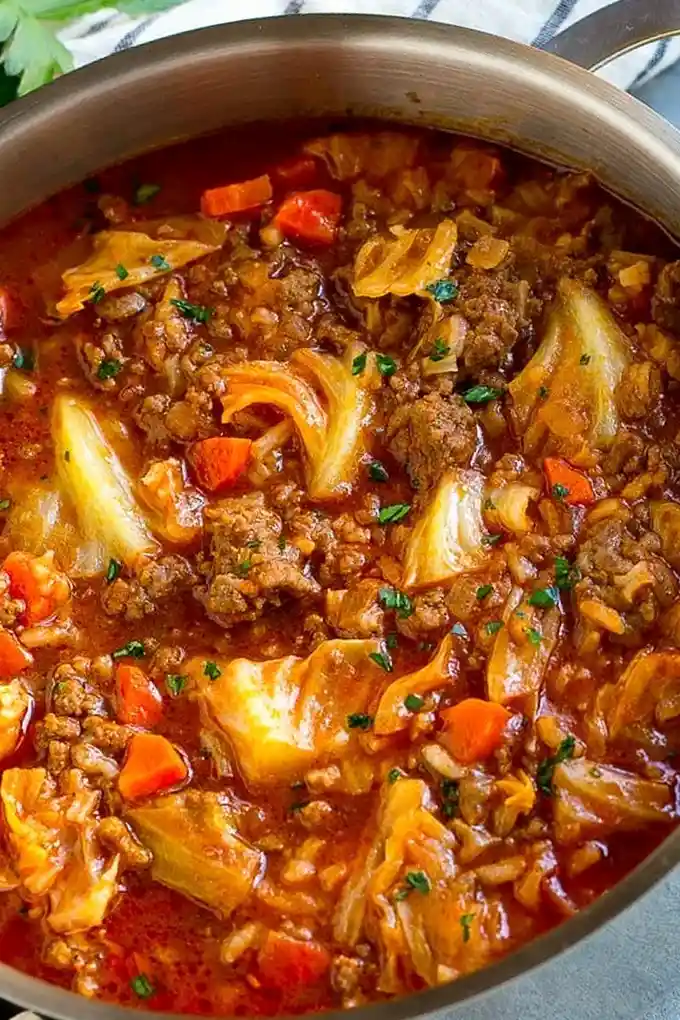
List of ingredients
- 2 teaspoons olive oil – used for sautéing the beef and aromatics.
- salt and pepper to taste – basic seasoning for the meat and broth.
- 1 pound ground beef (90% lean) – provides a rich base without excessive grease.
- 1 onion (finely diced) – adds aromatic depth to the soup.
- 2 teaspoons minced garlic – enhances the overall savory flavor.
- 4 cups coarsely chopped green cabbage – the primary vegetable providing texture and sweetness.
- 2 carrots (peeled, quartered and sliced) – adds color and mild sweetness.
- 4 cups beef broth – the liquid base that carries the flavors.
- 3 8 ounce cans tomato sauce – creates a rich, tangy tomato base.
- 1/2 cup uncooked long grain rice – adds substance and thickens the soup slightly.
- 1 bay leaf – adds a subtle herbal note during the simmering process.
- 3 tablespoons brown sugar – balances the acidity of the tomato sauce.
- 2 tablespoons parsley – used as a fresh garnish at the end.
step-by-step instructions
- Brown the beef: Heat the olive oil in a large pot over medium high heat. Add the ground beef and season with salt and pepper to taste. Cook, breaking up the meat with a spatula, until beef is browned, approximately 4-5 minutes.
- Sauté aromatics: Add the onion and garlic to the pot with the beef and cook for 2-3 minutes until softened.
- Combine ingredients: Add the cabbage, carrots, beef broth, tomato sauce, rice, bay leaf and brown sugar to the pot. Season with salt and pepper to taste.
- Simmer: Bring the mixture to a simmer and cook for 25 minutes or until the rice is tender.
- Final touch: Remove the bay leaf and discard it. Sprinkle with parsley and serve.
Beef Selection and Preparation Tips
Choosing the Right Lean Percentage
Using 90% lean ground beef is recommended to keep the soup from becoming too oily. If you use a higher fat percentage, such as 80% lean, you should drain the excess grease after browning the meat but before adding the onions.
Achieving a Proper Brown
Ensure the pot is hot before adding the beef to achieve a good sear. Breaking the meat into small, uniform pieces allows for even cooking and ensures the meat integrates well with the liquid ingredients.
Managing Meat Clumps
Use a sturdy spatula or wooden spoon to break the beef apart during the first few minutes of cooking. This prevents large chunks of meat from forming, which ensures every spoonful of soup has a balanced ratio of ingredients.
Vegetable Preparation Details
Chopping Cabbage for Consistency
Cut the green cabbage into coarse pieces about one inch in size. If the pieces are too small, they may overcook and disappear into the broth; if they are too large, they may not soften completely within the 25-minute simmer time.
Slicing Carrots for Even Cooking
Quarter the carrots lengthwise before slicing them into rounds. This creates uniform pieces that cook at the same rate as the cabbage and rice, preventing some pieces from being raw while others are mushy.
Sautéing the Aromatics
Cook the onions and garlic only after the beef has browned. Garlic burns quickly and can become bitter, so adding it toward the end of the browning process ensures it releases its flavor without scorching.
Rice Varieties and Texture Control
Using Long Grain White Rice
Long grain white rice is ideal because it maintains its individual shape better than short grain varieties. This prevents the soup from becoming overly thick or porridge-like as it sits.
Substituting with Brown Rice
If you prefer brown rice for added fiber, be aware that it requires a significantly longer cooking time. You will need to increase the simmering time by approximately 20 minutes to ensure the grains are tender.
Preventing Mushy Rice
Do not overcook the soup beyond the time it takes for the rice to reach tenderness. If the soup is simmered too long, the starch from the rice will break down, resulting in a cloudy broth and soft grains.
Flavor Balancing and Enhancements
Balancing Tomato Acidity
The addition of brown sugar is critical for neutralizing the sharp acidity of the canned tomato sauce. This creates a sweet and savory profile that mimics the taste of traditional cabbage rolls.
The Role of the Bay Leaf
A single bay leaf adds a subtle, earthy complexity that enhances the beef and tomato flavors. Always remember to remove the leaf before serving, as it remains hard and is not edible.
Adjusting Seasoning at the End
Taste the soup right before serving. Depending on the salt content of your beef broth, you may need an extra pinch of salt or a crack of black pepper to brighten the flavors.
Serving and Pairing Ideas
Choosing the Right Bread
Serve this soup with a side of crusty sourdough or rye bread. The acidity of sourdough complements the sweetness of the cabbage, while rye adds an earthy note that pairs well with beef.
Adding Fresh Greenery
A simple side salad with a lemon vinaigrette provides a crisp contrast to the rich, simmered texture of the soup. This helps balance the meal and adds a fresh element to the plate.
Garnishing for Presentation
Freshly chopped parsley adds a pop of color and a mild herbal brightness. For additional flavor, you can substitute parsley with fresh dill, which is a classic pairing for cabbage dishes.
Storage and Preservation
Refrigeration Guidelines
Store leftovers in an airtight container in the refrigerator for up to 3 to 4 days. Ensure the soup has cooled slightly before sealing the lid to prevent condensation from affecting the texture.
The Challenge of Freezing Rice
Freezing soups with rice can be tricky because the rice continues to absorb liquid during the freezing and thawing process. This often results in the rice becoming very soft and the soup becoming thick.
Freezing Without Rice
For the best results when freezing, cook the soup without the rice. Freeze the beef and vegetable base, and then add freshly cooked rice or simmer raw rice in the soup when you are ready to reheat it.
Reheating Instructions
Stovetop Reheating
Warm the soup in a pot over medium-low heat. Since the rice absorbs liquid over time, you will likely need to add a splash of beef broth or water to restore the original soup consistency.
Microwave Reheating
Heat the soup in a microwave-safe bowl in 2-minute intervals, stirring in between. Adding a tablespoon of water before heating helps prevent the rice from drying out.
Avoiding Overheating
Heat the soup until it is steaming but not boiling violently. Excessive heat during reheating can cause the cabbage to break down further and the rice to become mushy.
Alternative Ingredient Options
Using Ground Turkey
If you prefer a leaner meat, ground turkey is an excellent substitute for beef. Turkey has a milder flavor, so you may want to add a small amount of extra pepper or a pinch of paprika for depth.
Vegetable Broth Swap
For a different flavor profile, replace the beef broth with a high-quality vegetable broth. This lightens the soup while still maintaining the core cabbage and tomato flavors.
Low-Sugar Alternatives
If you want to reduce the sugar, you can use a small amount of honey or maple syrup. Alternatively, adding finely grated carrots can provide natural sweetness to balance the tomatoes.
Troubleshooting Common Issues
Soup is Too Thick
If the rice has absorbed too much liquid and the soup has become a stew, simply stir in an additional half-cup of beef broth or water. Bring it back to a simmer for a minute to integrate the liquid.
Soup is Too Thin
If the soup is too watery, simmer it uncovered for an additional 5 to 10 minutes. This allows some of the liquid to evaporate and concentrates the flavors while thickening the broth.
Flavor is Too Acidic
If the tomato taste is too overpowering, add an extra teaspoon of brown sugar or a small knob of unsalted butter. The fat in the butter helps mellow out the acidity of the tomato sauce.
Frequently Asked Questions
Can I use a different type of cabbage?
Yes, Savoy cabbage is a great alternative because its crinkled leaves hold their shape well. Avoid using Napa cabbage unless you reduce the cooking time, as it softens much faster than green cabbage.
Can I use brown rice instead of white rice?
Yes, but you must increase the cooking time. Brown rice takes longer to soften, so you will need to simmer the soup for about 45 minutes total instead of 25.
Do I have to use canned tomato sauce?
Canned tomato sauce provides a smooth consistency. If you use crushed tomatoes, the soup will be chunkier; if you use tomato paste, you will need to add more broth to maintain the liquid ratio.
Can I make this in a slow cooker?
Yes, but the rice should be added during the last hour of cooking. If you cook the rice for the full duration of a slow cooker cycle, it will likely become overcooked and mushy.
How do I prevent the beef from being too greasy?
Use 90% lean beef and brown it thoroughly. If you see a layer of oil on top after browning, use a spoon or a paper towel to remove the excess fat before adding the other ingredients.
Print
Hearty Unstuffed Cabbage Roll Soup
- Total Time: 45 minutes
- Yield: 6 servings 1x
- Diet: General
Description
This cabbage roll soup has all the same flavors as classic baked cabbage rolls, but with way less work! This unstuffed cabbage soup is hearty, filling and the perfect choice for an easy dinner option.
Ingredients
- 2 teaspoons olive oil
- salt and pepper to taste
- 1 pound ground beef
- 1 onion, finely diced
- 2 teaspoons minced garlic
- 4 cups coarsely chopped green cabbage
- 2 carrots, peeled, quartered and sliced
- 4 cups beef broth
- 3 8 ounce cans tomato sauce
- 1/2 cup uncooked long grain rice
- 1 bay leaf
- 3 tablespoons brown sugar
- 2 tablespoons parsley
Instructions
- Step: Heat the olive oil in a large pot over medium high heat. Add the ground beef and season with salt and pepper to taste.
- Step: Cook, breaking up the meat with a spatula, until beef is browned, approximately 4-5 minutes. Add the onion and garlic cook for 2-3 minutes.
- Step: Add the cabbage, carrots, beef broth, tomato sauce, rice, bay leaf and brown sugar to the pot. Season with salt and pepper to taste.
- Step: Bring to a simmer and cook for 25 minutes or until rice is tender. Remove bay leaf and discard.
- Step: Sprinkle with parsley and serve.
Notes
Recipe adapted from The Wholesome Dish. Not a fan of ground beef? Try ground turkey instead! You can substitute brown rice for white rice, but that will require about 20 more minutes of cook time.
- Prep Time: 15 minutes
- Cook Time: 30 minutes
- Category: Soup
- Method: Stovetop
- Cuisine: American
Nutrition
- Serving Size: 1 serving
- Calories: 263 kcal
- Sugar: 9 g
- Sodium: 574 mg
- Fat: 9 g
- Saturated Fat: 3 g
- Unsaturated Fat: 6 g
- Trans Fat: 0 g
- Carbohydrates: 24 g
- Fiber: 2 g
- Protein: 19 g
- Cholesterol: 49 mg