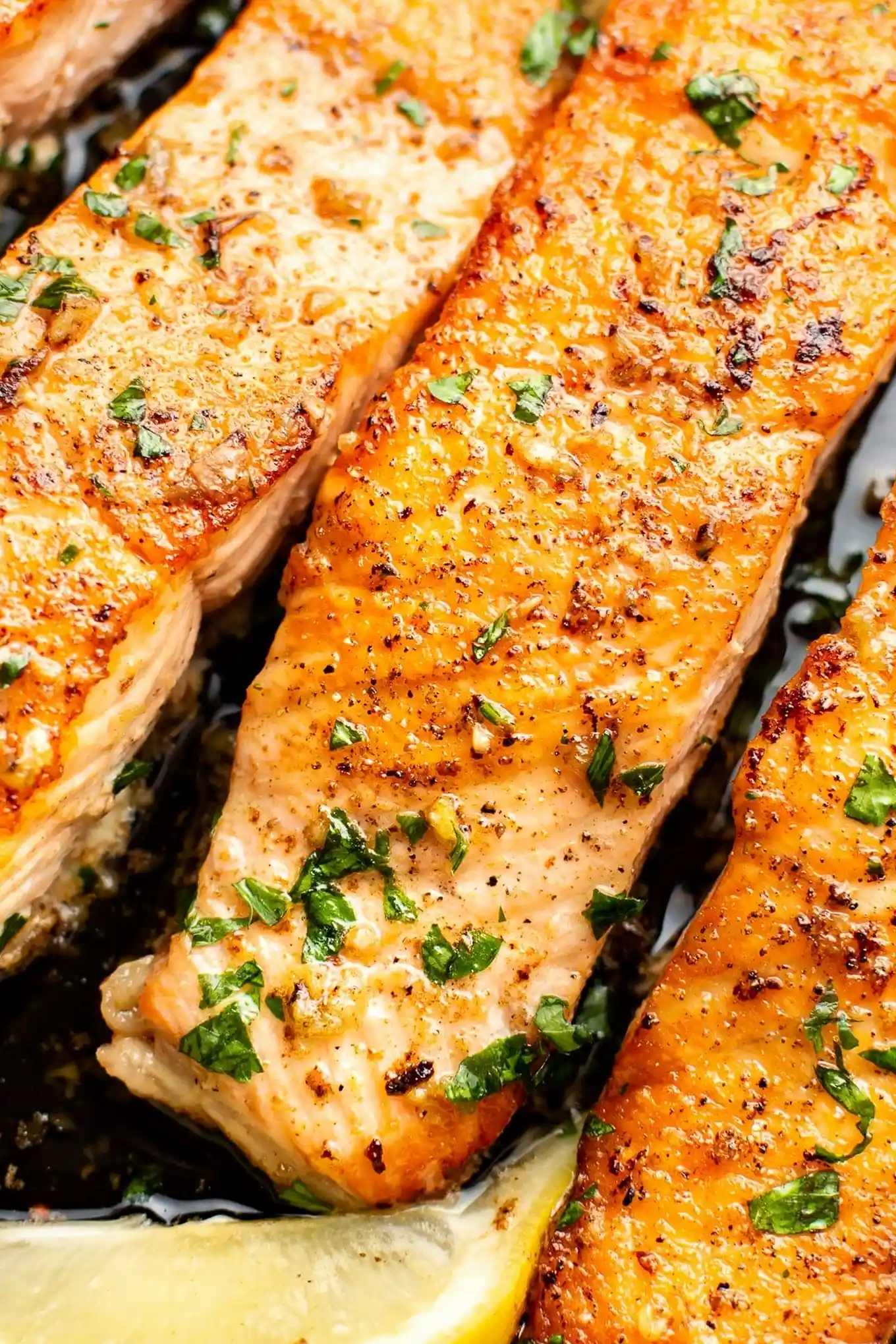
This pan-seared salmon recipe combines a rich garlic butter sauce with bright lemon acidity for a restaurant-quality meal. It is a fast, high-protein dinner that utilizes simple ingredients and basic kitchen tools. This method ensures the fish remains juicy while achieving a crisp exterior.
List of ingredients
- 1 pound salmon, cut into 4 pieces – ensure they are roughly equal in size for even cooking.
- Salt and pepper, to taste – use generously to enhance the natural flavor of the fish.
- 1 tablespoon olive oil – ideal for high-heat searing to prevent sticking.
- 4 tablespoons butter, divided – one part for the initial sear and three for the final sauce.
- 1/2 tablespoon lemon juice – freshly squeezed provides the best brightness.
- 4-5 cloves garlic, minced – provides a savory, aromatic base for the butter.
- 1 tablespoon chopped fresh parsley, optional – adds a pop of color and fresh herbal notes.
step-by-step instructions
- Prepare the salmon: Remove the salmon from the refrigerator 15-20 minutes before cooking to temper. Cut the fillet into 4 equal portions, pat them completely dry with paper towels, and season each side generously with salt and pepper.
- Heat the skillet: Place olive oil and 1 tablespoon of butter in a skillet over medium-high heat. Allow the pan to get hot for a few minutes before adding the fish.
- Sear the fish: Place the salmon in the pan skin-side down and cook for 5 minutes. Reduce the heat to medium, flip the pieces carefully, and cook for another 2-4 minutes until the fish is cooked through, then transfer the pieces to a plate.
- Prepare the garlic butter: Lower the heat to medium-low and add the remaining 3 tablespoons of butter. Once melted, stir in the minced garlic and lemon juice for about one minute until fragrant, then remove the skillet from the heat immediately.
- Combine and finish: Return the cooked salmon pieces to the skillet. Spoon the garlic butter sauce over the top of each piece and sprinkle with chopped parsley if desired. Serve immediately.
Professional Searing Techniques
Tempering the Fish
Taking the salmon out of the refrigerator for 20 minutes allows the internal temperature to rise slightly. This ensures the fish cooks more evenly from the center to the edge. It prevents the outside from overcooking before the middle is done.
The Importance of Patting Dry
Moisture on the surface of the salmon creates steam, which prevents a golden-brown crust from forming. Using paper towels to dry the skin and flesh thoroughly ensures a better sear. This step is essential for achieving a crispy skin texture.
Managing Pan Temperature
The oil and butter should be shimmering and hot before the salmon hits the pan. If the pan is too cold, the fish will stick and the skin will become soggy. Wait for the butter to foam slightly before adding the salmon.
Avoiding Pan Crowding
If your skillet is small, sear the salmon in two separate batches. Crowding the pan lowers the temperature and releases too much moisture. This leads to steaming rather than searing, which ruins the crispy exterior.
Using the Natural Release Method
Do not force the salmon to flip if it feels stuck to the pan. The fish will naturally release itself once the crust has formed and the proteins have seared. Forcing the flip can tear the delicate skin.
Recommended Kitchen Equipment
Cast Iron Skillet Benefits
Cast iron retains heat exceptionally well, providing a consistent temperature across the cooking surface. This makes it the best choice for achieving a professional-grade sear on salmon fillets. It is also durable and develops a natural non-stick surface over time.
Stainless Steel Pan Considerations
Stainless steel is a great alternative for searing because it allows for the creation of fond, the brown bits left in the pan. These bits add extra depth to the garlic butter sauce. However, you must ensure the pan is properly heated to prevent sticking.
Non-Stick Pan Usage
Non-stick pans are useful for beginners who are worried about the fish sticking. While they provide a safer experience, they often cannot handle the very high heat needed for the crispest skin. Keep the heat at medium to avoid damaging the coating.
Using Kitchen Tongs
Tongs provide the necessary grip and control to flip the salmon without breaking the fillet. Use a pair of wide-grip tongs to support the fish during the flip. This prevents the delicate flesh from flaking apart.
Garlic Press Efficiency
A garlic press is the fastest way to mince cloves into very small pieces. This ensures the garlic distributes evenly throughout the butter sauce. Smaller pieces also cook more quickly and consistently without burning.
Choosing the Best Salmon
Atlantic Salmon Characteristics
Atlantic salmon is widely available and typically has a higher fat content. This makes it very forgiving to cook and results in a buttery, moist texture. It is an excellent choice for this specific garlic butter recipe.
Wild-Caught Sockeye Profiles
Sockeye salmon has a deeper red color and a much bolder, more intense flavor. It is leaner than Atlantic salmon, meaning it can overcook more quickly. Reduce the cooking time slightly if using Sockeye to avoid dryness.
King Salmon Texture
King salmon is known for having the highest fat content of all salmon varieties. This results in a very rich, silky mouthfeel that pairs perfectly with lemon butter. It is highly resistant to overcooking compared to other types.
Evaluating Freshness at the Store
Fresh salmon should have a mild, clean scent and firm flesh that springs back when touched. Avoid fillets that look dull or have a strong fishy odor. The color should be consistent throughout the piece without any gaping or bruising.
Ingredient Substitutions and Swaps
Using Ghee Instead of Butter
Ghee is clarified butter with the milk solids removed, giving it a much higher smoke point. This allows you to sear the salmon at higher temperatures without the butter burning. It maintains the same rich flavor as traditional butter.
Replacing Fresh Lemon Juice
If fresh lemons are unavailable, you can use a high-quality bottled lemon juice. While not as bright, it provides the necessary acidity. A small amount of white wine vinegar can also work as a substitute for the tartness.
Using Garlic Powder
In a pinch, you can use garlic powder instead of fresh cloves. Mix the powder into the melted butter slowly to avoid clumps. Note that the flavor will be less pungent and aromatic than fresh garlic.
Herb Swaps for Parsley
Fresh dill is a classic pairing for salmon and provides a sophisticated flavor. Chives add a mild onion-like taste that complements the garlic butter. Cilantro can be used for a more zesty, fusion-style profile.
Ideal Side Dish Pairings
Creamy Mashed Potatoes
Mashed potatoes provide a hearty base that absorbs the excess garlic butter sauce. Adding a bit of roasted garlic to the potatoes mirrors the flavors in the salmon. They offer a smooth contrast to the crispy fish skin.
Roasted Cauliflower Florets
Roasted cauliflower adds a nutty flavor and a bit of crunch to the meal. Toss the florets in olive oil and salt before roasting at 400 degrees Fahrenheit. This keeps the meal lighter while remaining satisfying.
Fresh Arugula Salad
A simple arugula salad with a lemon vinaigrette cuts through the richness of the butter. The peppery notes of the greens balance the savory garlic. Add shaved parmesan for a salty, sharp finish.
Garlic Butter Noodles
Pasta tossed in butter and garlic is a comforting accompaniment that doubles down on the flavor profile. Use linguine or angel hair pasta for a light texture. This is a great option for those needing more carbohydrates in the meal.
Storing Your Leftovers
Refrigeration Guidelines
Store leftover salmon in an airtight glass container to maintain freshness. It will keep safely in the refrigerator for two to three days. Ensure the fish is completely cooled before sealing the lid to prevent excess moisture.
Avoiding the Freezer
Freezing cooked salmon is generally not recommended as it degrades the texture. The reheating process often makes the fish rubbery and dry. It is best to consume this dish fresh or within the refrigeration window.
Cold Serving Ideas
Chilled salmon is excellent when flaked into a cold pasta salad or placed atop a bed of spinach. The garlic butter flavor remains delicious even when cold. Squeeze a bit of extra lemon over the cold fish to refresh the taste.
Best Ways to Reheat
Stovetop Low-Heat Method
Place the salmon in a skillet over low heat with a small knob of butter. Cover the pan with a lid to trap the steam and warm the fish gently. This method prevents the salmon from drying out during the process.
Oven Reheating
Warm the salmon in an oven set to 275 degrees Fahrenheit. Place the fish on a baking sheet and cover it loosely with aluminum foil. This slow heating process preserves the moisture better than high-heat methods.
Microwave Precautions
If using a microwave, use the lowest power setting and heat in 30-second intervals. Overheating in the microwave can make the salmon tough and rubbery. Always add a teaspoon of water or butter to the plate to create moisture.
Common Cooking Challenges
Preventing the Fish from Sticking
Ensure your pan is fully preheated before adding the oil and butter. If the salmon sticks, it usually means the pan wasn’t hot enough or the fish was too wet. Use a non-stick pan if you continue to have issues with stainless steel.
Fixing Bitter Garlic
Bitter garlic occurs when the minced cloves are burnt by high heat. Always lower the heat to medium-low before adding the garlic to the butter. If the garlic turns dark brown, it is best to start the sauce over.
Managing Overcooked Salmon
Salmon is done when the center is opaque and just barely translucent in the thickest part. If the fish becomes dry, it is likely due to overcooking. Use a meat thermometer to target an internal temperature of 135-145 degrees Fahrenheit.
Achieving Crispy Skin
Press the salmon down gently with a spatula when first placing it in the pan. This ensures the entire surface of the skin makes contact with the heat. Avoid flipping the fish too early to let the crust set fully.
Frequently Asked Questions
Can I use skinless salmon?
Yes, you can use skinless salmon, but be aware that it cooks faster. Reduce the initial searing time by 1-2 minutes. The fish will also be more prone to sticking, so ensure your pan is well-greased.
How do I know when the salmon is done?
The best indicator is the color change; the light pink color should move up the side of the fillet. You can also press the top of the fillet with a fork; if it flakes easily, it is ready. Avoid overcooking to keep the fish juicy.
What is the best pan for this recipe?
A cast iron skillet is the superior choice for heat retention and searing. Stainless steel is a close second for those who enjoy building a pan sauce. Non-stick is recommended only for those very concerned about sticking.
Can I make this in an air fryer?
While you can air fry salmon, you will lose the pan-seared crust and the ability to make the butter sauce in the same vessel. To do so, cook the salmon at 400 degrees Fahrenheit for 8-10 minutes. Melt the garlic butter separately and pour it over the fish after cooking.
Print
Lemon Garlic Butter Salmon
- Total Time: 30 minutes
- Yield: 4 servings 1x
- Diet: General
Description
Easily cook pan-seared salmon with this garlic butter salmon recipe. It’s so juicy with a bright lemon garlic butter sauce, fast, and uses simple everyday ingredients!
Ingredients
- 1 pound salmon (cut into 4 pieces)
- Salt & pepper (to taste)
- 1 tablespoon olive oil
- 4 tablespoons butter (divided)
- 1/2 tablespoon lemon juice (or more, to taste)
- 4–5 cloves garlic (minced)
- 1 tablespoon chopped fresh parsley (optional)
Instructions
- Step 1: Take the salmon out of the fridge 15-20 minutes before starting the recipe if you can. Cut the salmon into 4 equal pieces and pat it dry with paper towels. Season each piece generously with salt & pepper.
- Step 2: Add the olive oil and 1 tablespoon of the butter to a skillet over medium-high heat. Allow the pan to heat up for a few minutes.
- Step 3: Cook the salmon (skin-side down) for 5 minutes, then reduce the heat to medium and flip the fish over and cook for another 2-4 minutes (should be cooked through). Transfer the salmon to a plate.
- Step 4: Turn the heat down to medium-low. Add the remaining butter to the pan and let it melt. Stir in the garlic and lemon juice. Continue stirring for a minute or so until the garlic is just cooked (do not let it burn or it’ll taste bitter). Take the skillet off the heat once it’s done.
- Step 5: Add the salmon back to the skillet and spoon some sauce over top and sprinkle parsley on if using. Serve immediately.
Notes
I use Atlantic salmon that’s about 1″ thick for this recipe. If your salmon is thicker or thinner, you may need to adjust cooking time a bit. If you use skinless salmon, it’ll cook faster. It’s ok if you’ve got a bit over a pound of salmon, just make sure it’s not too much over or the salmon pieces will be crowded in the pan and not cook properly.
- Prep Time: 10 minutes
- Cook Time: 20 minutes
- Category: Main Course
- Method: Pan-Searing
- Cuisine: American
Nutrition
- Serving Size: 1 piece of salmon
- Calories: 297 kcal
- Sugar: 1 g
- Sodium: 150 mg
- Fat: 22 g
- Saturated Fat: 9 g
- Unsaturated Fat: 12 g
- Trans Fat: 1 g
- Carbohydrates: 1 g
- Fiber: 1 g
- Protein: 23 g
- Cholesterol: 92 mg