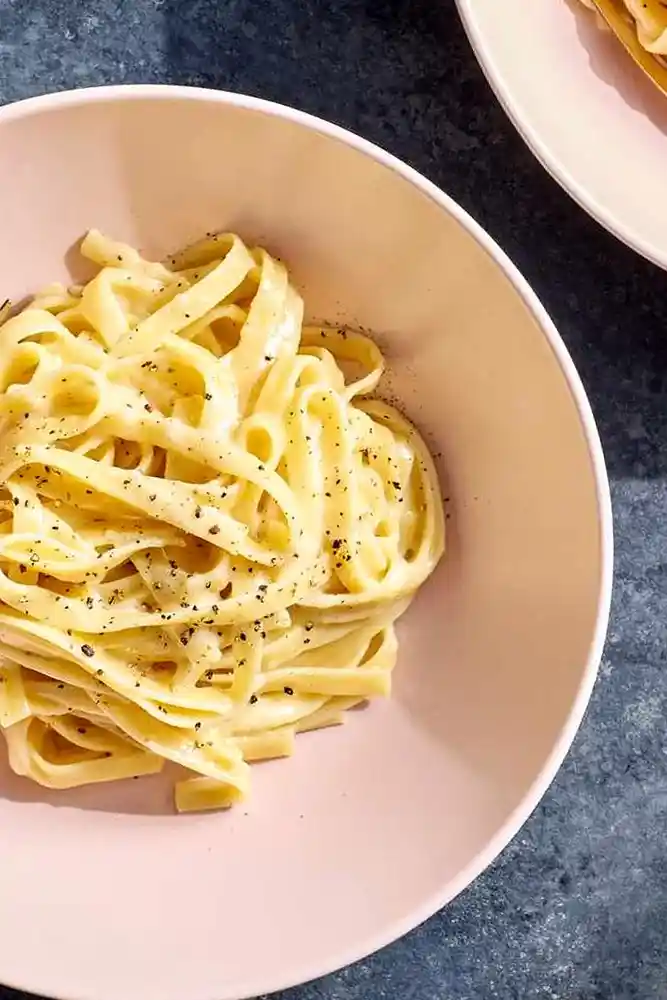
This recipe creates a rich, cream-free Alfredo sauce using a simple emulsification of butter and cheese. It is a fast way to achieve a restaurant-style pasta dinner with minimal pantry items.
List of ingredients
- 2 sticks unsalted butter, room temperature – necessary for a smooth emulsion.
- 0.5 pound grated Parmigiano-Reggiano cheese, plus more for serving – provides the authentic salty flavor.
- 1 pound fettuccine pasta – long flat noodles hold the sauce best.
- Coarse salt – used for seasoning the pasta water and the final dish.
- Freshly ground black pepper – adds a subtle heat to balance the richness.
step-by-step instructions
- Cream the base: Use an electric mixer to beat the room-temperature butter and grated Parmesan cheese together until the mixture is creamy. Season the paste with a pinch of black pepper.
- Boil the pasta: Cook the fettuccine in a large pot of boiling water seasoned generously with salt. Cook until al dente, typically around 12 minutes.
- Save and drain: Reserve approximately 1 cup of the starchy pasta cooking water before draining the noodles.
- Emulsify the sauce: Add the cooked fettuccine directly into the mixer with the cheese mixture. Toss with 1/2 teaspoon of salt and 1/4 cup of the reserved pasta water.
- Adjust consistency: Continue tossing the pasta, adding more reserved pasta water as needed until the sauce reaches a silky consistency.
- Serve: Plate the pasta immediately and top with extra grated Parmesan cheese.
Professional Pasta Techniques
Optimizing Salt Levels in Water
The pasta water should be seasoned until it tastes like sea water. This is the only opportunity to season the pasta noodles themselves, ensuring the dish is balanced from the inside out.
Monitoring the Al Dente State
Begin tasting the pasta two minutes before the package directions suggest. Al dente pasta should have a slight resistance in the center, which prevents it from becoming mushy when tossed in the sauce.
Utilizing the Starch Reserve
The cloudy water left after boiling pasta is rich in starch. This starch acts as a binding agent that helps the fat from the butter and cheese adhere to the noodles without separating.
Proper Draining Procedures
Never rinse your pasta after draining. Rinsing removes the surface starch that is essential for the sauce to cling to the noodles effectively.
Ingredient Quality and Selection
Selecting High-Fat European Butter
European-style butter generally has a higher butterfat content and lower water content than standard American butter. This results in a denser, creamier sauce that emulsifies more effectively with the cheese.
Choosing Authentic Parmigiano-Reggiano
Look for the DOP certification to ensure you are using authentic Parmigiano-Reggiano. This aged cheese has a complex, nutty profile and a superior melting point compared to generic Parmesan.
The Advantage of Freshly Grated Cheese
Pre-shredded cheeses are often coated in cellulose or potato starch to prevent clumping. These additives hinder the melting process and can result in a grainy or gritty sauce texture.
Comparing Fettuccine to Other Pastas
The wide, flat surface area of fettuccine is ideal for capturing heavy cream or butter sauces. While other shapes work, thinner noodles may not support the weight of the cheese emulsion as well.
Customizing the Flavor Profile
Incorporating Sautéed Garlic
To add depth, sauté minced garlic in a small amount of butter before adding it to the mixer. Ensure the garlic is golden but not brown to avoid a bitter taste in the finished pasta.
Adding Freshly Chopped Parsley
Fold in finely chopped flat-leaf parsley during the final tossing stage. This adds a bright, herbaceous note and a pop of color that cuts through the richness of the butter.
Integrating Sautéed Mushrooms
Brown sliced cremini or shiitake mushrooms in a separate pan until the moisture has evaporated. Toss them in at the end to add an earthy, savory element to the dish.
Adding Baby Spinach
Add a handful of fresh baby spinach to the hot pasta just before serving. The residual heat will wilt the greens perfectly without overcooking them.
Using Freshly Grated Nutmeg
A tiny pinch of freshly grated nutmeg enhances the nuttiness of the Parmesan cheese. Use a microplane to ensure the amount is subtle and does not overpower the other flavors.
Sauce Texture and Troubleshooting
Preventing Sauce Separation
Separation occurs when the fat and water do not emulsify. To prevent this, ensure your butter is room temperature and add the pasta water gradually while mixing constantly.
Fixing an Overly Thick Sauce
If the pasta looks dry or the sauce is too thick, add the reserved pasta water one tablespoon at a time. Stir vigorously to reintegrate the moisture into the cheese paste.
Solving Grainy Cheese Texture
Graininess usually stems from using pre-shredded cheese or overheating the sauce. Using a fine grater and avoiding direct high heat on the cheese mixture helps maintain smoothness.
Managing Butter Temperature
Cold butter will not cream properly with the cheese, leading to lumps. If you forgot to take the butter out, microwave it for a few seconds only until it is soft, not melted.
Serving and Presentation
Pre-warming the Serving Bowls
Alfredo sauce cools quickly, which can cause it to thicken too fast. Fill your bowls with hot tap water for a few minutes, then drain and wipe them dry before plating.
Pairing with Arugula Salads
A simple arugula salad with lemon vinaigrette provides a sharp acidity. This contrast balances the heavy fats of the butter and cheese, refreshing the palate between bites.
Garnishing with Extra Cheese
Use a combination of finely grated and shaved Parmesan for the garnish. The fine powder melts into the top layer, while the shavings provide a concentrated burst of flavor.
Timing the Service
This dish should be served immediately after tossing. The longer it sits, the more the pasta absorbs the liquid, which can lead to a sticky or clumpy consistency.
Storage and Preservation
Refrigeration Parameters
Store leftover pasta in an airtight container in the refrigerator for up to three days. Keep the container tightly sealed to prevent the pasta from drying out.
Best Reheating Liquids
When reheating, add a splash of milk or water to the pasta. This reintroduces moisture and helps the fats emulsify again as the dish warms up.
Microwave Reheating Steps
Heat the pasta in short 30-second intervals on medium power. Stir thoroughly between each interval to ensure the heat is distributed evenly and the sauce stays smooth.
Stovetop Reheating Method
Place the pasta in a skillet over low heat with a tablespoon of water. Stir gently and constantly until the sauce becomes creamy again, avoiding high heat which can break the emulsion.
Frequently Asked Questions
Why is an electric mixer necessary?
The mixer creates a mechanical emulsion between the butter and cheese, forming a stable paste. Simply stirring these ingredients by hand often results in a greasy sauce rather than a creamy one.
Can I use Pecorino Romano instead?
Yes, but be aware that Pecorino Romano is significantly saltier and tangier than Parmigiano-Reggiano. If you swap them, reduce the amount of added salt in the recipe.
Does this recipe work with gluten-free pasta?
It does work, but gluten-free pasta releases different starches. You may need to add slightly more pasta water or a touch of cream to achieve the same silky consistency.
Why is there no heavy cream in this version?
This is a traditional Roman-style preparation that relies on the emulsion of butter, cheese, and starchy water. The result is a cleaner cheese flavor and a lighter texture than cream-based versions.
How do I store leftovers without them becoming a block?
Toss the leftovers with an extra teaspoon of butter or olive oil before refrigerating. This creates a barrier that prevents the noodles from fusing together into a solid mass.
Print
Classic 3-Ingredient Fettuccine Alfredo
- Total Time: 25 minutes
- Yield: 4 servings 1x
- Diet: General
Description
Martha Stewart’s fettuccine Alfredo is a classic take on this favorite pasta dish, made with just three ingredients—butter, Parmesan cheese, and fettuccine.
Ingredients
- 2 sticks butter, room temperature
- 0.5 pound microbial-rennet Parmesan cheese, grated, plus more for serving
- Coarse salt and freshly ground black pepper
- 1 pound fettuccine
Instructions
- Step: Using an electric mixer, beat butter and Parmesan until creamy. Season with a pinch of pepper.
- Step: Cook fettuccine in a large pot of boiling salted water, according to package instructions, until al dente, about 12 minutes. Reserve about 1 cup of cooking water; drain pasta.
- Step: Add fettuccine to mixer. Toss pasta with 1/2 teaspoon salt, cheese mixture, and 1/4 cup of the pasta water. Add more pasta water as needed. Serve immediately with additional cheese.
Notes
Use unsalted butter to control saltiness. The beating step with an electric mixer is essential for a silky, luxurious sauce. Serve immediately to prevent the sauce from cooling.
- Prep Time: 10 minutes
- Cook Time: 15 minutes
- Category: Pasta
- Method: Mixing
- Cuisine: Italian
Nutrition
- Serving Size: 1 serving
- Calories: 820 kcal
- Sugar: 4 g
- Sodium: 980 mg
- Fat: 45 g
- Saturated Fat: 28 g
- Unsaturated Fat: 15 g
- Trans Fat: 2 g
- Carbohydrates: 48 g
- Fiber: 3 g
- Protein: 22 g
- Cholesterol: 120 mg