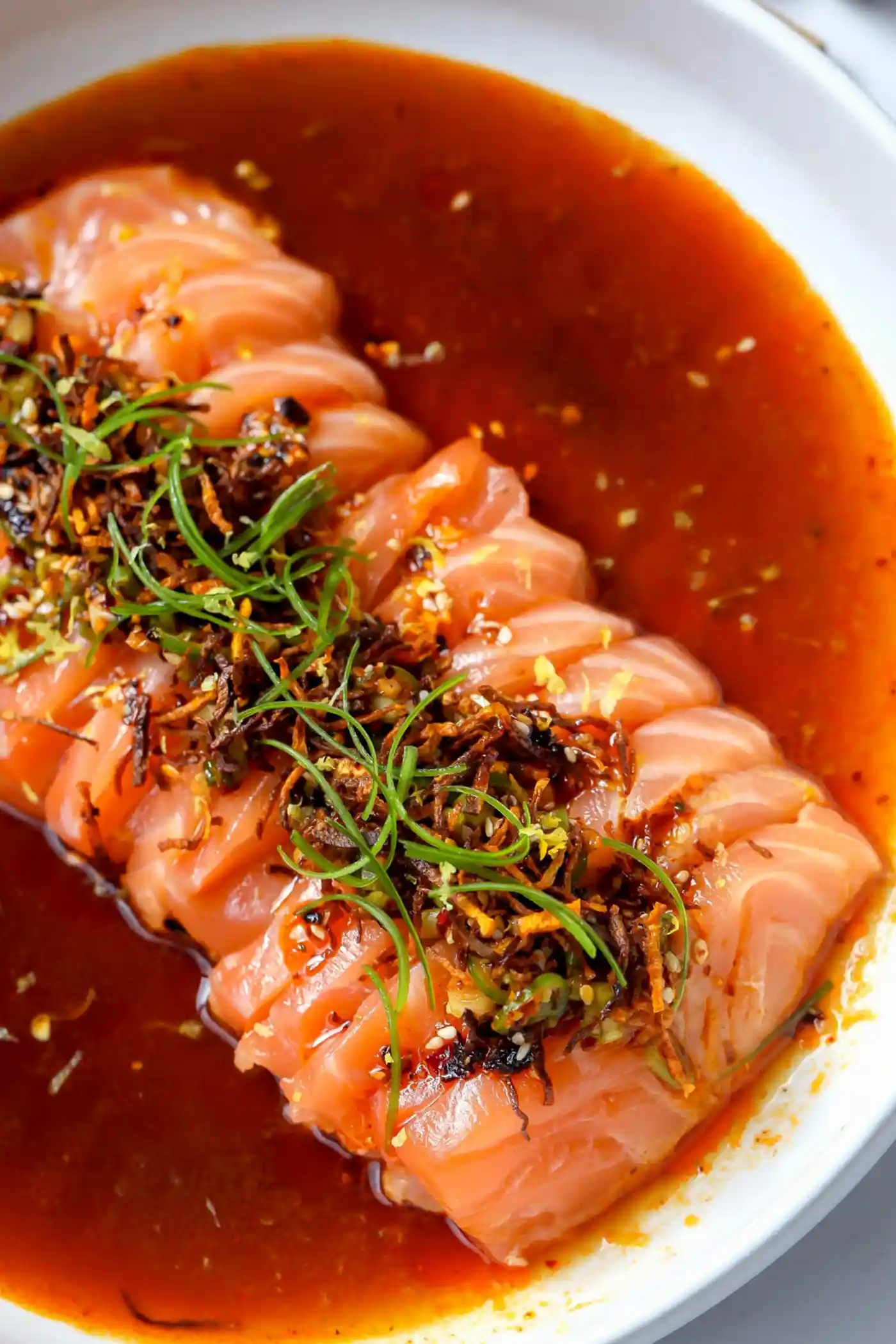
This vibrant salmon crudo blends the richness of raw fish with a zesty, spicy sauce and the crunch of golden-fried carrots. It is an elegant, low-cook appetizer that emphasizes fresh ingredients and contrasting textures.
List of ingredients
- 6 to 8 oz Salmon (sushi grade) – sliced into thin, uniform pieces.
- 1 Carrot – peeled and cut into very thin matchsticks.
- 1/4 cup Tamari (or soy sauce) – provides the savory umami base.
- 3 Scallions – white parts chopped for the sauce, green parts sliced into matchsticks for garnish.
- 1 tbsp Salsa macha or chili crisp – adds smoky heat and texture.
- 1 Serrano pepper – thinly sliced into rounds.
- 1 large Lemon – juiced for the sauce and zested for the final topping.
- 1 tbsp Agave syrup – balances the acidity with a mild sweetness.
- 1 tbsp Non-alcoholic mirin substitute (white grape juice mixed with a pinch of sugar) – adds a subtle sweetness.
- 1 tbsp Rice vinegar – adds a bright, tangy note.
- 1 tsp Sesame oil – provides a toasted, nutty aroma.
- 1 tsp Ginger – freshly grated for a sharp, clean bite.
step-by-step instructions
- Fry the carrots: Heat a small amount of olive oil in a pan over medium-high heat. Fry the carrot matchsticks until they are lightly golden and crisp, then immediately transfer them to paper towels to drain excess oil.
- Prepare the spicy sauce: In a mixing bowl, combine the white parts of the scallions, Tamari, non-alcoholic mirin substitute, rice vinegar, lemon juice, grated ginger, sesame oil, agave syrup, sliced serranos, and salsa macha. Stir well and let the mixture sit for 15 to 20 minutes to allow the flavors to meld.
- Chill the scallions: Take the green parts of the scallions that were sliced into matchsticks and place them in a bowl of ice water. This process makes them curl and stay exceptionally crisp.
- Plate the dish: Carefully strain the liquid part of the sauce onto a serving plate. Arrange the salmon slices neatly on top of the sauce. Spoon the chunky bits of the sauce over the fish, then garnish with the fried carrots, lemon zest, and the chilled scallion matchsticks.
Sourcing High-Quality Raw Salmon
Understanding Sushi-Grade Labels
The term sushi-grade is not a government-regulated standard but rather a commercial designation. It generally indicates that the fish was flash-frozen at extremely low temperatures to kill any potential parasites. When shopping, look for suppliers who can confirm their freezing process meets these safety standards.
Identifying Freshness by Sight and Smell
Fresh salmon should have a vibrant, consistent color without any brown spots or dullness. The flesh should feel firm to the touch and spring back immediately when pressed. Most importantly, high-quality raw salmon should have a clean, salty scent of the ocean rather than a strong “fishy” odor.
Maintaining Cold Temperatures
Temperature control is critical when handling raw seafood to prevent bacterial growth. Keep the salmon in the coldest part of your refrigerator until the moment you are ready to slice it. For the best texture, you can place the fillet on a chilled tray or in the freezer for 10 to 15 minutes before slicing to make the cuts cleaner.
Mastering the Spicy Sauce Balance
Achieving the Right Umami Balance
The combination of Tamari and sesame oil creates a deep savory foundation. Tamari is often preferred over soy sauce for its richer flavor and gluten-free properties. The depth of the sauce depends on the quality of these fermented ingredients, which anchor the lighter citrus notes.
The Importance of Marinating Time
Allowing the sauce to sit for 20 minutes is not optional; it is where the infusion happens. During this time, the salt in the Tamari draws the aromatic oils out of the ginger, serranos, and scallions. This creates a cohesive flavor profile rather than a collection of separate tastes.
Adjusting the Heat Level
The heat in this recipe comes from both the fresh serrano and the salsa macha. If you prefer a milder dish, remove the seeds from the serrano pepper before slicing. Conversely, for extra heat, you can add a pinch of red pepper flakes or increase the amount of chili crisp.
Advanced Garnish Techniques
Achieving Perfect Carrot Matchsticks
To get the carrots perfectly thin, use a mandoline slicer or a very sharp chef’s knife to create consistent julienne strips. Uniformity is key here because it ensures that every piece of carrot fries at the same rate, preventing some from burning while others remain raw.
The Purpose of Ice Water for Scallions
Soaking scallion matchsticks in ice water triggers a reaction that causes the cell walls to tighten and the stalks to curl. This not only provides a professional, curly aesthetic but also enhances the crisp snap of the vegetable, providing a temperature and texture contrast to the buttery salmon.
Using Lemon Zest for Aroma
While the lemon juice in the sauce provides acidity, the zest provides the essential oils and fragrance. Always zest the lemon before juicing it, and use a microplane to get the finest particles. Add the zest at the very last second to ensure the citrus aroma remains potent.
Customizations and Substitutions
Swapping Salmon for Other Fish
While salmon is rich and fatty, you can substitute it with other sushi-grade fish like Hamachi (yellowtail) or Ahi tuna. Yellowtail has a similar buttery texture, whereas tuna is leaner and firmer. Adjust the amount of sesame oil slightly if using tuna, as it does not need as much added fat.
Using Different Sweeteners
Agave syrup is used for its neutral sweetness and liquid consistency, which blends easily into the sauce. You can substitute this with honey or maple syrup, though these will add their own distinct flavor profiles. If using honey, you may need to whisk the sauce more vigorously to incorporate it.
Alternative Pepper Choices
Serrano peppers provide a crisp, bright heat. If you cannot find them, jalapeños are a great substitute, although they are slightly milder and fruitier. For a smoky heat, you could use finely diced chipotle in adobo, though this will change the color of the sauce.
Plating and Serving Suggestions
Plating for Visual Appeal
To create a restaurant-style presentation, arrange the salmon slices in a circular overlapping pattern or a clean straight line. Pour the strained sauce around the base of the fish to create a moat effect. Carefully pile the carrots and scallions in the center to add vertical height to the dish.
Complementary Side Pairings
This crudo pairs exceptionally well with plain steamed jasmine rice or a side of sliced cucumber salad. For a low-carb option, serve it with crisp rice crackers or endive leaves. The neutrality of these sides allows the complex flavors of the spicy sauce to remain the focal point.
Safety and Storage Guidelines
Raw Fish Storage Limits
Raw fish should be consumed immediately after slicing for maximum safety and quality. If you must prepare the fish in advance, keep it tightly wrapped in plastic and stored on a bed of ice in the refrigerator. Never leave raw salmon at room temperature for more than 30 minutes.
Serving Temperatures
The dish is best served chilled. Ensure your serving plates are chilled in the refrigerator for 15 minutes before plating. This keeps the salmon at a safe temperature and prevents the fats in the fish from softening too quickly, maintaining a firm bite.
Troubleshooting Common Issues
Managing Excessive Saltiness
If the sauce tastes too salty due to the Tamari, do not add water, as this will dilute the flavor. Instead, add a small squeeze of extra lemon juice or a touch more agave syrup. The acid and sugar will chemically balance the perception of salt on the tongue.
Fixing a Sauce That Is Too Acidic
If the rice vinegar and lemon juice make the sauce too sharp, balance it with a tiny amount of toasted sesame oil or a pinch of sugar. The richness of the oil coats the palate, softening the impact of the acetic acid from the vinegar.
Frequently Asked Questions
Can I use frozen salmon for this recipe?
Yes, as long as it is specifically labeled as sushi-grade or has been deep-frozen to kill parasites. Do not use standard supermarket frozen fillets that were not intended for raw consumption.
How do I stop the carrots from getting soggy?
Ensure the oil is hot enough before adding the carrots so they sear quickly rather than absorbing oil. Always drain them on paper towels immediately after frying and add them to the dish just before serving.
Is there a substitute for salsa macha?
You can use a high-quality Chinese chili crisp or a mixture of chili oil and toasted sesame seeds. The goal is to have a combination of heat and crunchy textured bits.
Can I make the sauce a day in advance?
Yes, the sauce can be made 24 hours in advance and stored in an airtight container in the fridge. In fact, the flavors often deepen and improve overnight, though you should add the fresh lemon zest only at the time of serving.
What is the best way to slice the salmon?
Use a very sharp, long knife and slice against the grain. Use a smooth sawing motion rather than pressing down, which can crush the delicate cells of the raw fish and ruin the texture.
Print
Spicy Salmon Crudo with Crispy Carrots
- Total Time: 20 minutes
- Yield: 2 servings 1x
- Diet: Pescetarian
Description
A sweet, spicy, and citrusy raw salmon dish topped with a crown of crispy matchstick carrots.
Ingredients
- 6 oz sushi grade salmon
- 1 carrot, cut into very thin matchsticks
- 1/4 cup tamari or soy sauce
- 3 scallions, chopped (separate white and green parts)
- 1 tbsp salsa macha or chili crisp
- 1 serrano, thinly sliced
- 1 large lemon
- 1 tbsp agave syrup
- 1 tbsp alcohol-free mirin alternative
- 1 tbsp rice vinegar
- 1 tsp sesame oil
- 1 tsp freshly grated ginger
Instructions
- Step: Fry the carrots in olive oil until lightly golden, then set over paper towels to remove excess oil.
- Step: Mix the light part of the scallions with the tamari, alcohol-free mirin alternative, rice vinegar, lemon juice, ginger, sesame oil, agave syrup, serranos, and salsa macha or chili crisp; let sit for 15-20 minutes.
- Step: Chop the green part of the scallion into matchsticks and let them sit in ice water.
- Step: Strain the sauce onto a plate, arrange the fish nicely, and top with the chunky part of the sauce, crispy carrots, lemon zest, and scallions.
Notes
Always use sushi grade salmon for safety. Yellowtail or ahi are excellent fish substitutes.
- Prep Time: 15 minutes
- Cook Time: 5 minutes
- Category: Appetizer
- Method: Raw Preparation
- Cuisine: Asian
Nutrition
- Serving Size: 1 serving
- Calories: 300 kcal
- Sugar: 13 g
- Sodium: 1758 mg
- Fat: 15 g
- Saturated Fat: 2 g
- Unsaturated Fat: 13 g
- Trans Fat: 0 g
- Carbohydrates: 23 g
- Fiber: 3 g
- Protein: 21 g
- Cholesterol: 47 mg