This savory dish combines juicy beef patties with caramelized onions and melted cheese on toasted bread. Using a cast iron skillet ensures a perfectly golden crust and evenly melted ingredients.
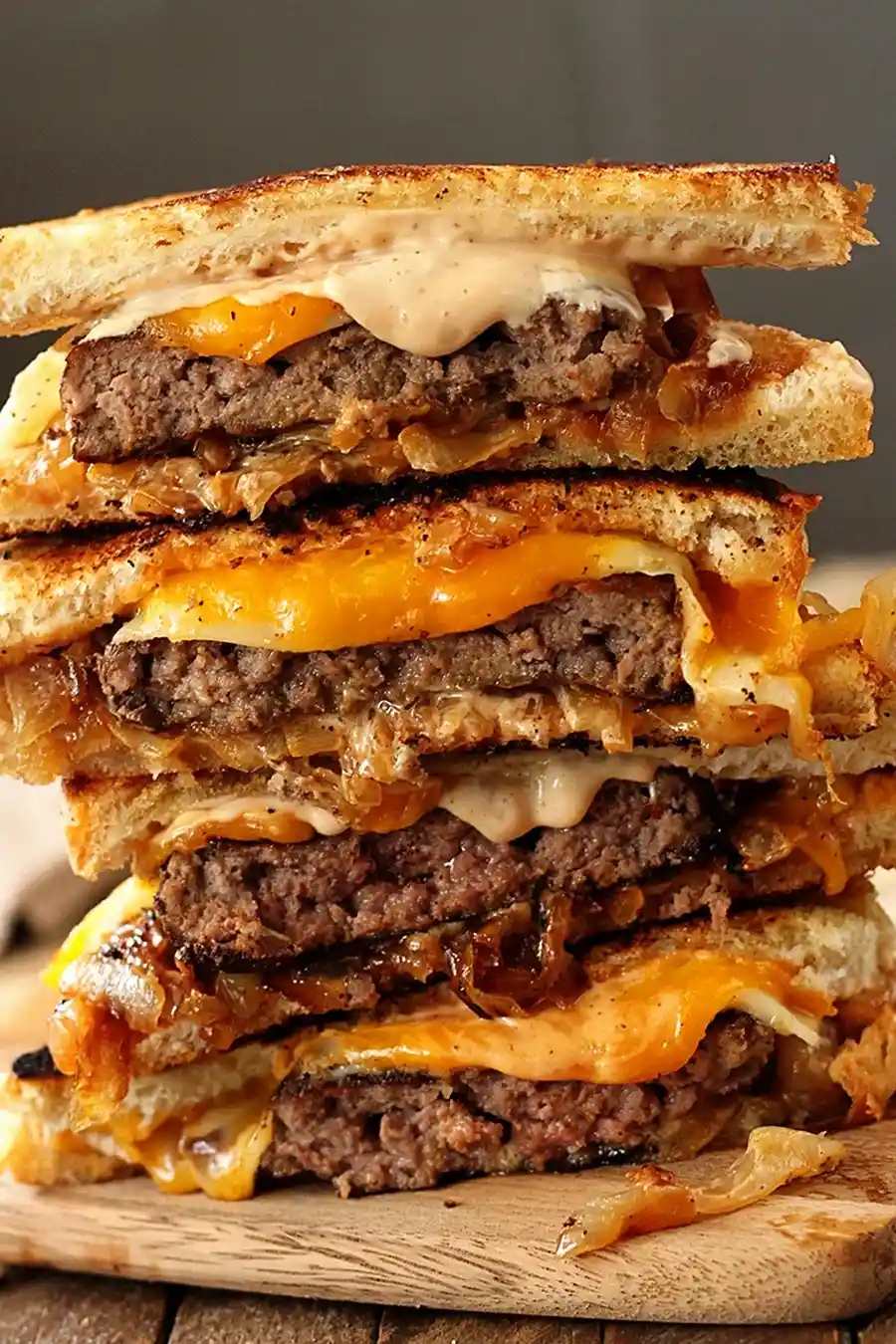
List of ingredients
- 2 large sweet onions, peeled, halved, and thinly sliced – provides a sweet, savory base.
- 8 tablespoons unsalted butter, divided – used for sautéing, searing, and toasting.
- 1/3 cup mayonnaise – the base for the creamy sauce.
- 2 tablespoons ketchup – adds tang and sweetness to the sauce.
- 1/2 teaspoon yellow mustard – provides a sharp contrast in the sauce.
- 1/4 teaspoon garlic powder – adds savory depth to the condiment.
- 1/4 teaspoon ground black pepper – for basic seasoning.
- 4 Chop House by Holten Angus Sirloin Steak Burgers – high-quality beef patties.
- 8 slices thick cut sourdough or rye bread – sturdy bread that holds up to grilling.
- 4 slices medium cheddar cheese – for a sharp, melty flavor.
- 4 slices swiss cheese – for a nutty, gooey texture.
step-by-step instructions
- Caramelize the onions: Melt 2 tablespoons of butter in a large skillet over medium-low heat. Add the sliced onions and cook over low heat, stirring occasionally, until they are golden and soft, which takes about 30 minutes.
- Prepare the sauce: In a small bowl, combine the mayonnaise, ketchup, mustard, garlic powder, and black pepper. Stir until smooth and set aside for assembly.
- Cook the beef: Heat a large cast iron skillet over medium-high heat. Add two tablespoons of butter and cook the burger patties according to the package instructions. Wipe the skillet clean after removing the patties.
- Assemble the sandwiches: Spread the prepared sauce on one side of all 8 slices of bread. Distribute the caramelized onions evenly between 4 of the bread slices. Top the onions with a burger patty, one slice of cheddar, one slice of swiss, and finally a second slice of bread.
- Toast the sandwiches: Melt 2 tablespoons of butter in a skillet over medium-low heat and swirl to coat the pan. Place the assembled sandwiches in the pan and cook until the bread is golden brown. Flip the sandwiches and add the remaining 2 tablespoons of butter. Move the sandwiches to ensure they are well-coated in butter and cook until the second side is golden brown. Serve immediately.
Optimizing Beef Patty Selection
Prioritize Higher Fat Content
Choose beef patties with a fat ratio of approximately 80/20. The extra fat prevents the meat from drying out during the two-stage cooking process. This ensures the burger remains juicy after being toasted in the skillet.
Evaluate Frozen vs. Fresh Patties
Freshly ground beef often provides a more tender texture. However, high-quality frozen patties, such as Angus sirloin, offer convenience and consistent thickness. Ensure frozen patties are thawed or cooked according to specific package directions for safety.
Match Patty Diameter to Bread
Select patties that are slightly smaller than the bread slices. This allows the cheese to drape over the edges of the meat. It also prevents the meat from hanging over the side, which helps the bread toast more evenly.
Bread Choice and Preparation
Using Sourdough for Texture
Sourdough is an excellent choice due to its sturdy structure and tangy flavor. The air pockets in sourdough trap butter, creating a crispier exterior. It holds up well under the weight of the beef and onions.
Integrating Rye Bread
Rye bread provides a traditional diner-style flavor profile. Its earthy notes complement the sweetness of the caramelized onions. Use a thick-cut rye to prevent the sandwich from becoming soggy from the sauce.
Importance of Thick Slices
Avoid using thin, pre-sliced sandwich bread. Thick-cut slices provide the necessary support for the heavy fillings. They also allow for a longer toasting time without burning through to the center.
Perfecting Caramelized Onions
Maintaining Low Temperature
Keep the heat on medium-low or low to allow the natural sugars in the onions to release. High heat will burn the onions rather than caramelize them, leading to a bitter taste. Patience is key to achieving a deep golden color.
The Role of Butter in Sautéing
Butter adds a rich, creamy flavor that oil cannot replicate. It helps the onions soften and brown evenly. If the pan becomes too dry, add a small knob of butter to maintain the sautéing process.
Preventing Onions from Sticking
Stir the onions every few minutes to ensure all sides make contact with the heat. If you notice brown bits sticking to the pan, add a tablespoon of water. This deglazes the pan and incorporates those flavorful bits back into the onions.
Cheese Melting and Layering
Combining Swiss and Cheddar
Using two types of cheese provides a balance of flavors. Cheddar offers a sharp, salty punch, while Swiss adds a nutty creaminess. Together, they create a complex flavor profile that complements the beef.
Slicing Cheese for Even Melting
Use consistent slices of cheese rather than shredded varieties. Slices create a solid barrier that helps hold the patty and onions in place. Ensure the slices cover the entire surface of the beef patty.
Achieving the Perfect Melt
Keep the skillet heat at medium-low during the final toasting phase. This ensures the bread doesn’t burn before the cheese has a chance to melt completely. A lid can be placed over the pan briefly to trap heat and speed up the melting.
Cast Iron Cooking Techniques
The Advantage of Heat Retention
Cast iron distributes heat more evenly than stainless steel or non-stick pans. This results in a consistent golden-brown crust across the entire surface of the bread. It prevents cold spots that leave parts of the sandwich untoasted.
Preheating the Skillet
Always preheat your cast iron skillet before adding butter or meat. A hot pan prevents the beef from sticking and creates a better sear. Wait until a drop of water sizzles and evaporates instantly before proceeding.
Cleaning Between Cooking Phases
Wipe the skillet clean after cooking the burger patties but before toasting the sandwiches. This removes excess burnt meat particles. It ensures the bread is toasted in clean butter rather than old grease.
Customizing the Signature Sauce
Enhancing the Tangy Profile
To increase the acidity of the sauce, add a teaspoon of apple cider vinegar or lemon juice. This cuts through the richness of the butter and cheese. It provides a brighter flavor that balances the heavy components of the melt.
Adding Spicy Elements
Incorporate a small amount of sriracha or diced jalapeños into the mayonnaise base. This adds a subtle heat that pairs well with the sweet onions. A pinch of cayenne pepper is also an effective way to add warmth.
Dairy-Free Sauce Options
Replace the mayonnaise with a vegan mayo alternative to make the sauce dairy-free. Use a plant-based butter in the skillet for the toasting process. The ketchup and mustard remain naturally dairy-free.
Serving and Side Suggestions
Classic Diner Side Pairings
Serve patty melts with a side of thick-cut steak fries or potato wedges. The saltiness of the fries complements the sweetness of the onions. A side of coleslaw provides a cool, crunchy contrast to the warm sandwich.
Balanced Vegetable Options
A simple garden salad with a vinaigrette dressing helps balance the richness of the beef and cheese. Roasted asparagus or steamed broccoli are also healthy alternatives to fried sides. These options add necessary freshness to the meal.
Condiment Enhancements
Place a few dill pickle spears on the plate to provide an acidic snap. Extra sauce can be served in a small ramekin for dipping. Some prefer a side of spicy brown mustard for an extra kick.
Storage and Preservation
Handling Leftover Components
Store cooked burger patties, caramelized onions, and the sauce in separate airtight containers. This prevents the bread from getting soggy and keeps the onions fresh. Label each container with the date of preparation.
Reheating for Maximum Crispiness
Avoid using a microwave to reheat the assembled sandwich, as this makes the bread rubbery. Use a skillet over medium heat with a small amount of butter. Toast each side until the bread is crisp and the cheese is melted again.
Freezing the Patties
If you are preparing meals for the week, cook the patties and freeze them. Allow them to cool completely before placing them in freezer bags. Reheat them in a pan before assembling the patty melt.
Troubleshooting Common Issues
Solving the Burning Bread Problem
If the bread browns too quickly while the cheese remains solid, lower the heat. You can also cover the skillet with a lid to trap heat and melt the cheese faster. Use a lower-fat butter or a mix of butter and oil to raise the smoke point.
Preventing Patty Disintegration
Avoid over-handling the beef patties during the searing process. Flipping them too many times can break the meat apart. Let the patty develop a solid crust before turning it over.
Avoiding Soggy Bread
Apply the sauce in a thin, even layer. Do not over-saturate the bread, as the moisture can seep into the crumb. Applying the sauce immediately before assembly and toasting helps maintain the bread’s integrity.
Frequently Asked Questions
Can I use a non-stick pan instead of cast iron?
Yes, you can use a non-stick pan, but you will lose some of the superior heat retention and crust quality. Ensure the pan is large enough to hold two sandwiches without crowding, which prevents steaming.
What is the best type of onion for caramelizing?
Sweet onions, such as Vidalia or Walla Walla, are ideal because they have a higher sugar content. This allows them to brown more effectively and provides a milder, sweeter taste than yellow onions.
Can I make these in an oven?
You can assemble the sandwiches and bake them on a sheet pan at 400 degrees Fahrenheit. However, you must butter the bread generously. They will lack the specific crispness achieved by searing them in a skillet.
How do I stop the sandwich from sliding apart?
Press down gently on the sandwich with a spatula after placing it in the pan. This helps the melted cheese act as a glue, binding the patty and onions to the bread slices.
Print
Cast Iron Patty Melts
- Total Time: 40 minutes
- Yield: 4 servings 1x
- Diet: General
Description
A classic American comfort food sandwich featuring beef patties, caramelized onions, and melted cheese on buttery toasted sourdough or rye bread.
Ingredients
- 2 large sweet onions, peeled, halved, and thinly sliced
- 8 tablespoons unsalted butter, divided
- 1/3 cup mayonnaise
- 2 tablespoons ketchup
- 1/2 teaspoon yellow mustard
- 1/4 teaspoon garlic powder
- 1/4 teaspoon ground black pepper
- 4 Angus Sirloin Steak Burgers
- 8 slices thick cut sourdough or rye bread
- 4 slices medium cheddar cheese
- 4 slices swiss cheese
Instructions
- Sauté: In a large skillet, melt 2 tablespoons of butter over medium-low heat. Add the onions and cook over low heat, stirring occasionally, until they are golden and soft – about 30 minutes.
- Mix: Make the sauce by combining the mayonnaise, ketchup, mustard, garlic powder, and black pepper. Set aside.
- Sear: Heat a large cast iron skillet over medium-high heat. Add two tablespoons of butter then cook the burger patties according to the package instructions. Wipe the skillet clean.
- Assemble: Assemble each sandwich by spreading the sauce on one side of all 8 slices of bread. Divide the onions between 4 slices of bread. Top each with a burger patty, one slice of each cheese, and then another slice of bread.
- Toast: Add 2 tablespoons of butter to a skillet over medium-low heat. Swirl to coat the pan with the melted butter. Add the assembled sandwiches and cook until the bread is golden brown. Flip the sandwiches and add the remaining 2 tablespoons of butter. Move the sandwiches around to coat them in butter. Cook until golden brown. Serve immediately.
Notes
Using a cast iron skillet provides an authentic diner-style flat top grill flavor.
- Prep Time: 10 minutes
- Cook Time: 30 minutes
- Category: Main Course
- Method: Pan-frying
- Cuisine: American
Nutrition
- Serving Size: 1 sandwich
- Calories: 1104 kcal
- Sugar: 12 g
- Sodium: 1850 mg
- Fat: 78 g
- Saturated Fat: 36 g
- Unsaturated Fat: 42 g
- Trans Fat: 2 g
- Carbohydrates: 48 g
- Fiber: 4 g
- Protein: 42 g
- Cholesterol: 190 mg