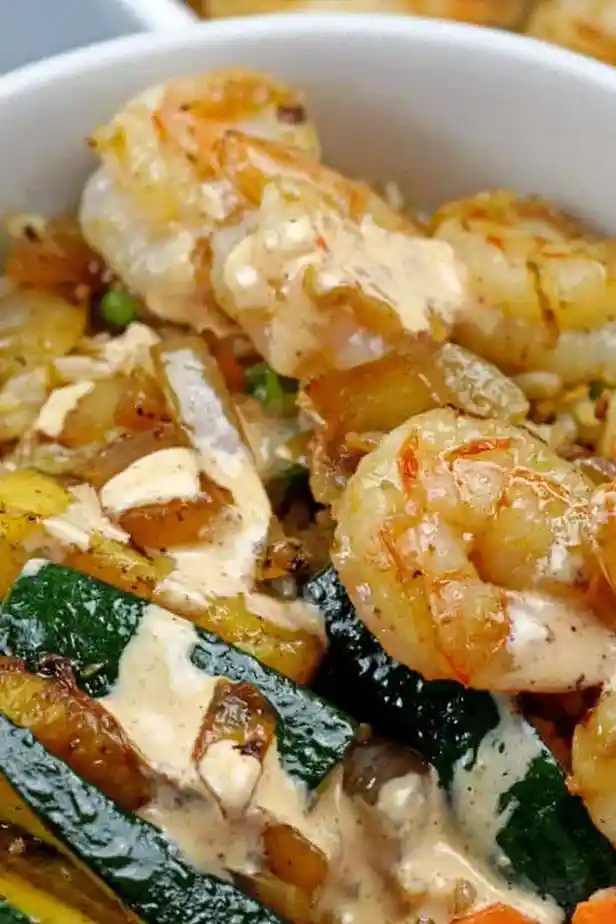
Create a restaurant-quality Japanese-American meal at home with these savory shrimp and fried rice bowls. This dish combines perfectly seared shrimp, tender sautéed vegetables, and flavorful fried rice, all topped with a creamy signature sauce.
List of ingredients
- 1/2 cup mayonnaise – provides the creamy base for the yum yum sauce.
- 2 tbsp ketchup – adds sweetness and a hint of acidity to the sauce.
- 1/2 tsp garlic powder – adds a savory, aromatic depth to the sauce.
- 1/2 tsp paprika – gives the sauce a subtle smoky flavor and a pinkish hue.
- Few dashes of hot sauce – optional, used to add a touch of heat to the sauce.
- 3 tbsp unsalted butter, divided – used for cooking the shrimp, vegetables, and rice in separate batches.
- 1 lb raw shrimp – peeled, deveined, and patted dry for a better sear.
- 4 tbsp soy sauce, divided – used for seasoning the shrimp and the sautéed vegetables.
- 1 medium zucchini – sliced into rounds or half-moons for consistent cooking.
- 1 small-medium onion – chopped into bite-sized pieces.
- 1 egg – used to add richness and bind the fried rice.
- 2 cups frozen peas and carrots – no need to thaw before adding to the pan.
- 4 cups cooked rice – cooled completely to ensure the grains stay separate.
- 2 tbsp soy sauce – specifically for seasoning the fried rice.
step-by-step instructions
- Prepare the sauce: Mix the mayonnaise, ketchup, garlic powder, paprika, and optional hot sauce in a small bowl. Stir until smooth and store in the refrigerator until ready to serve.
- Cook the shrimp: Heat a large skillet over medium-high heat and melt 1 tbsp of butter. Sear the shrimp for about 1 minute per side, then stir in 2 tbsp of soy sauce and cook until the liquid has mostly evaporated. Remove the shrimp and set them aside.
- Sauté the vegetables: Wipe the skillet clean with a paper towel if necessary and melt another 1 tbsp of butter. Add the chopped onion and sliced zucchini, sautéing for 4-5 minutes until the onion is translucent and the zucchini is tender. Stir in 2 tbsp of soy sauce, cook until evaporated, and remove the vegetables from the pan.
- Fry the rice: Melt the final 1 tbsp of butter in the skillet and scramble the egg, breaking the yolk as it cooks. Stir in the cooled rice and the frozen peas and carrots, sautéing for 2-3 minutes. Add 2 tbsp of soy sauce and continue to stir-fry for another 2-3 minutes until the rice is heated through.
- Assemble the bowls: Layer a generous portion of fried rice in each bowl, top with the sautéed vegetables and seared shrimp, and drizzle the chilled yum yum sauce over the top.
Professional Searing Techniques
Patting Shrimp Dry for a Better Crust
Always use paper towels to remove all surface moisture from raw shrimp before cooking. When shrimp are wet, they release steam in the pan, which prevents them from developing a golden-brown sear. Drying them ensures the butter browns the protein quickly for a better texture.
Maintaining High Pan Temperature
Ensure your skillet is hot over medium-high heat before adding the butter and shrimp. If the pan is too cool, the shrimp will simmer in their own juices rather than searing. A hot pan creates the Maillard reaction, which enhances the savory flavor of the seafood.
Avoiding Pan Overcrowding
Cook the shrimp in a single layer with enough space between each piece. Overcrowding the pan drops the temperature and causes the shrimp to release excess moisture. This leads to steaming rather than searing, resulting in a softer texture and less color.
Managing Soy Sauce Evaporation
Add the soy sauce toward the end of the cooking process for the shrimp and vegetables. Allow the liquid to bubble and reduce until it glazes the ingredients rather than leaving a pool of sauce. This concentrates the flavor and keeps the ingredients from becoming soggy.
Cleaning the Pan Between Batches
Use a paper towel to wipe out burnt butter or leftover soy residue between cooking the shrimp, vegetables, and rice. This prevents bitter flavors from carrying over into the next component. A clean surface ensures each element is cooked with fresh butter for optimal taste.
Rice Mastery and Texture
The Importance of Using Chilled Rice
Cold, day-old rice is the gold standard for fried rice because it has lower surface moisture. When warm rice is fried, the excess moisture can cause the grains to clump together or turn mushy. Chilled rice grains stay individual and firm during the stir-fry process.
Choosing the Right Rice Variety
Long-grain white rice or jasmine rice works best for this hibachi-style dish. These varieties have a firmer structure that holds up well to high-heat frying. Avoid using short-grain or sticky rice, as these will clump together and lack the characteristic fried rice texture.
Quick Hacks for Fast-Cooling Rice
If you do not have day-old rice, spread freshly cooked rice on a large baking sheet in a thin layer. Place the sheet in the freezer for 15-20 minutes to rapidly remove steam and cool the grains. This mimics the effect of overnight refrigeration and prevents mushiness.
Integrating the Egg for Texture
Scramble the egg in the butter before adding the rice to ensure the egg is cooked through. This prevents the egg from coating the rice in a wet film, which can make the dish feel greasy. Cooking the egg first allows the rice to fry against the pan surface for a better sear.
Balancing the Rice Seasoning
Add the soy sauce to the rice only after the grains have been sautéed and the vegetables are warmed. This ensures the soy sauce distributes evenly across the grains without burning. Taste the rice before adding the final amount of soy to avoid over-salting.
Vegetable Customizations and Substitutions
Replacing Zucchini with Other Squash
If zucchini is unavailable, yellow squash or baby marrow are excellent alternatives. These vegetables have a similar water content and cook at the same rate. Slice them into consistent sizes to ensure they all soften evenly in the skillet.
Using Fresh Instead of Frozen Mixed Vegetables
You can swap the frozen peas and carrots for fresh versions if preferred. If using fresh carrots, dice them very small so they cook through in the short time the rice is in the pan. Fresh peas should be blanched quickly before adding them to the stir-fry.
Adding Mushrooms for Extra Umami
Sliced shiitake or button mushrooms add a rich, earthy flavor to the vegetable mix. Sauté them along with the onions and zucchini to allow them to brown properly. Mushrooms absorb the soy sauce well, adding another layer of depth to the bowl.
Adjusting Vegetable Cut for Cooking Speed
Keep the onion and zucchini pieces uniform in size to prevent some pieces from burning while others stay raw. Smaller, bite-sized pieces increase the surface area for the soy sauce to cling to. This results in a more consistent flavor in every bite.
Sauce Variations and Enhancements
Adjusting the Heat Level in Yum Yum Sauce
Control the spiciness of the yum yum sauce by adjusting the amount of hot sauce or adding a pinch of cayenne pepper. For those who prefer no heat, omit the hot sauce entirely. The paprika provides color and a mild flavor without adding significant spice.
Creating a Dairy-Free Creamy Sauce
To make a plant-based version of the sauce, replace the mayonnaise with a vegan mayo based on soybean or avocado oil. Ensure the vegan mayo has a neutral flavor to keep the balance of the ketchup and garlic powder. The texture remains almost identical to the original.
Adding Fresh Ginger to the Sauce
For a more zingy and aromatic sauce, stir in a teaspoon of freshly grated ginger. Ginger complements the soy sauce in the main dish and cuts through the richness of the mayonnaise. It adds a bright, fresh note to the overall flavor profile.
Allowing the Sauce to Mature
Prepare the yum yum sauce several hours before serving and keep it refrigerated. This allows the garlic powder and paprika to fully hydrate and blend with the other ingredients. The flavors become more cohesive and balanced after resting.
Storage and Meal Prep Guidelines
Separating Components for Long-Term Freshness
When prepping these bowls for the week, store the rice and vegetables in one container and the shrimp in another. Keep the yum yum sauce in a small, separate condiment container. This prevents the sauce from soaking into the rice and keeps the shrimp at the best quality.
Safe Refrigeration Timelines for Shellfish
Cooked shrimp should be stored in an airtight container in the refrigerator and consumed within 3 to 4 days. Shellfish can spoil faster than other proteins, so ensure your fridge is kept at or below 40 degrees Fahrenheit. Always discard any leftovers that have exceeded this timeframe.
Optimal Reheating Methods for Rice and Shrimp
Reheat the rice and vegetable mixture in the microwave until steaming hot. Avoid microwaving the shrimp, as this often makes them rubbery and unpleasant. Instead, place the cold shrimp on top of the hot rice and let the residual heat warm them slightly.
Preventing Rice from Drying Out
When reheating fried rice, add a teaspoon of water or a splash of soy sauce to the container before microwaving. Cover the dish with a damp paper towel to trap steam. This re-hydrates the grains and prevents the rice from becoming hard or dry.
Using Airtight Containers for Sauce
Store the yum yum sauce in a glass jar with a tight lid to prevent it from absorbing odors from other foods in the fridge. Because it is mayo-based, it stays fresh for up to a week. Shake the jar gently before drizzling to reintegrate the ingredients.
Troubleshooting Common Issues
Preventing Mushy Fried Rice
If your rice is turning out mushy, it is likely due to using warm rice or too much soy sauce too early. Ensure the rice is completely cooled before it hits the pan. Add the liquid seasoning in small increments and stir-fry on high heat to evaporate the moisture quickly.
Stopping Shrimp from Overcooking
Shrimp cook very quickly and can become tough if left in the pan too long. Remove them as soon as they turn opaque and form a C-shape. If they curl into a tight O-shape, they are likely overcooked and will be rubbery.
Balancing Saltiness in Soy-Based Dishes
If the dish tastes too salty, add a pinch of sugar or a squeeze of fresh lime juice to the final assembly. The acidity of the lime or the sweetness of the sugar helps neutralize the intensity of the soy sauce. You can also add extra steamed vegetables to dilute the saltiness.
Fixing a Sauce That Is Too Thin
If the yum yum sauce is too runny, whisk in an extra tablespoon of mayonnaise. This thickens the consistency and helps the sauce cling to the shrimp and rice. Ensure the mayo is at room temperature for easier mixing.
Frequently Asked Questions
Can I use frozen shrimp for this recipe?
Yes, you can use frozen shrimp, but they must be completely thawed and patted very dry. If you add frozen shrimp directly to the pan, they will release a large amount of water, which will prevent the shrimp from searing and make the butter greasy.
What is the best substitute for soy sauce?
Tamari is a great substitute for soy sauce and is naturally gluten-free. Coconut aminos are another option for those seeking a lower-sodium alternative, though they are slightly sweeter and may require a pinch of extra salt to balance the flavor.
How do I prevent the vegetables from becoming watery?
Avoid overcrowding the pan and keep the heat medium-high. When zucchini is cooked too slowly or in too large a batch, it releases water and steams. Sautéing quickly in butter ensures the exterior browns before the interior releases too much moisture.
Can this recipe be made in a wok?
Absolutely, a wok is ideal for this recipe because its shape allows for high-heat stir-frying and easy tossing. Follow the same sequence of cooking the shrimp first, then the vegetables, and finally the rice to maintain the high temperature of the wok surface.
Do I have to use unsalted butter?
Unsalted butter is recommended because soy sauce is already very high in sodium. Using unsalted butter gives you more control over the overall salt level of the dish. If you only have salted butter, slightly reduce the amount of soy sauce used in the rice.
Print
Hibachi-Style Shrimp and Fried Rice Bowls
- Total Time: 30 minutes
- Yield: 4 servings 1x
- Diet: General
Description
Easy-to-make Hibachi-style shrimp rice bowls featuring sautéed shrimp and vegetables, savory fried rice, and a creamy yum yum sauce.
Ingredients
- ½ cup mayo
- 2 tbsp. ketchup
- ½ tsp. garlic powder
- ½ tsp. paprika
- Few dashes of hot sauce (optional)
- 3 tbsp. unsalted butter (divided)
- 1 lb. raw shrimp (peeled, deveined, and patted dry)
- 6 tbsp. soy sauce (divided)
- 1 medium zucchini (sliced)
- 1 small-medium onion (chopped)
- 1 egg
- 2 cups frozen peas and carrots (unthawed)
- 4 cups cooked rice (cooled)
Instructions
- Make Sauce: Make yum yum sauce by mixing together the mayo, ketchup, garlic powder, paprika, and hot sauce (if using) in a bowl. Set aside in the fridge until ready to serve.
- Cook Shrimp: Heat a large skillet over medium-high heat. Add 1 tbsp. of butter. Cook shrimp in butter for about 1 minute on each side. Add 2 tbsp. of soy sauce and cook until the soy sauce is mostly evaporated. Remove shrimp from pan and set aside.
- Sauté Vegetables: Dry out the large skillet with a paper towel if necessary. Heat another 1 tbsp. of butter in the same skillet and add the onion and zucchini. Saute for about 4-5 minutes until the onion is translucent and the zucchini is softened. Add another 2 tbsp. of soy sauce and cook until the sauce is mostly evaporated. Remove from the pan and set aside.
- Fry Rice: Dry out the large skillet if necessary again. Heat another 1 tbsp. of butter in skillet. Add egg, breaking the yolk and scrambling it. Add cooled rice and frozen vegetables. Saute for about 2-3 minutes and add 2 tbsp. soy sauce. Stir fry for additional 2-3 minutes or until warmed throughout.
- Assemble: Assemble the bowl by layering the fried rice, vegetables, and shrimp and drizzling the yum yum sauce on top.
Notes
For meal prep, store shrimp, vegetables/rice, and sauce in separate containers. Reheat rice and vegetables before adding cold shrimp and sauce on top.
- Prep Time: 5 minutes
- Cook Time: 25 minutes
- Category: Dinner
- Method: Stir-fry
- Cuisine: Japanese-American
Nutrition
- Serving Size: 1 serving
- Calories: 642 kcal
- Sugar: 5 g
- Sodium: 2214 mg
- Fat: 34 g
- Saturated Fat: 10 g
- Unsaturated Fat: 22 g
- Trans Fat: 0.4 g
- Carbohydrates: 59 g
- Fiber: 5 g
- Protein: 27 g
- Cholesterol: 225 mg