These honey garlic salmon bites are a quick, high-protein meal that balances sweet and savory flavors perfectly. They are seared to a crisp and tossed in a thick glaze, making them ideal for weeknight dinners or party appetizers.
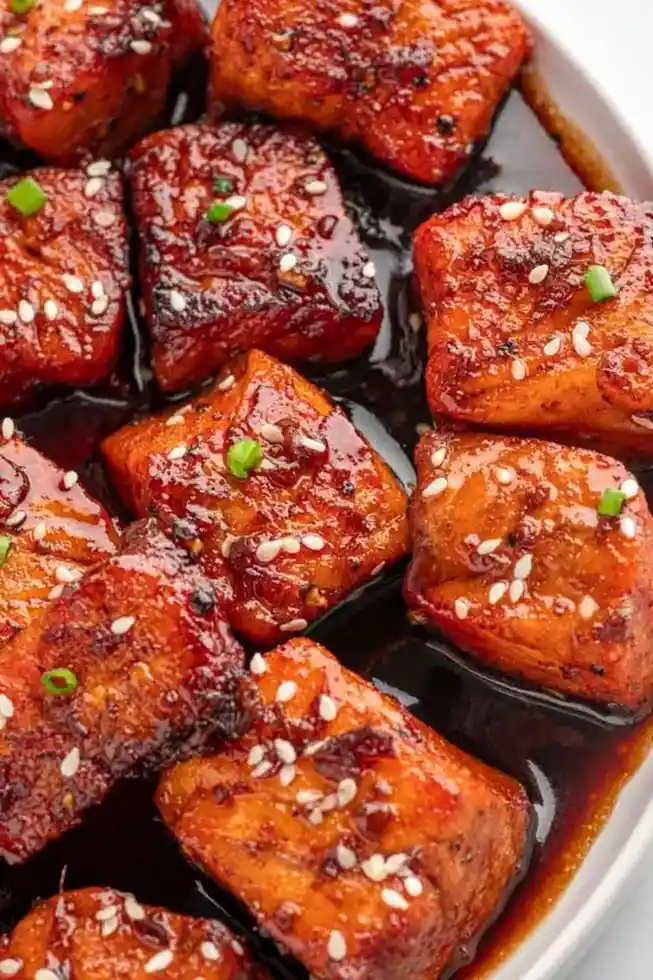
List of ingredients
- 1 ½ lb salmon, skin removed and cut into 1-inch cubes – ensures uniform cooking and bite-sized portions.
- 1 teaspoon paprika – adds a subtle smokiness and rich color.
- 1 teaspoon garlic powder – provides a concentrated savory base.
- 1 teaspoon onion powder – enhances the aromatic profile of the seasoning.
- ¾ teaspoon salt – balances the sweetness of the honey glaze.
- 1 teaspoon ground black pepper – adds a mild, warming heat.
- 3 tablespoons olive oil, divided – used for coating the fish and searing in the pan.
- 2 teaspoons garlic, minced – provides a fresh, pungent aromatic flavor.
- 1 teaspoon ginger, grated – adds a zesty, sharp note to the sauce.
- 3 tablespoons soy sauce – delivers saltiness and deep umami flavor.
- 2 tablespoons rice vinegar – provides the necessary acidity to balance the honey.
- ¼ cup honey – creates the signature sticky and sweet glaze.
- 2 teaspoons sesame seeds – adds a nutty flavor and visual texture.
- 2 teaspoons chopped chives – used as a fresh, colorful garnish.
step-by-step instructions
- Season the salmon: Pat dry the salmon cubes with a paper towel to remove excess moisture. Season them with paprika, garlic powder, onion powder, salt, and black pepper, then pour one tablespoon of oil over them and massage well to coat.
- Sear the cubes: Heat a heavy skillet with one tablespoon of oil over medium-high heat. Add the salmon cubes in a single layer and cook for 4-5 minutes, flipping them frequently until they are crispy and golden on all sides.
- Batch cook: Transfer the first batch of cooked salmon to a plate and repeat the searing process for the remaining cubes to avoid overcrowding the pan.
- Sauté aromatics: In the same skillet, add the remaining tablespoon of oil along with the minced garlic and grated ginger. Sauté for about one minute until the mixture becomes fragrant.
- Simmer the glaze: Stir in the soy sauce, rice vinegar, and honey. Simmer the sauce for 3-5 minutes, stirring occasionally, until it reduces and thickens into a glossy glaze.
- Combine and serve: Return the crispy salmon cubes to the skillet and toss them thoroughly in the sauce. Check for seasoning and serve the bites immediately over a bed of steamed rice.
Pro Cooking Tips for Perfect Salmon
Patting Salmon Dry for Better Searing
Use paper towels to thoroughly remove all surface moisture from the salmon cubes before seasoning. When the fish is wet, it creates steam in the pan, which prevents the Maillard reaction from occurring. Achieving a dry surface is the only way to ensure a golden-brown, crispy exterior.
Ensuring Uniform Cube Sizes
Cut the salmon into consistent 1-inch pieces to ensure they all cook at the same rate. If some pieces are significantly larger than others, the smaller ones will overcook while the larger ones remain raw. Use a sharp knife to make clean cuts without tearing the delicate flesh.
Using a Heavy-Bottomed Skillet
A cast iron or heavy stainless steel skillet is recommended because it retains heat much better than thin pans. This consistent heat distribution prevents the pan from cooling down when the cold fish is added. It results in a more professional sear and a better crust.
Avoiding Pan Overcrowding
Cook the salmon in batches if your skillet is not large enough to hold them in a single layer. Overcrowding the pan forces the fish to release moisture, which leads to steaming instead of searing. Leaving space between the cubes allows the hot oil to crisp every surface.
Managing Heat Levels
Maintain a medium-high heat setting throughout the searing process. If the heat is too low, the salmon will leak juices and won’t brown. If it is too high, the exterior will burn before the interior reaches the safe temperature.
Ingredient Substitutions and Alternatives
Replacing Honey with Maple Syrup
Pure maple syrup is a fantastic alternative for those who prefer a different kind of sweetness. It provides a slightly woodier, more earthy flavor profile compared to the floral notes of honey. The viscosity is similar, so the glaze will thicken in the same manner.
Using Gluten-Free Soy Alternatives
Tamari or coconut aminos are excellent choices for those avoiding gluten. Both options provide the same deep umami and salty base required for the glaze. Tamari is closer in taste to traditional soy sauce, while coconut aminos are slightly sweeter.
Apple Cider Vinegar as a Substitute
If rice vinegar is not available in your pantry, apple cider vinegar is a suitable replacement. It possesses a similar acidity level that cuts through the richness of the salmon and honey. Use the same measurement for a balanced taste.
Alternative Oil Options for High Heat
Avocado oil is a great choice due to its very high smoke point, which is ideal for searing. Grapeseed oil or canola oil also work well as neutral-flavored alternatives. Avoid using extra virgin olive oil for the high-heat sear as it may smoke too early.
Substituting Fresh Ginger with Powder
If you do not have fresh ginger root, you can use ground ginger powder from the spice rack. Use approximately one-quarter teaspoon of powder for every teaspoon of fresh grated ginger. While the flavor is less punchy, it still provides the necessary aromatic warmth.
Cooking Variations and Methods
Air Fryer Cooking Method
Preheat your air fryer to 390 degrees Fahrenheit for a faster cooking option. Place the seasoned salmon cubes in the basket and cook for 7-9 minutes. Shake the basket halfway through the cooking time to ensure an even crisp on all sides before tossing them in the simmered sauce.
Oven Roasting Technique
Spread the seasoned salmon cubes on a parchment-lined baking sheet. Roast them in a preheated oven at 400 degrees Fahrenheit for 10-12 minutes. Once they are golden, transfer them to the skillet with the prepared honey garlic glaze for the final toss.
Swapping Salmon for Shrimp
This recipe works wonderfully with large, peeled, and deveined shrimp. Reduce the searing time to 2-3 minutes per side to prevent the shrimp from becoming rubbery. The honey garlic glaze pairs perfectly with the mild flavor of shellfish.
Substituting Salmon with Chicken Breast
Cubed chicken breast can be used for a different protein variation. Increase the searing time to 6-8 minutes per side to ensure the chicken is cooked through. The glaze remains the same and provides a great contrast to the lean meat.
Adding a Spicy Kick to the Dish
Incorporate a pinch of cayenne pepper or smoked paprika into the initial seasoning blend. For additional heat in the glaze, stir in a teaspoon of sriracha or red pepper flakes during the simmering process. This adds a spicy dimension to the sweet honey.
Incorporating Citrus Notes
Add a squeeze of fresh lemon or lime juice to the sauce right before serving. The citrus acidity brightens the entire dish and cuts through the richness of the omega-3 fats in the salmon. It adds a professional, restaurant-style finish to the glaze.
Serving Suggestions and Pairings
Pairing with Steamed Rice
White jasmine or basmati rice are the classic choices as they absorb the extra honey garlic glaze beautifully. For a heartier option, use brown rice for a nuttier flavor and increased fiber content. Ensure the rice is fluffy and steamed just before serving.
Adding Quinoa for Extra Protein
Quinoa serves as a nutrient-dense base that complements the soft texture of the salmon. Its slight crunch pairs well with the sesame seeds used in the garnish. This option is excellent for those looking for a complete protein meal.
Using Cauliflower Rice for Low Carb
Sautéed cauliflower rice is an excellent low-calorie, low-carb alternative to traditional grains. It keeps the meal light and allows the bold flavors of the honey garlic sauce to stand out. Season the cauliflower rice lightly with salt and pepper.
Serving with Steamed Broccoli
Steamed broccoli florets provide a fresh, green contrast to the rich, glazed salmon. Steam them until they are tender-crisp to maintain their vibrant color and nutritional value. The broccoli stalks are great for scooping up the extra sauce.
Pairing with Sautéed Bok Choy
Bok choy adds a traditional Asian-inspired element to the plate. Sauté the bok choy quickly in a pan with a bit of minced garlic and oil. Its juicy stems and tender leaves balance the intensity of the honey glaze.
Adding Snap Peas for Crunch
Blanched snap peas offer a sweet, crisp element that refreshes the palate between bites of salmon. Their natural snap complements the seared exterior of the fish. Toss them in the pan for the last 30 seconds of cooking.
Fresh Garnish Options for Presentation
Top the finished dish with sliced green onions or extra toasted sesame seeds for visual appeal. Freshly chopped cilantro or parsley also adds a bright, herbaceous finish. A sprinkle of black sesame seeds can create a striking color contrast.
Creating Meal Prep Bowls
Divide the salmon, rice, and vegetables into airtight containers for the week. Store the components separately if possible to maintain the salmon’s texture. This makes for a healthy, ready-to-eat lunch that tastes great cold or reheated.
Storage and Reheating Advice
Refrigerating Leftovers
Store any remaining salmon bites in an airtight glass container in the refrigerator. They will stay fresh and safe to eat for up to 3 days. Keep the sauce well-distributed over the fish to prevent the salmon from drying out.
Avoiding Freezer Burn
If you wish to freeze this recipe, only freeze the salmon after it has been seasoned but before it is cooked. Use vacuum-sealed bags or freezer-safe containers to prevent ice crystals. Frozen seasoned salmon can be stored for up to 3 months.
Microwave Reheating Tips
Heat the salmon in 30-second intervals on medium power to avoid overcooking. This prevents the fish from becoming rubbery or dry. Adding a tiny splash of water to the container helps create steam and preserves the moisture.
Stovetop Reheating Method
Place the salmon bites in a non-stick pan with a teaspoon of water or oil over low heat. Cover the pan with a lid to trap the steam and heat the fish gently. This method better preserves the texture of the glaze than the microwave.
Serving Cold Salmon Bites
These glazed bites can be enjoyed cold as a topping for a fresh garden salad. Simply toss them with mixed greens, cucumber, and a light citrus vinaigrette. The cold honey glaze acts as a flavorful accent to the fresh vegetables.
Troubleshooting Common Issues
Preventing Salmon from Sticking
Ensure the pan is fully heated before adding the oil and the fish. Do not attempt to move the salmon cubes until a natural crust has formed and released from the pan. Using a high-smoke point oil also reduces the likelihood of sticking.
Fixing a Too-Thin Sauce
If the glaze is too watery, simmer it for an additional 2 to 3 minutes over medium heat. Reducing the liquid further concentrates the sugars in the honey, which naturally thickens the consistency. Stir constantly to prevent the sugars from burning.
Stopping Overcooked Salmon
Remove the salmon from the heat as soon as the flesh becomes opaque and flakes easily. Remember that carry-over cooking will continue to raise the internal temperature for a few minutes after the fish leaves the pan. This ensures the center remains moist.
Managing Burnt Glaze
Because honey contains high amounts of sugar, it can burn quickly if the heat is too high. Lower the skillet temperature before adding the honey mixture. If the sauce begins to darken too quickly, add a tablespoon of water to stabilize the temperature.
Frequently Asked Questions
Can I use frozen salmon for this recipe?
Yes, frozen salmon is a convenient option. You must thaw the fillets completely in the refrigerator overnight and pat them very dry with paper towels before seasoning to ensure they sear properly.
Is salmon healthy for daily consumption?
Salmon is highly nutritious, providing rich Omega-3 fatty acids and high-quality protein. It supports heart and brain health, making it an excellent addition to a balanced diet when paired with vegetables and whole grains.
How do I remove the skin from salmon fillets?
Start at the corner of the fillet and slide a sharp knife between the flesh and the skin. Angle the blade downward toward the skin and push away from yourself to gently peel the skin off in one piece.
Can I make this recipe without honey?
You can substitute honey with maple syrup or agave nectar. These alternatives provide a similar sweetness and viscosity, which is essential for creating the sticky glaze that coats the salmon bites.
Print
Crispy Honey Garlic Salmon Bites
- Total Time: 25 minutes
- Yield: 4 servings 1x
- Diet: Dairy-Free
Description
This honey glazed salmon is easy enough for a weeknight meal yet perfect for serving guests. Pair it with rice and steamed veggies for a complete dinner.
Ingredients
- 1 ½ lb salmon, skin removed and cut into 1-inch cubes
- 1 teaspoon paprika
- 1 teaspoon garlic powder
- 1 teaspoon onion powder
- ¾ teaspoon salt
- 1 teaspoon ground black pepper
- 3 tablespoons olive oil, divided
- 2 teaspoons garlic, minced
- 1 teaspoon ginger, grated
- 3 tablespoons soy sauce
- 2 tablespoons rice vinegar
- ¼ cup honey
- 2 teaspoons sesame seeds
- 2 teaspoons chopped chives
Instructions
- Season: Pat dry the salmon cubes with a paper towel and season them with paprika, garlic powder, onion powder, salt, and black pepper. Pour about a tablespoon of oil and massage the salmon cubes.
- Sear: Heat a heavy skillet with a tablespoon of oil, add the salmon cubes in a single layer, and cook for 4-5 minutes by flipping them often until crispy and golden. Transfer the cooked crispy salmon cubes to a plate and cook the remaining salmon.
- Sauté Aromatics: To the same skillet add the remaining oil and add garlic and ginger, saute for a minute.
- Glaze: Stir in the soy sauce, rice vinegar, and honey. Simmer the sauce for 3-5 minutes until it thickens.
- Combine: Transfer the crispy salmon back to the skillet and toss it well with the sauce. Check for seasonings.
- Serve: Serve the salmon bites over the rice and enjoy.
Notes
Dry the salmon with paper towels to remove extra moisture. Cube salmon evenly for consistent cooking. For a spicy kick, add cayenne pepper to the seasoning. You can marinate for 30-60 minutes for more flavor. Air fryer option: preheat to 390°F and cook for 7-9 minutes, flipping halfway.
- Prep Time: 10 minutes
- Cook Time: 15 minutes
- Category: Main Course
- Method: Pan-searing
- Cuisine: Asian-inspired
Nutrition
- Serving Size: 1 serving
- Calories: 540 kcal
- Sugar: 20 g
- Sodium: 820 mg
- Fat: 28 g
- Saturated Fat: 5 g
- Unsaturated Fat: 23 g
- Trans Fat: 0 g
- Carbohydrates: 25 g
- Fiber: 1 g
- Protein: 36 g
- Cholesterol: 85 mg