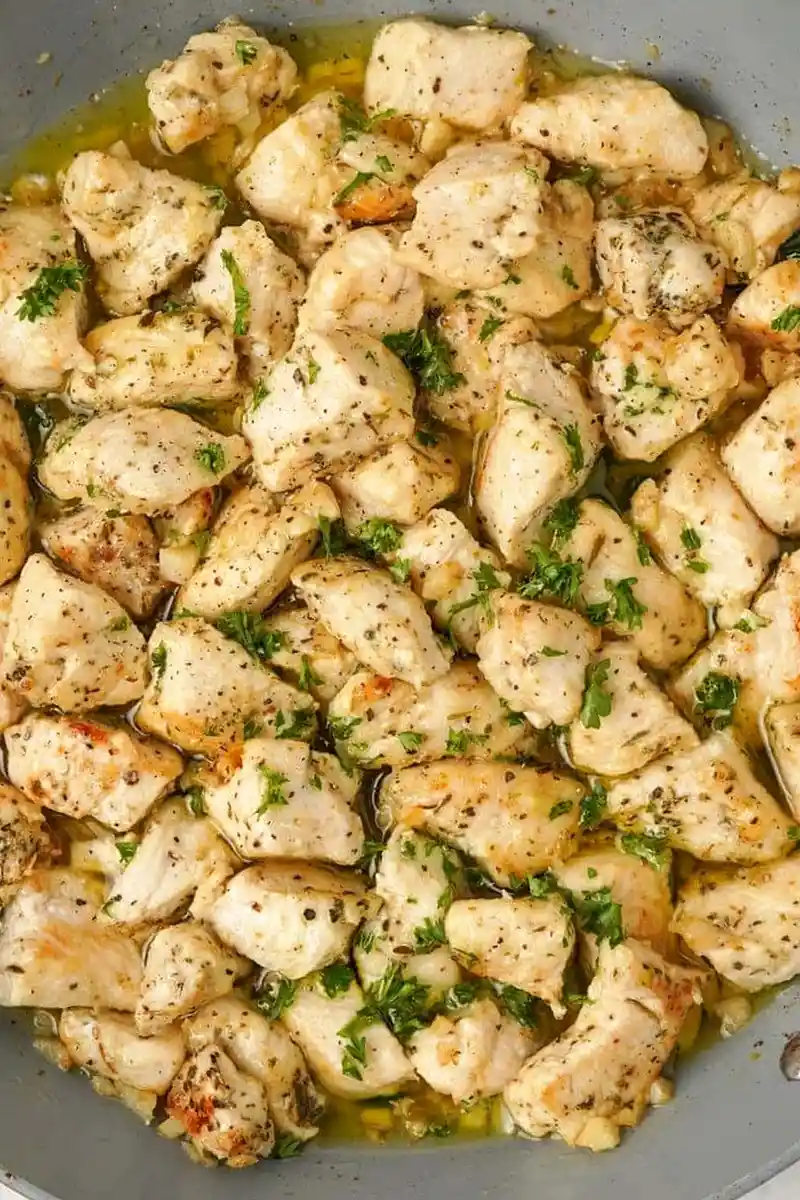
These garlic butter chicken bites are a fast and savory meal option that comes together in just 20 minutes. They feature pan-seared chicken breast pieces tossed in a rich, lemony garlic sauce for a tender result.
List of ingredients
- 2 pounds chicken breasts – cut into bite-sized pieces for even cooking.
- 1 tablespoon extra virgin olive oil – used to coat the chicken and prevent sticking.
- 2 tablespoons all purpose flour – helps create a golden crust and thickens the sauce.
- 1 teaspoon Italian seasoning blend – adds a balanced herb profile.
- 1 teaspoon salt – enhances all the primary flavors.
- 1/2 teaspoon ground black pepper – provides a subtle heat.
- 3/4 cup unsalted butter – divided between searing and sauce making.
- 3 tablespoons minced fresh garlic – provides the core aromatic flavor.
- 1 teaspoon fresh lemon juice – adds acidity to cut through the richness of the butter.
- 1 tablespoon fresh parsley – chopped for a fresh finish and garnish.
step-by-step instructions
- Prepare the chicken: In a large bowl, toss the chicken pieces with olive oil. Stir in the flour, Italian seasoning, salt, and pepper until every piece is thoroughly coated.
- Sear the meat: Melt 3 tablespoons of butter in a large skillet over medium heat. Add the chicken pieces in a single layer, ensuring they are spaced apart to allow for proper browning.
- Brown the first side: Let the chicken cook undisturbed for about 3 minutes. Do not move the pieces until they have developed a golden-brown crust.
- Finish cooking: Flip the chicken pieces and cook for another 2 minutes. Use a meat thermometer to ensure the internal temperature has reached 165 degrees F.
- Rest the chicken: Remove the cooked chicken from the skillet and place it on a plate, setting it aside while you prepare the sauce.
- Deglaze the pan: Reduce the heat to medium-low and add the remaining butter. Use a spatula to scrape up the browned bits from the bottom of the pan to incorporate that flavor into the sauce.
- Sauté the garlic: Stir the minced garlic into the melted butter. Cook for about 1 minute until the garlic becomes fragrant but not brown.
- Combine and coat: Return the chicken to the skillet and stir in the lemon juice and chopped parsley. Toss everything together until the chicken is fully coated in the garlic butter sauce.
- Serve: Transfer to a serving platter and serve immediately while hot.
Pan-Searing Mastery Techniques
Patting the Chicken Dry
Before adding olive oil or flour, use paper towels to pat the chicken pieces completely dry. Excess surface moisture creates steam in the pan, which prevents the chicken from browning and leads to a grey, boiled appearance. Dry meat ensures a crisp, golden sear.
Using High-Smoke Point Oil
The combination of olive oil and butter provides both flavor and a higher smoke point than butter alone. The oil helps stabilize the butter, preventing it from burning too quickly at medium heat. This creates a consistent heat environment for the flour coating to crisp up.
Avoiding Pan Crowding
Ensure the chicken pieces are not touching each other in the skillet. Overcrowding drops the temperature of the pan and releases too much moisture, which causes the meat to steam rather than sear. Cook in batches if your skillet is too small to maintain a single layer.
The Importance of the First Sear
Resist the urge to stir the chicken immediately after placing it in the pan. Developing a crust requires undisturbed contact with the hot surface for several minutes. Moving the meat too early disrupts the Maillard reaction and prevents the formation of a flavorful crust.
Controlling the Pan Temperature
Maintain a steady medium heat to avoid burning the flour coating before the chicken is cooked through. If the butter begins to smoke excessively, lower the heat slightly. A consistent temperature ensures the exterior is golden while the interior remains juicy.
Ingredient Substitutions and Alternatives
Swapping Breast for Chicken Thighs
Boneless, skinless chicken thighs can be used as a richer alternative to breasts. Thighs have a higher fat content, making them more forgiving and less likely to dry out. Note that thighs may require an extra 1-2 minutes of cooking time to reach the safe internal temperature of 165°F.
Gluten-Free Flour Options
For a gluten-free version, replace all-purpose flour with almond flour or a 1:1 gluten-free flour blend. Cornstarch is another viable option that creates a slightly glossier sauce. The ratios remain the same as the original recipe.
Controlling Sodium with Butter
Unsalted butter is recommended so you can precisely control the salt content of the dish. If you only have salted butter, reduce the added salt in the flour mixture by half. This prevents the final dish from becoming overly salty after the butter reduces.
Fresh vs Dried Herbs
Fresh parsley provides a bright, clean finish that balances the butter. If fresh parsley is unavailable, use a smaller amount of dried parsley, as dried herbs are more concentrated. Add dried herbs during the garlic sauté phase rather than at the end for better flavor integration.
Alternative Seasoning Blends
While Italian seasoning is standard, you can substitute it with a mix of dried oregano, basil, and thyme. For a different profile, use a combination of paprika and onion powder. Keep the total amount of seasoning to one teaspoon to maintain the garlic-forward taste.
Flavor Customizations
Adding Spicy Heat
To introduce a spicy element, add half a teaspoon of crushed red pepper flakes to the butter when sautéing the garlic. This infuses the butter with a subtle heat that complements the lemon juice. Adjust the quantity based on your heat tolerance.
Incorporating Honey for Sweetness
A tablespoon of honey stirred into the garlic butter sauce creates a sweet and savory glaze. Add the honey at the same time as the lemon juice to ensure it melts and emulsifies. This variation is particularly popular with children and pairs well with rice.
Enhancing with Lemon Zest
For a more intense citrus flavor, add one teaspoon of freshly grated lemon zest along with the lemon juice. The zest contains aromatic oils that provide a deeper citrus punch than juice alone. This adds a professional, bright note to the final dish.
Using Different Aromatic Bases
You can supplement the fresh garlic with a pinch of garlic powder in the flour dredging stage. This ensures garlic flavor is embedded in the crust as well as the sauce. For an earthy twist, add a small amount of minced shallots to the butter before adding the garlic.
Recommended Side Dishes
Rice and Grain Options
Serve these chicken bites over a bed of fluffy white rice, brown rice, or quinoa. The grains absorb the excess garlic butter sauce, ensuring no flavor goes to waste. Garlic-herb seasoned rice is a particularly strong pairing for this recipe.
Low-Carb Vegetable Pairings
Pair the chicken with sautéed asparagus, roasted Brussels sprouts, or air-fryer broccoli. These vegetables provide a crisp texture and nutritional balance to the rich butter sauce. Steamed cauliflower is another excellent low-carb option.
Pasta and Noodle Bases
Toss the chicken bites with fettuccine alfredo or simple buttered noodles. The creamy nature of Alfredo sauce complements the garlic and lemon notes of the chicken. For a lighter pasta option, use angel hair pasta tossed in olive oil and garlic.
Fresh Salad Complements
A crisp Caesar salad or a garden salad with a lemon-vinaigrette dressing cuts through the richness of the butter. The acidity of the salad dressing mirrors the lemon juice in the chicken. This creates a balanced meal with contrasting temperatures and textures.
Storage and Preservation
Proper Refrigeration
Store leftover chicken bites in an airtight container in the refrigerator for up to 4 days. Ensure the chicken is completely cooled before sealing the container to prevent excess moisture buildup. The sauce may thicken in the fridge, which is normal.
Freezing and Thawing
The chicken can be frozen for up to 3 months, though the texture of the sauce may change slightly. Freeze the pieces in a single layer on a baking sheet before transferring them to a freezer bag to prevent clumping. Thaw overnight in the refrigerator before reheating.
Best Reheating Techniques
Reheat the chicken in a skillet over medium heat with a small pat of fresh butter to restore the sauce’s consistency. Alternatively, use an oven at 350°F until warmed through. Avoid microwaving if possible, as it can make the chicken rubbery and separate the butter sauce.
Cooking Troubleshooting
Preventing Bitter Garlic
Garlic burns quickly and becomes bitter if exposed to high heat for too long. Always lower the skillet temperature to medium-low before adding the minced garlic. Sauté the garlic for only 60 seconds or until it smells fragrant but remains pale yellow.
Fixing Thin Sauces
If the sauce seems too thin, let it simmer for an additional minute before returning the chicken to the pan. The flour remaining from the chicken dredging naturally thickens the butter as it cooks. Avoid adding more flour directly to the pan, as it will create clumps.
Avoiding Rubbery Meat
Rubbery chicken is usually the result of overcooking. Use a digital meat thermometer to pull the chicken off the heat exactly at 165°F. Let the meat rest for a few minutes before tossing it back into the sauce to keep the juices locked in.
Managing Butter Browning
Butter contains milk solids that brown and then burn. If the butter turns dark brown too quickly, your pan is too hot. Keep the heat at medium-low during the sauce stage to ensure a golden, creamy emulsion rather than a burnt oil.
Frequently Asked Questions
How do I know when the chicken is perfectly cooked?
The only foolproof method is using a meat thermometer to check that the internal temperature has reached 165°F. Cutting into the meat to check the color can release essential juices, which often leads to dry chicken.
Can I use chicken tenders instead of breasts?
Yes, chicken tenders work well and save you the time of cutting the meat into pieces. However, tenders vary in thickness, so you will need to adjust the searing time to ensure the thickest part is fully cooked.
Can I double the recipe for a larger crowd?
You can double the ingredients, but you must cook the chicken in batches. Overcrowding the pan with four pounds of meat will cause the chicken to steam instead of sear, ruining the golden crust.
What can I use if I don’t have Italian seasoning?
A mix of dried oregano and dried basil is the closest substitute. If you have neither, a small amount of dried thyme or even a pinch of poultry seasoning will provide a similar savory herbal base.
Why is the flour necessary in this recipe?
The flour serves two purposes: it creates a protective barrier that helps the chicken brown and it acts as a thickening agent for the butter sauce. This ensures the sauce clings to the meat rather than pooling at the bottom of the plate.
Print
Garlic Butter Chicken Bites
- Total Time: 20 minutes
- Yield: 6 servings 1x
- Diet: General
Description
Garlic chicken bites are tender, flavorful, and ready in 20 minutes! Made with chunks of chicken breast, garlic, butter and lemon juice.
Ingredients
- 2 pounds chicken breasts (cut into bite sized pieces)
- 1 tablespoon extra virgin olive oil
- 2 tablespoons all purpose flour
- 1 teaspoon Italian seasoning blend
- 1 teaspoon salt
- 1/2 teaspoon ground black pepper
- 3/4 cup unsalted butter (divided)
- 3 tablespoons minced fresh garlic
- 1 teaspoon fresh lemon juice
- 1 tablespoon fresh parsley (chopped)
Instructions
- Step 1: In a large bowl, toss the prepared chicken breasts in olive oil. Add the flour, Italian seasoning, salt and pepper and stir until completely incorporated.
- Step 2: In a large skillet over medium heat, melt 3 tablespoons butter and swirl to coat the pan.
- Step 3: Add the chicken, being sure to space evenly apart. Do not touch until the chicken appears to be almost cooked through (about 3 minutes).
- Step 4: Flip over the chicken pieces and continue cooking an additional 2 minutes or until the internal temperature reads 165 degrees F.
- Step 5: Remove the cooked chicken from the pan and set aside.
- Step 6: Lower the temperature to medium low heat and add the remaining butter to the skillet. Use a spatula to scrape the browned chicken bits from the bottom of the pan.
- Step 7: Add garlic to the butter, cooking for 1 minute or until fragrant.
- Step 8: Return the chicken to the pan and add the lemon juice and fresh parsley.
- Step 9: Toss to fully coat the chicken in the sauce and serve immediately.
Notes
Storage: Leftover chicken can be stored in an airtight container in the fridge for up to 4 days. Freezing: These can be frozen, but reheating chicken from frozen can dry them out a bit. Reheating: The leftover chicken can be reheated in a skillet over medium or in a 350°F oven until warmed.
- Prep Time: 10 minutes
- Cook Time: 10 minutes
- Category: Dinner
- Method: Pan-searing
- Cuisine: American
Nutrition
- Serving Size: 1 serving
- Calories: 413 kcal
- Sugar: 1 g
- Sodium: 567 mg
- Fat: 29 g
- Saturated Fat: 16 g
- Unsaturated Fat: 12 g
- Trans Fat: 1 g
- Carbohydrates: 4 g
- Fiber: 1 g
- Protein: 33 g
- Cholesterol: 158 mg