This refreshing shrimp and avocado salad is a nutrient-dense meal perfect for quick lunches or light dinners. It combines high-protein seafood with healthy fats and a zesty lime dressing for a bright flavor profile.
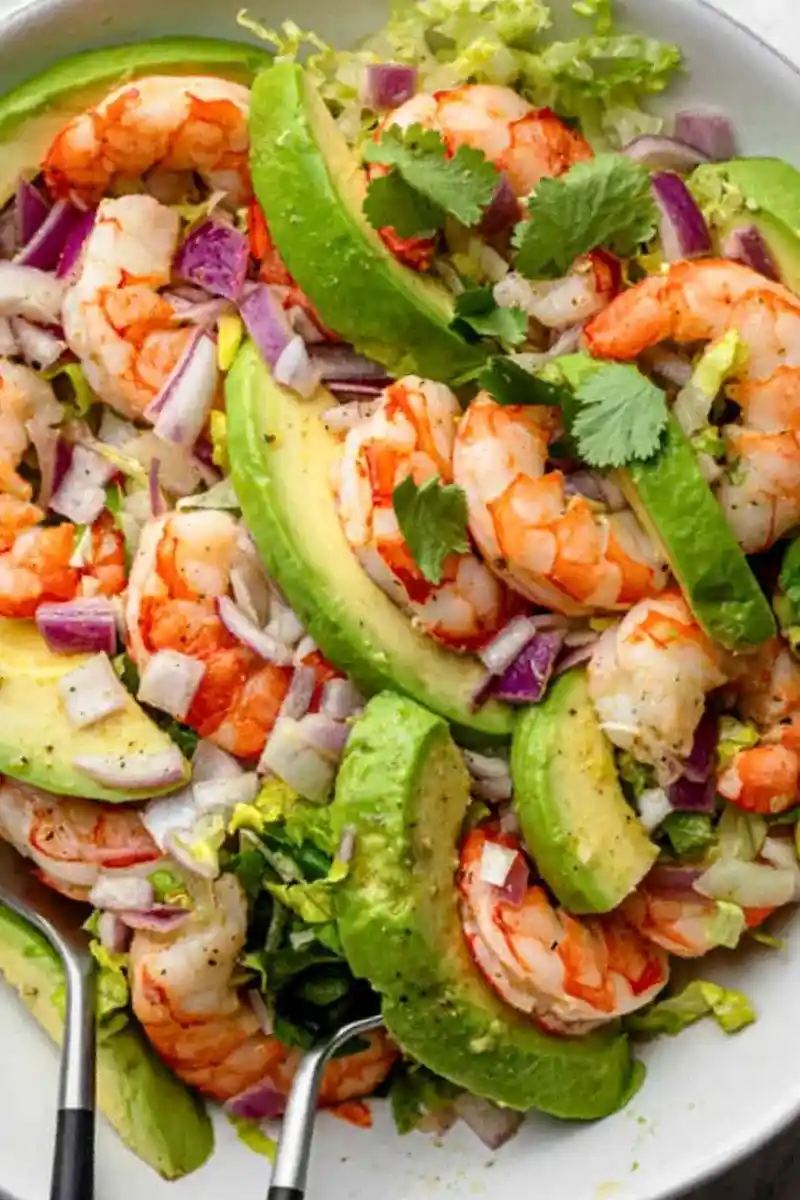
List of ingredients
- 1 pound large cooked shrimp (thawed) – use peeled and deveined for convenience.
- 2 cups shredded lettuce – crisp romaine or iceberg works best.
- 1/4 red onion (diced) – provides a sharp, savory contrast.
- 2 avocados (sliced) – ensure they are ripe but still firm.
- 1 tablespoon chopped cilantro – adds a fresh, herbal finish.
- 3 tablespoons extra-virgin olive oil – provides a smooth base for the dressing.
- 3 tablespoons lime juice – adds essential acidity and brightness.
- 1 teaspoon cumin – lends a warm, earthy depth to the vinaigrette.
- 1/2 teaspoon salt – enhances all the existing flavors.
- 1/2 teaspoon fresh cracked pepper – adds a subtle heat.
step-by-step instructions
- Thaw the shrimp: Run cold water over frozen, cooked shrimp for 5-10 minutes, or thaw them in the refrigerator overnight. Drain all excess water and pat the shrimp dry with paper towels to ensure the dressing adheres well.
- Prepare the dressing: Use a large mixing bowl that can accommodate all salad components. Whisk together the olive oil, lime juice, cumin, salt, and pepper until the mixture is fully emulsified.
- Combine base ingredients: Place the thawed shrimp, shredded lettuce, and diced red onions into the bowl with the dressing. Toss gently until everything is evenly coated.
- Add final touches: Carefully tuck the sliced avocados around the shrimp to avoid mashing them. Garnish the top with freshly chopped cilantro.
- Serve: Present the salad immediately at room temperature or keep it chilled in the refrigerator until serving.
Seafood Preparation Guidance
Thawing Frozen Shrimp Safely
To maintain the texture of the shrimp, avoid using warm water or the microwave. The safest method is a slow thaw in the refrigerator or a quick rinse under cold running water. This prevents the proteins from toughening or releasing too much moisture.
Steaming Raw Shrimp for Best Texture
If you start with raw shrimp, place them in a steamer basket over boiling water for 5-6 minutes. Cook them only until they turn opaque and form a C-shape. Overcooking will result in a rubbery texture that clashes with the soft avocado.
Selecting the Appropriate Shrimp Size
Large shrimp provide a substantial bite and hold up well against the other ingredients. If the shrimp are too large for your preference, you can cut them into thirds. This ensures every forkful contains a balanced mix of seafood and vegetables.
Produce Optimization Techniques
Identifying Perfectly Ripe Avocados
Gently squeeze the avocado in the palm of your hand; it should yield slightly but not feel mushy. Avoid avocados that are too soft, as they will break apart during the tossing process. A dark skin usually indicates ripeness, but the feel is the most reliable indicator.
Slicing Avocados to Maintain Structure
Cut the avocado in half and remove the pit before slicing the flesh into uniform wedges. Carefully scoop the slices out with a spoon to keep the edges clean. Adding them at the very end prevents them from disintegrating into the lettuce.
Reducing the Sharpness of Red Onions
To mellow the pungent flavor of raw red onions, dice them very finely. You can let the diced onions sit in the lime-based dressing for a few minutes before adding the other ingredients. This process, similar to quick-pickling, softens the bite.
Preparing Lettuce for Maximum Crunch
Ensure the shredded lettuce is thoroughly dried after washing using a salad spinner or paper towels. Excess water will dilute the dressing and make the salad soggy. Shred the leaves into thin strips to ensure they integrate well with the shrimp.
Dressing and Flavor Enhancements
Creating a Stable Vinaigrette Emulsion
Whisk the lime juice and spices first before slowly streaming in the olive oil. This technique helps the oil and acid bond, creating a creamy consistency that clings to the shrimp. A handheld frother or a small whisk is ideal for this step.
Customizing the Earthy Flavor of Cumin
Cumin provides a distinct warmth that complements the lime. If you prefer a more neutral flavor, you can reduce the amount to a half teaspoon or omit it entirely. For a deeper taste, use toasted cumin powder.
Selecting Fresh Lime Over Bottled Juices
Freshly squeezed lime juice contains volatile oils and a bright acidity that bottled versions lack. Squeeze the limes just before mixing to ensure the flavor is peak. Roll the lime on the counter before cutting to extract more juice.
Choosing the Right Grade of Olive Oil
Extra-virgin olive oil is recommended for its fruity notes and health benefits. If you prefer a more neutral taste, avocado oil is an excellent substitute. Avoid using highly refined vegetable oils which lack the flavor depth needed for this recipe.
Ingredient Substitutions
Substituting Red Onions with Green Onions
For a milder onion flavor, replace the red onion with thinly sliced scallions. Use both the white and green parts of the stalk for a mix of flavor and color. This is a great option for those who find red onions too overpowering.
Using Alternative Leafy Greens
While shredded lettuce is traditional, baby spinach or arugula can add more nutrients and a peppery taste. Kale is another option, though it should be massaged with a bit of oil first to soften the leaves. Ensure the greens are chopped to a similar size as the shrimp.
Replacing Cilantro with Other Fresh Herbs
If you do not enjoy the taste of cilantro, fresh flat-leaf parsley is a neutral and visually similar replacement. Fresh basil also works well, providing a sweeter, aromatic quality to the salad. Use the same quantity as specified for the cilantro.
Utilizing Alternative Heart-Healthy Oils
If olive oil is unavailable, grapeseed oil or sunflower oil can be used as neutral bases. Avocado oil is particularly fitting given the other ingredients in the salad. These oils have high smoke points, though that is less critical for a cold dressing.
Serving Suggestions and Variations
Adding Sweet Corn for Added Texture
Adding a half cup of roasted or canned sweet corn introduces a pleasant sweetness and a pop of texture. Mix the corn in along with the shrimp and onions. This variation adds a touch of heartiness to the light salad.
Incorporating Cherry Tomatoes for Color
Halved cherry tomatoes add a bright red color and a juicy burst of flavor. They complement the acidity of the lime dressing and the creaminess of the avocado. Toss them in gently to avoid bruising the fruit.
Serving the Salad in Tortilla Wraps
For a more filling meal, scoop the shrimp avocado mixture into warm flour or corn tortillas. Add a dollop of Greek yogurt or a slice of Monterey Jack cheese for extra richness. This transforms the salad into a handheld wrap.
Combining the Salad with Cooked Quinoa
To increase the fiber and satiety of the dish, mix in one cup of cooked, cooled quinoa. The grains absorb the excess dressing and provide a satisfying chew. This makes the salad suitable as a main course for lunch.
Storage and Preservation
Preventing Avocado Browning Through Oxidation
Avocados brown when exposed to oxygen. To slow this process, toss the avocado slices in a small amount of extra lime juice before adding them to the salad. This creates an acidic barrier that preserves the green color.
Keeping Lettuce from Becoming Soggy
If you are prepping the salad in advance, store the dressing in a separate container. Toss the lettuce and shrimp with the dressing only right before serving. This ensures the greens remain crisp and do not wilt from the acidity.
Storing the Dressing in Airtight Containers
The lime and oil vinaigrette can be made up to two weeks in advance. Store it in a glass jar with a tight lid in the refrigerator. Shake well before each use as the oil and lime juice will naturally separate over time.
Maximum Refrigerated Shelf Life
Once assembled, the salad is best consumed within 24 hours. While it can last up to two days in an airtight container, the avocado and lettuce will degrade. Store it in the coldest part of the fridge to maintain freshness.
Temperature and Troubleshooting
Avoiding High Temperatures During Serving
This salad is designed to be served cold or at room temperature. Do not heat the salad, as the avocado will become bitter and the lettuce will wilt immediately. Keep the bowl chilled until the moment of service.
Maintaining the Optimal Chilled Temperature
For the most refreshing experience, chill the shrimp and the bowl before assembly. This helps keep the ingredients crisp during outdoor gatherings or summer parties. Serve on a platter set over a larger bowl of ice if needed.
Preventing Excess Water in the Bowl
If you notice the salad becoming watery, it is likely due to poorly dried shrimp or lettuce. Use a clean paper towel to gently blot the top of the salad. In the future, ensure all ingredients are patted dry before mixing.
Correcting an Overly Acidic Dressing
If the lime juice is too strong, balance the acidity with a tiny pinch of sugar or a teaspoon of honey. This neutralizes the sharp edges of the lime without altering the overall flavor profile. Whisk thoroughly to dissolve the sweetener.
Handling Over-Ripe Avocado Flesh
If your avocado is slightly too soft, avoid slicing it into wedges. Instead, gently fold in small cubes of avocado. This prevents the fruit from turning into a mash when you toss the salad.
Frequently Asked Questions
Can I Use Raw Shrimp?
Yes, but you must cook them first. You can either steam them for 5-6 minutes or sauté them in a pan with a little olive oil until they are pink and opaque. Let them cool completely before adding them to the cold salad.
How Long Does the Dressing Stay Fresh?
The vinaigrette stays fresh for up to 14 days when stored in an airtight container in the refrigerator. Simply shake the jar to re-emulsify the oil and lime juice before using it.
Is This Salad Suitable for Freezing?
No, this salad should not be frozen. The avocado will lose its texture and become brown, and the lettuce will turn mushy upon thawing. Only the cooked shrimp can be frozen; the rest of the ingredients must be fresh.
Print
Shrimp Avocado Salad
- Total Time: 10 minutes
- Yield: 4 servings 1x
- Diet: Low-carb
Description
Make this quick and healthy Shrimp Avocado Salad in just 20 minutes! It’s low-carb, high in protein, and full of fresh flavor.
Ingredients
- 1 pound large cooked shrimp (thawed)
- 2 cups shredded lettuce
- ¼ red onion (diced)
- 2 avocados (sliced)
- 1 tablespoon chopped cilantro
- 3 tablespoons extra-virgin olive oil
- 3 tablespoons lime juice
- 1 teaspoon cumin
- 1/2 teaspoon salt
- 1/2 teaspoon fresh cracked pepper
Instructions
- Thaw: To thaw frozen, cooked shrimp, run cold water over them for 5-10 minutes until thawed or place frozen shrimp in a bowl, cover it, and thaw in the fridge overnight. Drain off any excess water and pat dry with paper towels.
- Dressing: To make the dressing, use a bowl large enough to hold all the salad ingredients. Whisk together the olive oil, lime juice, cumin, salt and pepper until emulsified.
- Combine: Transfer thawed shrimp on top of the dressing. Add the shredded lettuce and red onions and combine with the dressing in the bowl. Tuck the sliced avocados around the shrimp and garnish with fresh cilantro.
- Serve: Serve at room temperature or chilled.
Notes
Store any leftovers in an airtight container. They will last about 2 days in the fridge, but it’s best to enjoy it within 24 hours since the avocados will slightly brown the next day.
- Prep Time: 10 minutes
- Cook Time: 0 minutes
- Category: Salad
- Method: Mixing
- Cuisine: American
Nutrition
- Serving Size: 1 serving
- Calories: 363 kcal
- Sugar: 2 g
- Sodium: 438 mg
- Fat: 26 g
- Saturated Fat: 4 g
- Unsaturated Fat: 22 g
- Trans Fat: 0.01 g
- Carbohydrates: 12 g
- Fiber: 7 g
- Protein: 25 g
- Cholesterol: 183 mg