This elegant dish features pan-seared salmon fillets simmered in a rich, savory cream sauce. It combines the brightness of sun-dried tomatoes and fresh spinach for a complete meal. This recipe is designed for quick preparation without sacrificing flavor.
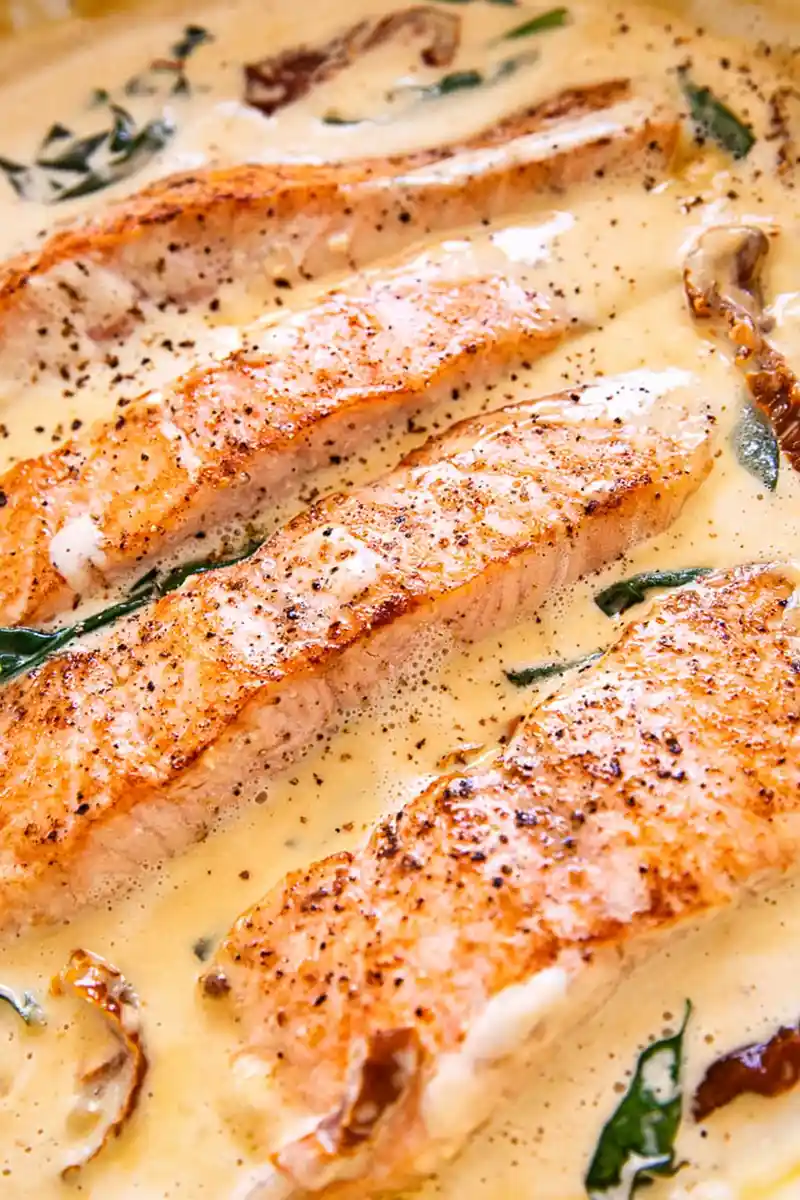
List of ingredients
- 1 tbsp butter – adds richness and prevents sticking.
- 1 tbsp olive oil – helps the salmon sear at higher temperatures.
- 4 salmon fillets – use fresh or thawed pieces of equal thickness.
- Salt and pepper – for basic seasoning of the fish.
- 2 cloves garlic – finely minced for a fragrant base.
- 3-4 sun-dried tomatoes – packed in oil, thinly sliced.
- 125ml vegetable broth mixed with a squeeze of lemon juice – provides acidity and depth without alcohol.
- 250ml double/heavy cream – creates the thick, velvety texture of the sauce.
- 50g Parmesan cheese – freshly grated for the best melting properties.
- 30g fresh spinach – adds color and nutritional value.
step-by-step instructions
- Prepare the Fish: Pat the salmon fillets dry on all sides using paper towels to remove excess moisture. Season them generously with salt and pepper.
- Sear the Salmon: Heat the olive oil and butter in a frying pan over medium-high heat. Place the salmon in the pan skin side up first and sear for 6-7 minutes until the skin is crispy and golden.
- Rest the Fillets: Remove the salmon from the pan and transfer the pieces to a clean plate. The fish does not need to be fully cooked through at this stage.
- Sauté Aromatics: Using the same pan, add the minced garlic and sliced sun-dried tomatoes. Sauté over very low heat for approximately 30 seconds to avoid burning the garlic.
- Reduce the Base: Pour in the vegetable broth and lemon juice to deglaze the pan. Let the liquid simmer for about 5 minutes until it has reduced by half.
- Create the Cream Sauce: Stir in the heavy cream and freshly grated Parmesan cheese. Continue stirring until the cheese is fully incorporated and the sauce is smooth.
- Final Simmer: Add the fresh spinach to the sauce and return the salmon fillets to the pan. Let everything simmer over low heat for an additional 5 minutes.
- Finish and Serve: Taste the sauce and add a pinch of salt if needed. Serve immediately while the sauce is creamy and the fish is tender.
Technical Searing Guidance
Remove Surface Moisture
Always pat the salmon dry with a paper towel before seasoning. Excess water on the surface creates steam, which prevents the fish from developing a brown, crispy crust.
Maintain High Pan Temperature
Ensure the oil and butter are shimmering before adding the fish. A hot pan ensures the proteins sear quickly, locking in moisture and creating a professional finish.
Avoid Overcrowding the Pan
Leave space between each salmon fillet during the searing process. Crowding the pan drops the temperature and can lead to the fish poaching in its own juices.
Start with Skin Side Up
Searing the flesh side first helps set the structure of the fillet. This ensures the skin side becomes exceptionally crispy when flipped in the final minutes.
Ingredient Substitutions
Using Alternative Fish Fillets
If salmon is unavailable, trout is an excellent substitute due to its similar fat content and texture. Steelhead trout works particularly well with creamy Parmesan sauces.
Swapping Spinach for Other Greens
Kale or arugula are great alternatives if you do not have spinach. Kale requires a slightly longer simmer time to soften compared to baby spinach.
Choosing Different Cheese Options
Pecorino Romano can replace Parmesan for a saltier, sharper flavor profile. Ensure you grate the cheese yourself to avoid the clumping agents found in pre-shredded bags.
Dairy-Free Cream Alternatives
Full-fat coconut cream or cashew cream can be used for a dairy-free version. Note that these will change the flavor profile and may require a pinch more salt for balance.
Sauce Optimization Tips
Use Freshly Grated Cheese
Avoid using freeze-dried or pre-grated Parmesan cheese. Freshly grated cheese melts smoothly into the cream, whereas pre-grated versions often leave the sauce gritty.
Control the Reduction Process
Ensure the broth reduces by half before adding the cream. This concentrates the flavor and prevents the final sauce from being too watery.
Balance Acidity with Lemon
Adding a squeeze of lemon juice to the broth mimics the acidity of white wine. This cuts through the richness of the heavy cream and Parmesan cheese.
Manage the Heat Level
Keep the heat low once the cream and cheese are added. High heat can cause the dairy to separate or the cheese to become oily.
Side Dish Pairings
Serving with Long Pasta
Linguine or fettuccine are the best pasta choices for this recipe. The wide surface area of these noodles allows the thick Parmesan sauce to cling effectively.
Pairing with Steamed Rice
Basmati or jasmine rice provides a neutral base that absorbs the extra sauce. This turns the dish into a hearty, comforting meal.
Combining with Roasted Vegetables
Roasted asparagus or broccolini complements the Tuscan flavors perfectly. The charred flavor of the vegetables balances the richness of the cream.
Adding a Fresh Green Salad
A light arugula salad with a lemon vinaigrette helps cleanse the palate. The bitterness of the greens contrasts well with the savory Parmesan sauce.
Storage and Preservation
Airtight Container Storage
Place leftover salmon and sauce in a glass airtight container. Ensure the fish is fully covered by the sauce to prevent the fillets from drying out in the fridge.
Refrigeration Timeline
This dish can be stored in the refrigerator for up to two days. Beyond this time, the texture of the salmon may degrade and the sauce may separate.
Preventing Sauce Separation
When cooling the dish, let it reach room temperature before sealing. This reduces condensation inside the container, which can affect the sauce consistency.
Freezing Considerations
It is not recommended to freeze this dish. The heavy cream and Parmesan sauce typically break and separate upon thawing, resulting in a grainy texture.
Reheating Methods
Oven Reheating Technique
Place the salmon and sauce in a baking dish and cover it tightly with foil. Heat at 135C (275F) for about 15 minutes until warmed through.
Stovetop Gentle Warming
Heat the sauce in a pan over low heat, adding a splash of milk or broth to loosen it. Gently place the salmon on top and cover with a lid for a few minutes.
Avoiding the Microwave
Microwaves often overcook fish and cause cream sauces to split. If you must use one, use the lowest power setting and heat in 30-second intervals.
Common Cooking Mistakes
Overcooking the Salmon
Salmon continues to cook after it is removed from the heat. Avoid cooking the fillets completely during the first sear to prevent them from becoming dry during the final simmer.
Burning the Garlic
Garlic burns quickly over high heat, becoming bitter. Always reduce the pan temperature to low before adding the minced garlic to the oil.
Adding Spinach Too Early
Adding spinach at the beginning of the sauce process can cause it to overcook and lose its vibrant green color. Stir it in just before returning the salmon to the pan.
Over-salting the Sauce
Parmesan cheese and sun-dried tomatoes are naturally salty. Always taste the finished sauce before adding extra salt to avoid overseasoning.
Frequently Asked Questions
Can I use frozen salmon fillets?
Yes, but you must thaw them completely in the refrigerator and pat them very dry. Frozen fillets release more water, which can hinder the searing process.
How do I know when the salmon is fully cooked?
The salmon is done when it flakes easily with a fork and the center is opaque. The internal temperature should reach approximately 63C (145F).
Can I make this sauce without heavy cream?
You can use half-and-half or whole milk thickened with a small amount of cornstarch. However, the sauce will be thinner and less rich than the original version.
What is the best way to slice sun-dried tomatoes?
Slice them into thin strips or julienne them. This ensures they distribute evenly throughout the sauce and provide a consistent burst of flavor in every bite.
Can I add other vegetables to the sauce?
Yes, sautéed mushrooms or diced zucchini work very well. Add them at the same time as the garlic to ensure they are cooked through before adding the cream.
Print
Creamy Tuscan-Style Salmon with Parmesan Sauce
- Total Time: 25 minutes
- Yield: 4 servings 1x
- Diet: General
Description
This pan seared salmon in Parmesan cream sauce with sun-dried tomatoes and spinach is a dinner inspired by Tuscan flavours.
Ingredients
- 1 tbsp butter
- 1 tbsp olive oil
- 4 pieces salmon fillet
- salt and pepper
- 2 cloves garlic
- 3–4 sun-dried tomatoes (packed in oil, sliced)
- 125ml / 1/2 cup vegetable broth and a squeeze of lemon juice
- 250ml / 1 cup double/heavy cream
- 50g / 1/2 cup Parmesan cheese
- 30g / 1 cup fresh spinach
Instructions
- Step: Pat the salmon dry with a paper towel all over to remove excess moisture. Season salmon with salt and pepper, heat the olive oil together with butter in a frying pan, then sear the salmon over medium high heat until golden and the skin side is crispy, starting with the skin side up. This should take approximately 6-7 minutes. The salmon doesn’t have to be cooked all the way through at this point. Remove the salmon to a plate until later.
- Step: To the same pan add the garlic and sliced sun-dried tomatoes, sauté for about 30 seconds over very low heat, then deglaze the pan with the vegetable broth and a squeeze of lemon juice and let it simmer for about 5 minutes until the liquid is reduced by a half.
- Step: Add the heavy cream and grated Parmesan cheese, stir until the cheese is incorporated into the sauce, then add the spinach and bring the salmon back into the pan, let the sauce simmer over low heat for 5 minutes. Season the sauce with salt to taste.
Notes
Use freshly grated Parmesan cheese as pre-grated versions may not melt smoothly. Pat the salmon dry to ensure a proper sear rather than steaming. Kale or arugula can be used as a substitute for spinach.
- Prep Time: 5 minutes
- Cook Time: 20 minutes
- Category: Main Course
- Method: Pan Searing
- Cuisine: American
Nutrition
- Serving Size: 1 fillet
- Calories: 356 kcal
- Sugar: 1 g
- Sodium: 261 mg
- Fat: 33 g
- Saturated Fat: 19 g
- Unsaturated Fat: 13 g
- Trans Fat: 1 g
- Carbohydrates: 5 g
- Fiber: 1 g
- Protein: 7 g
- Cholesterol: 102 mg