This quick one-pan meal combines tender chicken with a variety of fresh vegetables in a savory balsamic glaze. It is an efficient way to prepare a balanced, nutrient-dense dinner in just 20 minutes.
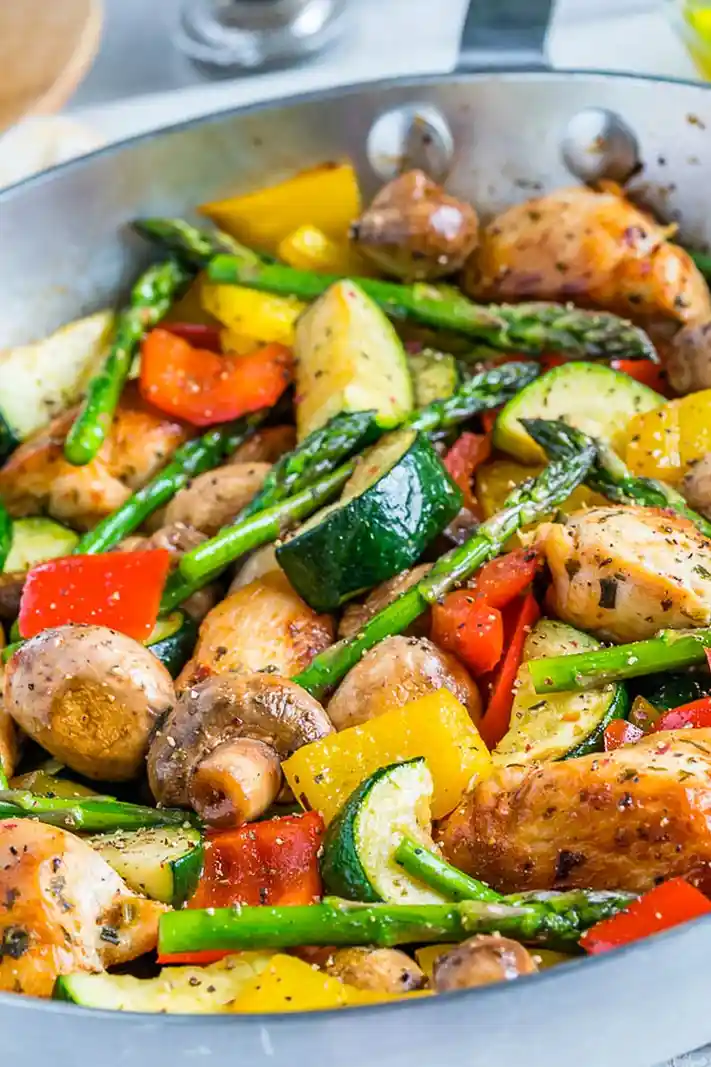
List of ingredients
- 1 pound chicken breast, cut into bite sized pieces – use boneless, skinless breasts for fast cooking.
- 2 Tbsp extra virgin olive oil, avocado oil, or unrefined coconut oil – choose an oil with a high smoke point.
- 4 fresh garlic cloves, minced – fresh garlic provides a more potent flavor than powdered versions.
- 8 oz fresh button mushrooms – slice them or keep them whole if they are small.
- 2 red bell pepper, chopped – these add sweetness and a vibrant color to the dish.
- 1 bunch asparagus, ends trimmed and cut in halves – ensure the woody bottom ends are removed.
- 1 medium zucchini, sliced – cut into uniform rounds or half-moons for even cooking.
- 1 Tbsp dry Italian seasoning – a blend of dried herbs like basil, oregano, and rosemary.
- 2 Tbsps high quality balsamic vinegar – this provides the characteristic tang and sweetness.
- Sea salt and black pepper – use these to season the meat and vegetables to your preference.
step-by-step instructions
- Heat the Pan: Heat oil over med-high heat in a large skillet. Using a heavy-bottomed pan helps maintain a consistent temperature.
- Sauté Aromatics: Add mushrooms and garlic, and saute for 5 minutes. Stir occasionally to prevent the garlic from browning too quickly.
- Brown the Chicken: Add chicken and cook for another 5 minutes until browned. Avoid overcrowding the pan so the chicken sears instead of steaming.
- Season the Base: Add Italian seasoning, balsamic vinegar and season with salt and pepper to your taste. Stir well to ensure the chicken is thoroughly coated in the glaze.
- Cook the Vegetables: Add in bell pepper, asparagus and zucchini, and cook for an additional 10 minutes or until veggies are tender and everything is cooked through. Toss frequently to ensure the vegetables cook evenly.
- Final Touch: Squeeze a bit of fresh lemon juice over the skillet before serving. This adds a bright acidity that balances the rich balsamic vinegar.
Expert Techniques for the Perfect Skillet
Use a Large Heavy-Bottomed Skillet
A cast-iron or stainless steel skillet is ideal because it distributes heat evenly across the surface. This prevents hot spots that could burn the garlic while leaving the chicken undercooked. A larger pan also ensures there is enough room for the vegetables to sear.
Cut Chicken into Uniform Pieces
Ensure all chicken breast pieces are roughly the same size. Uniformity prevents smaller pieces from overcooking and becoming dry while larger pieces remain raw. Bite-sized cubes of about one inch are recommended for this recipe.
Prepare Asparagus Correctly
The bottom inch of asparagus stalks is often woody and tough. Snap them off by hand or trim them with a knife before cutting the stalks into halves. This ensures every bite is tender and easy to chew.
Searing for Maximum Flavor
Allow the chicken to sit undisturbed for a minute or two when first added to the pan. This creates a brown crust known as the Maillard reaction, which significantly enhances the depth of flavor in the final dish.
Managing Heat Levels
Keep the heat at medium-high throughout the process. If the pan begins to smoke, lower the heat slightly to avoid scorching the balsamic vinegar, which has a high sugar content and can burn quickly.
Ingredient Substitutions and Customizations
Using Chicken Thighs Instead of Breast
Boneless, skinless chicken thighs can be used as a substitute for breast meat. Thighs have a higher fat content, making them more moist and harder to overcook. They will provide a richer flavor to the overall skillet.
Alternative Vegetable Options
If zucchini is unavailable, yellow squash or eggplant are excellent replacements. You can also add baby carrots or snap peas to increase the variety of nutrients. Keep in mind that denser vegetables may require a few extra minutes of cooking time.
Swapping the Bell Pepper
While red bell peppers offer the most sweetness, yellow or orange peppers work equally well. For a spicier profile, you can use a mix of red and green bell peppers. Ensure they are chopped to a similar size as the zucchini.
Vinegar Alternatives for Balsamic
If you do not have balsamic vinegar, apple cider vinegar mixed with a teaspoon of honey is a suitable replacement. Red wine vinegar is another option, though it is more acidic and less sweet than balsamic.
Oil Choices for Different Diets
Avocado oil is highly recommended for its high smoke point, making it safer for medium-high heat. For those preferring coconut oil, use unrefined coconut oil for a subtle sweetness, or refined if you prefer a neutral taste.
Low-Sodium Seasoning Options
To reduce salt intake, replace sea salt with a squeeze of extra lemon juice or a dash of onion powder. Many store-bought Italian seasonings already contain salt, so taste the dish before adding more.
Flavor Enhancements and Variations
Adding a Spicy Element
For those who enjoy heat, add half a teaspoon of crushed red pepper flakes when adding the Italian seasoning. You can also stir in a small amount of minced fresh jalapeño along with the garlic for a brighter spice.
Incorporating a Creamy Texture
To create a creamier sauce, stir in two tablespoons of heavy cream or cashew cream during the last two minutes of cooking. This mellows out the acidity of the balsamic vinegar and creates a luxurious glaze.
Adding a Cheesy Finish
Freshly grated Parmesan cheese can be sprinkled over the dish just before removing it from the heat. The cheese melts slightly into the balsamic glaze, adding a salty, nutty dimension to the vegetables and chicken.
Boosting the Garlic Profile
If you love garlic, try adding three cloves of roasted garlic in addition to the minced fresh garlic. Roasted garlic provides a mellow, caramelized flavor that complements the sweetness of the red bell peppers.
Fresh Herb Integration
While dry Italian seasoning is convenient, adding fresh chopped parsley or basil at the end enhances the freshness. Stir in the fresh herbs after the heat is turned off to preserve their color and volatile oils.
Increasing the Tanginess
For a more pronounced tartness, increase the balsamic vinegar by one tablespoon or add a teaspoon of Dijon mustard. The mustard acts as an emulsifier and adds a complex, savory depth to the pan sauce.
Serving and Pairing Suggestions
Serving Over Quinoa or Farro
Serve the chicken skillet over a bed of fluffy quinoa or chewy farro. These ancient grains absorb the balsamic pan sauce and add a nutty flavor and extra protein to the meal.
Pairing with Crusty Bread
A side of toasted sourdough or a warm baguette is perfect for this recipe. Use the bread to soak up the remaining balsamic and garlic juices at the bottom of the plate.
Using Cauliflower Rice for Low Carb
For a ketogenic or low-carb option, serve the skillet over sautéed cauliflower rice. The neutral flavor of the cauliflower allows the Italian herbs and balsamic glaze to remain the star of the show.
Pairing with a Fresh Side Salad
A simple arugula salad with a lemon-olive oil dressing pairs well with this dish. The peppery notes of arugula complement the sweetness of the roasted red peppers and balsamic vinegar.
Serving Over Brown Rice
Brown rice provides a hearty, fiber-rich base that makes the meal more filling. Cook the rice separately and scoop the chicken and vegetable mixture directly on top for a complete bowl.
Storage and Reheating Guidelines
Proper Refrigeration Methods
Store leftovers in an airtight glass container to maintain freshness. Allow the skillet to cool slightly before sealing the lid to prevent excess condensation, which can make the vegetables mushy.
Recommended Storage Duration
This dish keeps well in the refrigerator for three to four days. The flavors often meld and improve overnight, making it an excellent option for planned leftovers.
Best Way to Reheat on the Stove
Reheat the skillet in a pan over medium heat with a tablespoon of water or chicken broth. This helps loosen the balsamic glaze and prevents the chicken from drying out during the heating process.
Microwave Reheating Tips
When using a microwave, heat the meal on medium power in short intervals. Stir the food every 60 seconds to ensure the chicken and vegetables are heated evenly throughout.
Freezing the Skillet Meal
While you can freeze this dish, the zucchini and asparagus may lose their texture upon thawing. If freezing, undercook the vegetables slightly so they do not become overly soft when reheated from frozen.
Strategic Meal Prep and Make-Ahead Tips
Pre-Cutting the Vegetables
You can chop the bell peppers, zucchini, and asparagus up to 24 hours in advance. Store them in separate containers or a large bag in the fridge to save time during the actual cooking process.
Marinating the Chicken
Toss the chicken cubes in a mixture of olive oil and Italian seasoning an hour before cooking. This allows the flavors to penetrate the meat, resulting in a more seasoned and tender chicken.
Cooking in Large Batches
This recipe can be doubled to prepare meals for the entire week. Use two large skillets or cook in batches to avoid overcrowding the pan, which would prevent the chicken from browning.
Managing Your Mise en Place
Prepare all ingredients before turning on the stove. Because this recipe moves quickly from sautéing to simmering, having everything measured and chopped prevents burning the garlic.
Storing Sauce Separately
If prepping for the week, you can cook the chicken and vegetables but store the balsamic mixture separately. Add the sauce during the reheating process to keep the vegetables crisp.
Troubleshooting Common Cooking Challenges
Managing Excess Liquid in the Pan
If the vegetables release too much water, increase the heat to medium-high and simmer without a lid. This allows the liquid to evaporate and the balsamic glaze to thicken and coat the ingredients.
Preventing Burnt Garlic
If the garlic browns too quickly, add the mushrooms immediately to lower the pan’s temperature. You can also add a small splash of water or oil to prevent the garlic from sticking and burning.
Fixing an Overly Acidic Sauce
If the balsamic vinegar tastes too sharp, stir in a pinch of brown sugar or a drizzle of honey. The sugar neutralizes the acidity and brings out the sweetness of the red peppers.
Ensuring Chicken is Fully Cooked
Check the internal temperature of the largest piece of chicken with a meat thermometer. It should reach 165 degrees Fahrenheit to ensure it is safe to eat while remaining juicy.
Avoiding Mushy Vegetables
To keep the vegetables tender-crisp, do not overcook them beyond the 10-minute mark. Remove the pan from the heat as soon as the zucchini is translucent but still holds its shape.
Frequently Asked Questions
Can I use frozen vegetables?
Yes, you can use frozen vegetables, but ensure they are thawed and patted dry first. Excess moisture from frozen vegetables can prevent the chicken from browning and make the sauce watery.
How do I store leftovers?
Store them in an airtight container in the refrigerator for up to four days. Reheat them gently on the stove or in the microwave to maintain the texture of the vegetables.
Is this recipe gluten-free?
Yes, this recipe is naturally gluten-free as it uses whole foods and basic seasonings. Ensure your store-bought Italian seasoning and balsamic vinegar are certified gluten-free if you have a severe allergy.
Can I add other proteins?
You can replace the chicken with shrimp, scallops, or firm tofu. Adjust the cooking time accordingly; shrimp, for example, only need 2-3 minutes per side to cook through.
What is the best skillet for this?
A stainless steel or cast-iron skillet is best for achieving a proper sear on the chicken. Non-stick pans work as well, but they may not develop the same level of caramelized flavor.
One Pan Italian Chicken Skillet Recipe
- Total Time: 30 minutes
- Yield: 4 servings 1x
- Diet: Dairy-Free
Description
A quick and healthy one pan Italian chicken skillet featuring tender chicken breast and a colorful medley of fresh vegetables.
Ingredients
- 1 pound chicken breast, cut into bite sized pieces
- 2 Tbsp extra virgin olive oil
- 4 fresh garlic cloves, minced
- 8 oz fresh button mushrooms
- 2 red bell pepper, chopped
- 1 bunch asparagus, ends trimmed and cut in halves
- 1 medium zucchini, sliced
- 1 Tbsp dry Italian seasoning
- 2 Tbsps balsamic vinegar
- sea salt and black pepper, to taste
Instructions
- Heat: Heat oil over med-high heat in a large skillet.
- Sauté: Add mushrooms and garlic, and saute for 5 minutes.
- Brown: Add chicken and cook for another 5 minutes until browned.
- Season: Add Italian seasoning, balsamic vinegar and season with salt and pepper to your taste.
- Cook: Add in bell pepper, asparagus and zucchini, and cook for an additional 10 minutes or until veggies are tender and everything is cooked through.
- Finish: Squeeze a bit of fresh lemon on the finished dish.
Notes
Adding a squeeze of fresh lemon at the end enhances the flavors of the chicken and vegetables.
- Prep Time: 10 minutes
- Cook Time: 20 minutes
- Category: Main Course
- Method: Sautéing
- Cuisine: Italian
Nutrition
- Serving Size: 1 serving
- Calories: 310 kcal
- Sugar: 6 g
- Sodium: 480 mg
- Fat: 12 g
- Saturated Fat: 2 g
- Unsaturated Fat: 10 g
- Trans Fat: 0 g
- Carbohydrates: 14 g
- Fiber: 4 g
- Protein: 32 g
- Cholesterol: 95 mg