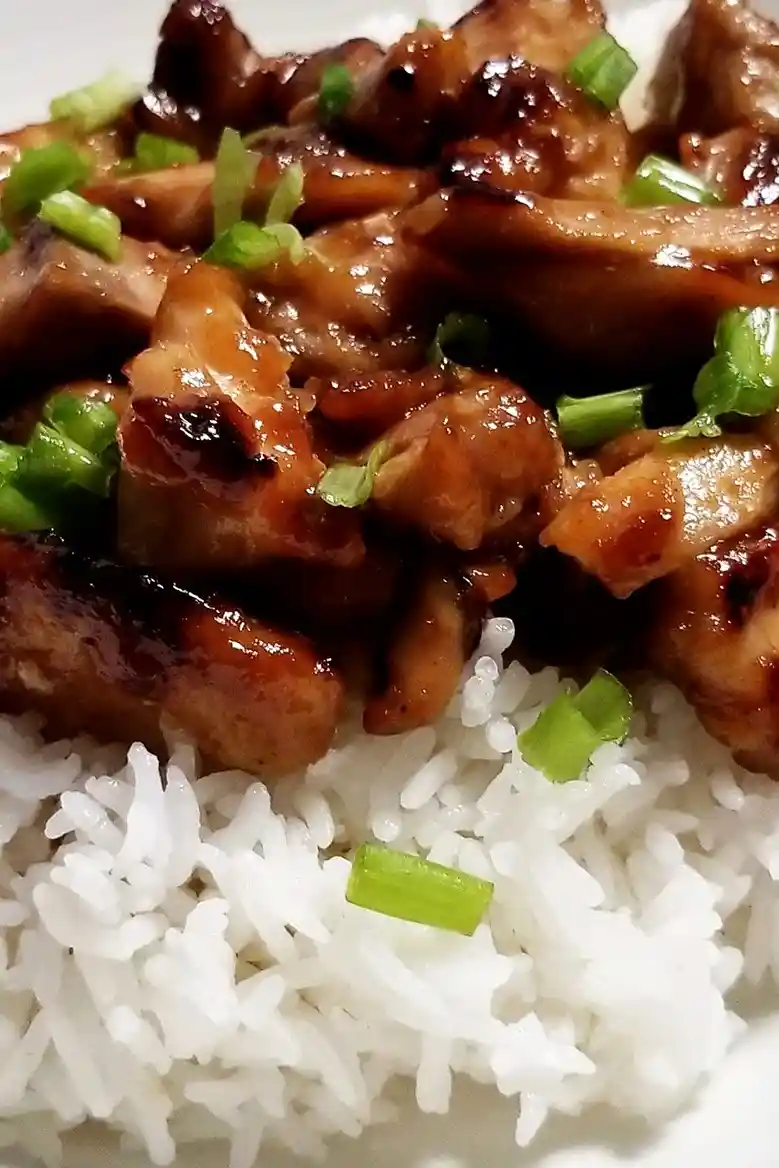
This quick teriyaki chicken recipe delivers a sweet and savory glaze that tastes just like your favorite restaurant takeout. It is an ideal weeknight meal that pairs perfectly with steamed rice and fresh vegetables.
List of ingredients
- 1 lb. chicken thighs – cut into 1/2″ cubes for even cooking
- 1 tbsp canola oil – for pan searing the chicken
- 1/4 tsp salt – to enhance the natural flavor
- 1/4 tsp pepper – for a hint of spice
- 1/4 tsp garlic powder – adds a deep savory note
- 2 tbsp cornstarch – used for coating the chicken pieces
- 2 tbsp green onions – chopped for a fresh garnish
- 1 cup water – the base for the teriyaki sauce
- 1/3 cup soy sauce – low-sodium recommended to control salt
- 2 tbsp cornstarch – serves as the thickening agent for the glaze
- 1 garlic clove – minced for aromatic flavor
- 1/2 tsp fresh ginger – minced or finely chopped for zest
- 1/3 cup brown sugar – provides a rich sweetness
- 1 tbsp honey – adds a glossy finish and depth
- 1/4 tsp sesame oil – for a toasted, nutty aroma
- 1 tbsp rice vinegar – adds a necessary acidic balance
step-by-step instructions
- Prepare the sauce base: Combine cornstarch and water in a small bowl and whisk until smooth.
- Simmer the sauce: In a medium saucepan, add all remaining teriyaki sauce ingredients along with the cornstarch and water mixture.
- Thicken the glaze: Stir frequently and bring the sauce to a simmer over medium heat. Cook for 5-7 minutes until the sauce thickens and reduces to about half, turning a dark brown color.
- Set sauce aside: Once the sauce has thickened, remove it from the heat immediately and cover the pan to keep it warm.
- Season the chicken: Pat the chicken thigh cubes dry with paper towels. Season all sides with salt, garlic powder, and pepper.
- Coat the chicken: Place the cornstarch in a bowl with the seasoned chicken and toss until every piece is fully coated.
- Sear the meat: Heat oil in a skillet or wok over medium-high heat. Once the oil is hot and shimmering, carefully add the chicken.
- Cook until golden: Stir fry the chicken for about 8-10 minutes until the pieces are fully cooked and have developed a golden-brown exterior.
- Combine and glaze: Pour the prepared teriyaki sauce over the chicken and toss to combine. Cook for 1 more minute to allow the sauce to bubble and cling to the meat.
- Final touch: Remove from heat and serve the teriyaki chicken over steamed white rice, topped with chopped green onions.
Cooking Tips for the Best Results
Pat the Chicken Dry
Removing surface moisture from the chicken thighs is essential for a proper sear. If the meat is wet, it will steam in the pan rather than brown, resulting in a rubbery texture.
Use High Heat for Searing
Ensure your skillet or wok is hot before adding the oil and chicken. High heat creates the Maillard reaction, which produces the golden crust and deep flavor associated with takeout chicken.
Avoid Overcrowding the Pan
Cooking the chicken in a single layer prevents the pan temperature from dropping too sharply. If the pan is too full, the meat will release juices and boil, which prevents the edges from crisping.
Fresh Ginger vs. Ground Ginger
Freshly minced ginger provides a bright, pungent zing that defines authentic teriyaki. If using ground ginger, reduce the amount to 1/4 teaspoon to avoid an overly concentrated flavor.
Ingredient Substitutions
Alternative Oils for Frying
Canola oil is recommended for its neutral taste and high smoke point. You can substitute it with avocado oil or vegetable oil, but avoid extra virgin olive oil as it may smoke at high temperatures.
Substituting Low-Sodium Soy Sauce
Using low-sodium soy sauce allows you to control the saltiness of the dish. For a gluten-free option, replace the soy sauce with Tamari or coconut aminos, though you may need a pinch more salt.
Honey Alternatives for Sweetness
Honey adds a specific viscosity and shine to the sauce. If honey is unavailable, maple syrup or agave nectar can be used, though these will slightly change the flavor profile.
Rice Vinegar Replacements
Rice vinegar is mild and slightly sweet. If you do not have it, apple cider vinegar or white wine vinegar are suitable replacements, though they are slightly more acidic.
Recipe Variations
Adding Mixed Vegetables
To add nutrients, sauté sliced carrots, snap peas, or broccoli florets in the pan before adding the chicken. Remove the vegetables once tender-crisp and toss them back in with the sauce at the end.
Using Chicken Breast Instead of Thighs
Chicken breasts can be used for a leaner option, but they cook faster than thighs. Reduce the stir fry time to 5-7 minutes to prevent the breast meat from becoming dry and overcooked.
Increasing the Heat Level
For a spicy version of this dish, add a teaspoon of sriracha or a pinch of red pepper flakes to the sauce ingredients. This provides a heat contrast to the sweetness of the brown sugar and honey.
Serving Suggestions
Choosing the Right Rice
Jasmine rice is the classic choice for its floral aroma and soft texture. For a nuttier flavor and more fiber, brown rice or wild rice blends also pair exceptionally well with the glaze.
Side Vegetable Pairings
Serve this dish with steamed bok choy, sautéed spinach, or roasted cauliflower. A side of sesame-dressed cabbage slaw provides a refreshing crunch that balances the richness of the sauce.
Creative Garnish Ideas
Beyond green onions, try adding toasted sesame seeds for a professional look and nutty taste. A light drizzle of sriracha or a sprinkle of shichimi togarashi adds visual appeal and flavor.
Storage and Reheating
Refrigeration Guidelines
Store leftovers in an airtight container in the refrigerator for up to 3-4 days. Ensure the chicken is completely cooled before sealing the lid to prevent excess moisture buildup.
Freezing Instructions
This dish can be frozen for up to two months. Place the chicken and sauce together in a freezer-safe bag, squeezing out as much air as possible to prevent freezer burn.
Best Reheating Methods
The best way to reheat is in a skillet over medium heat with a tablespoon of water. This loosens the thickened sauce and restores the moisture to the chicken without overcooking it.
Make-Ahead Advice
Preparing the Sauce in Advance
The teriyaki sauce can be made up to a week ahead of time. Store it in a glass jar in the fridge and shake well before heating, as the cornstarch may settle at the bottom.
Pre-cutting and Seasoning
You can cube and season the chicken several hours before cooking. Keep the cornstarch separate until just before frying to ensure the coating stays dry and crisp.
Troubleshooting Common Issues
Sauce is Too Thick
If the sauce becomes too thick during simmering or reheating, stir in water or vegetable broth one tablespoon at a time. Heat gently until the desired consistency is reached.
Sauce is Too Thin
If the sauce hasn’t thickened enough, simmer it for an additional 2-3 minutes. Alternatively, whisk a small amount of cornstarch with water and stir it into the boiling sauce.
Chicken is Not Browning
Lack of browning usually indicates the pan wasn’t hot enough or the chicken was overcrowded. Increase the heat and cook the meat in smaller batches to ensure a golden crust.
Frequently Asked Questions
Can I make this recipe gluten-free?
Yes, simply replace the soy sauce with Tamari or coconut aminos. Ensure your cornstarch is certified gluten-free, though most pure cornstarch naturally is.
How do I prevent the chicken from sticking?
Use a non-stick skillet or a well-seasoned wok. Ensure the oil is hot before adding the meat and avoid stirring too frequently during the first few minutes of searing.
Is the cornstarch coating necessary?
The cornstarch serves two purposes: it protects the chicken from drying out and creates a surface that helps the sauce cling to the meat for a thick, glossy glaze.
Print
Homemade Take-Out Style Teriyaki Chicken
- Total Time: 35 minutes
- Yield: 4 servings 1x
- Diet: General
Description
Pan seared teriyaki chicken served over white rice with chopped green onions.
Ingredients
- 1 lb. chicken thighs, cut into 1/2” cubes
- 1 tbsp canola oil
- 1/4 tsp salt
- 1/4 tsp pepper
- 1/4 tsp garlic powder
- 2 tbsp cornstarch (for coating)
- 2 tbsp green onions, chopped (optional)
- 1 cup water
- 1/3 cup soy sauce
- 2 tbsp cornstarch (for sauce)
- 1 garlic clove, minced
- 1/2 tsp fresh ginger, minced or finely chopped
- 1/3 cup brown sugar
- 1 tbsp honey
- 1/4 tsp sesame oil
- 1 tbsp rice vinegar
Instructions
- Prepare Slurry: Combine cornstarch and water in a small bowl.
- Simmer Sauce: In a medium saucepan, add all teriyaki sauce ingredients and the cornstarch mixture, then bring to a simmer.
- Thicken Sauce: Cook for 5-7 minutes until the sauce thickens, then remove from heat and cover to keep warm.
- Season Chicken: Pat chicken dry and season with salt, garlic powder, and pepper on all sides.
- Coat Chicken: Toss chicken in cornstarch until fully coated.
- Sear Chicken: Heat oil in a skillet or wok over medium-high heat and stir-fry the chicken for 8-10 minutes until golden and fully cooked.
- Glaze: Add the teriyaki sauce to the chicken, toss to combine, and cook for 1 more minute.
- Serve: Serve the teriyaki chicken over steamed white rice and top with chopped green onion.
Notes
For a lower sodium version, ensure low-sodium soy sauce is used as specified.
- Prep Time: 15 minutes
- Cook Time: 20 minutes
- Category: Main Course
- Method: Stir-fry
- Cuisine: Asian
Nutrition
- Serving Size: 1 serving
- Calories: 380 kcal
- Sugar: 22 g
- Sodium: 850 mg
- Fat: 14 g
- Saturated Fat: 4 g
- Unsaturated Fat: 10 g
- Trans Fat: 0 g
- Carbohydrates: 28 g
- Fiber: 1 g
- Protein: 32 g
- Cholesterol: 95 mg